One Outfit, One Photo: The Hidden Costs of China's Wear-Once Fashion
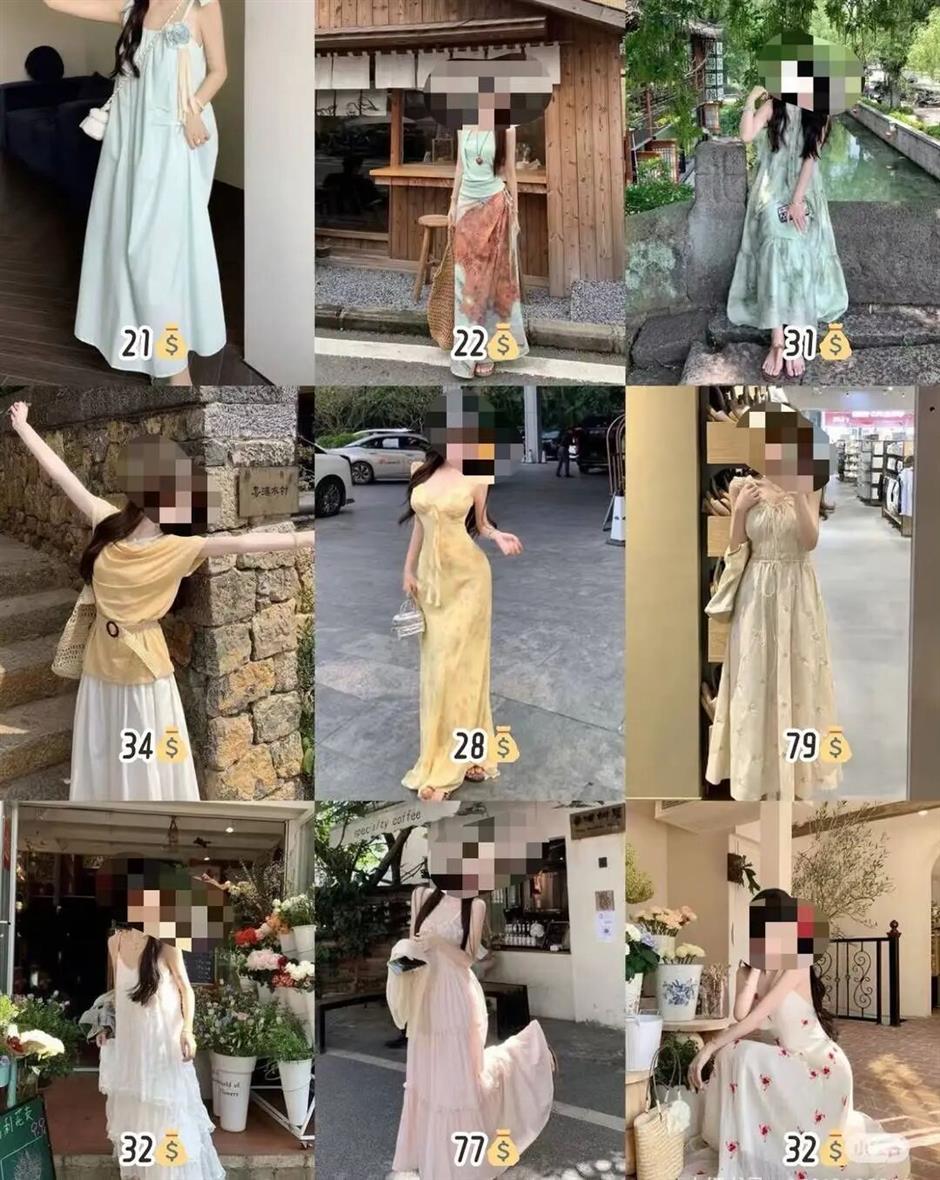
"Wear-once clothes" are trending on Chinese social media.
The idea is simple: Buy something cheap, look good in the photographs and move on. The pictures stay. The outfit may not.
For Xiao Yu, who had just finished China's university entrance examinations, a seven-day holiday meant five outfits costing less than 200 yuan (US$30) altogether. She planned to resell them after the trip. Most of her previous purchases for photographs, however, had ended up in the bin, she told Jiefang Daily.
Known as cipaoyi, these inexpensive, often brightly colored clothes are bought for holidays, birthdays and social-media posts rather than years of wear. A place in the photo album matters more than a place in the wardrobe.
But the appetite for a fresh look has a less photogenic backdrop: disappointing fabrics, parcels traveling back and forth, and sellers attaching ever-larger obstacles to their clothes.
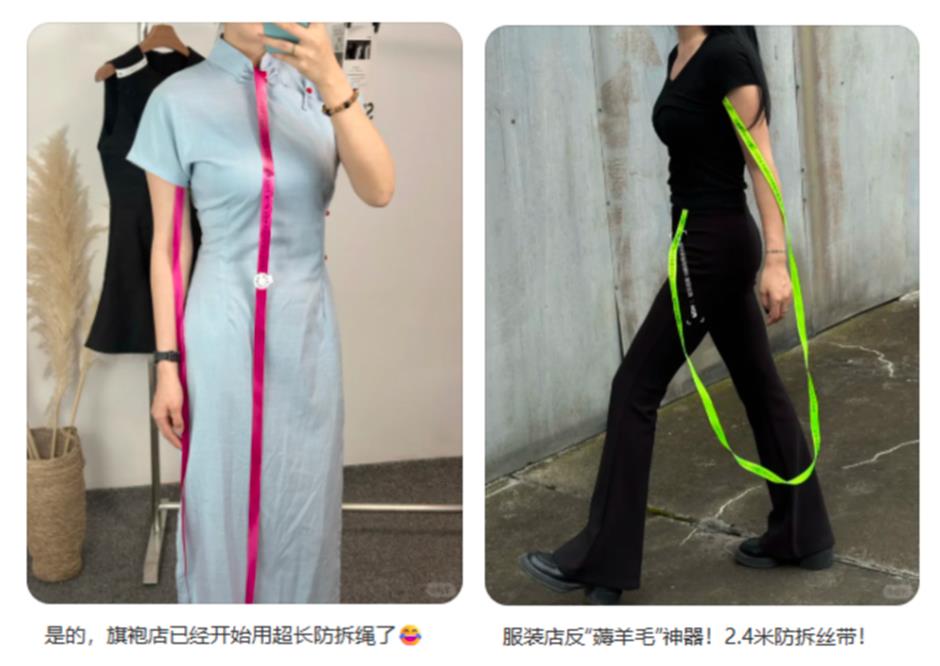
Across China's online womenswear market, tags have grown larger than faces. Anti-tamper ribbons stretch up to 2.4 meters. Some garments come with combination locks on their zippers.
These are not fashion statements. They are attempts to stop customers from wearing an outfit out, taking their photographs and sending it back for a refund.
Buying clothes to discard or resell is not the same as wearing and returning them. Yet the two practices highlight a tension running through online fashion: A garment can serve its purpose in an afternoon, while someone still has to absorb its costs.

Sold today, back tomorrow
For Chen Lin, who sells dresses marketed for photographs, demand is not the problem.
His shop sells more than 10,000 items a month, with popular designs priced between 20 and 50 yuan, he said. Fewer than 10 percent of customers buy again, but paid promotion helps each new collection find another audience.
Keeping those sales is harder. Chen estimated returns in his segment at 30 to 50 percent, driven largely by inaccurate sizing, color differences and poor fabric quality.
Those explanations challenge the suggestion that dishonest shoppers are chiefly to blame. Sometimes a dress comes back because it simply is not the dress the buyer thought she ordered.
Qilu Evening News reported return estimates of 50 to 60 percent across online womenswear, with some shops receiving eight returns for every 10 items sold. The figures cover different parts of the market, rather than a single verified industry-wide rate. They also do not reveal how many returns involve misuse.
For merchants, though, there is a practical difficulty: A tag still attached does not prove a dress has stayed indoors.
The tag gets bigger. The argument gets louder.
The latest ribbons are designed to make wearing a garment outside conspicuous. Fixed to collars, shoulder seams or zippers, they warn that removal means no returns or exchanges.
Some sellers say the deterrents work. A Sichuan tag manufacturer told China Central Television that demand for oversized tags spread after an early customer reported fewer returns.
Then came the workarounds. According to Qilu Evening News, social-media users shared ways to tuck ribbons into pockets or hide them inside collars.
Other shoppers had a different question: If sellers could redesign their tags so quickly, why were sizing and workmanship still unreliable?
The Jiangsu Consumer Council warned that physical barriers could obstruct legitimate fitting and worsen relations between buyers and sellers. Better products, clearer measurements and improved virtual fitting tools would offer more lasting solutions, it said.
The distinction matters on both sides. A seven-day return window is not a free clothing-rental service. But a merchant's "no returns" warning does not automatically extinguish a customer's legal rights.
Whose dress is it next?
Some shoppers wait weeks for clothes that have already made another delivery round.
Qilu Evening News reported pre-sale waits of up to 45 days, with some shops cleaning and repackaging returns to fulfill outstanding orders. Returned clothes are not necessarily worn, but passing used garments off as new is a different matter.
The risks go beyond a garment's previous owner. Zhong Jianbo, a dermatologist at a Hangzhou hospital, warned that poorly processed fabrics, dyes and chemical residues could irritate the skin, especially when wearers sweat. Wearing something briefly does not eliminate that risk.
Cai Shangwei, director of Sichuan University's cultural industry research center, urged action against used or refurbished clothes sold as new, alongside clearer sanitation and labeling standards for second-hand garments.
Wear-once clothing, he said, must meet the same safety standards as everything else.
Editor: Wang Qingchu
In Case You Missed It...

 Nov 3, 2026