Two Sessions: Twin Proposals Target Pet Economy Problems
Shanghai's fast-growing pet economy is bringing comfort to millions of households, but political advisors say the industry is now facing serious growing pains and urgently needs stronger regulation.
A joint proposal submitted by members of one of the non-CPC parties, Taiwan Democratic Self-Government League's Shanghai Committee, warns that while the city's pet market has expanded into a 230-billion-yuan (US$33.16 billion) to 250-billion-yuan industry, its development has outpaced regulation, creating problems in healthcare services, animal trading and urban management.

Pet healthcare has become one of the biggest sources of complaints. Advisors point out that clinics operate without unified treatment standards or official price guidelines, leading to wide price gaps and frequent cases of over-treatment. Some veterinarians are even under pressure to meet revenue targets, encouraging unnecessary procedures.
At the same time, shortages of approved pet medicines have allowed fake or substandard drugs to enter the market, while disputes are often hard for owners to resolve because responsibility is split across several government departments.

Live pet trading is another weak spot. Many animals are sold without clear health records or traceable origins, resulting in so-called "weekend pets" that fall sick or die soon after purchase. New services such as pet training and boarding have also grown rapidly, but without clear service standards, consumer disputes are becoming more common.
To bring order to the industry, the joint proposal suggests setting up a cross-department coordination mechanism led by market authority, with stronger cooperation among agriculture, health, public security and urban management authorities. It also calls for citywide standards for pet medical services, a one-stop platform for handling disputes, and mandatory microchipping to allow full traceability of pets from breeding to sale.
The proposal also argues that Shanghai should rethink its ban on pets in lots of public spaces. Instead of blanket restrictions, it recommends a "conditional access" system, allowing venues such as malls, restaurants and parks to apply for pet-friendly status if hygiene and safety requirements are met.

Separately, political advisor Hong Liang submitted an individual proposal focusing on pet funeral services, a niche sector that is quietly expanding but remains largely unregulated.
With more than 2.2 million dogs and cats in Shanghai, the number of deceased pets is rising every year, yet there are still no clear rules on how pet remains should be handled.
Hong noted that some owners bury pets in parks or residential green spaces, creating environmental and public health risks. Meanwhile, commercial pet funeral providers operate with uneven quality, unclear pricing and weak environmental oversight, leaving both consumers and regulators in a gray zone.
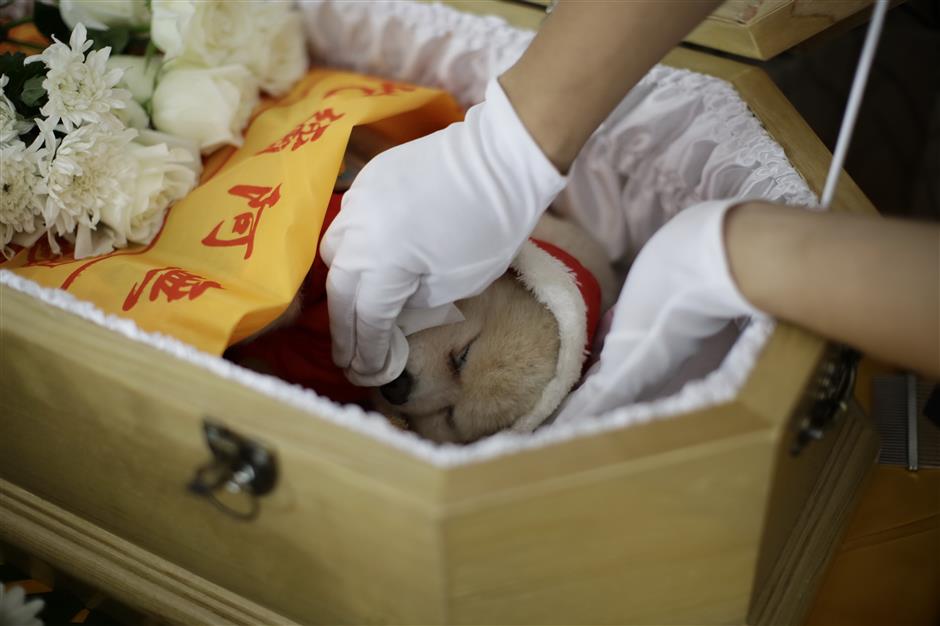
He called on the city to draft local rules for pet funeral services, clarify which departments are responsible for oversight, and include pet cremation and memorial facilities in urban public service planning. Hong also encouraged the development of environmentally friendly options such as centralized cremation and ecological memorial parks.
Together, the two proposals reflect growing concern among political advisors that Shanghai's pet economy can no longer rely on spontaneous growth alone. Without stronger rules and smarter governance, what began as a warm "emotional market" could become a source of long-term social and regulatory pressure.