In Rural China, Your Grandma's Birthday Party Is the Hottest Concert in Town
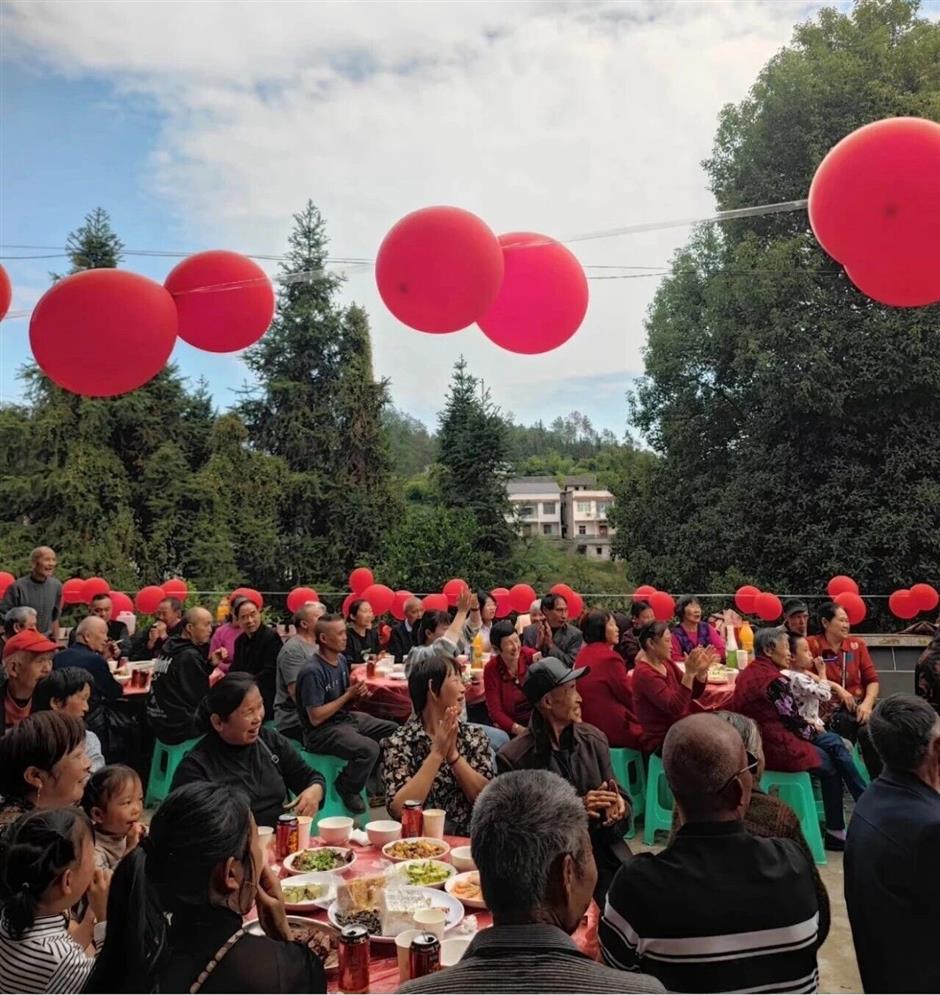
The smoke machine at this birthday party is a pile of burning corn stalks. The stage is a tarp. The crowd is eating.
And the five brothers currently doing a K-pop routine in front of them are known as the Yunnan BIGBANG. They have 2 million Douyin followers.
"Cunyu" has been around forever – the hired entertainment at weddings, funerals and birthday banquets that fills the gaps between courses in rural China.
Singers, acrobats, magicians, the occasional comedian. Stuff that city kids grew up embarrassed by.
Then someone started filming it.
Now it's everywhere. Short videos of performers jumping off village stages to clink drinks with the crowd, of girl groups doing BLACKPINK routines in courtyards with mountains behind them, of a singer in Chongqing returning a heart gesture.
They all garnered millions of views.
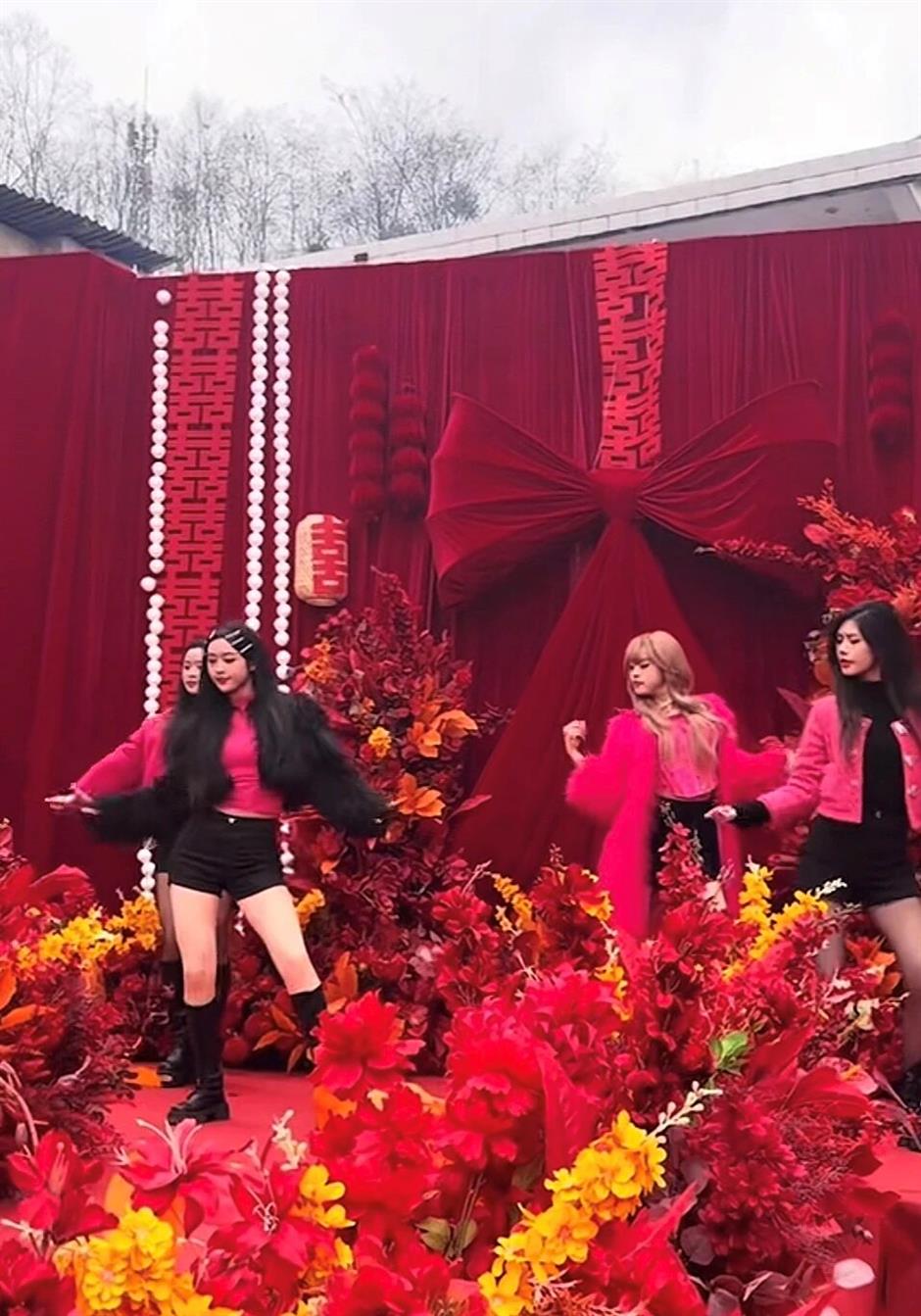
According to Zhizu Magazine, Lan Xi has been performing for 13 years. She grew up without much money, never got formal training, and learned her craft while touring with small troupes. Jazz, hip-hop, pole dance, classical. Whatever filled the gaps.
But only recently did she find a mass audience. In February, she drove more than an hour from Chongqing to perform at an 80th birthday banquet in a rural village.
On an outdoor stage set up beside a farmhouse – with red carpets, a backdrop bearing the Chinese character for longevity and festive slogans – she sang a classic song.
Spotting a young girl in the audience making a heart gesture, Lan returned it, forming a shared heart with her hands.
The moment, filmed and posted online, quickly went viral, garnering over 4 million views with the caption: "I got fan service at a village banquet – I'm following village entertainment now."

Clips of high-energy singing, dancing and fan interactions have flooded short-video platforms, with some users joking: "Forget C-pop and K-pop – village entertainment is where it's at."
Here's what's actually going on.
Pop culture spent years building a wall between performer and audience – parasocial relationships managed through official fan clubs, concert tickets that cost a month's salary, idols visible only through screens and carefully curated social posts. The whole machinery of modern fandom is designed to keep you at a distance and sell you the feeling of closeness.
Village entertainment does the opposite by accident. The stage is low. The performer is right there. After the show, she sits down and eats with everyone else.
"Idols feel like stars in the sky," Xiaolin, a fan from Chongqing who has spent the past year filming village performances instead of attending idol events was quoted by the magazine "You can only ever look at them through a screen. Village performers are just – there. It's a completely different feeling."
Baomihua, another fan from Baoding in Hebei, has seen six or seven village shows in person. Most of the crowd doesn't care – elderly villagers, small kids, people there for the food and the gossip. Baomihua brings her own glow sticks. She's usually the loudest person under the tent, screaming call-and-response chants at performers who are visibly delighted that anyone is engaging at all.
She can't get tickets to real idol concerts. Village stages are free with a gift envelope.
"The sound system isn't great," she said. "I don't care. I'll still be in the front row."
Bao Dou is twenty-eight, and she comes from Zhenxiong county, in the mountains of northeastern Yunnan – the kind of place that has been exporting its young people to factory towns and city construction sites for a generation.
Three years ago, she started doing livestreams with her sister and a few friends. They filmed outdoors, in the hills, mixing folk songs with hip-hop, leaning into a sensibility that already had a name: tu-hai, a term that might be translated as something like gleefully, defiantly local. Within two months they had tens of thousands of daily viewers.
She named the group Yunnan Weishi – a pun on Yunnan Satellite TV, after viewers kept joking the stream looked like an official broadcast.
Some members left when the income got comfortable enough that the work no longer seemed worth it; others when the physical demands wore them down; others when people in their home villages started making remarks about the kind of women who danced for strangers. The ones who remained were mostly in their twenties, mostly local.
Bao Dou has never changed what she looks for when she recruits. She does not audition for technique. She asks whether you love this – the performing, the circuit, the particular life it requires.
"If you don't," she said, "you won't last."
The goal she names, when asked, is not fame or followers or a record deal. She wanted to build something that would give young women in Zhenxiong County a reason to stay. The Douyin audience was incidental.
In Ludian County, five brothers are doing something similar. Yunnan BIGBANG recreates K-pop hits in their courtyard with whatever's around – corn stalks burned for smoke, a tricycle rolled in as a prop, everything shot live in one take. They have 2 million Douyin followers and draw millions of viewers per livestream, according to Jimu News. Fans call them real grassroots idols.
The trend has pulled traditional culture along with it. Yingge dance from the Chaoshan region, regional opera, folk rituals – are all getting a second look.
At this year's National People's Congress, a delegate named Rong Ba Xinna – a singer from the Nujiang mountains of Yunnan – called these grassroots performers sparks, and asked the government to help them catch. The government work report that session had already called for developing cultural tourism.
The thing about cunyu that the trend pieces tend to miss is that it was never trying to be cool.
The performers aren't optimizing for an algorithm or workshopping their parasocial persona. They're working a circuit that existed before TikTok was conceived.
When that gets filmed and posted, it reads as something increasingly rare: a person who is just genuinely good at something, performing it for the room they're in.
Xiaolin wants the scene to grow, but on its own terms. "The content should come from real life," she said. "Keep the rough energy. Don't turn it into just another influencer thing."
Back in Yunnan, the tarp is still up. The corn stalks have burned down. The brothers are taking a break between songs, drinking water, talking to the people at the front tables.
The cameras are rolling. They always are now.
Editor: Wang Qingchu
In Case You Missed It...

 Oct 21, 2026

![[SH Transit] Holiday Over, Fares Down: Time for a Shanghai Getaway](https://obj.shine.cn/files/2026/10/14/7b800124-6bfc-4f8a-91a6-7e819b86cfa2_0.jpg)