China's Biotech Licensing Boom Has a Value Problem
The licensing boom in Chinese biotech has raised the question of how much value Chinese companies can retain after selling assets.
Shanghai recorded 37 biopharma business-development deals in the first eight months of 2026, with a headline value of US$18.23 billion. Nationally, Chinese companies signed 81 outbound licensing deals for innovative medicines in the first half of the year, with a combined potential value of about US$110 billion, according to the National Medical Products Administration.
But separate industry data puts disclosed upfront payments at only about US$5 billion. Much of the rest is contingent on drugs advancing through development, clearing regulatory hurdles and reaching commercial milestones.
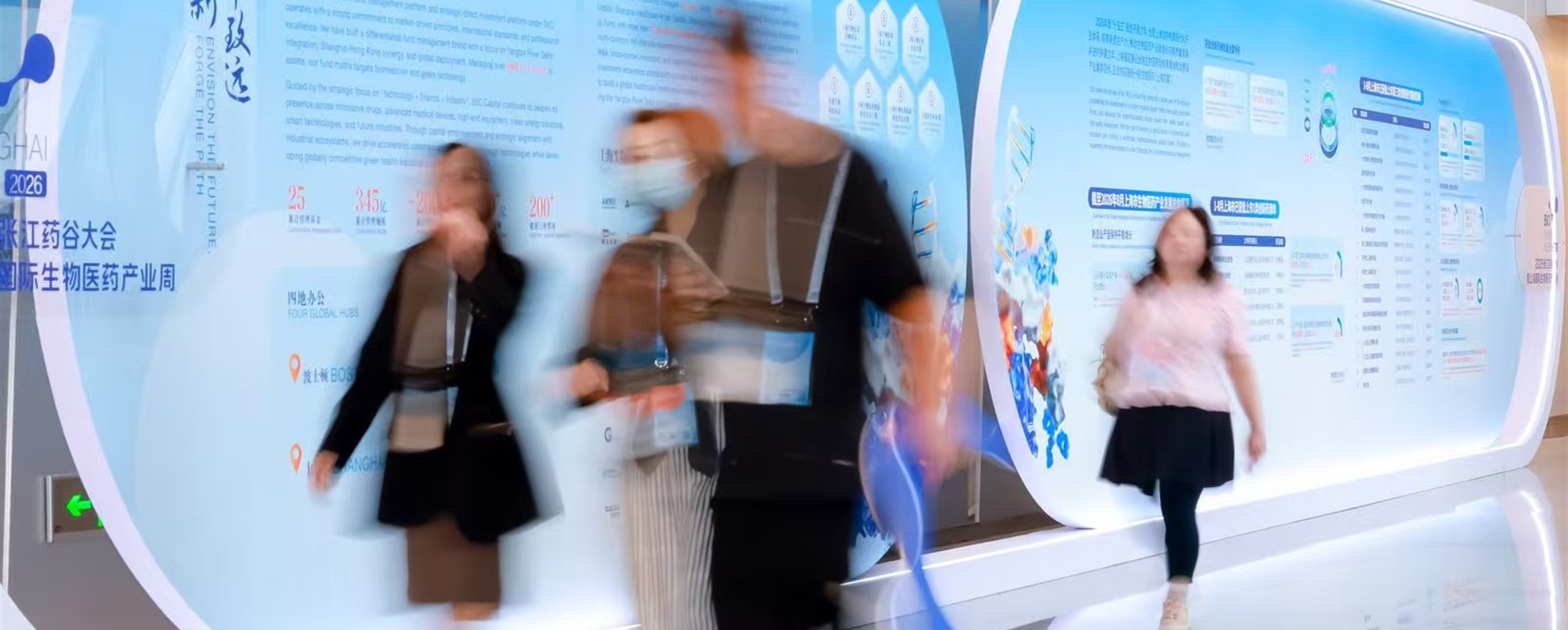
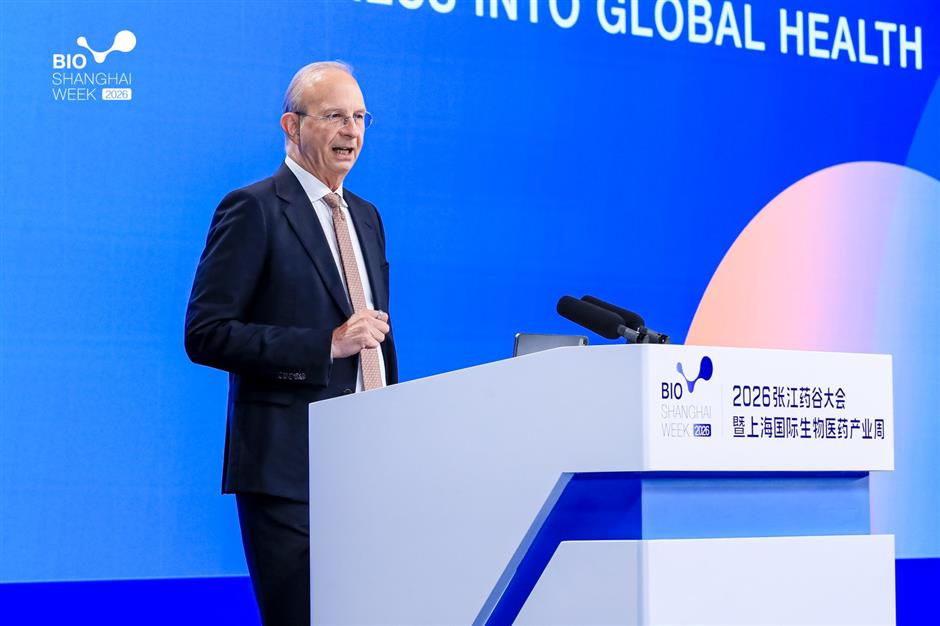
That gap was a recurring theme at BioShanghai Week this week in Zhangjiang, Pudong New Area, where drugmakers, investors and scientists gathered as China's pharmaceutical industry pushed deeper into global markets.
"Licensing deals are the starting point," said Allan Gabor, a global cooperation ambassador for BioShanghai Week.
China has already demonstrated that there is global demand for its drug pipeline. The first-half transactions involved buyers from 20 countries and regions, according to the NMPA, and their combined potential value was already roughly 80 percent of the total recorded for all of 2025.
China now accounts for about 30 percent of drugs in development globally, ranking second worldwide, according to the NMPA. But selling an asset early comes with a trade-off.
"If you're licensing a very early preclinical medicine, the risk profile is still very high," Gabor said. "And so the immediate value that you get for something like that is risk-adjusted.
The earlier a drug is licensed, the more clinical and regulatory risk the buyer assumes, and the greater the share of future value that remains conditional on milestones.
"If the Chinese companies want to have a bigger share of the overall value, the lifetime value of the medicine, they have to become adept at the international regulatory environment," Gabor said. "They have to establish and understand the go-to-market models across many different governments."
Some of the latest deals suggest Chinese drugmakers are already trying to move further downstream.
In May, Innovent Biologics signed a global oncology partnership with Pfizer covering 12 programs. Innovent received US$650 million upfront and could receive as much as US$9.85 billion in development, regulatory and commercial milestone payments.
The more revealing part of the agreement is its structure.
Pfizer receives full global rights to four programs and rights outside China to another four. But the remaining four will be jointly developed, with the companies sharing development costs, co-commercializing in the US and Europe, and splitting profits. Innovent retains China rights.
That is a different proposition from simply discovering a molecule, taking an upfront payment, and handing the rest of its global development to a multinational pharmaceutical company. It gives Innovent direct exposure to overseas clinical development and commercialization, and potentially a larger share of the economics if the products succeed.
Other deals show why the traditional licensing model remains attractive.
AstraZeneca agreed in January to pay CSPC Pharmaceutical US$1.2 billion upfront for access to eight obesity and diabetes programs as well as its peptide discovery and long-acting formulation technologies. CSPC could receive another US$3.5 billion in development and regulatory milestones, plus additional commercial milestones and royalties.
CSPC will take the first programs through Phase I. AstraZeneca will then assume later-stage development and commercialization outside China, while CSPC retains rights in China.
The arrangement illustrates the basic economics behind many Chinese biotech partnerships: A global pharma company can absorb the capital requirements and risk of multinational trials, regulatory filings and overseas commercialization, while the Chinese developer monetizes its discovery and early-development capabilities much earlier.
For smaller biotechs in particular, that can be a rational trade.
But as Chinese companies become better capitalized and their pipelines command higher valuations, the calculation is beginning to change. The question becomes not simply how large a licensing deal can be signed, but which rights should be sold, which should be retained, and where the company itself wants to participate.
Gabor said he is seeing Chinese companies seek a larger role even when they continue to partner with multinational drugmakers.
"We see licensing deals saying that the local companies want to be more involved in the co-promotion and the regulatory filing process," he said.
Partnerships can therefore do two things at once, he said: Bring medicines to global markets faster while allowing Chinese companies to learn how those markets work.
"That's a way to quickly get your medicines to market and smartly learn about the international market."
That may mark the next phase of China's biotech globalization.
The first phase was about validation: whether a molecule discovered in Shanghai, Suzhou or elsewhere in China could persuade Pfizer, AstraZeneca or Eli Lilly to pay for it.
With licensing values now running into tens of billions of dollars, that question is increasingly settled.
The more challenging question is what occurs after the deal is signed.
For Chinese biotech, going global is starting to mean more than selling innovation abroad. It increasingly means deciding how much of the global development, commercial control, and eventual value to keep at home.
Editor: Liu Qi
In Case You Missed It...
 Sep 18, 2026