Light, Wood, and Wanderings: A Global Family's Warm Xuhui Haven
Virgine Peuch-Lestrade arrived in Shanghai five years ago with her husband and three children, carrying with them a quiet longing for the home they had just left behind in Hong Kong.
Space, light, greenery, and calm – these were the qualities they treasured most. Born and raised in Paris, cultural richness was essential. The historic architecture and leafy lanes of Xuhui District felt immediately right: a neighborhood where heritage and serenity coexist.
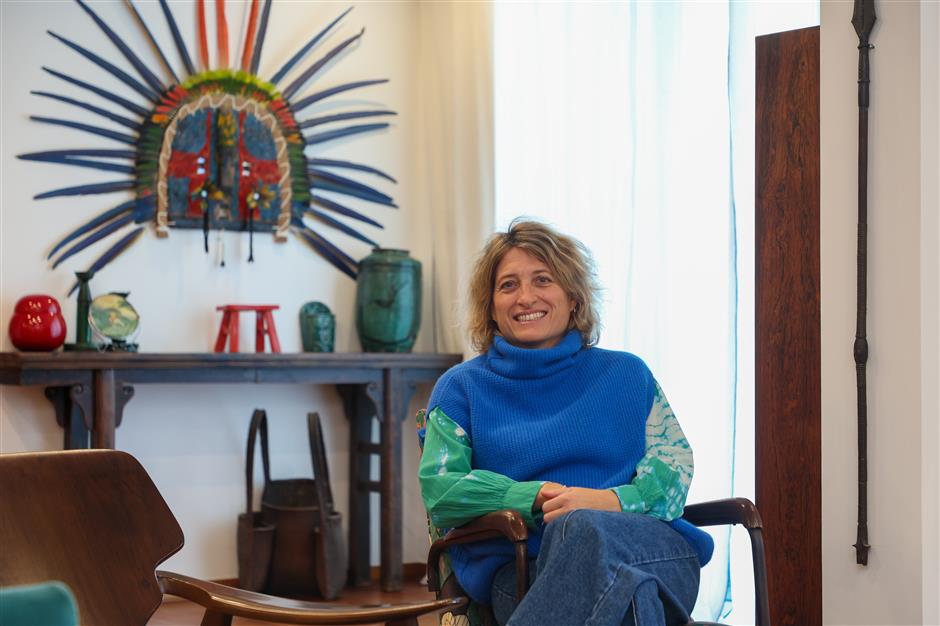
The apartment that would become their home made an impression the moment they walked in. What captivated them first was the expansive living room – a rare luxury in central Shanghai and exactly the kind of open space they envisioned for hosting friends, long dinners, and gatherings of 20 at one time.
The view sealed it.
"From the windows, the treetops unfurl at eye level, recalling the bow window we once had in São Paulo, overlooking charming homes and a skyline beyond. That familiar embrace of greenery, height, and calm felt like a sign," Virgine said.
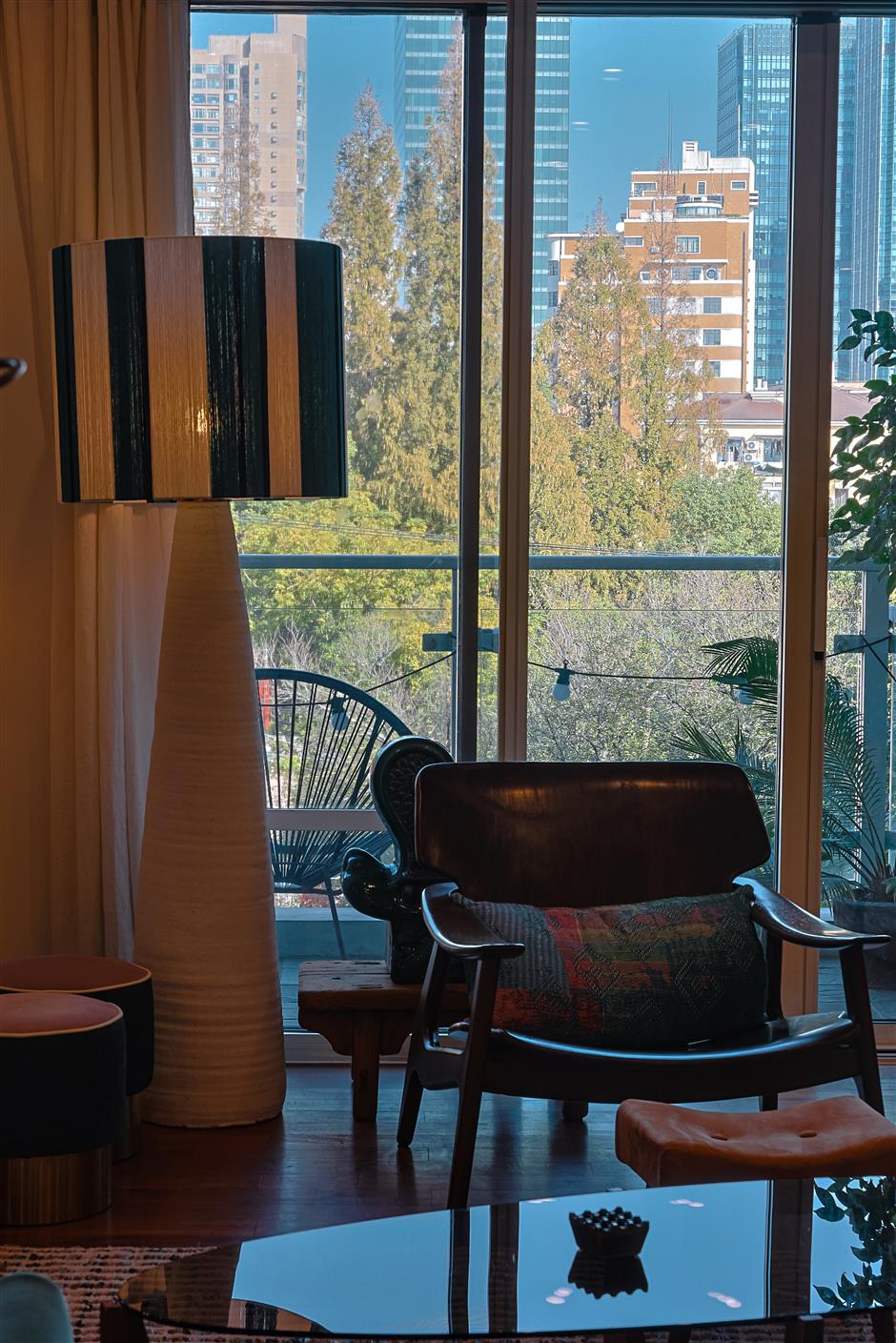
Set within a small condominium tucked inside a lane, the apartment is exceptionally quiet. Each morning begins with soft daylight and the sight of squirrels running along the branches – a simple, daily joy that still hasn't lost its magic.
The home needed to feel inviting. It needed to feel lived-in, warm, and comfortable, not polished to perfection, sterile, or overly curated. It should be a place where friends instinctively relax, where nothing is too precious to touch, and where lingering over good conversation and good wine is the norm.
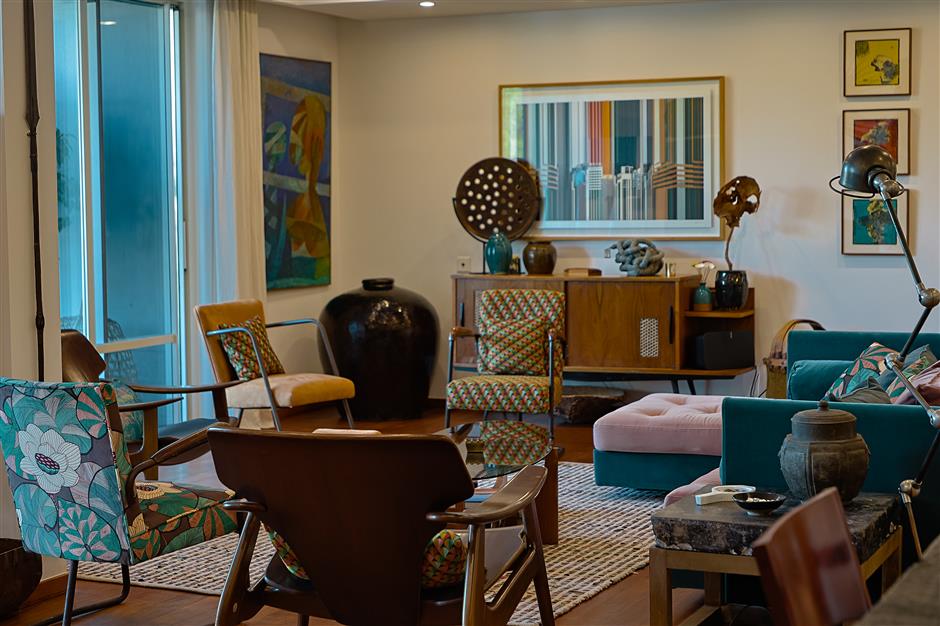
They wanted neither a minimalist black-and-white box nor a space weighed down by tradition. Instead, they sought a balance: color, memory, texture, and warmth stitched together into an environment that feels truly theirs.
Despite appearances, the home wasn't designed according to a strict plan.
"Our belongings simply 'found their place,' much as we had in our previous homes around the world," Virgine said.
A Hong Kong cabinet now sits effortlessly beneath a Brazilian mask; decorations align through their colors rather than any imposed structure; and the only truly deliberate choice was painting a single wall green to softly separate the living and dining areas while warming the large room.
In the master bedroom, the palette grows calmer: soft neutrals, intimate lighting and corners dedicated to both her and her husband. His workspace – a black Chinese cabinet discovered in an antique shop – is framed by old French engravings.
Another corner is a gentler mix of beige tones and her jewelry pieces, while near the window, blue dominates through a pair of Brazilian chairs and traditional Chinese ceramics.
"Furniture, too, was chosen instinctively. Each piece is a coup de cœur – collected during travels across Asia or discovered through encounters with people who left an impression. Nothing was selected to fit a trend; everything was chosen because it moved us," she said.
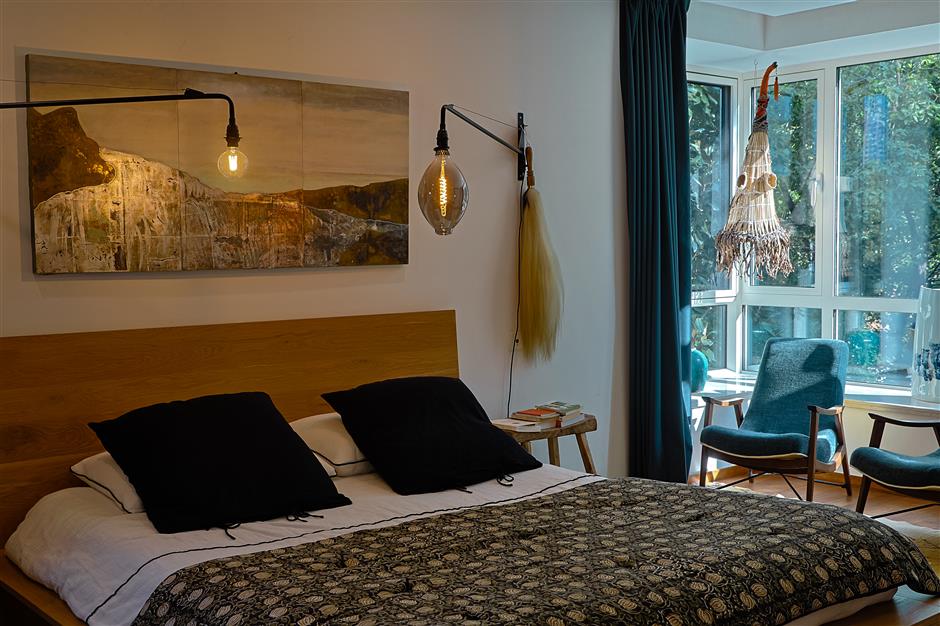
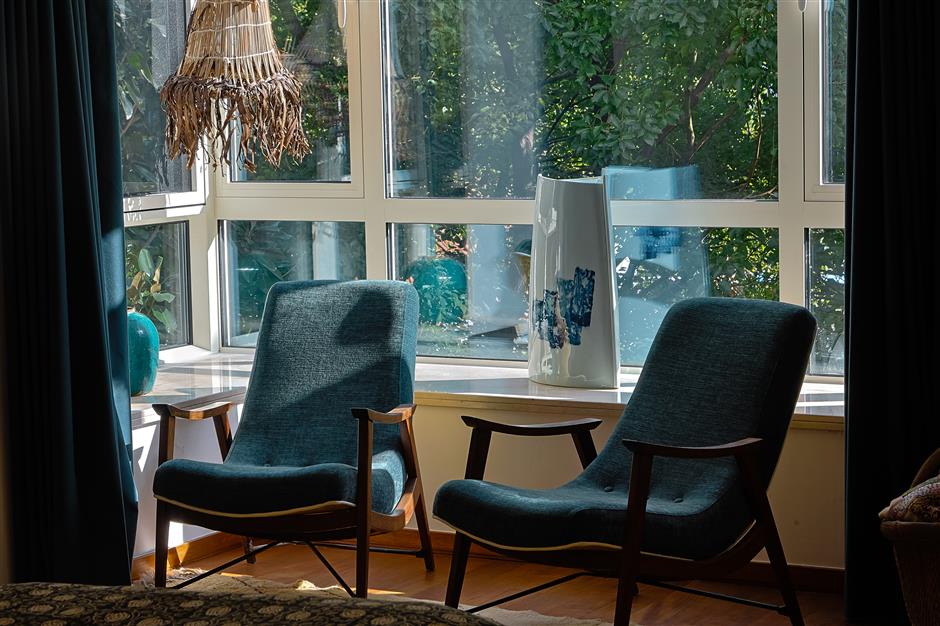
Among the most cherished pieces in their home are a pair of "Diz" armchairs by iconic Brazilian designer Sergio Rodrigues. Sculptural, partly handmade, and steeped in Brazilian craftsmanship, they were among the couple's first acquisitions during their time in Brazil. Today, they sit alongside three Shanghainese armchairs – reupholstered in French fabrics – creating an elegant dialogue between the places they've lived.
One beloved object is a rare Brazilian ritual mask from the Pantanal region, adorned with feathers used in ancestral celebrations. They purchased it just hours before leaving Brazil, making it one of the most symbolic ties to a chapter of their life that remains deeply meaningful.
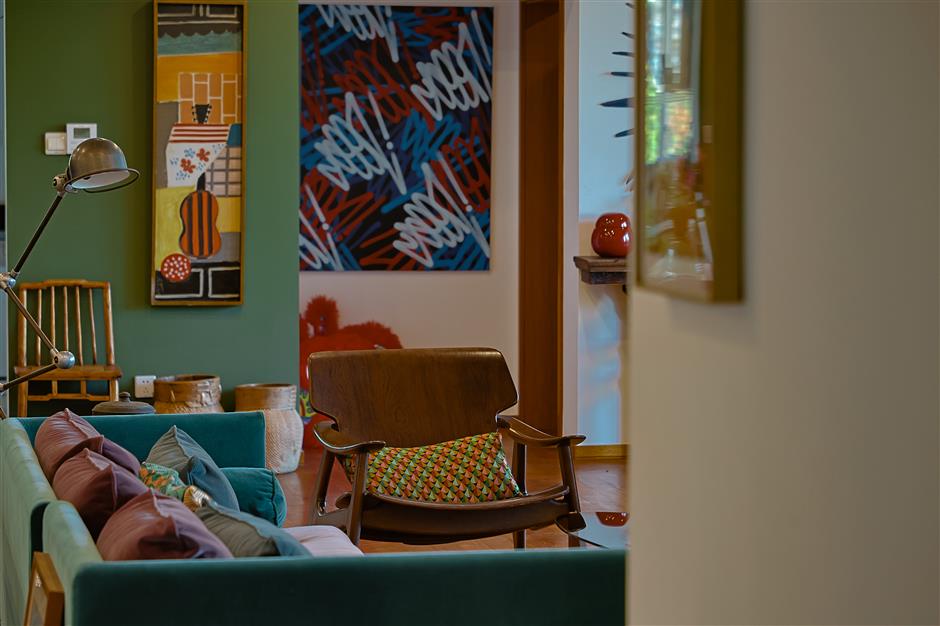
Their past and present mingle harmoniously in the dining room as well: the red Pau-Brazil wood chairs, the black oak table purchased on Taobao, and the vibrant colors of a painting by the contemporary artist Peter Ngugi.
"This large-format piece uses metaphor to hint at the contemporary reality of Kenya. The bodies of the figures are rendered without any visible details, almost as if they were just simple silhouettes. Their clothing creates a striking contrast with the floral background, which echoes a more traditional iconography," Virgine said.
Another eye-catching piece is an artwork by the Carioca artist ZEMOG. He created a large-scale sculpture by stringing Coca-Cola bottle caps together along a length that mirrored the full sweep of Copacabana Beach. He then cut the installation into multiple sections based on the colors of the caps – some hues being far rarer than others, which makes certain fragments especially precious. The piece is very versatile; you can hang it from the ceiling or display it however you want.
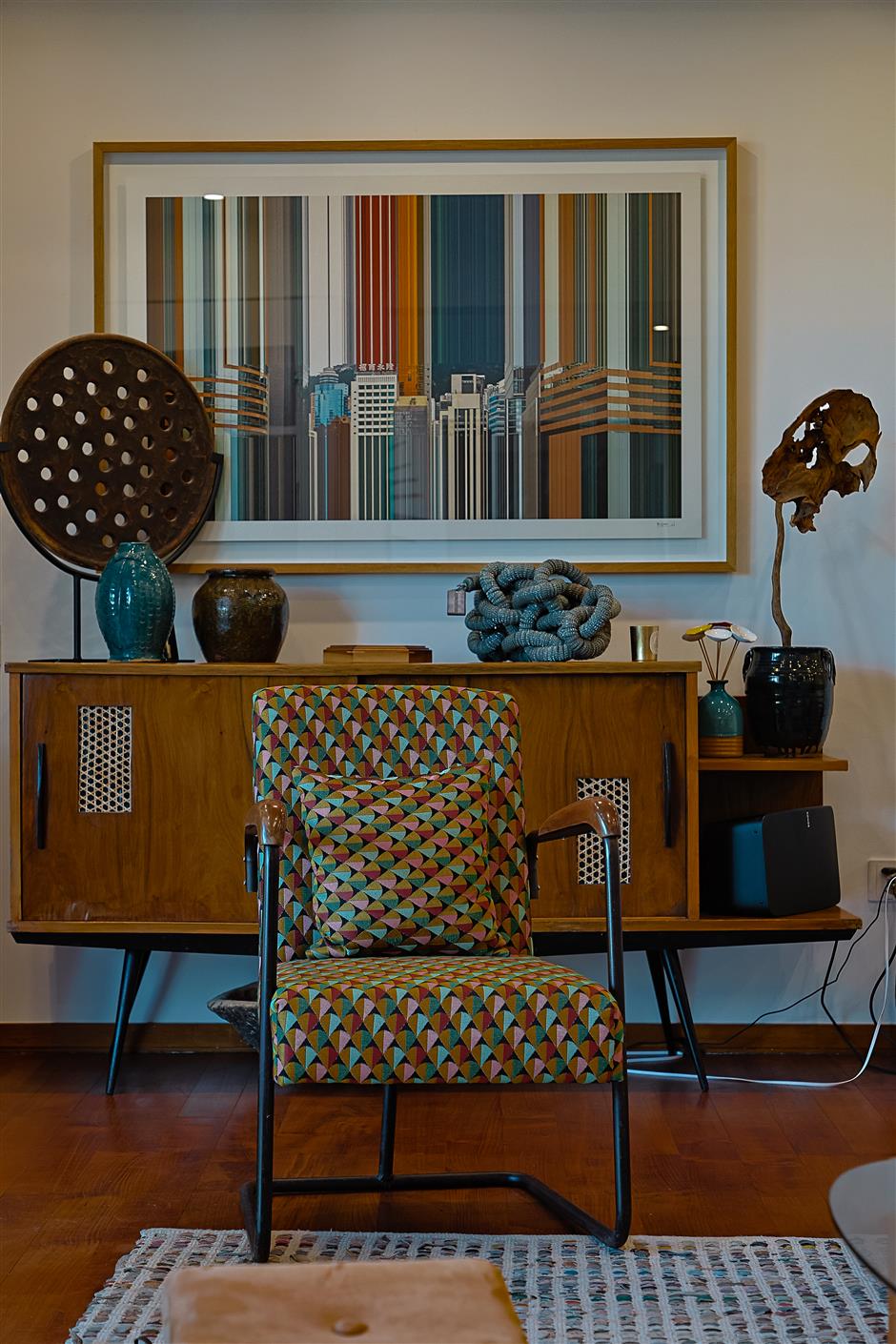
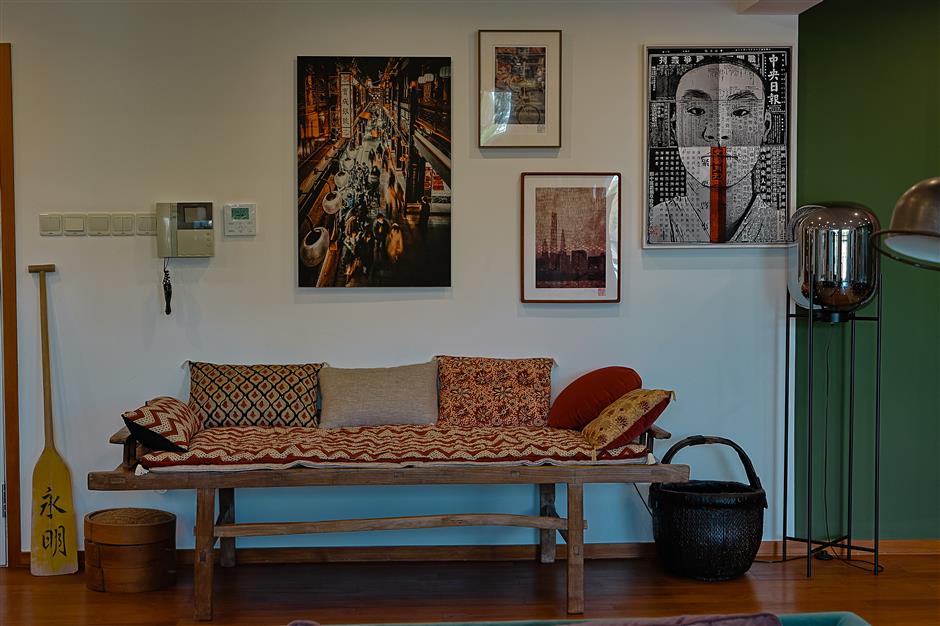
In the corridor hangs a painting of São Paulo by Lulu, a French artist based in Brazil.
"It captures the exact view we once had from our bay window there – rooftops and houses in the foreground, with the Paulista Avenue skyline rising behind them. Immediately, we noticed a striking parallel with our current view in Shanghai: the neighborhood's traditional homes framed by the Huaihai towers in the distance. It's a beautiful echo between two cities – Shanghai and São Paulo – both similar in scale and shaped by an enduring Art Deco heritage, each blending two rhythms, two ways of living, into one dynamic skyline," she said.
Virginie's collection of baskets and chicken coops, gathered across Asia, also holds sentimental weight – treasured for their materials, patina, and the stories they carry.
In this home, nothing exists solely for decoration. Every piece is a marker of time, place, and emotion.
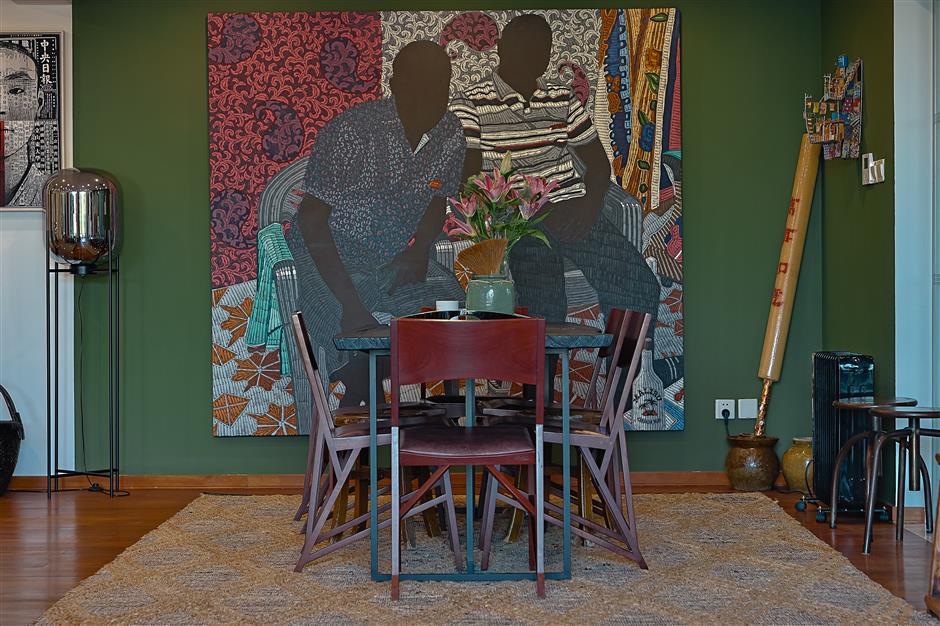
Their love for wood is present in every room – its warmth and character acting as an antidote to the cold neutrality of all-white interiors. Wood pairs naturally with the colorful accents that appear throughout the apartment: art, textiles, ceramics, and objects that spark joy and connection. The result is a room that feels alive, open, and stable.
Above all, this home is not just a physical space. For the family, who has not lived in France for 15 years, this home serves as a nest – a place where the absence of their extended family feels somewhat softer. In every country they move to, their home evolves, but it also carries traces of every chapter before.
"It's the thread connecting five of us, wherever we go," she said.
Editor: Fu Rong
In Case You Missed It...
 Apr 1, 2026
![[SH Buzz] BIG Changes. 13 New Openings + 5 Closures (Goodman!)](https://obj.shine.cn/files/2026/04/01/17a2d715-df2a-4452-be5c-7e713296594e_0.jpg)