Traditional Calligraphy, Buddhist Figures and Decorative Art to be Auctioned in City
A total of 1,000 items, ranging from traditional ink-wash paintings and calligraphy to Buddhist figures, bronze incense burners, and an eclectic array of decorative arts, will go under the hammer this Friday at The Longemont Hotel Shanghai.
The 2026 Shanghai Council Spring Auction comprises five specialized sections, with "The Himalayan Art Special Sale" the highlight.
Thangka is a traditional form of Tibetan Buddhist scroll painting on cotton, silk, or paper. The paints are traditionally made from precious natural materials, including minerals and gems like gold, silver, pearl, turquoise, coral and malachite, as well as organic plant-based substances.
Dating back over 1,300 years, it is a sacred art form deeply rooted in Tibetan culture, often referred to as the "Encyclopedia of Tibetan culture." In 2006, thangka was recognized as a Chinese National Intangible Cultural Heritage.
One of the thangkas appearing in this section draws on the raw strength of early Tibetan painting, enriched by decorative influences from Nepal and Kashmir. Its vivid contrasts, assured brushwork, and intricate depiction of fabrics and jewelry place it firmly within the transitional phase of Tibetan thangka art in the 13th and 14th centuries.
Historically, thangka became popular among traveling monks because the scrolls were easy to roll up and transport from monastery to monastery, serving as important visual aids for teaching the life of the Buddha and other deities.
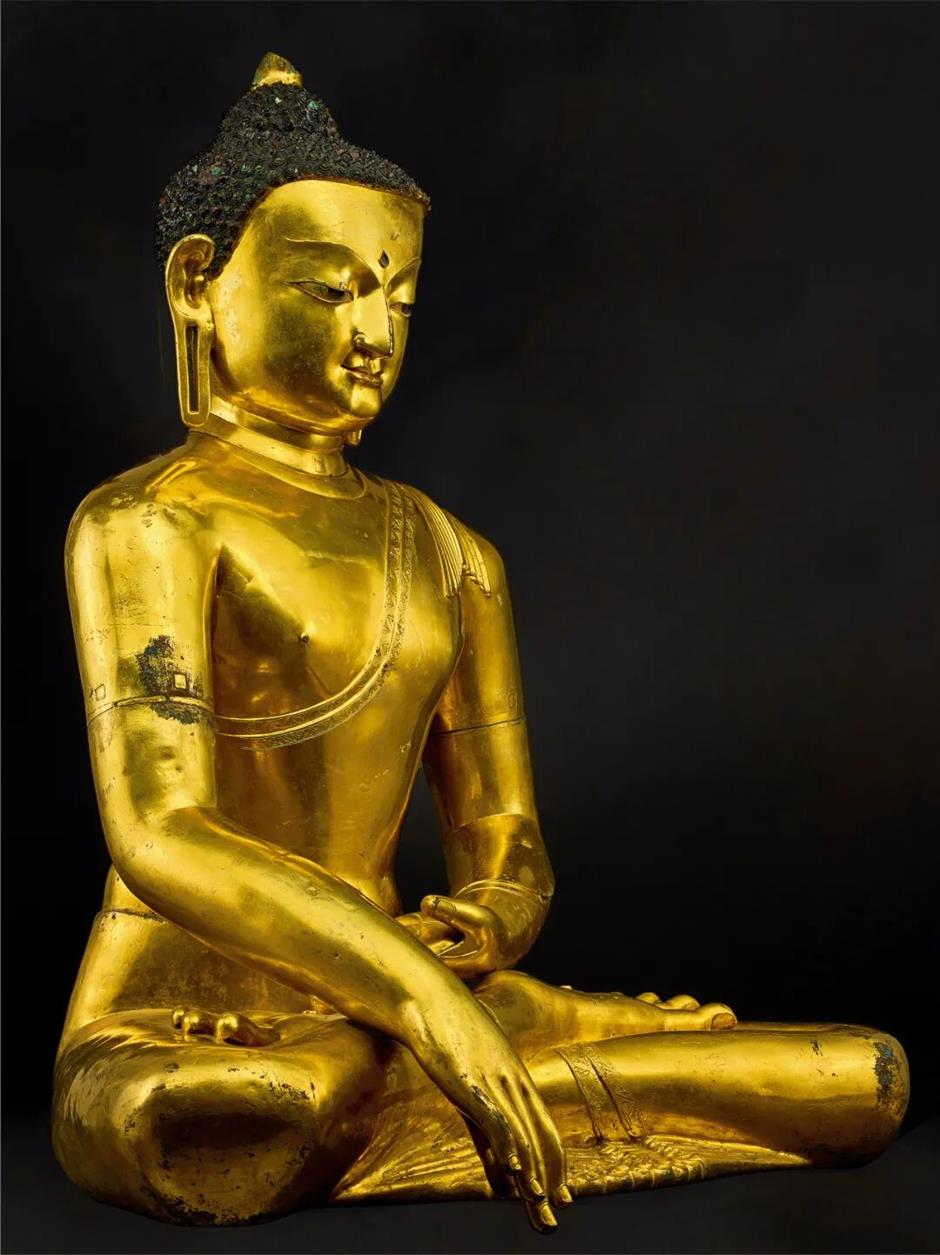
The "Himalayan Art Special Sale" also includes a cluster of antique Buddhist figures.
Buddha's enlightenment images appeared in Xizang around the 12th century. By the 13th century, Nepalese Newar influence had reshaped the style: hair curls moved forward, foreheads broadened, chest and arms grew powerful, and torsos shortened. In the 14th-15th centuries, the idiom softened, with the close-fitting robe draping over the left shoulder in a fish-tail fold – a nod to late Gupta decorative traditions of India.
One of the Buddha statues in this section is cast in copper with mercury gilding, using a piece-mold technique: Each part was modeled and cast separately before assembly – a demanding process, especially for larger works. The seamless integration of the sections speaks to the artisan's masterful precision.
Auction info:
Date: July 1-2, 10am-6pm (preview); July 3, 10am (auction)
Venue: 6/F, The Longemont Hotel Shanghai
Address: 1116, Yanan Rd W.
延安西路1116号