CHINA EARNINGS DIGEST: 1st-7th March, 2026
Editor's note:
Earnings of China companies reflect economic, political, industrial and trade trends affecting the bottom line. To keep you up-do-date, we are compiling a weekly roundup of earnings results from major listed companies. Stock tickers are in parentheses.
Technology
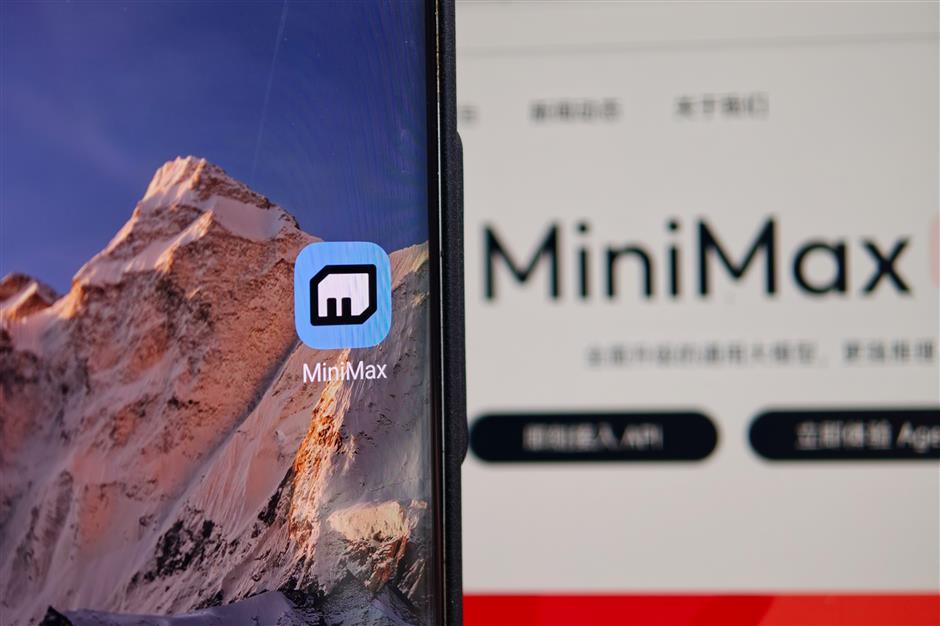
MiniMax (0100.HK)
Shanghai-based startup MiniMax, one of the so-called "Chinese AI tigers," reported 2025 revenue jumped 159 percent to US$79 million, with more than 70 percent from international markets. Net loss widened to US$1.87 billion from US$465.2 million a year earlier, which the company attributed to revaluation of financial assets it holds. The strong sales underscored demand for low-cost, open-source Chinese models that rival those of the US, but competition in the industry and the cost of training AI models are eating into profits.
MiniMax said 2026 will be another strong earnings year, with annual recurring revenue in February exceeding US$150 million. Co-founder and Chief Executive Yan Junjie said the company is "transforming from a large model firm to a platform in the age of AI." The company develops large language models that can generate text, audio, images, video and music. It has cumulatively served more than 236 million users around the world.
Founded in 2022 by researchers from AI developer SenseTime, the company raised HK$4.82 billion (US$618.6 million) in an initial public offering in Hong Kong in early January. Its shares have more than quadrupled from their offer price amid intense investor interest in Chinese mainland emerging technology companies.
ZTE (0763.HK/000063.SZ)
Shenzhen-based technology and telecommunication firm ZTE said net profit in 2025 fell 33 percent from a year earlier to 5.4 billion yuan (US$780 million), with revenue rising 10 percent to 133.9 billion. For the fourth quarter, the company reported profit of 295.7 million yuan and operating profit of 33.3 billion yuan, without giving year-earlier figures. Revenue from wireless and fixed-network services fell 10.6 percent for the year, while corporate and government businesses doubled.
Consumer businesses rose 4.4 percent. The company said it spent 22 billion yuan on research and development. ZTE's core businesses is wireless, optical transmission, data telecommunications gear and software and mobile phones. ZTE said in a statement that digital and intelligence have become dominant trends, reshaping the industrial scene at an unprecedented pace.
Consumer market

JD.com (0618.HK/NY:JD)
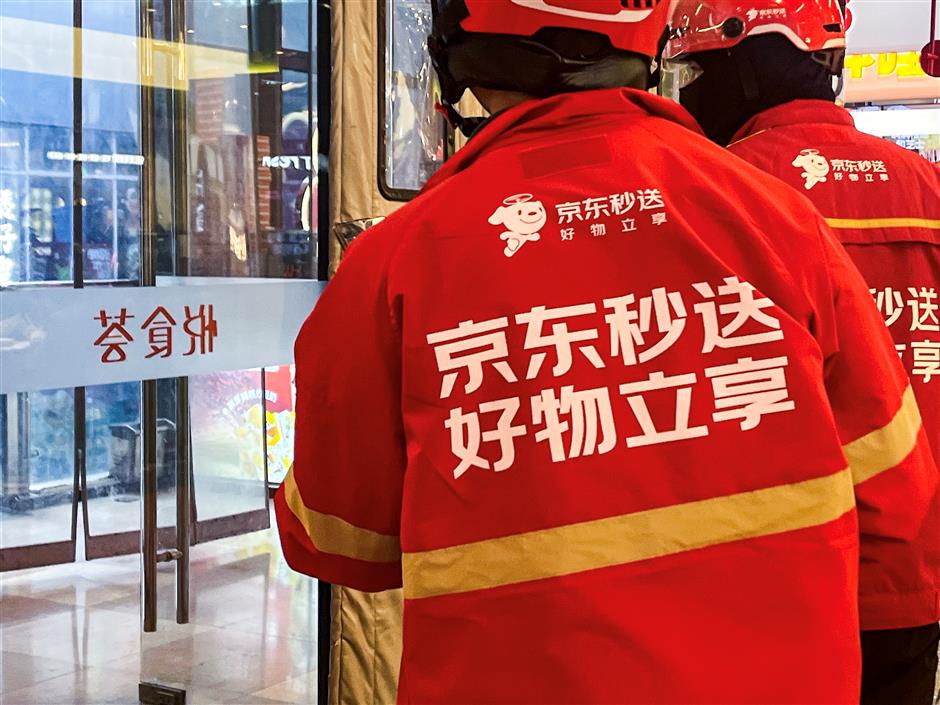
Beijing-based e-commerce giant JD.com, China's largest retailer by revenue, turned to a loss of 2.7 billion yuan (US$400 million) in the fourth quarter from a year earlier profit of 9.9 billion yuan, with the cost of its fast food-delivery service and a drop in retail earnings weighing down income from other segments. Marketing expenses surged 50 percent.
The company reported a 1.5 percent rise in revenue to 352.3 billion yuan and an operating margin of 3.2 percent. JD has been in a fierce and costly battle with Alibaba and Meituan in the instant food-delivery market. The company doesn't break out figures for food delivery but lumps it into the "new businesses" segment. That segment showed a sharp loss of 14.8 billion yuan, widening from an 885 million yuan loss a year earlier.
The company said its food delivery market share grew to 15 per cent at of the end of 2025, with the aim of controlling a third of the market by the end of 2026. Chief Executive Xu Ran told investors on a conference call that the company will reduce its investment in food delivery this year "depending on market competition" and will improve operational efficiency.
In its retail segment, JD was burdened by weaker consumer spending. Profit declined 2.5 percent on a 2 percent drop in revenue. Sales of electronics and home appliances fell 12 percent. The company continued to expand offline operations, with 15 stores on the mainland and a new JD Mall in the southeastern city of Xiamen. For the full year, the company reported a 52 percent drop in profit to 19.6 billion yuan on a 13 percent increase in revenue to 1.31 trillion yuan. JD acquired German electronics retailer Ceconomy for US$2.5 billion last year.
JD was founded in 1998 by Liu Qiangdong as an optical equipment store but has since expanded into retailing, AI technology, logistics, health care, insurance and property management. It has spun off three units for separate public listings. JD Logistics reported 2025 revenue rose 19 percent to 271 billion, with adjusted net profit of 7.7 billion yuan.
JD Health had annual revenue of 73.4 billion yuan, up 26 percent, and net profit increased 29 percent to 5.4 billion yuan. JD Industrials delivered a standout performance, with net profit tripling to 2.3 billion yuan on a 17 percent rise in revenue to 24 billion yuan.
Bilibili (9626.HK/NY:BILI)
Bilibili, a Chinese online video-sharing platform, reported fourth-quarter net profit surged almost sixfold from a year earlier to 513.9 million billion yuan (US$73.5 million) on a 27 jump in ad revenue and a 10 percent gain in daily users to 113 million. Revenue rose 8 percent to 8.32 billion yuan, with sales from mobile games up 14 percent. Net margin improved to 6.2 percent from 1.1 percent. For the full year, the Nasdaq-listed company turned to a profit of 1.2 billion yuan from a year-earlier loss of 1.4 billion. Revenue in 2025 rose 13 percent to 30.4 billion yuan, and net margin was 3.9 percent. Ad revenue in the year was up 23 percent and sales from mobile games gained 14 percent.
Energy

Dajin Heavy (002487.SZ)
Dajin Heavy Industry, a maker of wind-power equipment, reported a 63 percent surge in 2025 revenue to a record 6.17 billion yuan (US$857 million), with net profit soaring 133 percent to 1.1 billion yuan. The gains reflected explosive growth in the company's overseas expansion, with export sales up 165 percent to about 4.6 billion yuan, comprising roughly 75 percent of total revenue and 81 percent of gross profit.
Dajin attributed this success to shifting from a basic product manufacturer to a comprehensive system services provider for global wind-power developers. In November, the company reported a 1.3 billion yuan order from an undisclosed leading European company and unveiled plans to build two new onshore wind farms in mainland China. Completion of the wind farms will more than double Dajin Heavy's wind power business, the company said at the time.
Editor: Liu Qi
In Case You Missed It...

 Mar 9, 2026



![[China Tech] Local Experts Issue Guidelines on Chronic Ankle Sprain](https://obj.shine.cn/files/2026/03/09/1834680c-a91f-442e-a8e6-40cf686b9967_0.jpg)