Latest Hot Tech Sensation Clamps Its Claws Into Public Fancy
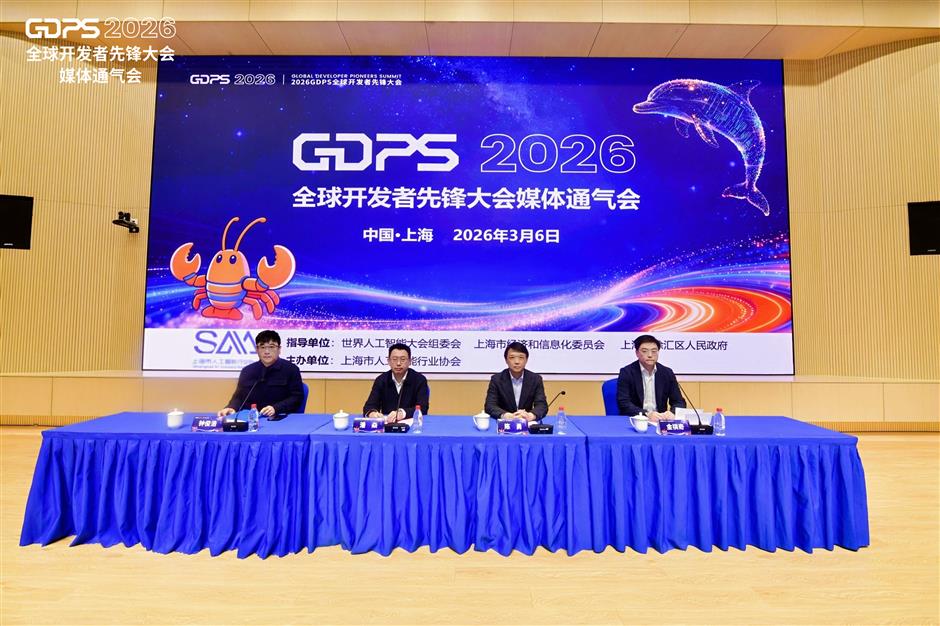
If you look closely at the latest posters for the 2026 Global Developer Pioneers Summit to be held in Shanghai later this month, you'll spot a curious new addition: a bright red lobster.
This isn't a seafood advertisement. It's the unofficial mascot of OpenClaw–the world's buzziest open-source AI agent, which has taken China by storm. From elite programmers and office workers to social media influencers and even grandmothers, everyone is trying to catch the "lobster wave," which is reminiscent of how DeepSeek's cheaper chatbot last year seized center stage.
But experts and regulators are warning there is a downside to the latest AI poster-boy product – possible security problems and higher-than-expected costs.

OpenClaw Frenzy in China
Developed by Austria-born software engineer and entrepreneur Peter Steinberg, OpenClaw (formerly known as Clawdbot) is being hailed as a "ticket to a truly autonomous lifestyle." Unlike standard chatbots that just answer questions, OpenClaw is an AI agent. Think of it as installing a brain into your computer.
Once given permission, this agent can take over your machine 24/7 for tasks like browsing the web, drafting emails, managing social media accounts and even fixing software bugs while you sleep. For many, it's the fulfillment of a dream to just let AI do the work.
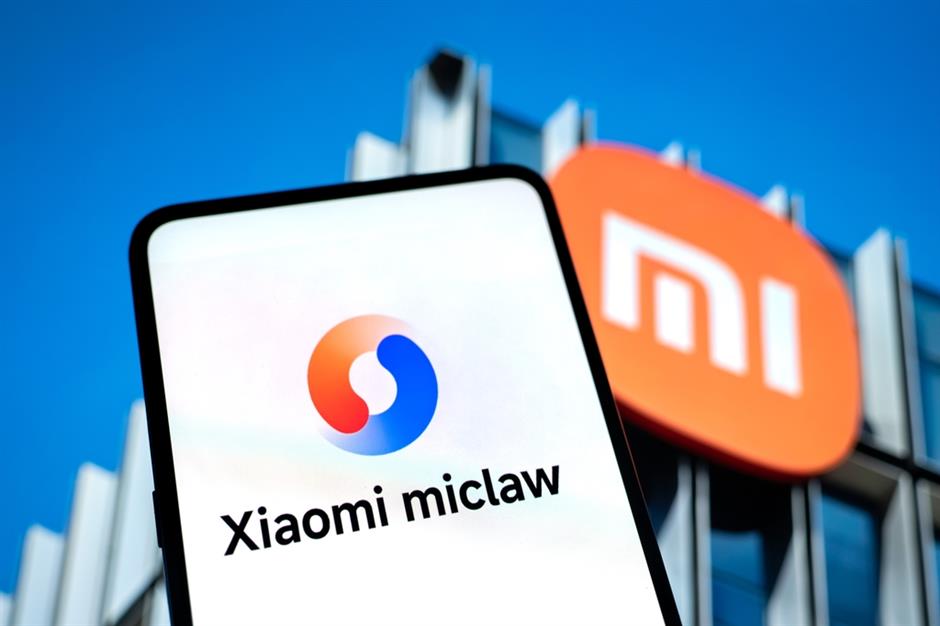
Tech giants like Alibaba, Tencent and Xiaomi have been quick to release their own OpenClaw-style tools and platforms in recent days. The city governments of Shenzhen and Wuxi have already released policies to support the OpenClaw concept of "one-person companies."
The hype has moved from the realm of techies to the broader public. A queue of more than 1,000 people formed outside Tencent's headquarters in Shenzhen when the company announced free installations of OpenClaw. Stocks like UCloud and QingCloud surged by their 20 percent daily limits on Monday as investors bet on the massive computing power OpenClaw requires.
Reality Check: Costs and Complexity
Despite the "fear of missing out" frenzy that has gripped the OpenClaw craze, experts warn that the "lobster " can make a dent in the wallet and still faces testing hurdles for many.
"Currently, 99 percent of the public doesn't have OpenClaw," said Chetah Mobile Chief Executive Fu Sheng, an experienced industry guy who spends a lot of time installing and adjusting the agent. It faces many unexpected technical problems, Fu admitted in social media.
The complexity is that the tool requires intricate configuration and model integration – opening a door for entrepreneurs to make some money. On social media, "door-to-door OpenClaw installation and debugging" have become common offers, with pricing ranging from 300 yuan (US$43) for a remote setup to up to 1,500 yuan for on-site service.. One service provider reportedly claimed earnings of 260,000 yuan within days of entering the trade.
After installing, using OpenClaw isn't free. It constantly consumes "tokens," or AI processing units. One content creator, Yang Dali, noted that while the AI agent made a data sheet for just 4.6 yuan, a simple set of automated emails cost him 69 yuan a night. Others have reported horror stories of unexpected weekly bills reaching US$500.
Research firm Gartner said token consumption is often viewed as a signal reflecting AI scale, adoption and market leadership. However, this metric does not effectively capture business value, efficiency or sustainability. What truly determines long-term viability are monetization principles and sustainable profit margins.
Security Concerns
The OpenClaw frenzy has also raised alarms over privacy and security. China's Ministry of Industry and Information Technology recently issued a warning that some OpenClaw deployments may pose significant risks if left in default or poorly configured states, potentially exposing users to cyberattacks or data leaks.
OpenClaw brings risks even for professionals. In February, Summer Yue, a Meta AI safety and alignment researcher, reported that OpenClaw deleted her personal email inbox. The agent, running on a Mac mini, began bulk-deleting emails when the inbox became too large, causing the agent to lose initial safety constraints due to "context compaction."
Office workers may gossip about their "lobsters" in elevators, but many still don't have a clue of how to deploy it effectively.
"If I say I haven't opened my 'lobster' lately, it may mean I've been kicked out of the circle," Thomas Luo, an IT website founder said on WeChat.
Most authorized Chinese OpenClaw services connect domestic models such as Kimi, DeepSeek and MiniMax. IT engineer Xiao Fan, however, said, "In OpenClaw, Chinese AI models still lag behind US models like GPT and Claude, though they are very affordable."
All these issues will be debated at the Shanghai AI pioneers summit late this month, which has now adopted the theme "Claw Moment in Shanghai." Government officials, business executives, developers and users will discuss whether OpenClaw is a permanent trend or just a passing tech fad.
FAQ on 'Lobsters'
Q: What is this "lobster?'
A: It's not about seafood! "Lobster" refers to OpenClaw, an AI agent originally named in reference to Anthropic's Claude AI system and featuring a red lobster in its logo. People can train this agent to execute tasks, like coding or booking trips, autonomously. It marks AI's shift from agents just "talking" to actually "doing."
Q: How much does it cost?
A: While the software is free, its "brain" isn't. It runs on an application programming interface that costs money. A hardworking "lobster" can drain hundreds of dollars overnight. High-frequency users have reported monthly bills reaching nearly 30,000 yuan (US$4,200).
Q: What are the risks?
A: Beyond the costs, there are system-level threats. If misconfigured, your computer could be exposed to hackers. Because it has "execution power," the agent could accidentally leak data or irreversibly delete core files.
Q: Should I get one?
A: The platform is probably best left at the moment for tech pros or business owners with repetitive tasks – users who know how to manage the risks. If you are just a casual user or "chasing the trend," it's better to wait until the technology matures and becomes safer for the general public.
Editor: Liu Xiaolin
![[Hai Guide] Your Fun & Food Guide to the Longines Global Champions Tour Shanghai](https://obj.shine.cn/files/2026/04/30/a759d72c-ce68-484c-a126-b0e5257fc396_0.jpg)