No. 6 Dingxing Road: Inside Shanghai's Viral 'Eastern Omelet' Stand
Shanghai mornings often begin with the smell of food drifting out of side streets.
One such street is Dingxing Road, a quiet lane barely a few hundred meters long in downtown Huangpu District, where the contrast is immediate. To the west lies Huanghe Road, the neon-lit thoroughfare made famous by the TV drama "Blossoms Shanghai." To the east stands Gezhi Junior High School, one of the city's best-known school campuses.
Amid this contrast sits an egg pancake stall that has quietly gone viral online. It relies on zero marketing. Its rain-or-shine queues are its best advertisement.
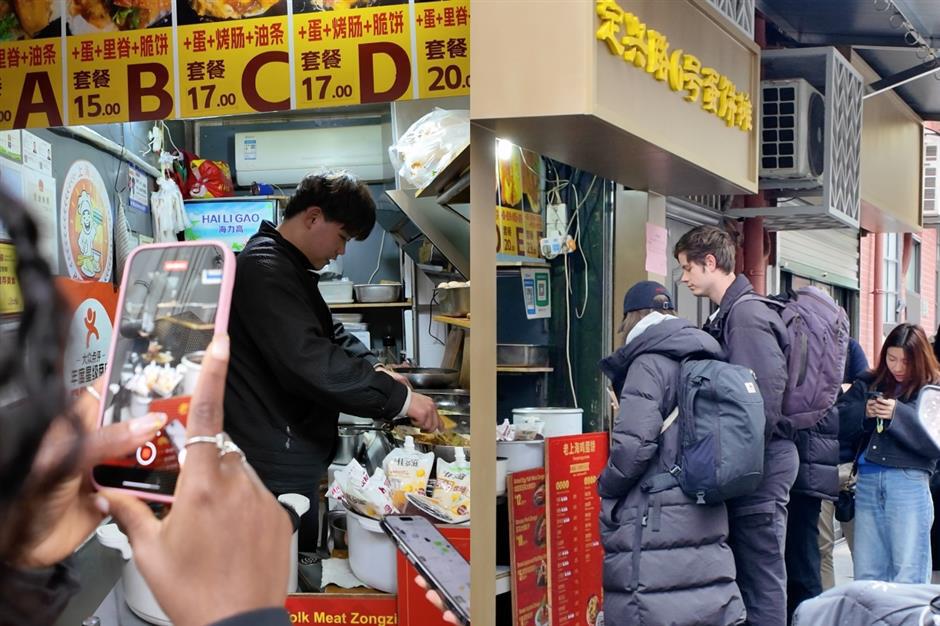
On the wet morning of our visit, umbrellas clustered around the modest griddle, sheltering a mix of regulars and first-time visitors.
"I live near West Nanjing Road, but everything there feels like Europe," said a tourist from Spain who discovered the stall on short-video platform TikTok (Duoyin in Chinese). "I was looking for something local."
Nearby, an Australian couple who had been traveling in China for a month said they came after seeing posts on China's lifestyle-sharing platform RedNote (or Xiaohongshu). Despite living in a Chinese neighborhood back home in Sydney, they found the Shanghai-style soft pancake "unique."
"It's not like the omelets we usually have – just egg, spring onion, maybe bacon," Patrick observed. "And it's cheap. I expected a viral place to be expensive."
Fifteen years, one routine
Run by a couple from east China's Anhui Province, the stall has been part of the neighborhood for more than 15 years.
Their day begins well before sunrise. By 3am, the lights are already on. To avoid disturbing residents in the apartments above, owner Zhou Qinghe moves with practiced quietness, a tip-toeing routine shaped by years of habit.
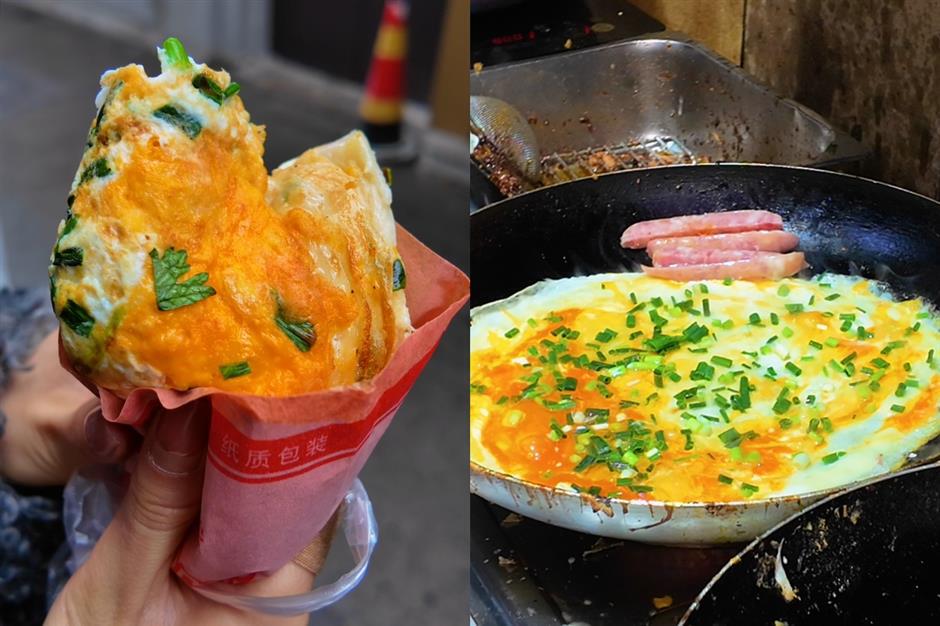
"We have to get up early in the morning to prepare," the owner's nephew explained. "All our ingredients are made fresh." From the batter and pork fillets to the sausages, crispy crackers and even the sauces, everything is prepared on site each day.
By 7am, the breakfast rush is in full swing. A steady stream of customers keeps the griddle sizzling until the stall closes around 1pm. On a sunny weekend, the queue can mean a wait of nearly an hour.
"It's definitely busier on weekends than on weekdays," noted a nearby resident standing in line. "I've waited over half an hour on a weekend myself."
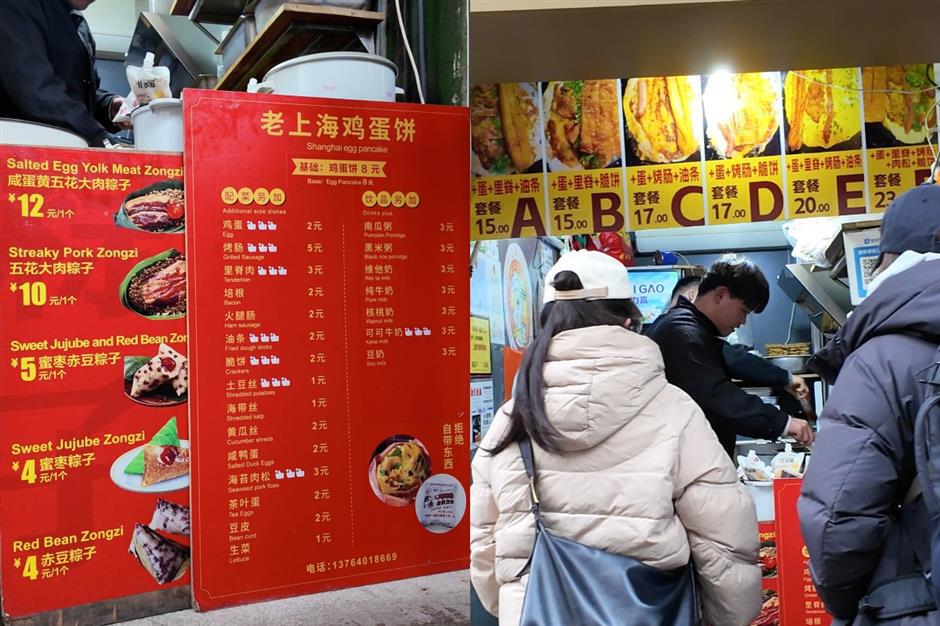
To satisfy diverse cravings, the stall currently offers six set meals, labeled A through F, priced between 15 and 23 yuan (US$2-3). Customers can mix and match ingredients such as eggs, pork fillets, sausages, crispy crackers, deep-fried dough sticks and pork floss.
"Every combo is popular. There really isn't a single best-seller," the owner's nephew said.
When asked about the secret behind their egg pancakes, Zhou offered a simple answer. "The heat isn't the trick. It's all in the sauce."
For regulars, the appeal goes beyond flavor. Soft Shanghai-style pancakes have become increasingly rare, one local diner said. "You can find the crispy Shandong-style ones everywhere, but this soft version is harder to come by."
A menu in two languages
As Shanghai has seen a steady rise in international visitors, driven by China's visa-free policies and social media exposure, the line outside the stall has grown increasingly diverse.
According to Zhang Linghua, Party secretary of the Dingxing Neighborhood Committee, the stall's first notable foreign customers were Korean tourists who stopped by after eating at nearby restaurants. Today, travelers from Europe, Oceania, and Southeast Asia often make a special trip after discovering the stall online.
At first, ordering across the language barrier could be awkward. "People relied on translation apps, but there was always a delay," Zhang said.
The solution emerged through cooperation between the family and the neighborhood. Zhou's daughter drafted an English menu, which community staff later helped refine.
Now a bilingual sign hangs at the stall, making ordering easier.
"Once it's written there, everyone understands right away," Zhou's nephew said, spreading batter across the griddle. Some customers lift their phones to film the moment, capturing the batter turning into a "10/10" Eastern omelet. Others jokingly refer to the deep-fried dough sticks as "Chinese churros."
In the queue, a tourist from New Zealand pointed at the menu and told the owner, "wei la (mildly spicy, 微辣)."
"Honestly, foreign visitors' tastes aren't that different from ours," Zhou said. "They eat pretty much everything."
Beyond the griddle
For residents, the stall's role extends beyond breakfast.
Zhang described the stall owner, Zhou, as quiet but dependable, noting that he often picks up groceries for elderly neighbors living alone.
To reduce the impact of cooking fumes, Zhou installed an extended canopy and sends messages in the building's group chat before frying large batches, reminding residents to bring in their laundry.
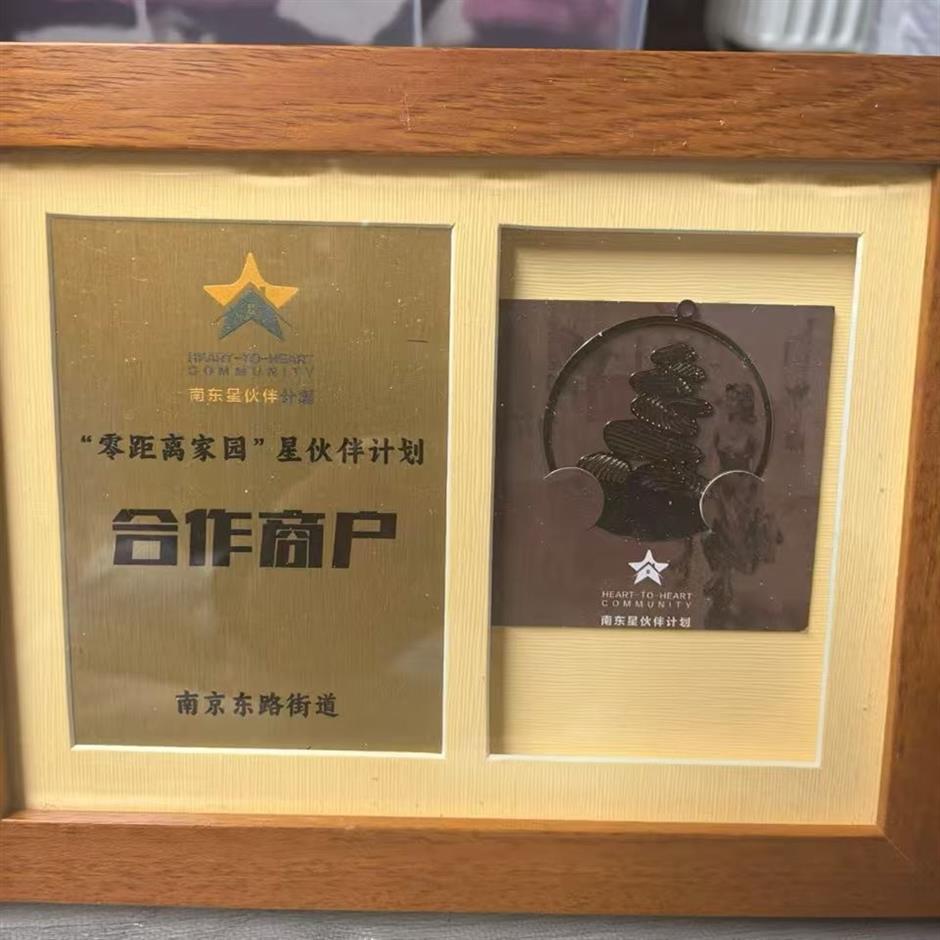
"Out of the 18 residential communities in our subdistrict, only six businesses have been named 'community-friendly shops'," Zhang said. "Zhou's stall is one of them."
More recently, community organizers have floated the idea of a simple tick-box ordering sheet for Zhou, inspired by the ordering style commonly seen in malatang (spicy hot pot, 麻辣烫) shops.
"The idea is to let visitors simply check off ingredients and spice levels, so nothing gets lost in translation," Zhang explained.
For Zhou, however, the future remains just as personal. His son works as a supervisor at a coffee shop. He sometimes imagines opening a place together one day – egg pancakes and coffee.
By late morning, the rain eases, and the line begins to thin. An office worker hurries away with a takeaway bag.
Standing by the curb, the Spanish tourist takes her first bite.
"Delicioso," she laughs. "I'll come back tomorrow."
Editor: Yang Meiping
In Case You Missed It...
 Mar 2, 2026

Popular Reads

Mideast War Grounds Flights and Triggers Emergency Refunds
![[China Tech] Local Experts Develop Novel Gene-editing Tool for Autism](https://obj.shine.cn/files/2026/02/28/bcd42f01-b0ca-4dba-8779-c8b64434ecee_0.jpg)
[China Tech] Local Experts Develop Novel Gene-editing Tool for Autism

China-SCO Platform Launched in Shanghai to Tackle Metabolic Diseases
![[China Tech] Chinese Experts Develop World's First AI System With Traceable Reasoning for Rare Disease Diagnosis](https://obj.shine.cn/files/2026/02/25/115392ea-bbde-409c-b37b-af65d6db7c4e_0.jpg)
