Broken Links in Overseas Sales, Servicing Undermine Chinese Auto Exporters
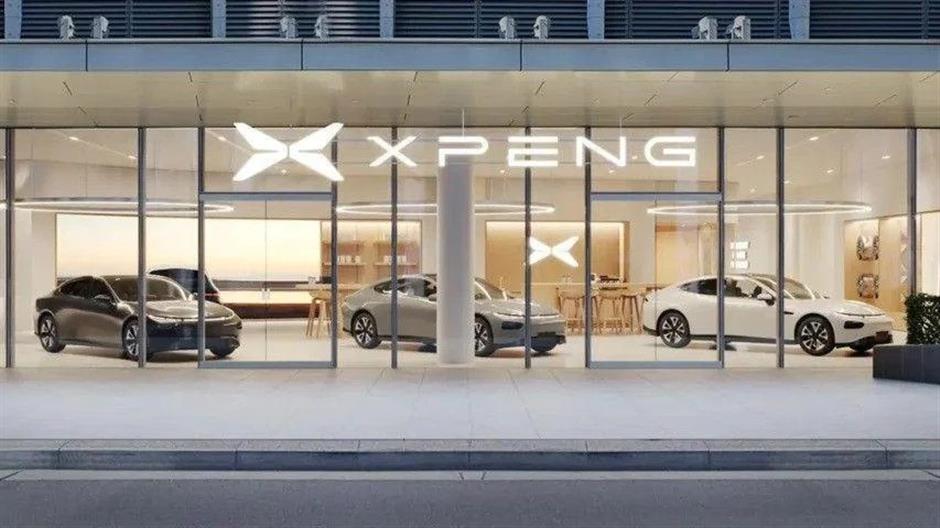
The recent collapse of TrueEV, XPeng's exclusive local distributor in Australia, has sent a clear warning signal across the industry. TrueEV's descent into voluntary administration due to a severe cash flow crisis has disrupted vehicle deliveries and dealt a significant blow to XPeng's local brand reputation and operational momentum.
According to XPeng, TrueEV had not purchased any vehicles for over a year. Data from the automotive website The Driven reveals that XPeng sold roughly 2,100 units in Australia in 2025. Spread across TrueEV's 18 listed locations, that equates to a meager 117 vehicles per dealership annually.
XPeng's collaboration with TrueEV began in May 2024 when it signed the exclusive import and retail agreement with the distributor. XPeng is still confident about its market in Australia, vowing to build a trusted tech brand in Australia in the next three years.
However, the incident is not an isolated example. Instead, it exposes the collective growing pains of Chinese automakers expanding into global markets, from Europe to Southeast Asia, Latin America and Oceania. As they rush to capture overseas market share, channel selection, partner risk control and local management remain the most volatile variables.
The urgency to resolve these channel and service bottlenecks is underscored by the sheer volume of Chinese vehicles pouring into international markets. In the first quarter of 2026 alone, China's new energy vehicle exports reached 954,000 units, representing a year-on-year increase of over 120 percent. With this relentless pace of expansion, securing stable distribution networks and reliable after-sales support is no longer just a strategic option for Chinese automakers, but an imperative for sustaining global momentum.
The immediate challenge lies in the sales model itself, where Chinese brands have swung like a pendulum between two flawed extremes.
Shanghai-based automaker Nio is one example.
Starting in 2021, Nio attempted to wholly replicate its domestic direct-sales Nio House model in Europe. At its peak, the company operated eight flagship locations across Norway, Germany, the Netherlands and Sweden. However, the capital-intensive nature of this approach, weighed down by huge commercial rents, high labor costs and slow European construction approvals, turned into a massive financial liability.
Nio has since been forced into a strategic retreat, abandoning the direct-sales model in favor of traditional dealership networks. As of this month, the automaker has established a solid network of regional partners, handing over local operations to well-developed local automotive groups to manage expansion, such as the JAP Group in Portugal, the Motodynamics Group covering Greece, Cyprus and Bulgaria, and the AutoWallis Group spearheading sales across Austria, Hungary, Czech, Poland and Romania.

Conversely, BYD learned a hard lesson by relying too heavily on local partners.
In 2022, BYD appointed Hedin Mobility, a premier European dealership group, as its master distributor for Germany and Sweden. The problem? Mega-dealers representing dozens of legacy brands rarely view a newly arrived Chinese entrant as a core strategic priority. Lacking aggressive marketing and dedicated showroom investments from its partner, BYD sold just over 4,000 units in Germany in 2023.
To reclaim pricing power and operational control, BYD had to spend heavily in late 2024 to acquire Hedin's German distribution business outright. And in 2025, BYD sold more than 23,300 cars in Germany, marking a 700 percent year-on-year increase.
Beyond the showroom floor, the after-sales abyss presents an even steeper cliff. Selling the car is only half of the equation; servicing it determines long-term brand survival.
For instance, BYD is often criticized for a lag in software updates. Electric vehicle blogger Electric Seal published a survey on YouTube recently, showing that European owners have to wait an average of 3.5 months for over-the-air updates, while owners in Asia, Latin America and Oceania are left waiting even longer, up to 10 months.
Hardware maintenance is equally frustrating due to a severe lack of local expertise. On auto review website Trustpilot, a review from owner Gordon Dawson expressed the general frustration: "BYD Seal Excellence, only four weeks old, developed a charging problem. There are no experienced techs in the UK, so waiting on China for a solution. Six weeks in the garage."
BYD has noticed the problems. Stella Li, BYD executive vice president, in an interview with "Business Car," stressed that the company's focus now is on aftersales.
"(We focus on) offering a five-star service. This is not only with BYD, but including third-party servicing as well," she said.
By the end of 2025, BYD had more than 1,000 authorized sales and service outlets in Europe and the number is expected to double this year.
This issue has also plagued SAIC brand MG. In Australia, numerous owners of models like the MG ZS electric vehicle have complained to local automotive outlets, such as Drive, that repair wait times following moderate collisions can stretch into months, with extreme cases leaving vehicles stranded in workshops for half a year.
Although MG Australia has claimed a high parts fill rate at its local warehouses and stated that air-freighting specialized components from Shanghai takes a maximum of two weeks, authorized frontline repair shops frequently experience severe shortages. Complex body panels and core electric vehicle powertrain components are often caught up in sluggish cross-border supply chains. That can result in a shattering of consumer trust.
Jiang Yongxing, chief executive of CassTime, an automotive technology company that specializes in digitizing the auto-arts aftermarket, said Chinese electric vehicles are currently trapped in a triple bind of fragmented overseas service networks, incompatible parts and tools, and a lack of digital infrastructure.
"The goal of Chinese automakers is not just to ensure Chinese cars sell well in overseas, but to ensure global owners can get them repaired well," he said at last week's Smart EV Development High-Level Forum. "The next phase of globalization will require leveraging AI and China's robust supply chain to build a unified global service network. Until Chinese automakers can seamlessly integrate their digital prowess with physical repair capabilities abroad, their global ambitions will remain vulnerable to the next broken link in the chain."
Editor: Yao Minji
In Case You Missed It...
 Aug 13, 2026
![[Hai Guide] A Field Guide to Chinese Tea, for the Scam-Wary](https://obj.shine.cn/files/2026/08/13/8a80ad22-ed67-4019-b6ff-cdce5ce55a21_0.jpg)