China's Robotaxi 'Profit Milestone' Depends on How You Calculate It
China's robotaxi industry buzzed recently with claims of the "first year of robotaxi profitability" after Pony.ai announced monthly per-vehicle operational profit in Guangzhou and Shenzhen, and Baidu's sixth-generation self-driving vehicle drove down per-vehicle costs drastically.
However, do "positive unit economics" equate to "comprehensive corporate profitability?"
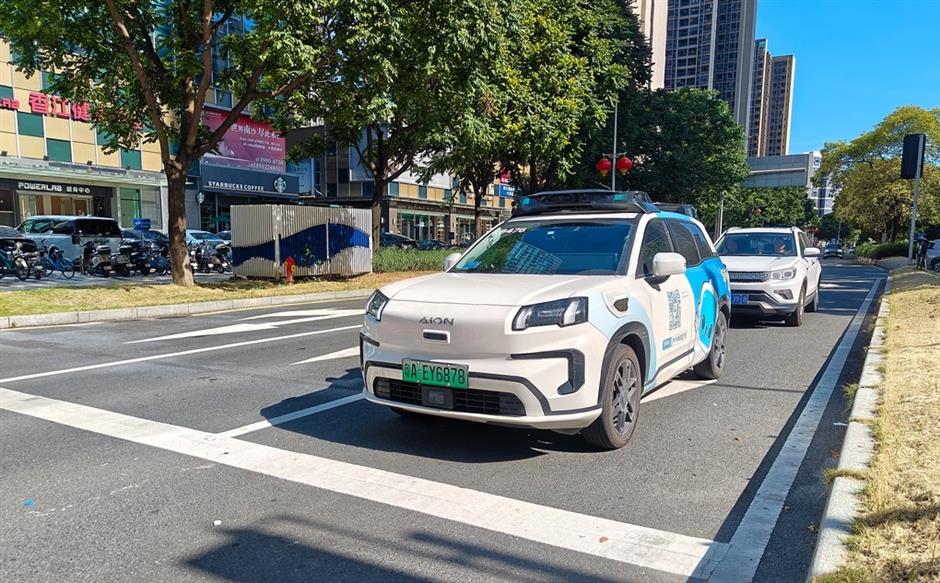
To measure the commercial health of robotaxis, the industry has long relied on two distinct metrics: single-vehicle unit economics and overall corporate revenue.
From the perspective of unit economics, Chinese companies have indeed crossed the golden crossover point. This is largely driven by a decline in hardware costs.
Take Baidu's Apollo Go as an example. The bill for materials cost for its sixth-generation vehicle dropped to around 204,600 yuan (US$30,305), with costs for light detection and ranging sensors slashed by over 70 percent.
Simultaneously, today's robotaxis have completely eliminated in-car safety operators in favor of remote cloud monitoring, further reducing labor costs and turning the marginal revenue per vehicle positive.
However, the reality at the corporate level may be much harsher.
Take ride-hailing service WeRide as an example. Its total revenue for 2025 reached 685 million yuan, representing a year-over-year increase of 90 percent. Of that robotaxi revenue tripled to 148 million yuan. Yet, its research and development expenses last year shot up to 1.4 billion yuan, resulting in an adjusted net loss of 1.25 billion yuan.
Even though robotaxi revenue is multiplying, research and development costs in the emerging, highly competitive market are eating away at overall profitability.
Apollo Go seems to be faring slightly better, having accumulated over 22 million service trips by April. Still, it relies on continuous financial lifeblood from parent Baidu's other core businesses.
Thus, the "profitability milestone" currently proclaimed by the Chinese industry essentially means that technological maturity has successfully overcome hardware production and operational costs. But for an entire company to become profitable, operational scale must successfully overcome research and development expenses and capital amortization.
So, what paths can these companies take moving forward? Are there any precedents to follow?
Let's turn our attention across the ocean to robotaxi operator Waymo in the United States.
Alphabet-owned Waymo represents a typical "high-pricing, asset-heavy" model. It deploys high-density fleets in places such as San Francisco, Los Angeles and Phoenix, cities that have high personal incomes, strong travel demand and generally warm climates.
By the end of 2025, Waymo's weekly paid orders had reached 450,000, which is 100,000 more per week than Apollo Go's figures in the first quarter of 2026.
Waymo's average revenue per trip ranges between US$15 and US$17. While slightly lower than local Uber rates, the absolute value is far higher than that in the Chinese market.
By deeply penetrating select core cities, Waymo directly pursues high per-vehicle profits to support its massive research and development efforts. However, this model cannot be easily replicated in China where road networks and a distinct consumer environment are different.
But Chinese companies do not necessarily need to copy Waymo's playbook.
Compared with Waymo's premium pricing, domestic companies are more likely to compete on price and a strategy of market penetration and mass deployment.
Baidu's Apollo Go in Wuhan is a prime example. It quickly built up customer volume by pairing extremely low vehicle costs with fares cheaper than traditional ride-hailing services. The challenge of this model lies in the fact that lower charges require higher fleet sizes to offset back-end costs such as cloud computing power, algorithm training, real-time updates for high-definition maps and the construction of remote cloud dispatch centers.
Today, the base fares for robotaxis operating in trial cities like Beijing, Shanghai, Guangzhou and Wuhan are comparable to standard ride-hailing and taxi services, but platforms frequently offer discount coupons to drum on trade. In pilot zones in Wuhan and Beijing, coupons for new users or regular discounts can drive the fare for trips of less than 10 kilometers down to between 5-12 yuan, significantly lower than the 15-30 yuan typically charged by ride-hailing platforms.
"Core profitability logic for robotaxis relies on expanding fleet size to dilute vehicle depreciation and maintenance costs, while reducing the empty-cruising rate," said an industry report released by Guojin Securities last week. "Only by forming a large-scale operational network can the economic model of replacing traditional ride-hailing truly hold up, allowing the industry to escape the phase of continuous cash burn."
According to estimates, robotaxi fleet size in a single city must exceed 10,000 vehicles, and the national total must surpass 100,000 vehicles. Only through such economies of scale can the massive AI research and development, and data center costs be diluted to just a few cents per kilometer.
Therefore, once a robotaxi network is large enough and user habits have been cultivated, pricing must gradually return to the levels of ordinary ride-hailing services.
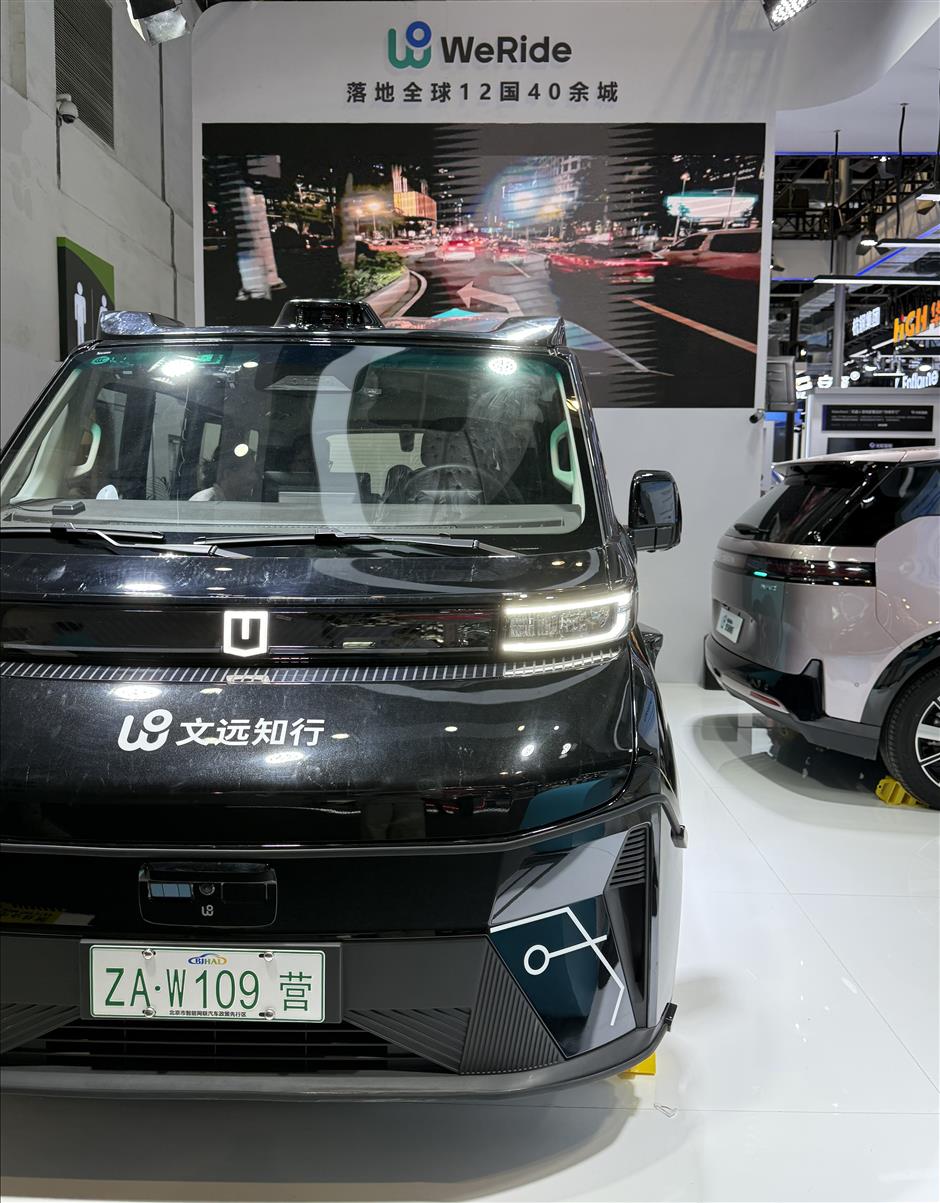
Meanwhile, expanding overseas has become another inevitable path for Chinese robotaxi companies to generate profits. Today, both WeRide and Baidu are deploying robotaxis in the Middle East and Europe.
WeRide's Middle East subsidiary already achieved operational profitability in 2025 by relying on an "asset-light" model. It delegates vehicle operations to local companies, such as the UAE's Tawasul, and lists its self-driving taxis on the most popular local Uber app to pick up passengers, charging only a technology service fee.
Furthermore, robotaxis lack drivers, turning the interior of the car into a space that can be tapped for profit by offering amenities such as paid food and beverages, or massage seats or selling advertisements.
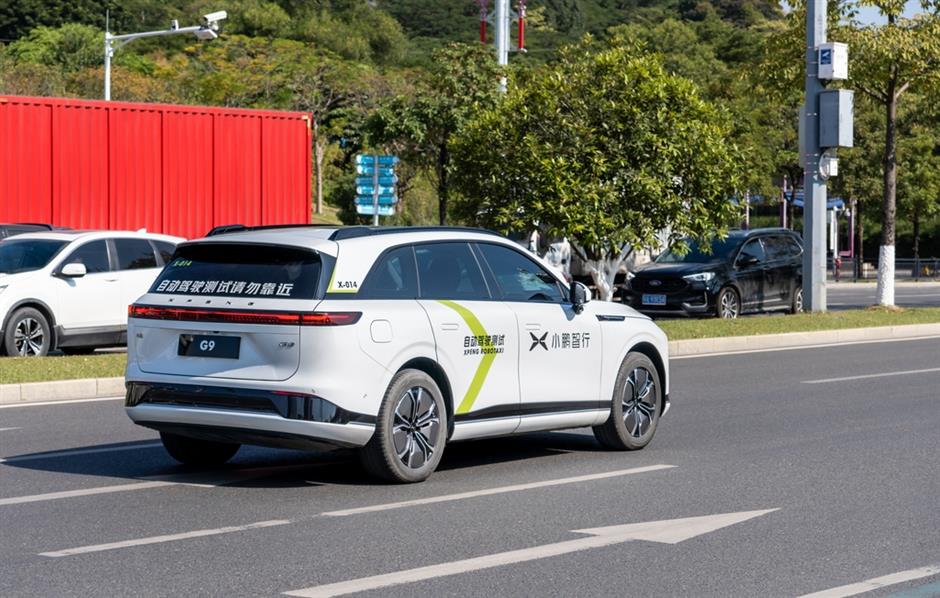
Xpeng's robotaxi business is already offering super-VIP memberships that include QQ Music and NetEase Cloud Music as standard features, with every vehicle including a vast library of copyrighted content for free.
Editor: Liu Qi
In Case You Missed It...

 Aug 6, 2026


![[Weather] Shanghai Bears Brunt of Rain, Wind as Typhoon Dolphin Makes Landfall](https://obj.shine.cn/files/2026/08/09/78f7e76c-2da3-4a70-af37-a0d89800f42b_0.jpg)
![[Weather] Get Ready for Summer's Wettest Typhoon as City Issues Dolphin Alert](https://obj.shine.cn/files/2026/08/08/e2607c40-c6d9-42fe-bcbb-10b987cc5d39_0.jpg)
