Chinese Vehicle Makers Drive Overseas Sales Goals at FIFA World Cup
With the 2026 FIFA World Cup at full tilt across co-hosts Mexico, Canada and the United States, the game is on for Chinese automakers in a high-stakes marketing war.
With the tournament expanding to 48 teams for the first time, global viewership is poised to shatter previous records. For Chinese automakers, this quadrennial football extravaganza is no longer just an advertising opportunity, but the core battleground for their global expansion strategies.
To break into fiercely competitive foreign passenger car markets, associating with top-tier national teams and global icons has become the preferred playbook.
Changan Automobile recently launched a partnership with the Portuguese Football Federation, which is a very calculated move. Portugal talisman Cristiano Ronaldo wields strong influence amid the demographic of younger consumers the company is seeking for its international brand image. More importantly, the Portuguese team boasts a massive, deeply loyal fanbase across Europe and Latin America, the exact growth markets Changan is targeting.
Partnership with Portuguese Football Federation opens a new gate for Changan to the European and Latin American market.
While passenger car brands chase the limelight, Chinese commercial vehicle manufacturers are employing a more pragmatic approach: enhancing localized services.
Anticipating the immense logistical demands of the North American tournament, Zhongtong Bus deployed its N12 electric trolleybuses into Mexico City's public transit network to handle heavy commuter and fan transportation during the World Cup.
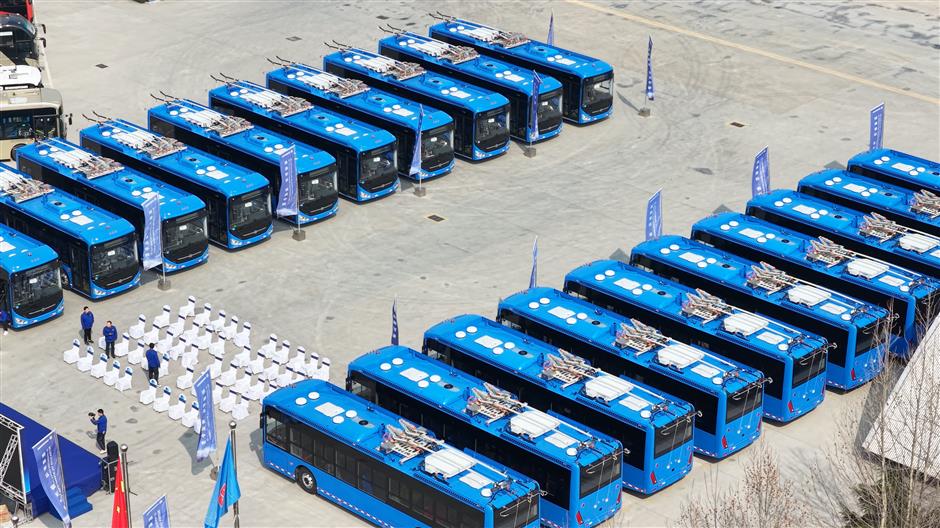
Zhongtong is taking a cue from the successful strategy of Yutong Bus, which supplied 1,500 electric buses to the Qatar World Cup in 2022. After the event, the buses were integrated into the local public transit network.
"Building on that trust, Mowasalat, Qatar's national transport company, later introduced Yutong's new-energy light trucks and electric school buses to accelerate the country's transition to a fully electrified public transport system," said Shen Hui, general manager of Yutong's Middle East operations.
The partnership reached a historical milestone in 2024, when Yutong and Mowasalat broke ground on a joint-venture electric bus assembly plant in Qatar, the first electric commercial vehicle assembly facility in the Gulf state. That move has translated directly into a surge of orders, market share and brand prestige across the region.
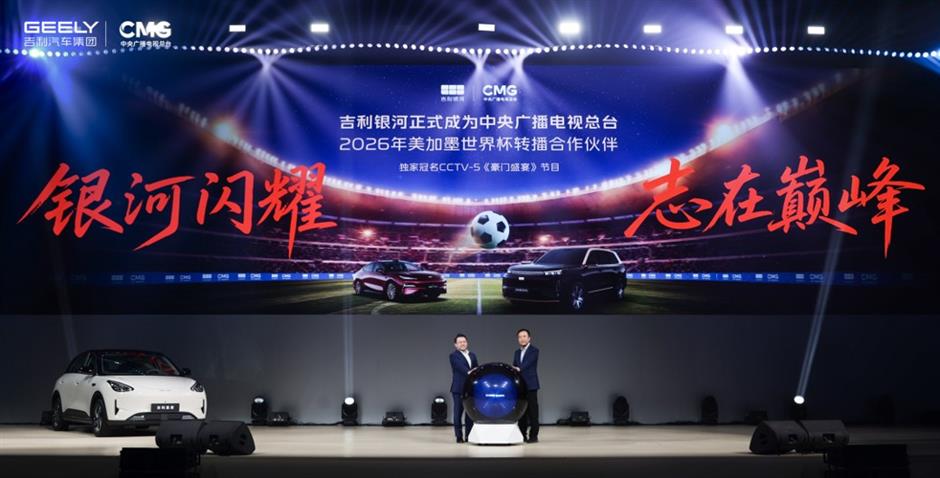
For its part, Geely Galaxy recently became the official broadcast partner of China Central Television for the 2026 World Cup. By leveraging the nation's most widely watched channel, Geely aims to seamlessly convert millions of captive football fans into auto buyers, using the universal appeal of sports to position its electric vehicles as premium statements of lifestyle.
Yet, despite these aggressive maneuvers from Chinese challengers, traditional auto giants remain entrenched in the World Cup. Hyundai-Kia, a perennial World Cup partner, continues to monopolize the official logistics infrastructure. This year, the South Korean conglomerate provides 660 vehicles to handle the core transportation needs of athletes and VIPs.
Dislodging an incumbent with such institutional ties to the sport requires more than just sponsorships; it demands comprehensive industrial integration.
That is precisely why Chinese automakers are already positioning themselves for the 2030 World Cup, which will be hosted by Spain, Portugal and Morocco, with opening matches in Argentina, Uruguay and Paraguay. Again, the geography overlaps with Chinese automakers' foreign expansion targets.
Chery Automobile has already started production at its localized assembly plant in Argentina, a traditional automotive hub. The company is hoping that matches played in the shadow of its own supply chain will yield a home-field advantage.
Meanwhile, BYD is constructing a manufacturing facility in Morocco, an ideal gateway to both European and African markets. Using the World Cup as a catalyst, BYD is poised to export a comprehensive package of technology, brand power, manufacturing capacity and local services.
Changan's partnership with Portugal also extends through 2030. With Portugal serving as a games co-host, the automaker is hoping that the alliance will give it leverage in its ambitious target of 1.5 million overseas vehicle sales by the end of the decade.
There is, however, one wild card that could overshadow all overseas investments – the Chinese men's national football team. It has been over two decades since their last World Cup appearance, and the team currently lacks an automotive sponsor. But if the team manages to pull off a miracle and qualifies for 2030, expect domestic automakers to rewrite their marketing budgets overnight. Until then, China's car brands are proving they do not need to be on the pitch to win the global game.
Editor: Liu Qi
In Case You Missed It...
 Jul 27, 2026