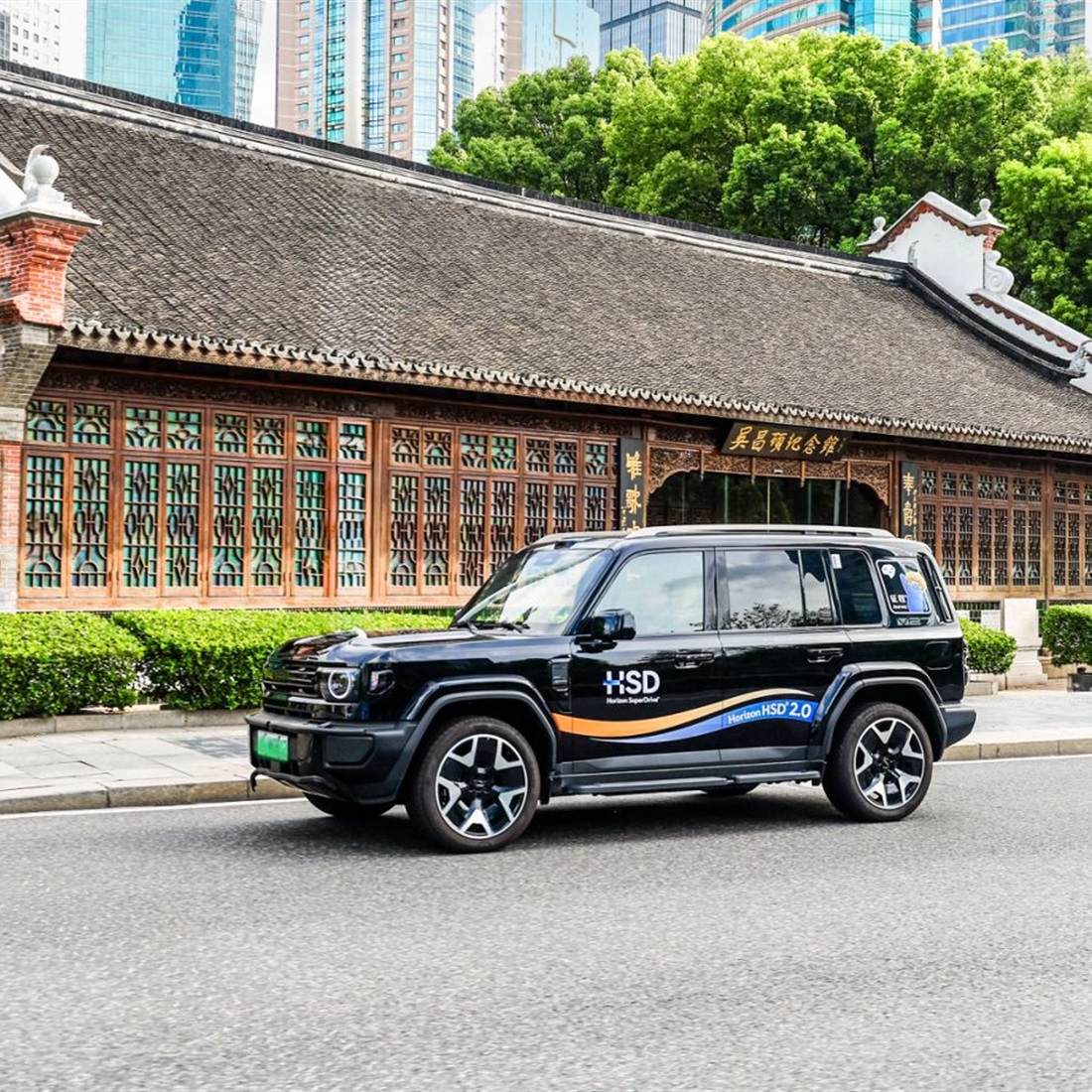
New China Standards on Smart Driving Focus on Safety, Liability
With the release of two mandatory national standards for smart driving, marketing buzzwords like "L2.9 smart driving," "quasi-autonomous driving" and "hands-free operation" that were once used as launch-event gimmicks lose their marketing power.
China's Ministry of Industry and Information Technology released standards for L2 combined driving assistance and L3/L4 autonomous driving last week. The former takes effect in January; the later next July.
Self-driving technology is commonly expressed in six categories, from Level 0 of no automation, to partial automation Level 2, conditional automation in Level 3, high automation in Level 4 and full automation in Level 5. As the levels rise, the requirements for driver override controls decrease.
Together, the new rules establish a complete, mandatory regulatory system, marking a turning point for China's smart driving industry as it shifts away from a marketing-driven era into a new phase of compliance and high-quality growth.
A major change lies in who bears the liability for mishaps. In the past, whenever an accident occurred, automakers often exempted themselves from blame by arguing that an autonomous feature was merely an assistant and the driver failed to pay attention. Under the new national standards, automakers will bear some legal responsibility in L3 systems, which require driver override, and L4 modes, where driver intervention is an option.
"Selling a car is no longer the end of a transaction, but the starting point for automakers to assume lifelong safety responsibility," said Cui Dongshu, secretary-general of the China Passenger Car Association. "This requires car companies to build full lifecycle operational systems, including vehicle data monitoring, black-box traceability and defect investigations. After a crash, data can determine within seconds whether a human or the system was driving, providing a legal basis for liability assessments and insurance claims."
For consumers and car owners, the implementation of these new standards is also a wake-up call to reset their understanding of smart driving. The market was previously flooded with vague promotions. Many motorists put too much trust in assisted driving, thinking they could take their hands off the wheel or even nap on highways, leading to tragic results.
In October 2025, for example, a Changan Qiyuan A07 crashed on an expressway in Jiangxi Province while operating in smart driving assist mode. The driver had taken hands off the steering wheel for about 13 seconds, and the car failed to detect a semi-trailer stalled in the travel lane due to a breakdown, resulting in a rear-end collision that killed a family of three. The official investigation report noted that the driver's over-reliance on smart driving and distracted driving were the primary causes of the crash.

Meeting the new requirements will demand a total overhaul across research and development workflows, cost structures and marketing operations for Chinese automakers. In recent years, automakers grew accustomed to applying fast-paced Internet product updates to cars to sell vehicles by pitching high hardware specifications and then adding features month by month via over-the-air software updates.
"The new national standards draw a hard red line against this practice," Cui said. "Any software update involving autonomous driving control must undergo a safety validation process that includes road testing. That eliminates the risk of carmakers launching and then later adding software updates. It forces car companies to put safety validation at the very beginning of product design."
When it comes to hardware and development costs, the new national standards set strict baselines for minimum risk maneuvers. For example, in the past, some driver-assisted systems determined if a driver was attentive simply by sensing small pulls on the steering wheel. Many reckless drivers would hang a physical weight of a few hundred grams on one side of the steering wheel to exert continuous pull, tricking the computer into believing a human hand was holding the wheel and stopping its warning alarms.
The new L2 standard mandates that steering wheels use touch-sensitive materials that detect human skin, paired with in-cabin perception systems to monitor driver behavior. For higher-level autonomous driving, the car must be capable of automatically pulling over to the roadside or slowing down safely on its own whenever a severe system fault occurs.
"The hidden costs of creating safety archives, building compliant simulation platforms and conducting third-party testing are even larger," Cui noted. "Top-tier companies with full-stack self-developed technology face manageable pressure because they already have technical reserves. In contrast, smaller automakers that rely heavily on outsourced solutions and lack independent validation capabilities will see their smart-driving price premiums squeezed dramatically, accelerating industry consolidation toward market leaders."
The rollout of China's new standards also clears a regulatory path for Chinese smart-driving technology and automakers expanding overseas. Chinese smart driving software and hardware solutions are accelerating penetration into markets across the Middle East, Southeast Asia and parts of Europe.
According to Gasgoo Auto Research Institute, the installation rate of L2 and higher-category systems on new cars sold by Chinese automakers, such as Chery, BYD and SAIC, in the European market has surpassed 70 percent.
"As the new national standards fully incorporate the core principles of United Nations regulations, they will shorten their compliance cycles for overseas launches," said Cui.
Editor: Liu Qi
In Case You Missed It...

 Aug 22, 2026
![[Current Trends] Tourists Pay Top Dollar for a Front-Row Look at China's Tech Boom](https://obj.shine.cn/files/2026/08/12/b6608561-313a-4d20-bef4-c108cda6c188_0.jpg)