Beyond the Breakthrough: Can Protein-Destroying Drugs Deliver Better Treatment?
After two decades of promise, a new way of destroying disease-causing proteins has finally reached the market. Now targeted protein degradation faces a tougher test: whether it can produce medicines that are not just novel, but better.
The US Food and Drug Administration in May approved vepdegestrant, or Veppanu, for certain patients with advanced breast cancer carrying ESR1 mutations, marking the first FDA approval of a PROTAC, or proteolysis-targeting chimera. The oral drug recruits the cell's own protein-disposal machinery to break down the cancer-driving estrogen receptor.
The approval gave the field something it had long lacked: proof that the technology could make it all the way from the laboratory to the market.
But it also raised the bar.
"Different targets need different technology approaches," Dr. Yang Xiaobao told China Biz Buzz at the World Laureates Forum in Shanghai.
The scientist-turned-entrepreneur is the founder and chairman of Gluetacs Therapeutics and has worked on protein degradation since 2013.
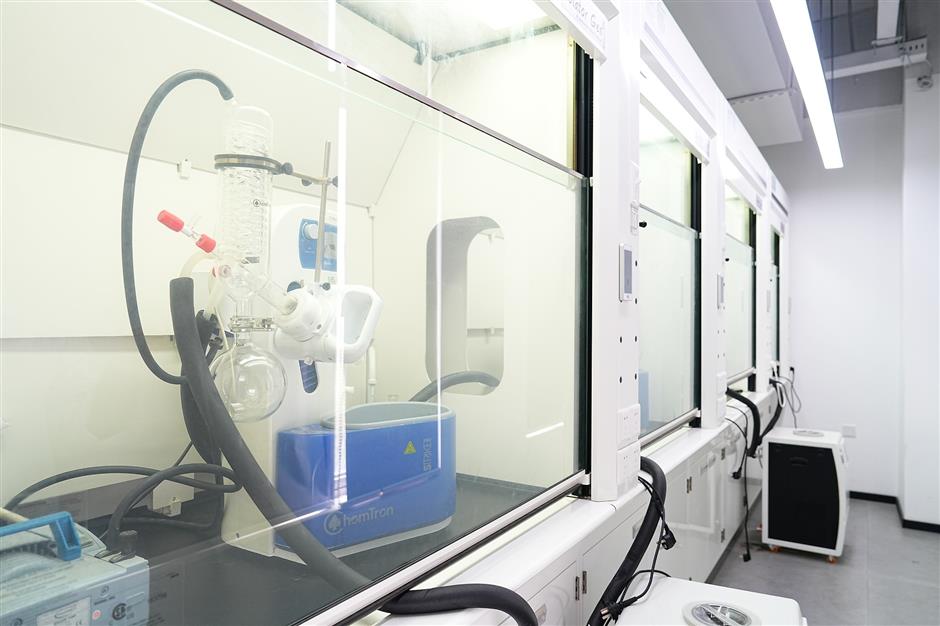
Protein degraders, he said, will not simply replace inhibitors, or even chemotherapy.
Traditional targeted drugs generally work by blocking a particular function of a disease-causing protein. Degraders take a different route: they recruit the cell's natural waste-disposal system to remove the protein itself.
That distinction can matter when a protein does more than one job. Some cancer-driving proteins, for example, also have non-enzymatic functions that conventional inhibitors may leave untouched. Removing the entire protein may block those additional functions and, in some cases, help overcome pathways that allow tumors to escape treatment, Yang said.
Yet making a protein disappear in a laboratory is one thing. Turning that effect into a useful medicine is another.
A degrader still has to reach the right tissue, remove enough of the target without causing unacceptable toxicity and, most importantly, improve outcomes for patients.
That challenge is now moving into the clinic.
Yang's research, which grew out of work at ShanghaiTech University, has produced candidates spanning blood cancers, solid tumors and autoimmune diseases. GT919, a molecular glue being developed for multiple myeloma, has reported Phase I data, while Yang said the program is moving into Phase II development. GT818, a bifunctional degrader targeting solid tumors, has entered Phase I and had reached its second dose cohort.
The commercial potential is already clear in multiple myeloma. Revlimid, or lenalidomide, long a backbone treatment for the blood cancer, generated US$12.82 billion in worldwide sales for Bristol Myers Squibb in 2021, before generic competition began eroding revenue.
Treatment is now moving into a new generation. In August, the FDA granted accelerated approval to BMS's iberdomide, a cereblon E3 ligase modulator, or CELMoD, for previously treated multiple myeloma. China's drug regulator followed with a conditional approval in September, bringing the same drug class into the Chinese market.
The opportunity in China is also expanding as patients live longer with the disease. Yang described the country's multiple myeloma population as sizable, while advances in treatment are increasingly turning the cancer into a condition that can be managed over many years for some patients, extending demand well beyond newly diagnosed cases.
That is the market GT919 is targeting. Yang said the candidate is designed to improve selectivity and tolerability in multiple myeloma, particularly for patients who relapse or become resistant to existing therapies.
The opportunity is also expanding beyond cancer. Developers are testing protein degradation in autoimmune and inflammatory diseases, while Yang said later programs from his team are also moving into autoimmune conditions.
For Chinese biotechs, the next inflection point may be as much commercial as scientific.
Yang said early human data can sharply change how overseas drugmakers value an asset.
"If safety can hold up and we can also see some efficacy," he said,"Foreign drugmakers are generally more willing to pay for the risk attached to an early-stage program."
His team is already in discussions with multinational pharmaceutical companies and has received interest in licensing one of its assets overseas.
That reflects a broader change in drug development: owning an interesting platform is no longer enough. As more degraders enter human trials, clinical data are becoming the dividing line between technological promise and commercially valuable assets.
The first approved PROTAC answered one question: this approach to targeted protein degradation can produce a medicine.
The next generation now has to answer a harder one: when is degradation actually the better way to treat disease?
For Yang, the answer depends on the target.
Inhibitors will not disappear, he said. Neither will chemotherapy. The task is to choose the right tool for the right biological problem.
That may ultimately be the clearest sign that protein degradation is maturing: success will depend less on whether a drug is called a PROTAC or a molecular glue than on whether it is simply a better medicine.
Editor: Yao Minji
In Case You Missed It...

 Oct 31, 2026