26 Boxes of Hope: An American Son's Cancer-Drug Mission to Shanghai
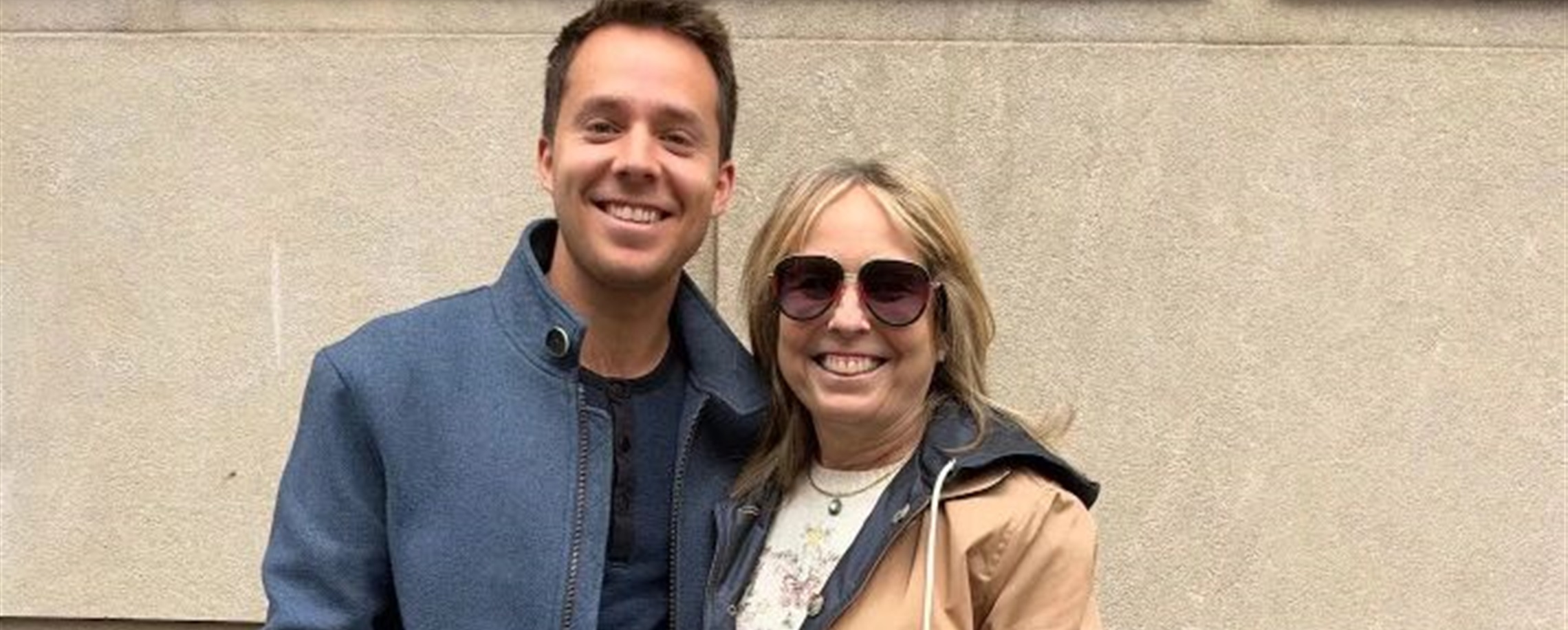
When doctors in New York ran out of options for Debbie Doppelt, one of them offered a remark her son could not forget: "Too bad she's not Chinese. She could go to a pharmacy in China and buy it."
So Max Doppelt, a 30-year-old computer engineer, got on a plane to Shanghai.
He came home with 26 boxes of sunvozertinib, a targeted lung cancer drug developed by Shanghai-based Dizal Pharmaceutical, packed in his luggage. The medicine cost about US$10,000.
"Getting on the plane and bringing the medicine home felt like my life's purpose," he told KFF Health News, the US health news outlet that first reported the family's story on October 20.
A clip of Max recounting the journey on The Cracking Cancer Podcast has been circulating on Chinese social media this week.
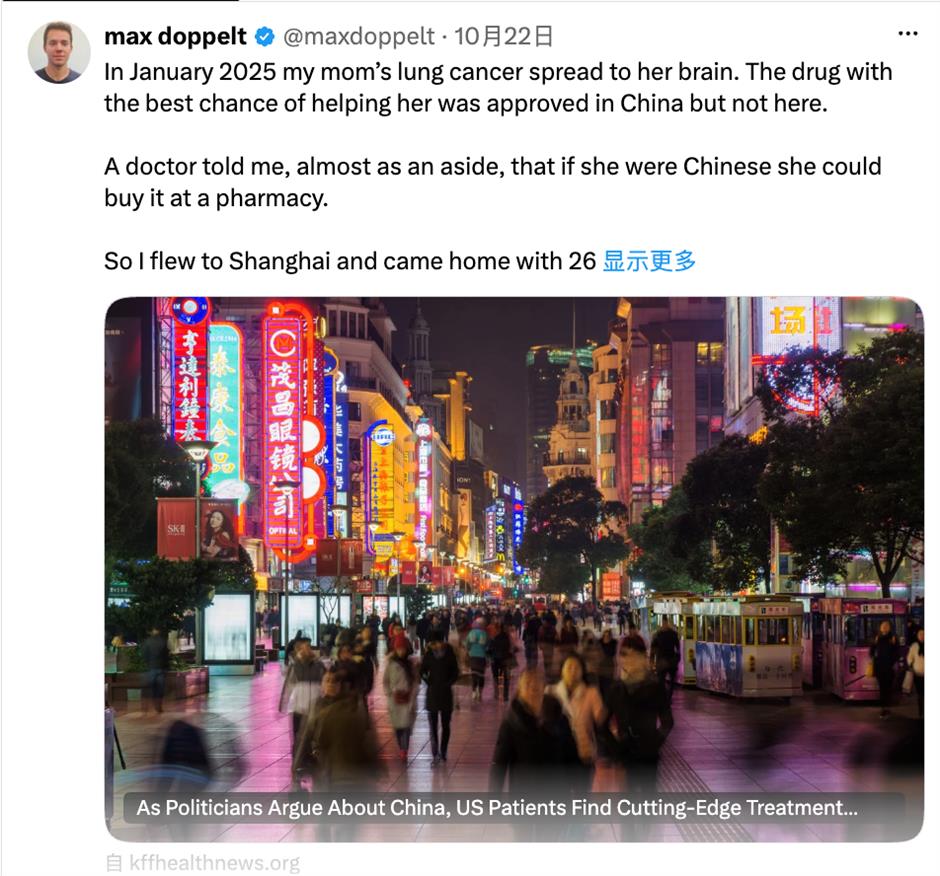
Debbie, 60, runs a diamond business with her husband in New York. She was diagnosed in late 2023 with an uncommon form of lung cancer that mostly affects nonsmokers. In December 2024, scans showed it had spread to her brain, with 10 tiny tumors. The following month, she was ruled ineligible for a clinical trial at Memorial Sloan Kettering Cancer Center because of scarring in her lungs.
Within hours of that setback, mother and son reached out to friends and relatives. One of them obtained a small supply of sunvozertinib from a contact living in China. A few months later, Max flew to Shanghai for a refill.
Some 19 months after she started the drug, her cancer was still mostly held at bay, with the help of a few radiation treatments and dose adjustments, KFF Health News reported. She has scarcely missed a day of work since her diagnosis.
Sunvozertinib targets a rare mutation known as EGFR exon 20 insertion. Chinese regulators approved it in 2023, and the US Food and Drug Administration cleared it in July 2025. Yet as of mid-October, the drug was still not on the US market. AstraZeneca signed a deal with Dizal on September 1 to distribute it worldwide and plans to make it available in the United States by early 2027.
The drug does not work for everyone. It appears to help about half of the patients who take it.
Max said he knows of at least 30 Americans who have traveled to China to obtain it. He has since started a company that uses artificial intelligence to help cancer patients find clinical trials. About 300 patients have used it so far, all of them lung cancer patients like his mother, and he does not charge them.
China accounted for about 46 percent of new drugs entering testing worldwide in 2025, according to KFF Health News, and a growing number of US drugmakers now license experimental treatments from Chinese labs.
"We may be adversaries in many areas, but we're not competing with them to cure cancer," said Peter Kolchinsky, managing partner of the investment firm RA Capital Management.
Editor: Wang Qingchu
In Case You Missed It...
 Oct 31, 2026