New Guidelines Take Aim at Online Prescription Drug Sales
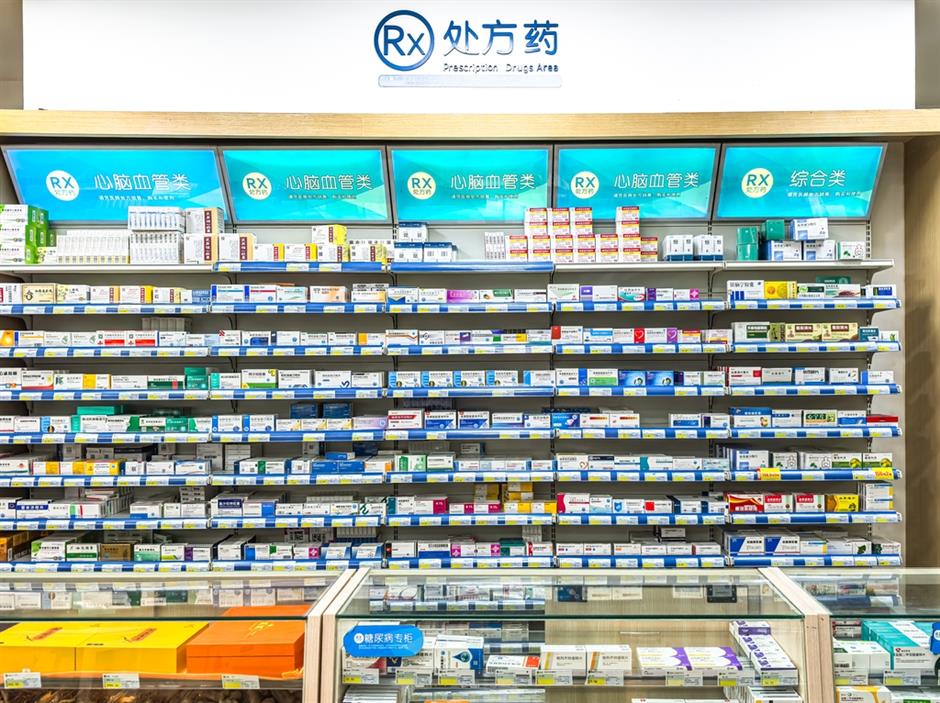
Office worker Mao Xiaoting felt her chest tighten during lunch break after walking past a smoker outside her office building. She opened a medicine app, answered a few questions from a chatbot, and within minutes an asthma inhaler was on its way to her office.
"Sometimes the medicine gets here before I finish eating," she said.
China's drug regulators now want to slow that process down.
The National Medical Products Administration (NMPA) this week released new compliance guidelines for online prescription drug sales, tightening oversight on one of China's fastest-growing healthcare businesses.
The rules target problems regulators say have spread alongside the boom in online medicine sales: drugs sold without valid prescriptions, weak prescription checks, and aggressive marketing of prescription medicine.
Under the new guidelines, online buyers must use real names and valid prescriptions. Platforms are banned from using artificial intelligence to replace licensed pharmacists in prescription reviews, while repeated use of the same prescription is also prohibited.
"The new guidelines are meant to reinforce a basic principle: prescription drugs should only be sold with valid prescriptions," said Hu Xin, chief pharmacist at Beijing Hospital. "That is a widely accepted international standard for medication safety. The rules also place greater emphasis on keeping online and offline prescription drug sales under the same regulatory framework."
China's online drug retail market has surged in recent years as consumers increasingly buy medicine through apps instead of waiting at crowded hospitals or making late-night trips to pharmacies.
Official data showed online drug retail sales exceeded 70 billion yuan (US$9.7 billion) in 2024 and passed 80 billion yuan in 2025.
Platforms, including JD Health, Alibaba Health and Dingdang Health, have spent years racing to make buying medicine as easy as ordering dinner.
In major Chinese cities, consumers can now order fever medicine at midnight, renew chronic disease prescriptions on their phones and receive asthma inhalers in less than 30 minutes.
That speed helped turn online pharmacies into one of the country's fastest-growing internet healthcare businesses. It also created cracks in the system.
One example is the online sale of weight-loss drugs.
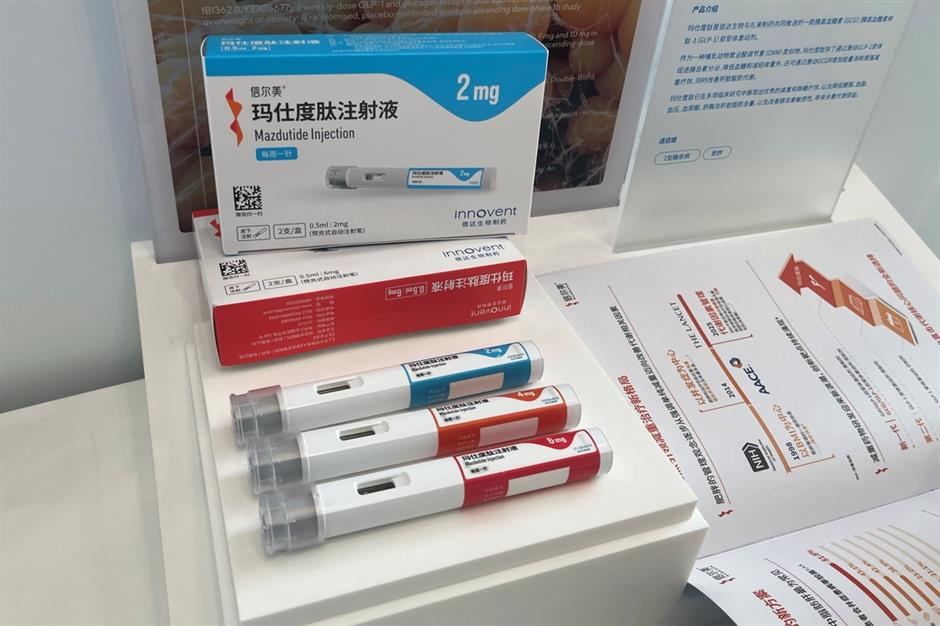
On major e-commerce platforms, users looking to buy Innovent Biologics' mazdutide injection, marketed as Xin'ermei, are not always required to upload a paper prescription. Instead, buyers can move through a preset online consultation process and obtain a digital prescription through the platform before completing the purchase.
The drug typically requires evaluation and follow-up by physicians in obesity or metabolic clinics. Like other GLP-1 therapies, it can trigger side effects ranging from nausea and vomiting to more serious complications, including pancreatitis, requiring ongoing medical supervision.
"Roughly 60-70 percent of GLP-1 inquires we get aren't suitable," said Han Xiaodong, an obesity surgeon at Shanghai Sixth People's Hospital. "Some people have unrealistic expectations, thinking one injection will solve everything. Others don't meet the clinical criteria, and using the drug could even backfire."
The new rules require platforms to employ licensed pharmacists, verify merchant qualifications and monitor how prescription drugs are displayed and marketed online. Platforms that discover serious violations must immediately stop providing online drug trading services and report the cases to regulators.
The rules also add safeguards for underage buyers, requiring platforms to issue medication risk warnings and, in some cases, block purchases entirely.
At the center of the new rules is a clear message on AI.
Internet healthcare platforms have increasingly used automated systems to collect symptom information, assist online consultations and speed up prescription processing. But regulators now say AI cannot replace human pharmacists in reviewing prescriptions.
The rules do not ban AI tools entirely. But they make clear that responsibility for prescription checks must remain with licensed professionals.
Zheng Wei, deputy director of the NMPA's drug supervision department, said the guidelines are built around four core principles for online prescription drug sales: valid prescriptions, strict review procedures, traceability and risk control.
"The goal is to contain risks at the source while supporting the healthy and sustainable development of the online drug retail industry," he observed.
For China's online pharmacy platforms, the message is straightforward: medicine may be sold online, but regulators do not want prescription drugs treated like ordinary e-commerce products.
Editor: Liu Qi
In Case You Missed It...

 Sep 17, 2026


![[Community] Say Bye, Say Hi: An Evening of Swapping, Sharing and Connecting](https://obj.shine.cn/files/2026/09/16/699fe833-2ba8-4118-b51a-6cee96e14a30_0.jpg)