Private Insurance in China to End 'One Leg' Drug Payment System
China has opened a new payment channel for some of its most expensive drugs, allowing private insurers to issue policies covering high-cost, innovative therapies not on the government reimbursement system.
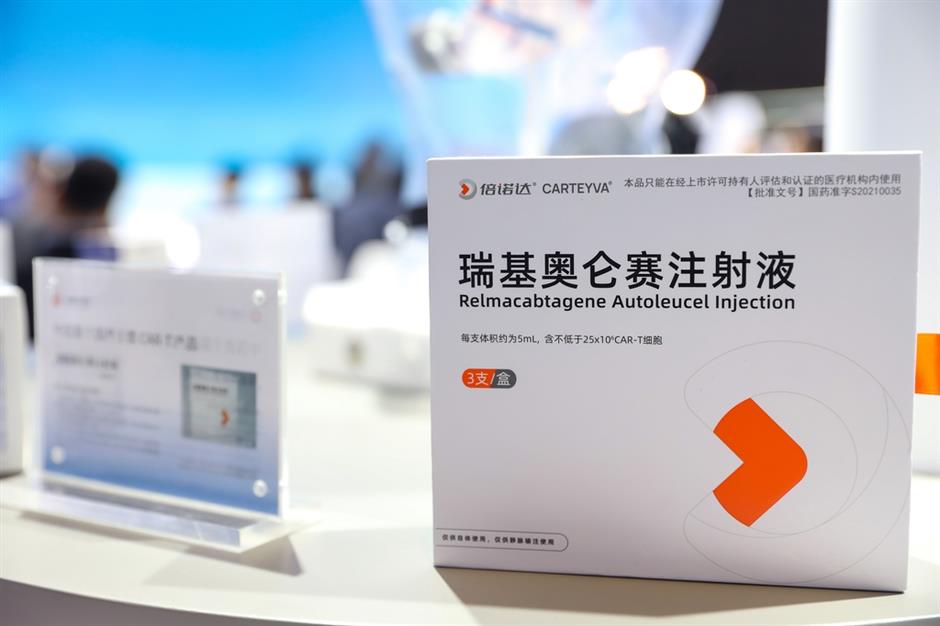
The insurance can cover therapies such as CAR-T cell cancer treatments that can cost more than 1 million yuan (US$140,000) per treatment.
The government has compiled a commercial insurance drug catalogue to operate outside of China's tightly controlled public insurance system.
"The move toward multiple payment channels is aimed at easing pressure on publicly funded insurance while meeting growing demand for innovative medicines," said Zhu Lin, a researcher at the Shanghai Health Development Research Center. "Public insurance will continue to focus on basic coverage, but drugmakers face a dilemma. Entering the public system requires deep price cuts, while staying outside of it makes it hard to scale up sales. Commercial insurance offers a more workable pathway."
The first commercial insurance drug catalogue, which comes into effect on January 1, includes 19 products. The drugs largely fall into categories that have struggled to secure coverage under the public reimbursement system because of high prices, limited patient populations or budget impacts.
Five of the products are expensive CAR-T cell therapies, which are among the most expensive treatments approved in China.
The catalogue also covers drugs for rare diseases, including neuroblastoma, a nerve tissue cancer, and Gaucher disease, which affects the liver and spleen. There are also two medicines for Alzheimer's disease and a quadrivalent influenza vaccine.
"China's drug payment system has long been operating on one leg," said Zhang Hongliang, a pharmaceutical industry analyst and widely followed healthcare podcast creator. "Whether for conventional medicines or innovative drugs, public health insurance plays a central role as the payer. For most treatments, patients still cover the remaining costs themselves."
China's public health insurance system covers more than 1.3 billion people and is designed to ensure broad access to essential medicines at controlled prices. Its enrollment holds at about 95 percent of the population, and total fund spending reached nearly 3 trillion yuan (US$420 billion) in the past eight years.
That structure has helped expand basic coverage over the past decade, but it leaves limited room for absorbing expensive new therapies, particularly one-time or highly personalized treatments. Drugs that cost hundreds of thousands of yuan per patient can place disproportionate pressure on a system built to serve a mass population.
"The high cost of some innovative drugs naturally conflicts with the basic coverage mandate of public insurance," Zhang said.
Public hospitals in China operate under strict budgeting and performance assessments tied to public insurance spending. High-priced medicines can distort cost indicators, affecting departments' reimbursement ratios and triggering scrutiny under diagnosis-related group and case-based payment systems.
As a result, hospitals have tended to be cautious in adopting expensive new therapies, particularly those with limited patient volumes.
Globally, innovative drug spending is concentrated in markets with established payment systems. The US accounts for roughly half of global use, supported by a mature commercial insurance market, while Europe represents about 20 percent. Japan makes up around 10 percent, with commercial insurance playing an important role alongside public coverage.
China, by contrast, is estimated to account for about five percent of global use of innovative therapies. Payment has historically relied on public insurance, with out-of-pocket spending still accounting for nearly half of total payments, while commercial insurance covers less than 8 percent.
"Unlike the public reimbursement list, the commercial insurance innovative drug catalogue is designed to upgrade commercial insurers as market participants," Huang Xinyu, director of medical services management at China's National Healthcare Security Administration, told a press conference.
Discounts agreed under the commercial channel typically range from 15 to 50 percent, significantly narrower than the cuts often required in national reimbursement negotiations, where prices can fall by 60 or even 70 percent.
Under this commercial framework, insurers negotiate directly with drugmakers and bear the payment risk themselves, while the National Healthcare Security Administration acts as an organizer and policy coordinator, rather than a payer.
Drugs finding their way into the commercial catalogue are excluded from public insurance self-pay ratio targets and are exempt from monitoring as substitutes for centrally procured drugs. The measures do not guarantee uptake, but they remove constraints that have previously made hospitals reluctant to stock expensive therapies.
For drugmakers, the policy changes open a more workable route into public hospitals, even without public reimbursement.
"What the policy offers is not funding, but regulatory incentives," Zhang said. "For drugmakers, entry into the commercial insurance catalogue gives them access to procurement platforms and hospitals, and creates room for further negotiations. That is highly appealing for many companies."
Editor: Liu Qi
In Case You Missed It...
![[Hai Lights] 6 Places in Shanghai to Catch the Perfect Sunset](https://obj.shine.cn/files/2026/10/08/3db61a75-c15c-4bb2-9dfd-c98c81f46d09_0.jpg)
 Oct 8, 2026
![[Hai Lights] 6 Places in Shanghai to Catch the Perfect Sunset](https://obj.shine.cn/files/2026/09/29/ac5d350e-0c26-4c86-a653-4f37132a5b7e_0.png)

Popular Reads

AI Romance Between Monkey King and Lin Daiyu Tests Limits of Remixing the Classics

China Foreign Exchange Reserves Fall in September, Gold Reserves Rise
DeepSeek Nears Massive 100 Billion Yuan Funding Round, Paving Way for Early 2027 IPO