Daily Buzz: 23 September 2026
Top News
Alibaba Shares Roadmap for Advances in AI Models, Chips, Data Centers
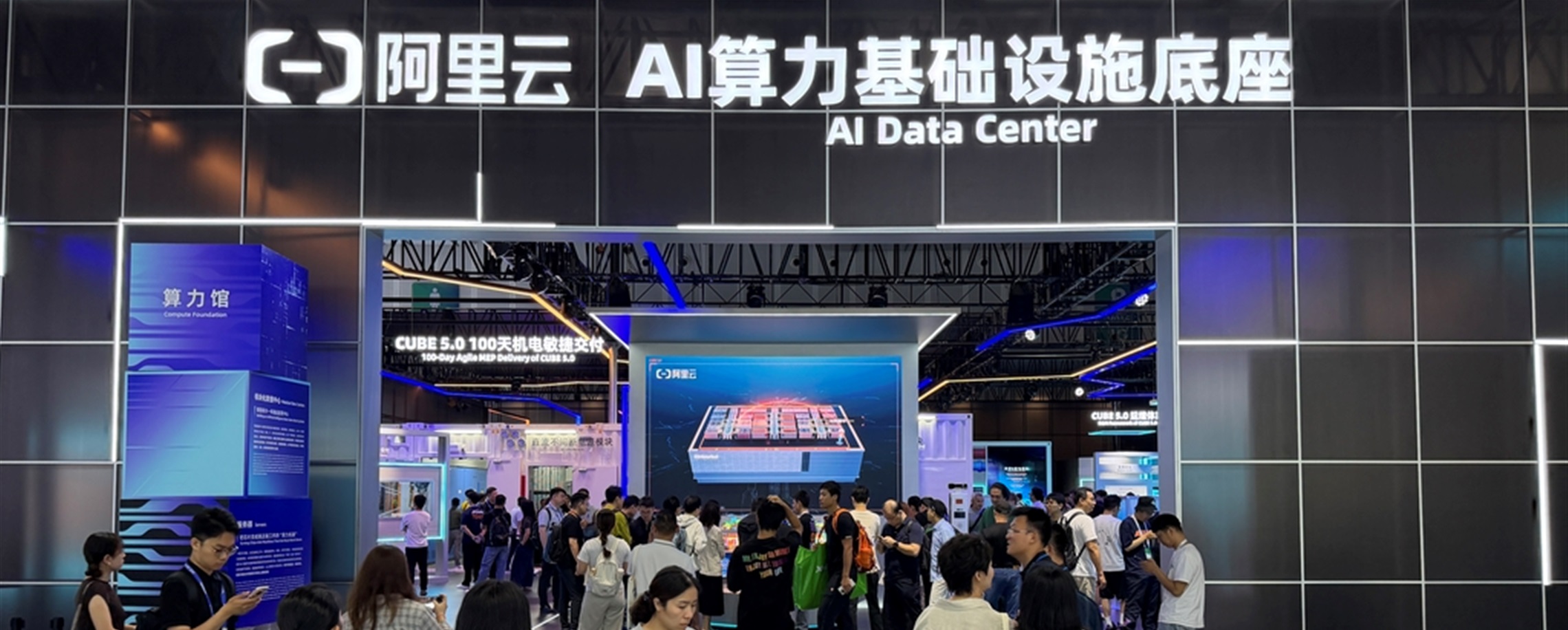
Chinese tech giant Alibaba Group said it plans to train a new AI model with between 5 trillion and 10 trillion parameters, with Chief Executive Eddie Wu outlining a sweeping strategy for AI models, chips and data centers. Speaking at Alibaba Cloud's annual Apsara Conference in Hangzhou, Wu said the company's Qwen team is continuing research into model architecture and data optimization, with the goal of completing "more complex, longer-horizon tasks" and advancing toward superintelligence Alibaba also revealed that its next-generation model Qwen 4 is currently in training. The pending Qwen 4.5 and Qwen 5 series are projected to scale up to 10 trillion parameters, which are the variables used to train models and roughly gauge sizes. Alibaba's current flagship model, the Qwen 3.8 Max, has 2.4 trillion parameters. Wu said Alibaba's proprietary M890 AI supernode already handles inference for models above 2 trillion parameters, a capability he said only "a handful of companies globally" possess.
Wu raised eyebrows at the event when he said machine thinking in the future could far outstrip than human thinking. "Since machines account for less than 3 percent of total thinking today, there is still potential for that share to grow by at least tens of thousands of times," he said. Alibaba also introduced the Zhenwu V900, a next-generation AI chip from its T-Head semiconductor unit, which Wu called the most powerful AI chip in China. The chip is scheduled for mass production and commercial release in the first quarter of 2027.
US to Establish Two Military Bases in Greenland Under New Arctic Deal
The US, Denmark and Greenland formally signed a deal that allows the US to set up two new military bases in Greenland. One of the sites is Narsarsuaq on the southern coast, a former Cold War installation closed in the 1950s. The other is Mestersvig, a remote outpost on the eastern coast that's being used by a Danish military dog sled unit. Denmark has been keen to stress that the agreement leaves intact Danish sovereignty over the semi-autonomous territory of Greenland and respects the right of Greenlanders to determine their own future. Copenhagen also said the agreement puts Arctic security under NATO's watch rather than leaving it solely to the US or Denmark. The deal ends threats from US President Donald Trump to seize Greenland for its strategic location in the Arctic and its mineral wealth. Those threats triggered a diplomatic crisis within NATO last January. Both the US and Denmark are members of the bloc. During the Cold War, the US maintained 17 military installations in Greenland. Today only one base remains.
Trump Says Ukraine War Nearing End, a Meeting With Iran Delegation Went Well
US President Donald Trump, in a speech to the UN General Assembly, said the war in Ukraine is "near its end" and Russia is keen to continue talks, but gave no details. He later met with Ukrainian President Volodymyr Zelensky, who said his country is open to negotiating a ceasefire in the escalating bilateral attacks on energy facilities, which have helped raise global diesel prices to a record. Zelensky said later in an online post that both his country and the US want the war to end before the harsh winter season sets in.
On the other major conflict weighing on world peace, Trump, said officials in his administration met with the Iranian delegation attending the General Assembly, describing the three-hour meeting as "very good," without giving details. Trump said Iran now faces two choices: obliteration or potential greatness as a country. "It's to their advantage to make a deal," he said. Iran state media said Iranian Foreign Minister Abbas Araghchi met with US special envoy Steve Witkoff, telling the US side that Tehran's terms for reopening the choked Strait of Hormuz include the lifting of the US naval blockade on its ports and releasing frozen Iranian assets. During a separate meeting with Persian Gulf leaders, Trump again threatened to blow up Pickaxe Mountain, a suspected Iranian nuclear site. Global benchmark Brent crude futures slipped below US$100 a barrel in New York, closing at US$99.25 a barrel.
World Leaders Weigh In on UN Effectiveness, Global Conflicts
In speeches to the UN General Assembly on Tuesday, Brazilian President Luiz Inácio Lula da Silva said the global body is "failing in one of its most important missions: to rid humanity of the scourge of war." Jordan's King Abdullah II urged world leaders to take action over Israel's conduct in Gaza and the occupied West Bank, warning that Israeli expansionism now poses a wider regional threat. Turkish President Recep Tayyip Erdoğan said the UN has become weak and Gaza "has become the most inhumane and shameful concentration camp of our time." Qatar's Emir Sheikh Tamim bin Hamad Al Thani warned the Middle East is passing through one of its "most dangerous phases" and called for an urgent diplomatic solution to the Gulf crisis. French President Emmanuel Macron urged the world not to yield to war and global divisions, condemning continued Israeli violence against Palestinians and calling US policy toward the conflict a "spectacle of shame." Lithuanian President Gitanas Nausėda said Russia's war against Ukraine poses the greatest threat to world order.
Top Business
Ligent Technologies Closes Slightly Higher in Hong Kong Debut
Shares in Ligent Technologies, a Chinese maker of optical transceivers and chips for data center networks, rose 4.6 percent from their offer price in their trading debut in Hong Kong after a HK$5.7 billion (US$722.7 million) initial public offering. The retail portion of the IPO was oversubscribed 35 times, and the international portion, 4.7 times. The Qingdao-based company said will use proceeds from the sale to fund research and development, and expand production capacity for optical transceivers and chips. Cornerstone investors, including Primavera Investment Fund, GigaDevice Semiconductor and a unit of Amlogic Shanghai, took about 47 percent of the base offering and agreed to hold their shares for at least six months.
Meituan Pledges US$4.5 Billion Investment in Fast-Delivery Services
Chinese e-commerce giant Meituan will pour 30 billion yuan (US$4.5 billion) into its fast-delivery business in the next three years, company Vice President Xiao Kun told a retail conference on Tuesday. He said the "flash shopping" business, which promises delivery within 30 minutes, will back industry partners across infrastructure, research and development, and marketing. Meituan is targeting the building 100,000 "lightning" warehouses, with a goal of hitting 200 billion yuan in transaction volume for the segment. "Lightning warehouses" are 24/7 online‑only supermarkets run by third‑party partners, while the Meituan platform supplies online marketing guidance and traffic support.
Aggressive Spending on AI and Debt Financing Head for US$1 Trillion
JPMorgan Chase Chief Executive Jamie Dimon said he expects global capital spending by AI "hyperscalers" to reach US$1 trillion next year, up from US$700 billion this year and US$300 billion last year. Calculations from Goldman Sachs and Bank of America show that the debt financing required to support AI expansion is swelling in tandem, with external financing needs for core AI infrastructure reaching up to US$1.5 trillion by 2030. All major hyperscalers except Microsoft have already slipped into negative free cash flows. Dimon cautioned some AI spending constitutes a "table stakes" entry fee to remain competitive, with returns difficult to quantify in the near term and ultimate winners still impossible to call.
Meta's New AI Agent Tops App Store
Meta's new AI agent application Muse climbed to the top of Apple's App Store rankings, drawing attention to the company's efforts to compete in the fast-growing artificial intelligence market. Muse was launched on September 8 and quickly gained popularity, surpassing rival applications, including OpenAI's ChatGPT and Anthropic's Claude. Unlike traditional chatbots that mainly respond to user queries, AI agents are designed to perform tasks autonomously, including searching for information, completing online operations and managing workflows on behalf of users.
CAS Launches AI Computer Satellite Into Low Orbit
CAS Space Technology, a private Chinese commercial space firm, launched an AI computing-power satellite into orbit, part of the nation's drive to advance computing infrastructure in space. The Lijian-1 Y18 carrier rocket launched the S·AIDC-1 satellite, which carried a remote sensing camera and AI computer, and eight other satellites into low orbit. The computers are capable of processing information in real time. CAS originated at the Chinese Academy of Sciences.
China Central Bank Chief Meets With Foreign Financial Executives
The People's Bank of China convened a symposium with senior executives of 15 foreign financial institutions this week, with Governor Pan Gongsheng telling them that China's economy is operating steadily with positive momentum, and that the central bank will maintain an "appropriately accommodative monetary policy" while continuing reform policies to open up the financial sector wider, optimize cross-border payment services and facilitate the international use of the yuan. Those in attendance included executives from Bank of America, JPMorgan Chase, HSBC, Standard Chartered, Deutsche Bank, DBS, First Abu Dhabi Bank, BNP Paribas, Morgan Stanley, Goldman Sachs and UBS Securities.
Chinese Regulators Ask Banks Not to List Vanke Loans as Duds
Chinese financial regulators have asked some banks not to classify overdue loans to ailing property developer China Vanke as non-performing and to extend repayment deadlines, Reuter reported. The guidance is aimed at averting a default that would likely be the largest ever on the Chinese mainland. Vanke has been negotiating with creditors on revised payment schedules for maturing debt. Vanke, a casualty of a five-year property slump triggered by a liquidity crisis that led other developers into bankruptcy, reported total debt at the end of June stood at 351 billion yuan (US$52 billion). The company's net loss widened to 15 billion yuan in the first six months of the year on a 33 percent plunge in revenue to 70 billion yuan. The company has been kept afloat by loans from principal shareholder Shenzhen Metro.
Panda Bond Issues Surge in China
Issue of panda bonds in China rose to 214 billion yuan (US$32 billion) in the first eight months of the year, surpassing the full-year figure for 2025. Panda bonds are debt issued in yuan by foreign entities. The surge in issues highlights relatively low financing costs associated with the Chinese yuan. According to data from the People's Bank of China, nearly 30 offshore entities issued the bonds during the January-August period, helped in part by a growing presence of sovereign borrowers, including inaugural issues by Slovenia, Pakistan, Kazakhstan and Indonesia.
China Investigates DeepSeek, Moonshot AI Over Possible Leaks of Classified Material
China's Cyberspace Administration has launched an investigation into AI startups DeepSeek and Moonshot AI over suspected leaks of state secrets to a US AI company. The probe was triggered by a report published by Anthropic, which alleged that both companies had been forwarding user queries to its Claude model without authorization and using the responses to train their own models. The transferred data reportedly included internal information from China's People's Liberation Army, public security authorities and state-owned enterprises.
China's Passenger Car Market Forecast to Shrink 20 Percent
China's passenger car market, largest in the world, is expected to decline by about 20 percent this year, according to Volkswagen's top executive in China, Ralf Brandstaetter. His comments came as the German carmaker is battling declines in deliveries and profit margins on the Chinese mainland, contributing to a major global restructuring. Overall domestic sales in China's car market fell in August for an eleventh consecutive month though vehicle exports remained robust.
China LCD Panel Makers Raise Prices
China's three largest LCD panel makers, BOE, TCL and HKC, have notified South Korea's Samsung Electronics and LG Electronics that they will raise panel prices starting in the fourth quarter. Chinese vendors controlling about three-quarters of the large LCD panel market. South Korea's display industry exited LCD production years ago, leaving the two Korean tech giants with no alternative supply sources. Panels account for up to half of TV manufacturing costs.
China Expands Chemical Export Controls
China has expanded its export control list for chemical substances that can be used to make illicit drug, requiring permits for shipments of two newly added chemicals to the US, Mexico and Canada. Under the new rules, exporters must also obtain licenses before shipping chemicals to Myanmar, Laos and Afghanistan.
Robot Firm Partners with PetroChina Retail
Shanghai-based Ace Robotics signed an agreement with PetroChina Shanghai Sales to launch a trial project deploying embodied AI robots in gas station convenience stores. Under the partnership, Ace Robotics will use its technology and self-developed robotic systems to handle tasks including product recognition, restocking, shelving, packing and order fulfillment. The robot solution, known as Xiaoman, will be integrated with PetroChina's digital platforms and convenience store operations. The companies said the trial will determine whether the technology can be expanded across different products, tasks and store locations. China has more than 110,000 gas stations and over 100,000 public charging stations for electric vehicles, creating a large potential market for automated retail and service applications.
Corporate
Guangzhou Auto Eyes Expansion in European Production Capacity
Guangzhou Automobile Group (GAC) plans to increase production capacity in Europe to bolster a large rollout of cars in major markets like France, GAC's Magna partner currently manufactures vehicles sold in Europe, where GAC has expanded to Finland, Greece, Poland, Portugal, Spain and the UK. "We are currently looking into production capacity in Europe, both with Magna and with other investors," Cedric Lacur, head of GAC France, told Reuters at a Paris event where the company unveiled the compact all-electric Aion UT and Aion V, its first two cars for the French market. GAC plans to launch 12 electric and hybrid models in France by 2030 and raise its dealerships in France to 50 this year and to 200 by 2030. In August, electric-vehicle registrations as a proportion of all cars sold in France reached 38 percent as the Iran war increased fuel prices.
Ant Merges Three Business Groups to Focus on Alipay
Chinese fintech giant Ant Group, an affiliate of Alibaba, has merged its Alipay, digital payments and Zhima credit business units into a new Alipay Business Group to sharpen its focus on AI agents to drive growth and strengthen its merchant services. The company appointed Wu Minzhi, a veteran executive at Ant, who previously worked at Alibaba, to lead the new group.
Robotic Vacuum Components Maker Camsense Begins IPO
Shenzhen-based Camsense Technologies, a supplier of sensors for robotic vacuum cleaners, began taking subscriptions for a Hong Kong initial public offering that aims to raise HK$682 million (US$87 million). It is offering 11.6 million shares priced at HK$58.85 each. Each lot of 100 shares requires a minimum investment of HK$5,944. The shares are scheduled to begin trading on September 30. Camsense reported it turned to a profit of 7.8 million yuan (US$1.1 million) in the first quarter from a 6.7-million-yuan loss a year earlier on revenue of 196 million yuan.
Vivo Unveils X500 Imaging Flagship Series
Smarphone maker Vivo unveiled its new X500 imaging flagship series, upgrading photo and video functions. The models supercharge concert, portrait and telephoto shooting, while simplifying live and casual video creation for everyday users. Powered by advanced MediaTek processors and high-performance BOE Technology displays, the X500 series also introduces specialized accessories for telescope and selfie photography. The base model goes on sales this week with a starting price of 5,499 yuan (US$809).
American Battery Startup Chooses China Over US for First Factory
US battery startup EnerVenue, which scrapped plans for a US site for its first factory, opens its first manufacturing facility in the Chinese city of Changzhou this week. Chief Executive Henning Rath told Reuters the decision to manufacture in China came down to the local talent pool, lower salaries and supply chain depth. The company's decision was in defiance of President Trump's calls for US industries base facilities at home.
Baidu's Kooko Logs 10 Million Overseas Users
Baidu, a Chinese multinational technology company specializing in internet services, AI and cloud computing, said its Oreate AI office suite, officially renamed Kooko, has logged 10 million overseas users since its launch last year. Baidu said its Wenku Wangpan division is accelerating the global expansion of the suite and undergoing a global brand upgrade. The combined global monthly active users of the general-purpose agent Kuku A and Kooko exceed 40 million, ranking first in the AI office category, the company said. Kooko integrates document management, office editing and AI agent capabilities, and allows users to trace data sources and reasoning processes.
Swire Coca-Cola Workers in Zhengzhou Don't Drink the Product
There is no pause that refreshes for the newest additions to Swire Coca-Cola's workforce at its factory in Zhengzhou, which opened last year. The company, a subsidiary of Hong Kong conglomerate Swire, has deployed robots to identify products from live orders, compute efficient warehouse routes and handle heavy-duty lifting. "China is a growth market, and consumer habits are changing," chief supply-chain officer Peter Mills was quoted as saying by the South China Morning Post. "We need to have a more flexible and responsive supply chain to meet the shifting needs." Robots deployed at the 900-million-yuan (US$134 million) factory can lift loads of up to 40 kilograms and process 600 cases of Coke an hour. Mills said the robotics system will be expanded to other Chinese mainland production sites
Poissonsoft Unveils AI-Driven Industrial Software Suite
Poissonsoft, an industrial software and automation company, launched a software suite spanning product lifecycle management, vehicle dynamics simulation and its proprietary Geoshape Vertex design AI agent. The release highlights the company's breakthroughs in native core technologies, AI-driven capabilities and full-chain collaboration. The company also signed framework agreements with Nanjing-based Shangzhe Intelligent Technology and Shanghai's Weilan Zhidian Energy Technology.
Li Auto to Commercialize In-House Chips
Li Auto confirmed it will commercialize its self-developed Mach chips and silicon carbide modules, joining fellow Chinese electric-vehicle startups Nio, XPeng and Leapmotor in entering technology outsourcing. Nio has spun off its Shenji chip business into a separate entity, and Leapmotor is exporting its battery, motor and electronic control technology, and vehicle architecture. XPeng reported that technical service revenue from its Volkswagen partnership reached 4.7 billion yuan (US$706.4 million) in the first half, with a gross margin of 71 percent far exceeding the 12 percent margin from its core automotive business.
Swancor Unveils Two Qiyuan Robot Models
The consumer robotics brand Qiyuan of Swancor Advanced Materials launched two personal robot models, the Q1 and T1, in Shanghai, with base prices of 19,999 yuan (US$2,986) and shipments beginning on October 1. Swancor invested 164 million yuan in robotics research and development in the first half of the year and reported a net loss attributable to shareholders of 167 million yuan. Qiyuan targets families, tech enthusiasts and developers, focusing on interactive intelligence but said task-oriented intelligence for home use is still 3-5 years away.
Editor: Yao Minji
In Case You Missed It...

 Sep 22, 2026