Beyond the AI Race: What China and the US Actually Need from One Another
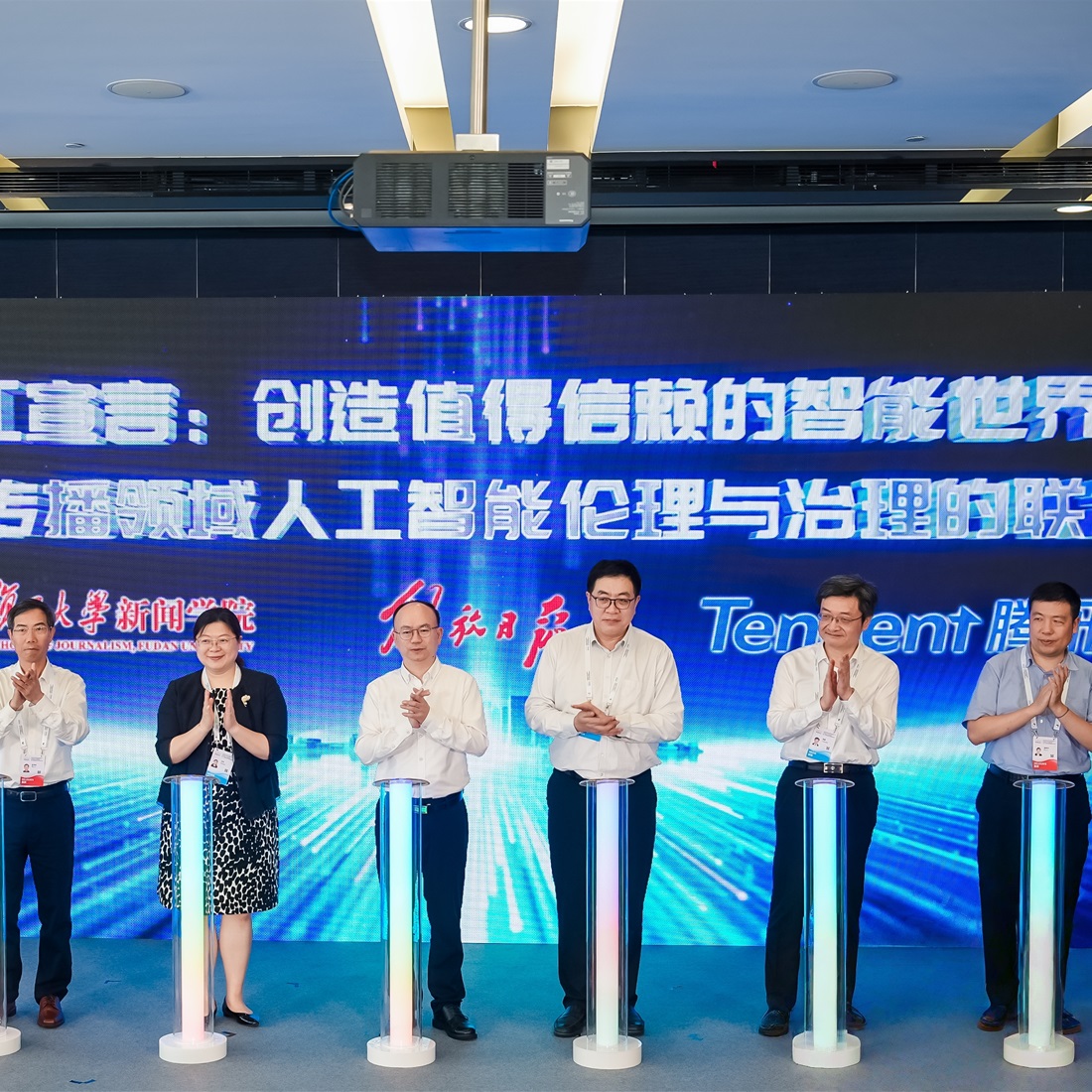
On July 17, President Xi Jinping opened the World Artificial Intelligence Conference in Shanghai. The next day, the 19th annual Artificial General Intelligence Summit kicked off in San Francisco. The Shanghai event highlighted humanoid robots, self-driving systems and advanced AI models; while San Francisco focused on coding agents, founders and investors.
It is tempting to see two separate futures from the twin events – China making AI tangible while America chasing artificial general intelligence. A better reading is that each side was confronting what the other already knows: Machine intelligence must leave the laboratory, but deployment without deeper capability soon reaches a ceiling. The next stage will need both.
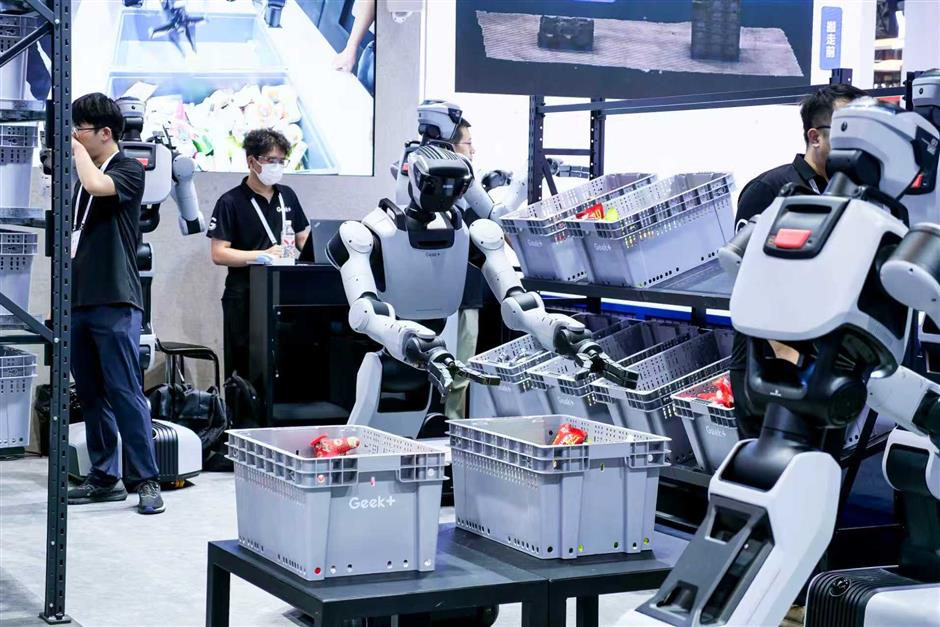
Xi's presence at the Shanghai event reinforced the top priority China places on AI as a national strategy, but the origins of the science are international. The quest for artificial intelligence began in 1956 at a Dartmouth University workshop in the small US state of New Hampshire. That's where the term "artificial intelligence" was first coined, leading to seven decades of work by researchers around the world.
Xi sought to build on the international future of AI, pledging that China will spearhead access to lesser-developed economies through the creation of the new, Shanghai-based World Artificial Intelligence Cooperation Organization, with 29 signatories and a global body dedicated to governance and AI collaboration.
"The development of artificial intelligence should not be a solo performance," Xi proclaimed, "but rather a symphony of global cooperation."
That vision was reinforced two weeks ago when the Global AI Capacity Development Network was launched in Geneva, involving 23 centers from 19 countries and organizations focused on education, open science and policy capability.
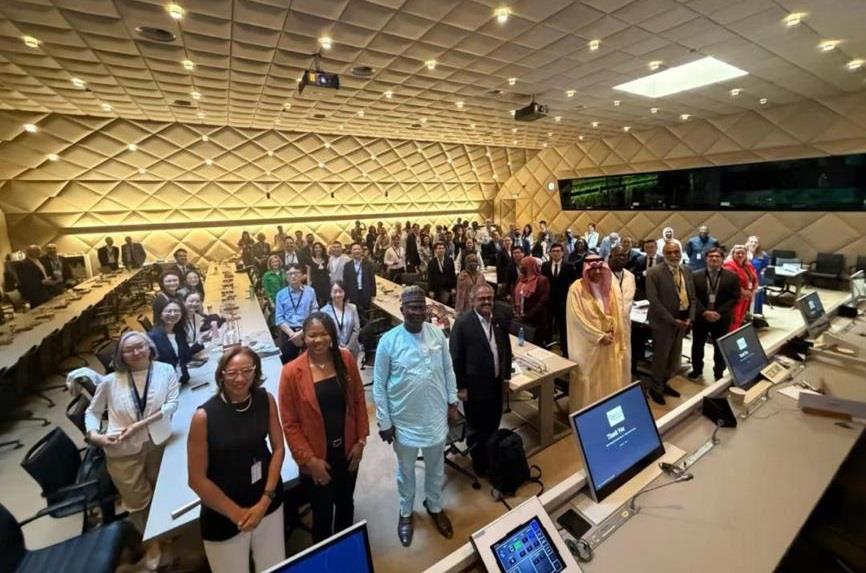
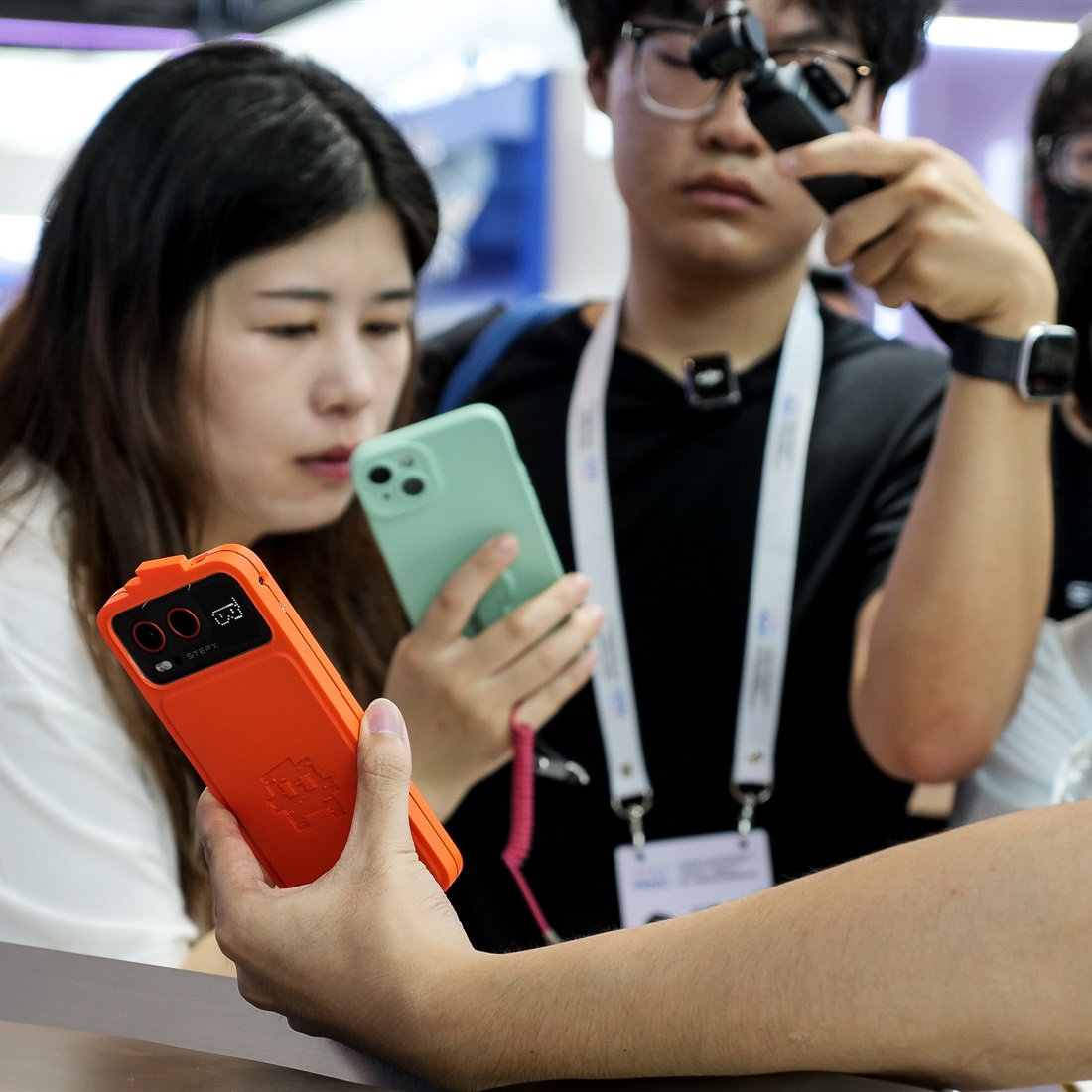
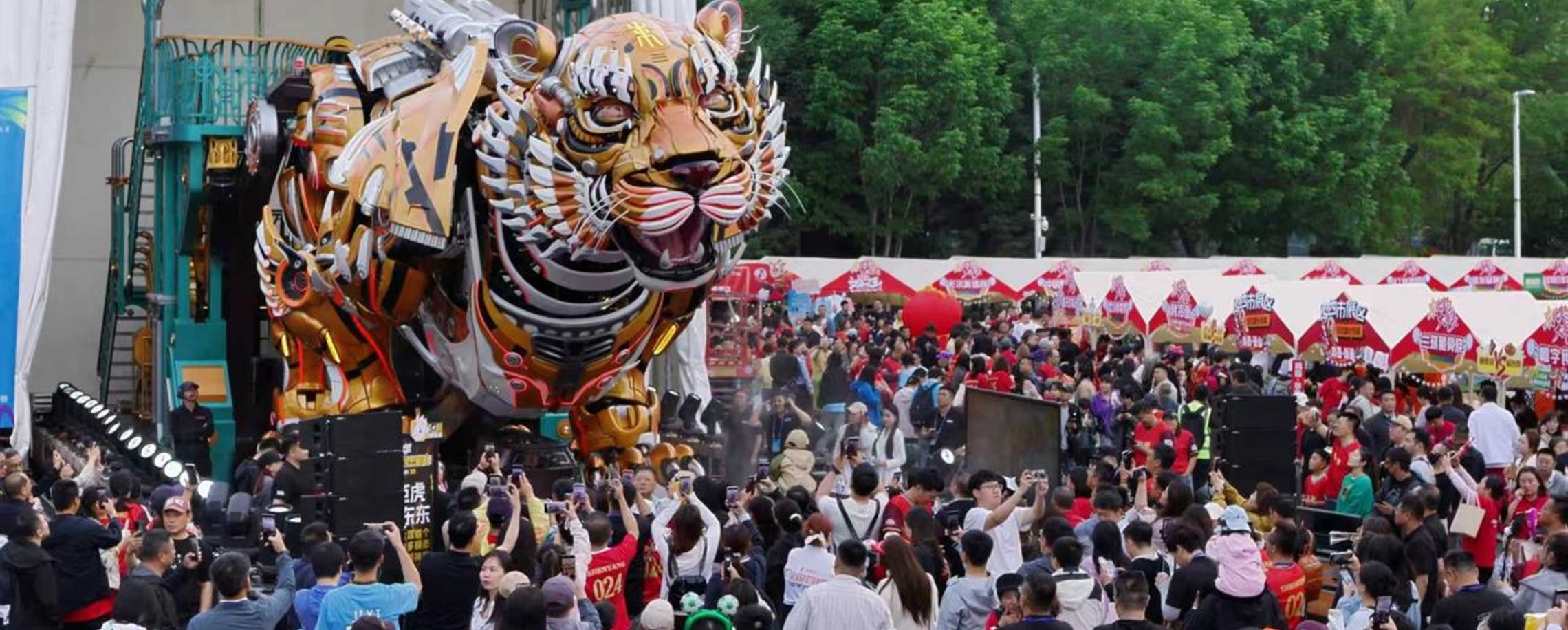
On the exhibition floor at the Shanghai conference, China's bet on the globalization of technology was clear. World models, embodied intelligence and physical AI drew crowds because they connect software to China's factories and households.
The catchphrase huandao chaoche (换道超车), or "changing lanes to overtake," can sound like a search for a shortcut. In practice, the new lane is built from hard-won strengths in batteries, electric vehicles, motors, sensors, factories and supply-chain engineering. Companies such as Unitree and AgiBot are trying to turn those assets into machines that can navigate warehouses, production lines and homes.
Robots are the visible end of a deeper stack. Their performance depends on language and multimodal models, agents, simulation, data and computing infrastructure – the less photogenic work being done by DeepSeek, Moonshot AI, Z.ai, Alibaba's Qwen teams, ByteDance, Huawei and many specialist suppliers. China's distinctive opportunity is not robots instead of models. It is the integration of models into the physical world, followed by the diffusion of that capability beyond a small group of technology companies.
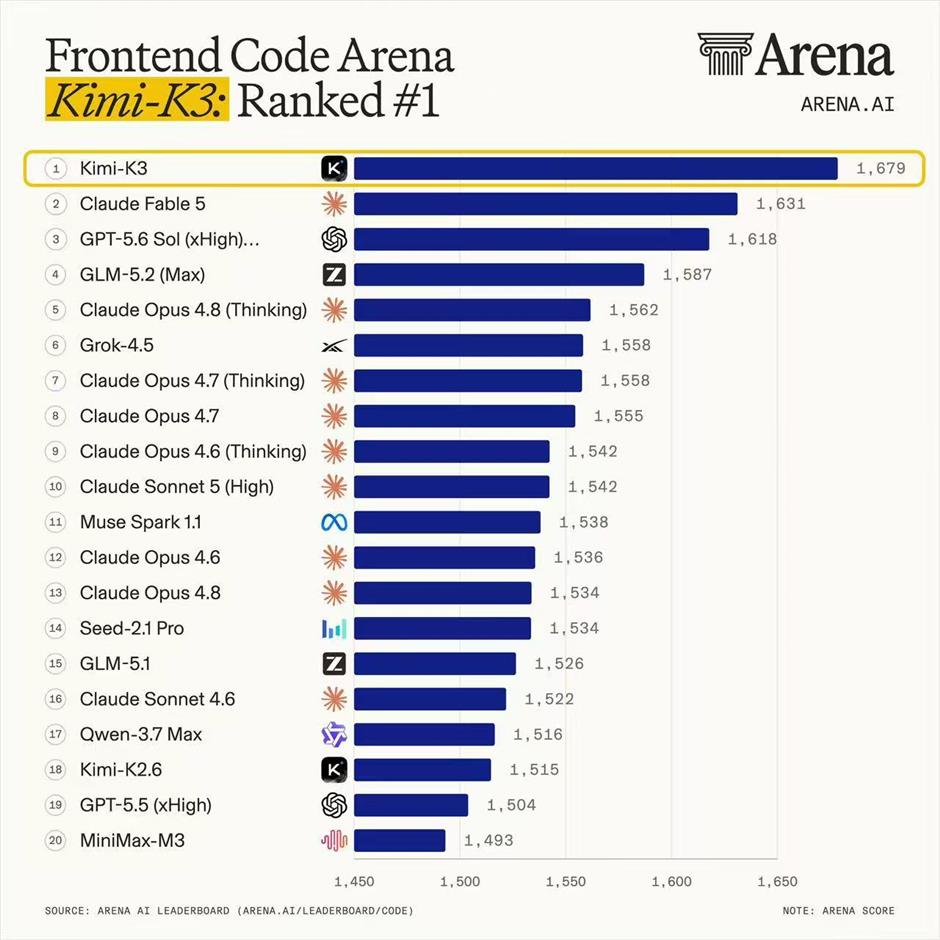
Moonshot released Kimi K3 model on the eve of the Shanghai conference, grabbing world attention with its 2.8 trillion parameters, 896 experts with 16 activated for each token, native vision and a one-million-token context window. Moonshot says architectural changes produced 2.5 times the scaling efficiency of Kimi K2.
More revealingly, K3 is not priced as a bargain substitute. Its output costs US$15 per million tokens. Moonshot is asking customers to pay for completed work, not merely inexpensive inference.
That is where "taste" enters the Chinese model race. Moonshot demonstrated K3 building a compact graphics processing units compiler, conducting a 48-hour simulated chip-design run, recreating an astrophysics workflow and editing a launch video from 56 clips.
But such demonstrations are not independent scientific validation. Moonshot candidly admits that K3 still trails Claude Fable 5 and OpenAI's GPT-5.6 Sol overall, and has a "noticeable gap" in user experience. But that admission helps define the next contest. Taste means knowing when a chart is unreadable, when an agent should ask rather than improvise and when a technically correct result is a work in progress.
This is the "second half" of the race described by Tencent chief AI scientist Yao Shunyu.
"AI is a long-term game, with the second half of the race just starting," he said in June, pointing to coding agents, multimodal systems and embodied intelligence. China has the users to test that proposition: QuestMobile counted 499 million monthly users of AI-native apps in May, up 85 percent in a year, while the China Internet Network Information Center counted 602 million generative-AI users by December 2025.
Those users are already testing AI in commerce, entertainment, education, automobiles and office work. Scale does not automatically produce intelligence, but it reveals which forms of intelligence people can actually use.
There is also a return to research fundamentals. In July, Z.ai co-founder Tang Jie announced a two-year "Touch High" plan that would shift the focus from short-term application revenue to long-horizon agents, self-training and safety governance. That is a meaningful departure from the internet-era habit of treating daily active users as the final measure of value.
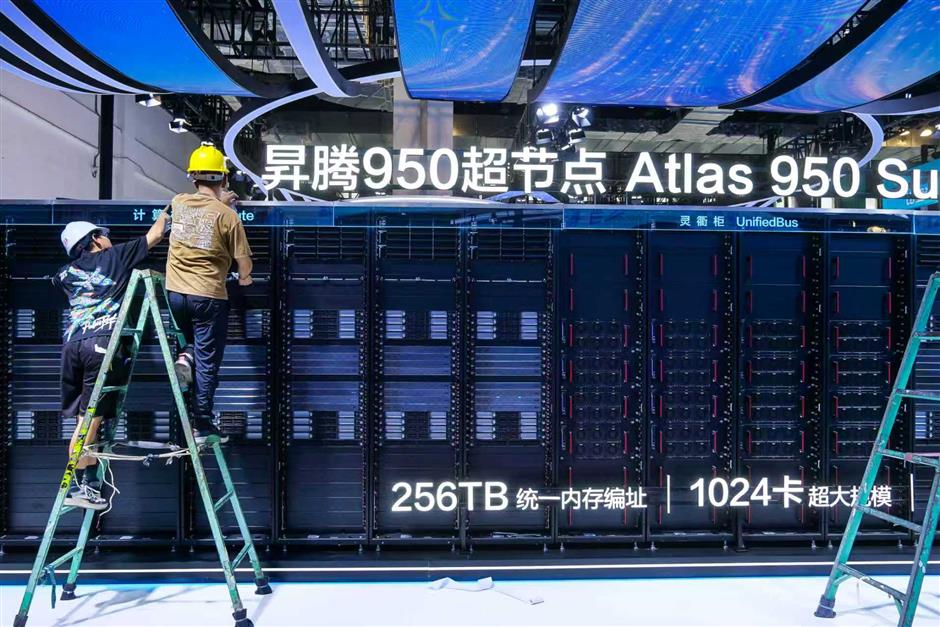
China's compute constraints remain real. Researchers interviewed during a spring tour by a group of AI writers and researchers repeatedly raised the issue of limited access to advanced computing, while Nathan Lambert from the Allen Institute estimated that research and development can consume roughly 80 percent of the computing involved in producing a frontier model.
Yet scarcity has also rewarded efficient architectures and open weights. DeepSeek, Qwen and Kimi have given universities, smaller companies and developers across the global south tools they can modify rather than merely rent. This is more than a defensive response to chip controls; it can become a durable contribution to global AI research.
The next obligation, therefore, falls heavily on companies. Chinese laboratories seeking global trust should publish stronger evaluations, report serious failures, fund independent red teams and protect the rights of workers, creators and users. China already has extensive government rules. Its next phase requires corporate commitments that can be examined from outside the conference hall.
The AGI Summit in San Francisco expressed the Silicon Valley's frontier conviction. Its program was more practical: agents, foundation models, robotics, coding, open source, five-minute product demonstrations and direct access to investors. The event's slogan moved from "AI assists you" to "AI executes for you."
American frontier labs still speak as if artificial general intelligence, and increasingly superintelligence, is an engineering destination. Their behavior is more concrete. Anthropic released Claude Fable 5 on June 9, emphasizing long-running work and coding. OpenAI released GPT-5.6 on July 9 across ChatGPT, Codex and its application processing interface. In San Francisco, Anthropic's Aengus Lynch was billed to discuss Claude for enterprise and alignment; OpenAI's Rohan Varma represented Codex. The frontier race is now simultaneously a research contest, a developer-tools war and a fight to become the interface through which companies reorganize work.
That battle is growing more intense. The Wired reported that contractors working on Meta's Cannes project posed as minors and sent rival chatbots more than 45,000 prompts in one testing round, probing suicide, sex, eating disorders and drugs. Meta described it as safety benchmarking; Google said it had not authorized the testing.
Palantir Chief Executive Alex Karp attacked the frontier labs from another direction, saying companies were "paying for tokens that create no value" while risking the loss of proprietary knowledge. Microsoft then launched its US$2.5 billion Frontier Company with more than 6,000 specialists to embed inside customer organizations and integrate models without ceding the customer's intelligence to one provider.

The competition is not simply Claude versus Codex. It is model labs versus cloud platforms, consultants and company-data incumbents versus who owns the learning loop.
Capital makes that competition unusually durable. Of the US$300 billion of global venture investment in the first quarter of 2026 reported by Crunchbase, AI companies captured US$242 billion. OpenAI's US$122 billion round alone accounted for roughly two-fifths of the total. In a politically and economically unsettled America, investment in AI is still one of the few shared convictions.
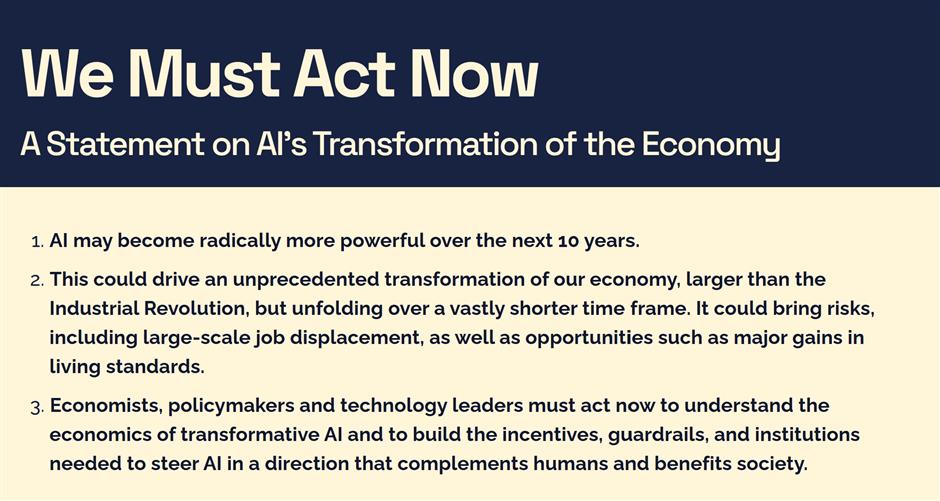
Social permission is less assured. The "We Must Act Now" initiative, which attracted more than 200 initial signatories, including 16 Nobel laureates, calls for AI that complements rather than displaces people. Opposition to data centers, anxiety about child access to harmful online content and arguments over work displacements are now part of American politics. That resistance need not be treated as anti-technology. It is the process through which a society decides who suffers from disruption and who receives the gains.
China has become a convenient scapegoat in the process: When a lab wants tighter controls, China is accused of distilling US models; when investors want faster permits, China is accused of innovating too quickly. When reformers seek worker protections, Eric Schmidt, former Google chief executive who now heads Relativity Space, and his AI chief Selina Xu return from China reporting that some Chinese executives would rather slow deployment than trigger a Luddite reaction.
Schmidt has argued that while America builds the most powerful systems, China is using AI to build a more powerful economy.
The China-US competition is no cause for panic. It has an inherent complementary nature. America's frontier culture needs stronger channels into industry and public life; China's deployment culture benefits from continued penetration in those realms. Each country is stronger near the other's missing pieces.
The most important China-US dialogue may begin with each side becoming curious about the other's questions.
At the Shanghai conference, President Xi called for "mutual learning between civilizations" and for technology that preserves cultural differences. AI systems respond not only to calculations, but to grief, doubt, conflict, ambition and love. Every model, therefore, carries an image of human beings, whether their creators acknowledge it or not.
China is more open to this reflection than many Western observers assume. When Pope Leo XIV published the Magnifica Humanitas this year, Chinese technology outlets and social media produced lengthy readings connecting the encyclical to employment, education, healthcare and digital life. One summarized the Pope's statement memorably: "Every sentence mentions AI; every word is about humans." This was recognition that a 2,000-year-old institution was asking what benchmarks cannot: What must remain irreducibly human?
Claude's "constitution" has received similar attention. The Beijing Academy of Artificial Intelligence described its explicit moral principles as a shift from reward and punishment toward education. Tsinghua's Institute for AI International Governance asked the harder question: If AI has a constitution, who writes it, whose values does it represent and who may revise it? This is intellectual openness – not accepting an American company's answers, but studying its experiment and continuing the argument.
Silicon Valley, in turn, is reopening its doors to the humanities. Anthropic's Amanda Askell has helped shape Claude's character and moral reasoning. In 2026, the company also recruited Harvey Lederman, a philosopher of AI mentality and Chinese neo-Confucianism. His award-winning work examines Wang Yangming's "unity of knowledge and action," the idea that genuine moral knowledge cannot be separated from conduct. The symbolism is rich – an American frontier laboratory asking a scholar of Chinese philosophy to work on alignment and character. Ideas are crossing the Pacific even as chips face tighter borders.
This makes a new narrative possible. Liberal traditions speak about rights and agency; Chinese thought deepens ideas of relationship and harmonious coexistence. Christian social thought insists on dignity and the common good; other traditions bring their own visions of community, wisdom and the living world.
The task is not to blend them into a slogan, but to let each reveal what the others fail to see.
The robots in Shanghai offer a final reminder. Intelligence enters history through bodies: the hands of a worker, the attention of a teacher, the vulnerability of a patient, the curiosity of a child and the ecosystems sustaining them. Mankind's flourishing cannot be reduced to tokens, automation rates or the arrival date of artificial general intelligence.
As the two most important players of the AI era, China and America can still build together if they imagine a future larger than victory – one in which AI helps different peoples live, create and coexist without surrendering the relationships that make AI worth having. The deepest openness is allowing another civilization's question to change one's own answer.
(The author specializes in the international expansion of Chinese tech companies in the advanced hardware and energy sectors. He also serves as a geo-economic expert for several think tanks in Beijing.)
Editor: Liu Qi
In Case You Missed It...
 Jul 19, 2026