Fostering Innovation-Driven Development of Shanghai's Service Sector
Editor's note:
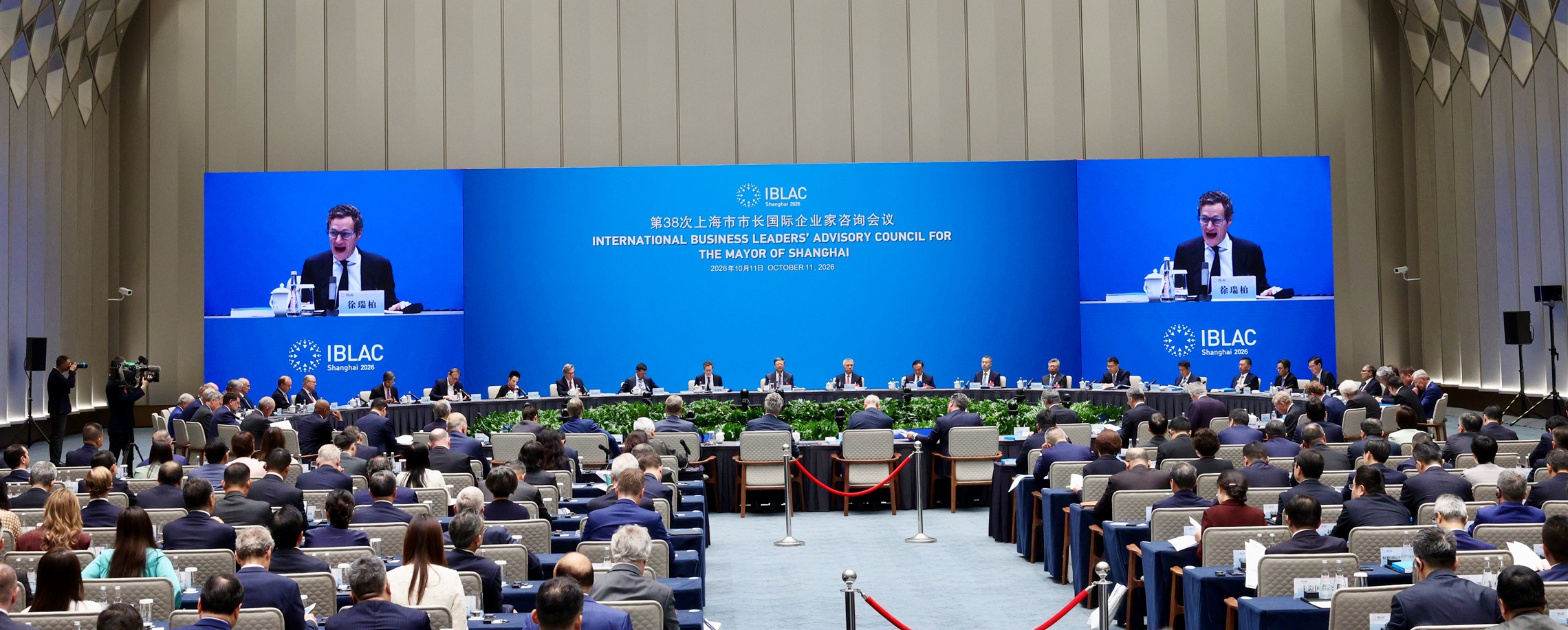
The International Business Leaders' Advisory Council for the Mayor (IBLAC) brings together top executives from leading multinationals to exchange insights on Shanghai's development strategy. Each company brings forward a paper that draws from their global practices and local insights. Shanghai Daily has selected and summarized some of the astute suggestions to this city.

While Shanghai's services GDP is substantial, its productivity per effective population (residential and visiting) currently trails behind global peers like New York, London and Singapore. This disparity is partly driven by a higher concentration of manufacturing and a lower weight of high-productivity professional and technology services compared to other global hubs.
In most developed economies, the services sector accounts for 70-85 percent of GDP (e.g., US ~80 percent, UK ~79 percent). In global cities like London or Tokyo, it can exceed 85 percent due to the concentration of finance, tech and professional services. Shanghai's services sector stood at 79 percent of GDP in 2025.
However, looking at GDP percentages can be misleading when seeking to define a global city's future growth services sector strategy. Absolute services GDP is a more meaningful comparison.
It is also important to compare these cities based on both population and annual number of visitors, both of which are key drivers of services GDP. Most analyses often use metro-/urban-region populations, rather than city proper populations, as the former better reflects their true economic footprint.
Going a step further, we could consider each city's living population and the visitors' population adjusted for the duration of their presence in the city. This is an interesting metric because it adjusts the economic output of a city for its "effective human contribution."
Several observations emerge:
- Cities tend to specialize and leverage historical strengths: As prime examples of this observation, London, New York and Hong Kong remain strong in financial services. San Francisco and Singapore show strength in technology services. Hong Kong and Singapore thrive as international ports and trade centers.
- Services vary in productivity: They range from very high in IT, AI and professional services to much lower in catering, logistics and domestic services for example.
- Shanghai has a large and growing number of visitors: This is thanks in part to the attractiveness of the city and the new visa-free policy for 55 countries. Still, the number remains low compared to the size of the living population in the city, and visitors tend to stay fewer days.
A dual-track strategy addressing both the resident population and an expanding visitor base could help achieve Shanghai's longer-term growth objectives through 2035.
Additionally, Shanghai should leverage technology as a critical lever to enhance service-sector productivity and improve quality of life.
The services sector stands to gain significant advantages from digital transformation, primarily through enhanced productivity and operational efficiency achieved via the automation of routine tasks. This shift not only lowers operating costs through cloud-based solutions and process automation but also revolutionizes the customer experience by offering personalized, 24/7 service delivery.
Furthermore, the integration of AI and advanced analytics facilitates more precise, data-driven decision-making. These technological advancements also expand market reach through digital platforms and pave the way for innovative business models, such as the rise of subscription services and the platform economy.
In summary, there is great potential for Shanghai to increase its services GDP, consistent with its "Five Centers" (economy, finance, trade, shipping and science and technology) and its willingness to keep a healthy manufacturing sector.
Editor: Liu Qi
In Case You Missed It...

 Oct 11, 2026