IBLAC Tips AI to Drive City's Future Growth
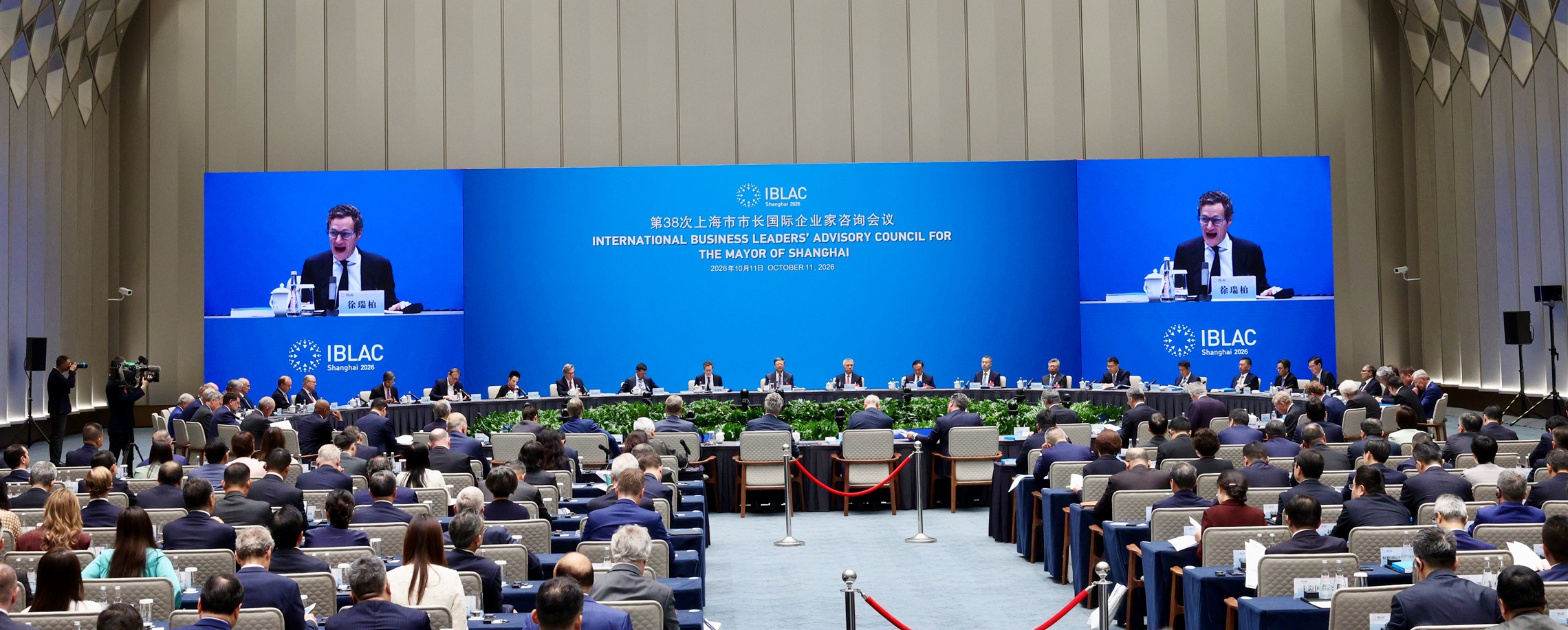
Better use of artificial intelligence, attracting more talented people and increasing investment in education were among the suggestions for Shanghai's future development made by participants at the annual meeting of the International Business Leaders' Advisory Council for the mayor on Sunday.
IBLAC members also insisted that Shanghai's policies should remain transparent, consistent and efficient, The council is a platform for seeking advice from the best global companies for the city's growth.
"Predictability is very important for companies to make important decisions, and I would suggest Shanghai keeps its policies transparent, consistent and efficient," said John Waldron, president and chief operating officer of Goldman Sachs, responding to an on-site question from Shanghai Mayor Zhu Zhongming on how to improve the city's attractiveness for foreign investors.
Jason Furman, a professor at Harvard University, said AI has been transforming many industries and it will do the same to a city's development, starting from affecting how the government works.
"AI won't steal any jobs from people, but those who can use AI more adeptly will… With AI, people can increase productivity and reliability, which is essential for many businesses," he said in a keynote speech.
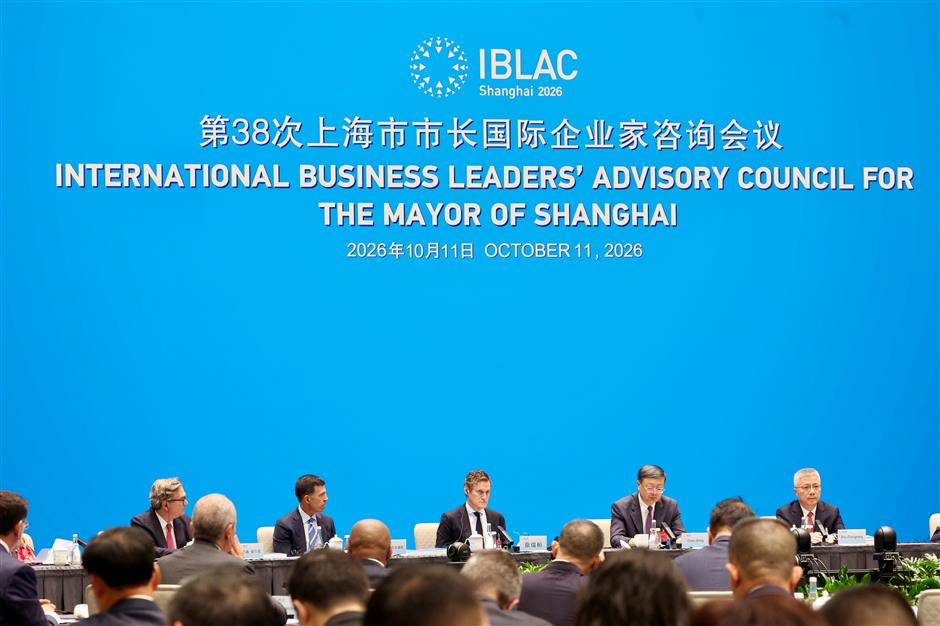
Shanghai Party Secretary Chen Jining said at the opening that the city, after achieving solid success in the past, would continue to implement reform and opening up to the outside world, while making the service sector a key part to lead innovations and upgrades.
"The market-based reforms are expected to arise more from the demand side in the next five years, and we hope to be better powered by technologies for higher quality growth," Chen told the meeting themed "Fostering Innovation-driven Development of Shanghai's Service Sector."
Bjørn Gulden, CEO of German sportswear firm adidas, said Shanghai has strong foundations in infrastructure, innovation and consumption. The next frontier is deeper human connection.
"Emotional vitality of a city can become not only a new form of consumption, but a new source of urban competitiveness," he added.
Morten Wierod, president and CEO of Swiss automation firm ABB Ltd, said the city of the future will work like an intelligent organism, which will run on frontier technology, prioritize green development, and balance operational efficiency with services that address people's needs.
"For Shanghai, already a leading global center with established industries and a track record of innovation and development, harnessing AI will accelerate the city's competitiveness while improving quality of life for its residents," he observed.
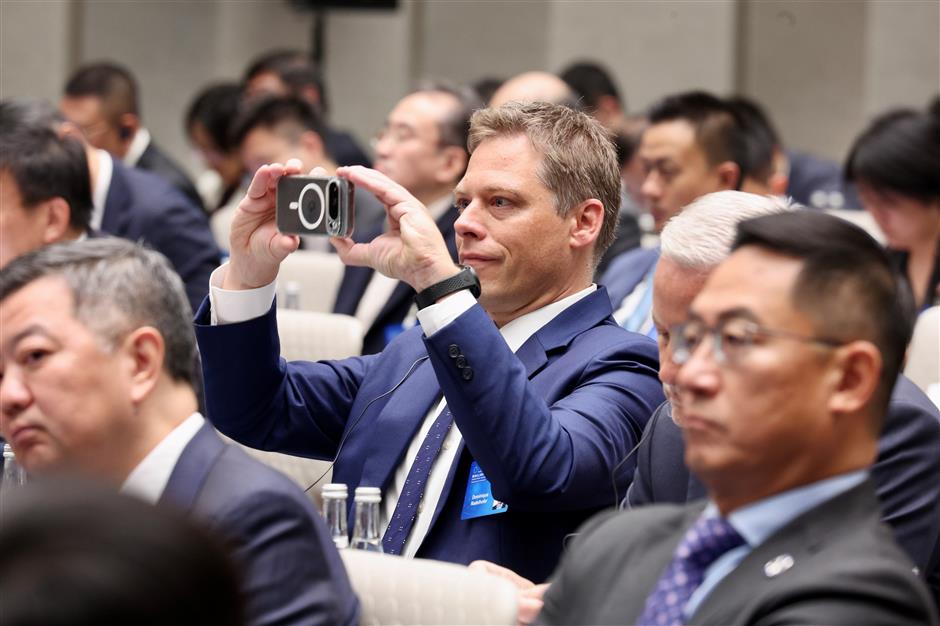
Mohamed Kande, global chairman of US-based consulting firm PwC, noted that AI is the defining technology of our era, but its value will be decided only by who puts it to work in real work applications at scale.
"Shanghai should make use of its distinctive opportunities to build itself into a model for AI in professional services, standing alongside New York, London and Singapore when the city combines one of the world's deepest real economies, China's strongest AI ecosystem, and Asia's most complete cluster of international professional services," he said.
Indeed, AI, along with other technological innovations especially in the service sector, has strengthened Shanghai's economic performance. In the first half of this year, the city's gross domestic product increased 5.6 percent year on year to 2.78 trillion yuan (US$412 billion), ahead of its target for the year. The gain was led by the service sector, which rose 5.9 percent to 2.21 trillion yuan, or 79 percent of the total economic output.
It also helped the city attract more foreign investment. In the first eight months of the year, Shanghai hosted 4,172 new foreign-invested companies, with implementation of foreign investment rising 6.9 percent to US$11.6 billion. The top three sectors favored by foreign investors were business services, retail and technology research.
"Shanghai's next chapter will depend on how effectively it turns technological and economic change into higher productivity, better services, and broader opportunity. IBLAC's mission is to serve that future: to keep Shanghai in dialogue with the world, deepen the relationships that support its development, and bring global experience to the work of helping the city grow and innovate," said Rob Speyer, chief executive officer of US-based property firm Tishman Speyer, who chaired this year's council.
Starting from 12 members from eight countries in 1989, the IBLAC now has 42 members from 15 countries, covering a wide range of industries and businesses from manufacturing, automotive, finance, consumer goods to technologies.
Editor: Yao Minji
In Case You Missed It...

 Oct 11, 2026