Multi-Channel Networks Shift as Traffic Growth Peaks
China's livestreaming e-commerce market surpassed 5 trillion yuan (US$726 billion) in 2024, placing multi-channel networks (MCN) – online talent agencies that are essential links between content production and commercial monetization – at a new crossroads.
The number of MCNs has surged from hundreds to tens of thousands in recent years, while content formats have evolved from text and images to short videos and livestreaming. Influencers, typically content creators with a certain level of followers and platform influence, are also being incubated at a much faster pace.
However, this rapid expansion has brought mounting pressure, including rising traffic acquisition costs, increasing content homogenization, and intensifying competition for talent, leaving some MCNs facing the need to adjust their business and profitability models.
What exactly defines an MCN?
An MCN is an operating model that brings together multiple content creators. They provide services such as content production, distribution, marketing, and monetization, while serving as a bridge between platforms and brands. In China, the development of MCNs has been closely tied to the rise of short video and livestreaming, gradually evolving into different models, including e-commerce-focused, general content and marketing-driven MCNs.
MCNs can be broadly understood as talent agencies for influencers. But beyond managing creators, they are also responsible for content production, traffic operations and commercial monetization.
In practice, MCNs handle content planning and traffic distribution, while also taking on the role of monetization. For example, Joy Media manages more than 1,000 influencers, with operations spanning livestreaming e-commerce, brand partnerships, and content management.
Among Joy Media's total sales of between 100 million and 250 million yuan in any given month, the agency's top influencer duo can generate over 100 million yuan some months, while another could contribute between 75 million and 100 million yuan, highlighting the critical role of top-tier talent and content in driving commercial conversion.
At the same time, the industry remains highly fragmented. By 2022, China had more than 24,000 MCN agencies and nearly 140 million streamer accounts. Demand continues to expand, with 87.8 percent of online content consumers regularly watching short videos or livestreams. However, under pressure from rising traffic, content, and talent costs, about 90% of MCNs remain unprofitable, indicating the industry is still searching for more sustainable business models.

Battle for top influencers
Competition in the industry has long centered on top influencers. A single top creator can often contribute more than 80 percent of an MCN's e-commerce sales. However, their strong bargaining power and mobility also create instability for individual MCNs.
In recent years, mid-tier influencers have become increasingly important. Since the second half of 2020, about half of the 50 fastest-growing accounts on Douyin, Kuaishou (1024.HK) and Taobao have been signed by MCNs, making mid-tier creators a key source of stable growth.
At the same time, the role of MCNs is evolving. Moving beyond influencer management and advertising placements, they are expanding into integrated marketing and long-term operations, offering brands a more comprehensive service chain. The focus of competition is shifting from "who has more influencers" to "who can consistently produce effective content and deliver conversion."
From 2018 to 2023, China's MCN market expanded from 25.2 billion yuan to 41.8 billion yuan, representing a 10.65 percent annual growth. The market is expected to reach 162 billion yuan by 2028, growing 31.12 percent annually between 2024 and 2028.
As competition in the domestic market intensifies, MCNs are accelerating their overseas expansion, with Southeast Asia emerging as a key destination. Data shows that in Indonesia, daily livestreaming gross merchandise value (GMV) on TikTok has reached between US$3 million and US$5 million, while during the 2022 Double 11 (November 11) shopping festival, livestreaming GMV surged by 408 percent, with orders increasing by 169 percent.
Chinese-backed MCNs have already gained a foothold in these markets, with several ranking among top sellers. Platform subsidies and traffic incentives are attracting more players, including Be Friends Holding (1450.HK) and Make Wonder MCN. For Be Friends, influencer marketing accounts for 70 percent of its overseas business, while distribution-based sales contribute 10 percent and livestreaming operations account for 20 percent. However, expanding overseas is not simply a matter of replicating the domestic model. It requires building localized supply chains, developing local influencer networks, and adapting to different consumer behaviors.
A new logic of content production
Technology is reshaping the underlying operating model of MCNs. The use of AI and related tools has lowered the barriers to content production while significantly improving efficiency. For example, an evaluation report for a 1.2-million-word novel can now be completed in 15 to 30 minutes, compared with about a week of manual work, greatly accelerating content screening and planning.
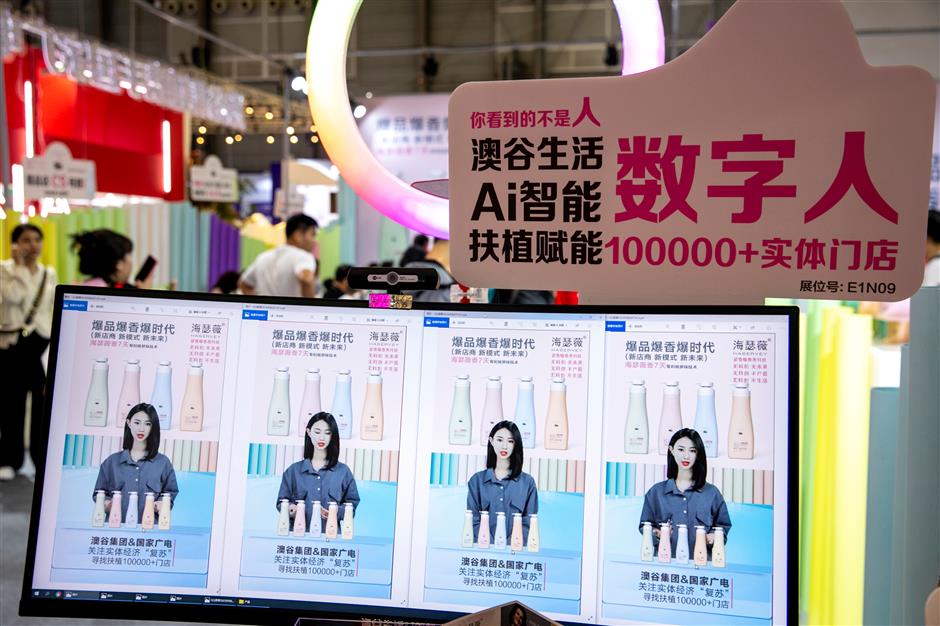
At the same time, virtual humans and digital content are developing rapidly. By 2030, China's virtual human market is expected to reach 270 billion yuan, with virtual idols, e-commerce assistants, and digital content hosts becoming increasingly mature, providing new formats and monetization channels for MCNs.
These changes are reshaping the industry's underlying logic. As content production becomes more efficient and tools become more widely adopted, MCNs are gradually reducing their reliance on individual top influencers, with content production shifting toward standardization and scalability. The focus of competition is moving from traffic acquisition to content production capabilities and conversion efficiency.
As traditional e-commerce accelerates its shift toward content-driven commerce, demand from brands for influencer marketing is no longer limited to one-off sales but is extending to brand building and long-term operations. Leading MCNs are expanding into overseas markets, deepening their presence in vertical segments, and adopting technology to improve content efficiency, evolving from talent agencies into integrated marketing service providers.
The MCN business used to be about who could capture traffic the fastest. Now, it is increasingly about who can turn content into a consistent and scalable capability. Top influencers still matter, but they are no longer the only answer. As platform-driven growth stabilizes and content supply continues to expand, the gap between MCNs increasingly comes down to content organization, operational execution, and the ability to drive commercial conversion.
(LeadLeo Research Institute is an original content platform for research on banks and companies and an innovative digital research service provider with nearly 100 senior analysts. It also publishes on Bamboo Works, a news platform that provides in-depth coverage to drive informed decision-making for investors.)
Editor: Liu Qi
In Case You Missed It...

 Mar 31, 2026