How China Becomes the World's Largest AI Film Laboratory
Chinese director and screenwriter Yu Baimei says he is one of "AI's loudest public advocates," but at this stage opposes AI-generated movies. The aerospace programmer-turned-screenwriter has experimented with AI content, from hometown nostalgia pieces to surreal shorts, and also watched thousands of AI film festival entries as a jury member.
He says the apparent contradiction in his views is down to the distinction between "AI-generated film in cinema" and "AI-generated content."
Of AI-generated film, "the technology is not ready yet, and audiences are not ready to pay for AI-generated content in cinema," he told China Biz Buzz at the recent Shanghai International Film Festival. "It's ready when audiences can't tell it's AI-generated, but I don't think current video-generation models can achieve that."
Yu's contradiction mirrors a debate within China's film industry this summer. The country is running the most aggressive, highest-volume experiment with AI video anywhere in the world, but the people closest to the film industry are still undecided on whether any of it belongs on the silver screen.
The scale.of experimentation helps explain why the debate matters.
China is processing 140 trillion AI tokens a day, a 1,400-fold increase from two years ago, the National Data Administration reported in March. Tokens are the units of data processed by AI models.
China Online, a major player in China's AI short-drama market, said in a briefing this month that video generation tops the country's token consumption at 55 percent.
What makes China's case structurally different is that this isn't only top-down. According to an annual report from ByteDance's Douyin video-sharing arm, submissions of high-quality AI content rose more than 14 times between March and November 2025. Accounts creating AI content nearly doubled, and accounts with 10,000-plus followers posting AI content rose 160 percent.
One of Yu's videos that went viral on Douyin was created from a single photo of a demolished amusement park from his Xi'an childhood, inspiring others to make similar videos of hometown buildings that were lost. Another video was about his home county, which attracted comments from other small counties who had never seen their own geography on screen.
"Before AI, no footage had ever bothered to show an area that small," Yu said, adding that is the format he considers best-fit for AI content generation at present.
This hobby-oriented activity, multiplied across hundreds of millions of users, drove rapid growth in the industry. AI short drama is forecast to top US$3.5 billion market by the end of this year, producing about 500 dramas a day at costs as low as US$30 a minute.
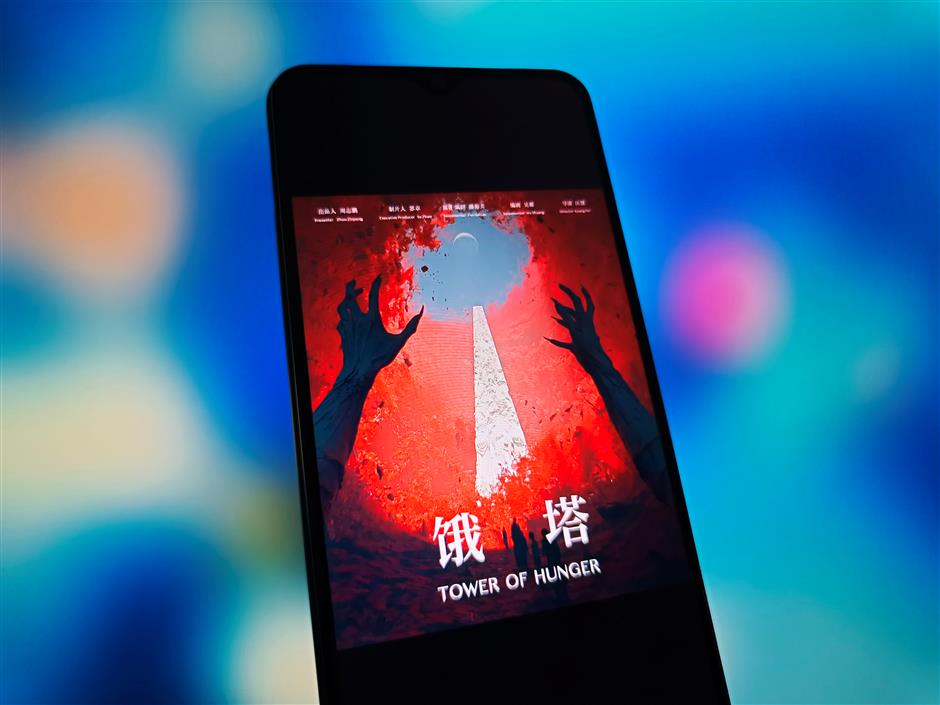
Its use in cinema-level films is more nuanced, deployed in pre- and post-production stages.
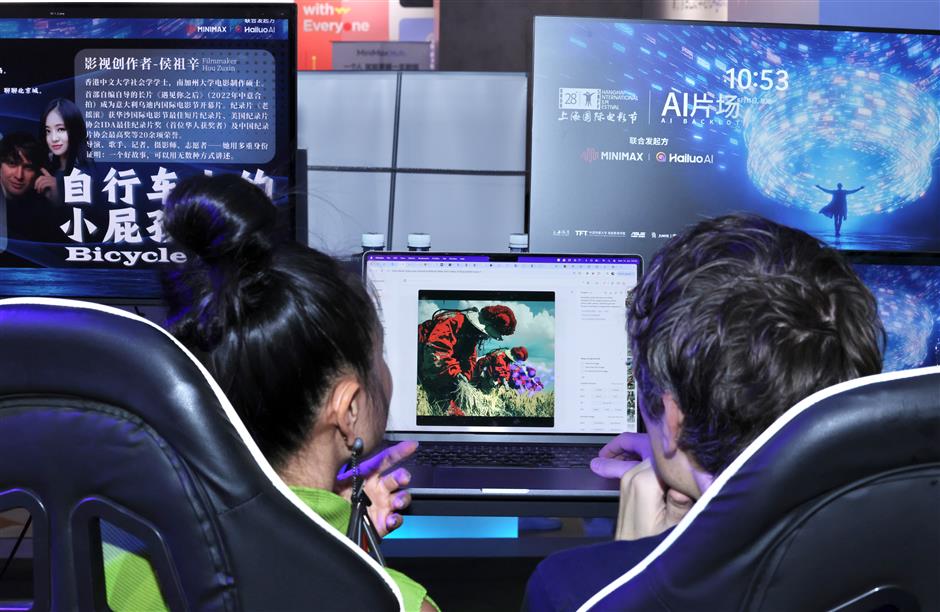
The Shanghai International Film Festival this year launched its "AI Backlot" program with MiniMax's Hailuo AI. It is a monthlong production lab pairing professional filmmakers with AI creators, where finished shorts compete live at the festival. It is the world's only major film festival running an AI production lab on site.
"It's interesting that many directors don't treat AI as tools, but rather as a collaborator. That is something we didn't expect," said He Jiashan, head of multi-modal marketing at Minimax.
"Many director and producers are not turning to AI for flashy effects, but to reduce pre-production costs and accelerate the process of verifying different ideas," she said. "It's a faster way to turn an idea into footage to be assessed. They want the results to be more controllable."
AI short dramas never demanded artistic risk, so growth of the industry was greatly accelerated as AI made it cheaper without friction. The prestige floor of the silver screen is where it gets more interesting.
Ren Ning, producer of big-budget movies like "1921," told China Biz Buzz that young creators now almost always submit self-made AI previews alongside their scripts before any funding decisions are made.
"These previews really help a producer like me to judge what the script would look like on the silver screen, and how much budget we are looking at," she said.
Yu said he doesn't think current models can close the gap, full stop. It's not a timing problem, he said, but an architectural one. Today's AI is a probabilistic pattern-matcher that can't hold true consistency across a feature-length cut. It also doesn't understand the physical world enough.
A real path forward, in his view, requires "world models" built around physical consistency rather than statistical imitation, which some companies are already trying to do.
Zhang Jingyu, a professor of directing at the Communication University of China whose AI-assisted student short won recognition at the World AI Film Festival, is in the more optimistic camp.
"Director-console tools across major platforms are solving panoramic spatial consistency," she said. "AI animated films have reached cinema-level quality, though live-action remains further out. AI tools are being upgraded in increasingly shorter times, so technology will get there. But the real problem is regulation and audience acceptance."
AI use can cause friction. Zhang describes her own process of making an ink-wash animated short like a strategic game with AI tools, just like how a director might battle with a traditional crew. Movie crews eventually understand what a director wants; AI often doesn't and could produce random results.
AI has entered Oscar-nominated cinema quietly. The 2024 films "The Brutalist" and "Emilia Pérez" both used AI voice tools and quietly credited the technology without publicizing the use of AI. In February, an AI-generated clip of Tom Cruise and Brad Pitt fighting in a hyper-realistic fight went viral, followed by a series of similar content with Hollywood movie elements or A-list actors. The viral wave drew immediate cease-and-desist letters from major Hollywood studios.
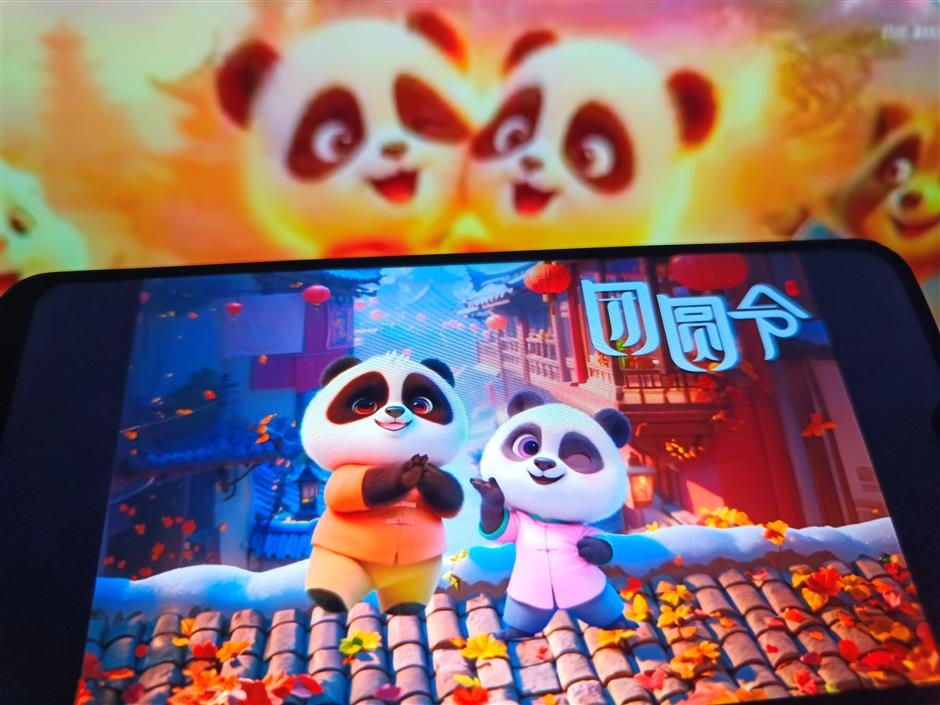
Chinese authorities and filmmakers are also discussing regulations for AI-generated content. In May, the sci-fi feature film "Sanxingdui," which uses AI tools extensively, got "dragon label" permission to screen in cinemas, though it was approved under the category animated feature. It may become the first AI feature length film to be shown on the silver screen globally. In February, the fully AIGC animation "The Reunion Journey" premiered in Chinese cinemas, the first to get theatrical release.
China isn't running this experiment because it has resolved the debate of whether AI belongs in a movie theater. But it's the only market experimenting simultaneously at every level – a hobby with 10 million-plus participants, a US$3.5 billion industrial floor and a prestige film festival serious enough to host live AI competitions. Meanwhile, Hollywood is still in the throes of negotiating AI terms through expiring contracts, and Europe's film industry is debating rules not even written yet.
What scale means for the art itself is anybody's guess. It's the questions Yu keeps returning to: when will AI-generated films be ready, will audiences ever be unable to tell the difference and whether it's even that bar that matters.
Editor: Liu Qi

![[Health Byte] Men's Sexual Organs, and Cancer](https://obj.shine.cn/files/2026/06/18/0c2a70ff-f6e4-4d36-8f1a-74e041b8e435_0.jpg)
