China's Banks Seek New Profit Channels, Embracing 'Going Global' Trend
Six US financial heavyweights were among the 17 corporate leaders accompanying US President Donald Trump on his China visit last week, and it's no coincidence that it was a higher proportion than on Trump's last visit nine years ago when there were only two among the 33.
The importance of finance as the oil of global trade and commerce has heightened in a changing world.
Michael Miebach, CEO of Mastercard, and Alfred Kelly, head of Visa, as well as the top executives from banks of Citi and Goldman Sachs, and private equity firms of Blackstone and BlackRock, were in Beijing on a mission: to make sure they retain a profile as China's financial markets expand globally.
"We're encouraged by the positive momentum following the discussions," Miebach said after a state banquet where top executives of China's Big Four banks were also among guests.
"For businesses, a stable and open environment is essential, and continued engagement helps build confidence and supports growth," he said. "Mastercard is committed to China for the long term – continuing to invest, deepen local partnerships and bring products and services that support businesses, consumers and the broader economy."
To that end, Mastercard announced a partnership with China e-commerce giant JD.com to expand payment systems in support of international business and enhanced services for foreign tourists in China.

It is a bold new initiative for Mastercard, which has traditionally tied expansion plans to linkups with banks. Last November, it partnered with Bank of China, one of the nation's Big Four, to launch a debit card aimed at helping Chinese companies establish a global payroll network. This March, it announced a partnership with the Bank of Shanghai to promote cross-border money flows.
Citigroup recently said it will expand its China investment banking team by adding selective senior bankers while aiming to win more business from cross-border deals of merger and acquisition.
Big Chinese banks, state-owned, are under pressure nowadays to get on the bandwagon of Chinese companies going global and reform how they do business. It comes amid declining interest rate margins, a key measure of the difference between interest earned from loans against interest paid out on deposits.
"The income earned from interest margins has much less weight for today's banks, which are seeking new business through a variety of channels," said Dong Ximiao, deputy director of Shanghai Institution for Finance and Development.
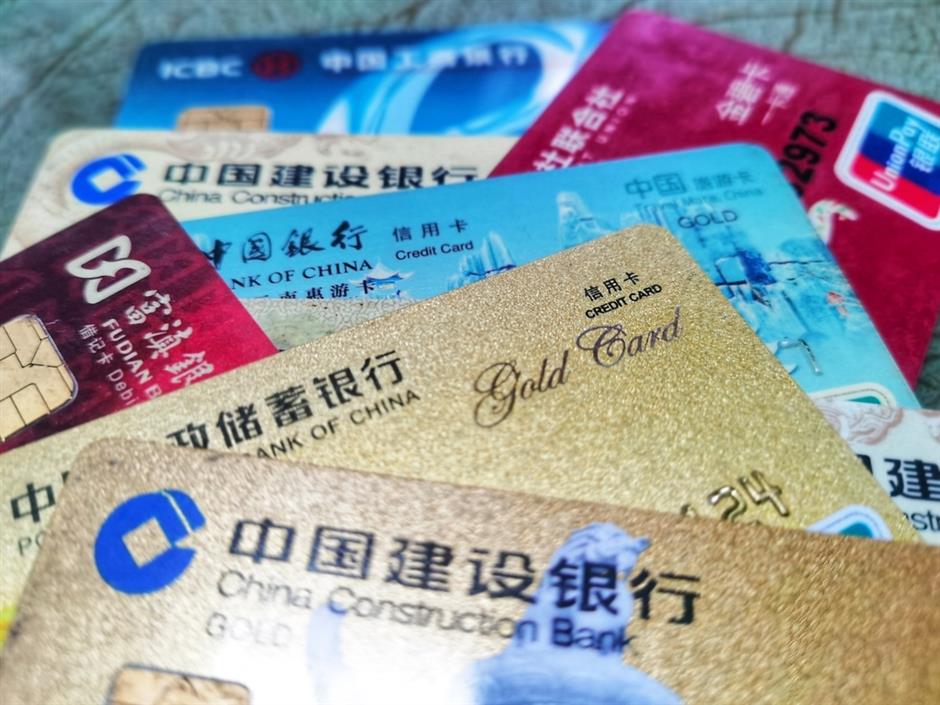
Bank of China, the world's fourth-largest lender, has been particularly aggressive on the reform front. It recently announced that it will cease operations of its credit card app on June 30 – one of the first major state-owned banks to fully retire a dedicated credit card platform and transfer those functions to its bank application. The change reflects a broader industry trend toward consolidation as mobile payment systems erode card profitability.
China's outstanding credit card debt at the end of 2025 fell to 696 million yuan (US$102 million), down 111 million yuan from a peak in 2022. Nearly 100 million cards have been cancelled in that period, with the number in circulation falling to about 707 million by late 2025 as mobile payments dominate consumer spending.
HSBC, Europe's largest lender, said in late 2024 that it would terminate Chinese mainland credit card operations because of poor profitability.
Ge Haijiao, chairman of the Bank of China, said in the lender's annual report that the bank will focus on core businesses and enhance core competitiveness. He said the bank will enhance its global network and international competitiveness, support commerce along China's "Belt and Road" initiative that stretches west across Asia and assist Chinese companies going global.
With assets of 38.4 trillion yuan, Bank of China reported a 2.1-percent increase in profit to 257 billion yuan. It outperformed Industrial and Commercial Bank of China, the largest lender in the world by assets, whose profit edged up only 0.7 percent to 368.6 billion yuan.
"We will also accelerate adoption of new technologies, including AI, to optimize customer experience, reduce operational costs and improve management efficiency," Ge said.
Commenting on it, Dong said "China's banking sector has entered an era requiring fine and intensive management, while new technologies and extensive cooperation are key to sustained development."
Finance remains the backbone of the economy, especially in an interconnected world troubled by trade imbalances, geopolitical strains and complicated tax policies. Just to mention, China's current 15th Five-Year Plan (2026-2030) also made it a key to promote greater integration between finance and technology.
Editor: Liu Qi