China Nurtures Technology Development as Engine of Growth
Editor's note:
China recently released the blueprint for the 15th Five-Year Plan (2026-2030), outlining how the nation will move up the value chain in industry and spur innovation, become more self-reliant in technology, and improve living standards. The new plan, which comes amid a more disquieting global environment, will go to the National People's Congress in March for adoption. This series provides insights into China's vision of its path forward.

The word "technology" appears 46 times in China's 15th Five-Year Plan (2026-2030) and "innovation" is cited 61 times. The frequency is no accident. Rather, it underscores the nation's serious pivot toward development of a digital economy and growth reliant on breakthroughs in advanced technology.
The plan stresses the nation's drive toward self-reliance in technology development to free China from dependence on foreign suppliers. It's expected to create a new a new wave of industrial efficiency and heighten the nation's global competitiveness.
The plan, which goes to the National People's Congress in March for approval, comes as the technology industry is already on the march in artificial intelligence, humanoid robotics and intelligent logistics.
New developments come by the month.
In November, tech giant Huawei unveiled Flex:ai, a new AI container software that drastically improves hardware utilization. By using compute-slicing technology, Flex:ai can run multiple workloads on a single card, potentially lifting typical processing unit utilization from 30-40 percent to about 70 percent. This directly addresses one of the largest cost bottlenecks in training massive AI models.
Alibaba's Qwen AI assistant has been downloaded over 10 million times, an acceleration record surpassing rivals like ChatGPT and Sora. Furthermore, affiliate Ant Group's multimodal AI tool Lingguan garnered 2 million global downloads within six days of its launch, highlighting the rapid consumer uptake of domestic AI applications.
According to research firm International Data Corp, the global digital revolution, marked by generative artificial intelligence and AI agents is thriving in China.
Data, model and supply chain security are being woven throughout the industry fabric, from infrastructure to AI applications, ensuring that the digital transformation is built on a trusted foundation, said IDC.
Humanoid robotics is another major hotspot, with the market on the cusp of an "explosive growth" period, according consultancy Bain. Mass manufacturing is predicted to reduce costs by up to 70 percent, potentially leading to annual worldwide sales of about 6 million units and a market value exceeding US$120 billion within the next decade.
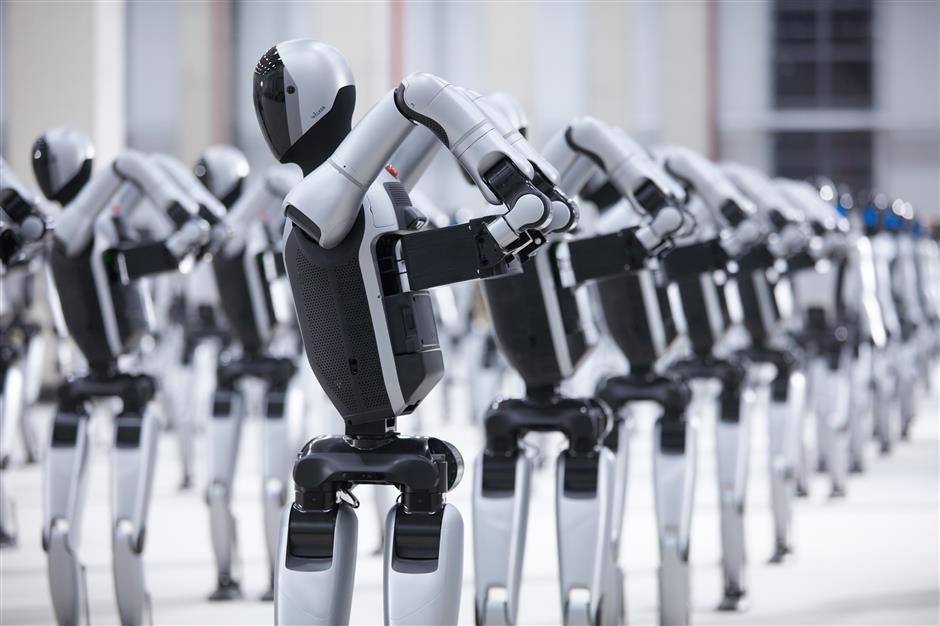
China is actively taking steps to be a leader in the field. A new national committee on humanoid robot technical standards has been formed, comprising top executives from leading robotics companies such as Unitree and Agibot, and chaired by a chief engineer from the Ministry of Industry and Information Technology.
Domestic robotics companies are securing major contracts, evidenced by Ubtech's Walker series of humanoid robots, which has attracted 1.3 billion yuan (US$180.6 million) in orders so far in 2025.
The true impact of the tech revolution lies in its deep integration with key industries, becoming a growth engine across multiple sectors.
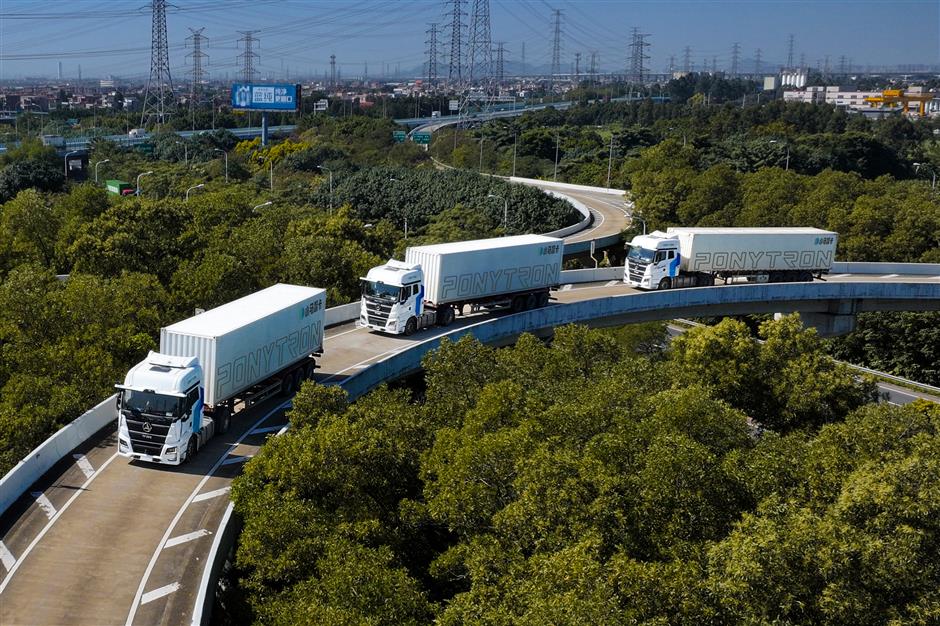
Nasdaq-listed robotaxi firm Pony.ai is actively responding to the "AI + transportation" policy strategy. The company is partnering with truck manufacturers like Sany Heavy Truck and Dongfeng Liuzhou Motor to mass-produce a new line of autonomous driving trucks, with initial operations planned for 2026. The driverless truck cuts per-kilometer freight costs by 29 percent and reduces single-vehicle carbon emissions by an estimated 60 tons a year.
Electric auto maker Xiaomi has open-sourced its MiMo-Embodied large language model that integrates AI applications with autonomous. It's another step forward in cross-sector synergy in China's tech industries.
Technological advancements in the automotive sector have provided a framework for the robotics industry. Bain said both industries share technologies such as visual perception, advanced batteries, power management and precision manufacturing.
Editor: Yao Minji
In Case You Missed It...
 Sep 21, 2026