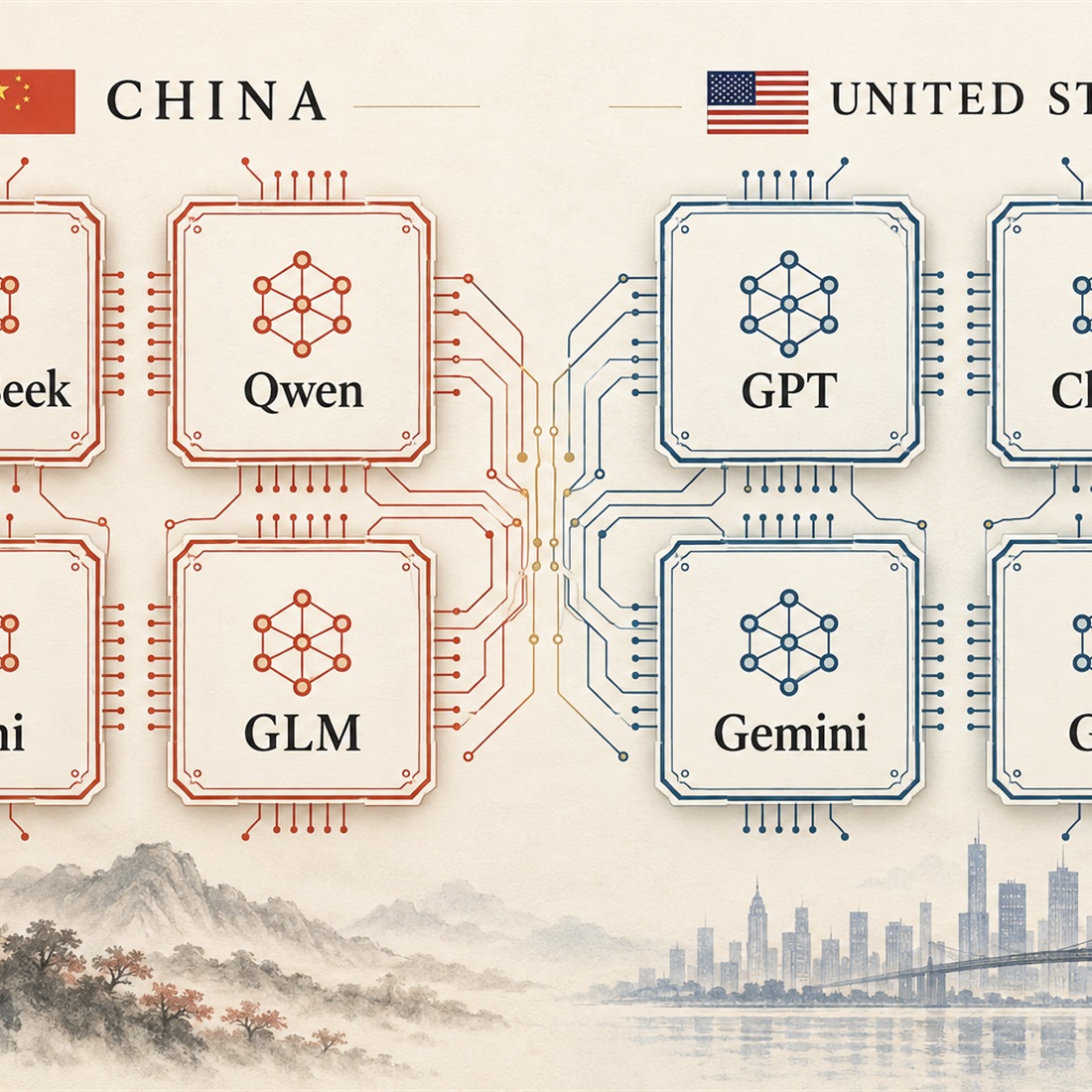
China underscores efforts to build a robust ecosystem for AI advancement
China unveiled an array of new corpus platforms and multilingual large models at the recent World Artificial Intelligence Conference (WAIC) 2025, underscoring its concerted efforts to build a robust underlying ecosystem essential for the advancement of artificial intelligence.
A debut at WAIC 2025 was the nation's first unified public service portal for corpus operations, developed in collaboration with Shanghai-based Kupas. This portal is designed to provide "AI-Ready" high-quality corpus data, facilitating streamlined corpus invocation and integrating blockchain technology to enhance transparency and traceability of data.
In further support of standardization, Kupas also released over 10 group standards for industry-specific corpuses during WAIC. Additionally, in partnership with the China Academy of Information and Communications Technology (CAICT), it co-published industry standards and guidelines for high-quality database construction. These foundational standards span diverse critical fields that include health care, education, finance, autonomous driving, scientific research and urban governance.
Chen Jie, vice mayor of Shanghai, highlighted the city's commitment to creating an "Shanghai Solution" for corpus foundations, aiming to contribute Chinese wisdom to the global AI landscape. He emphasized that Shanghai's AI industrial development strategy centers on ecosystem building, with a specific focus on breakthroughs in embodied intelligence, high-quality reasoning datasets and scarce datasets. The overarching goal, as stated by Chen during WAIC, is to establish high-quality corpus libraries through mechanisms of co-building and sharing.
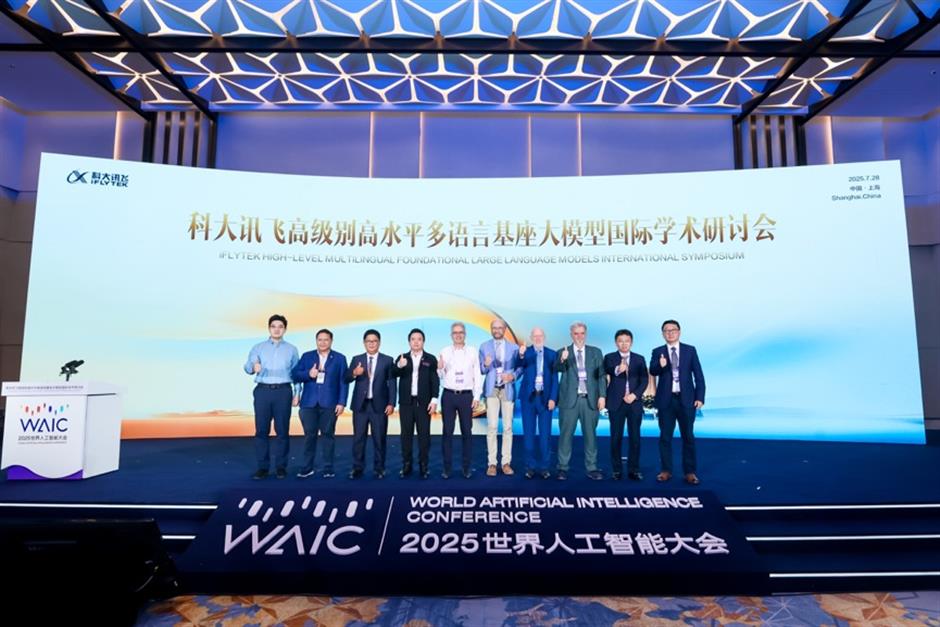
Also at the WAIC, Shenzhen-listed iFlytek hosted the High-Level Multilingual Foundational Large Model International Academic Seminar, bringing together around 30 representatives from industry, academia and research across nearly 20 countries and regions in Asia and Europe, reflecting global interest in multilingual AI.
Liu Cong, president of the iFlytek Research Institute, stated the company's ambition: "We hope to build comprehensive multilingual large models and their applications to offer the world a second option."
Liu introduced the upgraded version of iFlytek's large language model, Spark X1, which now supports over 130 languages. He claimed its overall performance in key languages such as Arabic, German, French, Korean and Japanese has surpassed that of OpenAI's GPT-4.1. The Spark Model also supports speech recognition for 100 languages, with its overall performance exceeding Whisper V3, and its speech synthesis for 55 languages demonstrates industry-leading results.
The WAIC exhibition concluded today, with the event expected to have attracted around 350,000 attendees to its conferences and exhibitions.
Editor: Liu Qi
In Case You Missed It...
![[Chinamaxxing] Qiufen, AKA Autumn Equinox](https://obj.shine.cn/files/2026/09/22/28d32ec3-070f-4b2c-bcd0-6dfcb977995f_0.jpg)
 Sep 23, 2026