China-US Competition in Frontier Tech Lifts Off into Space Orbit
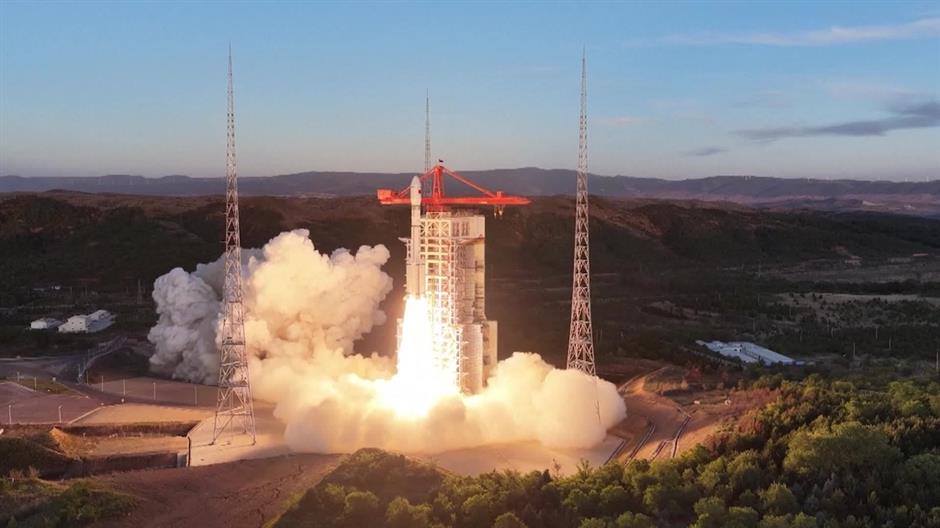
China is rapidly accelerating its presence in space-based artificial intelligence computing – a scientific frontier that merges satellite networks with advanced AI workloads.
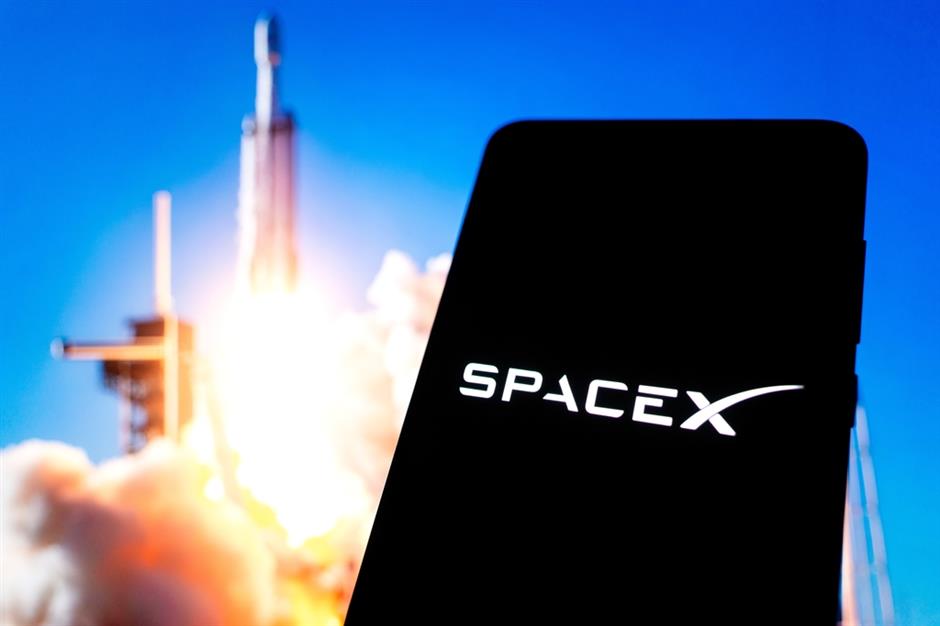
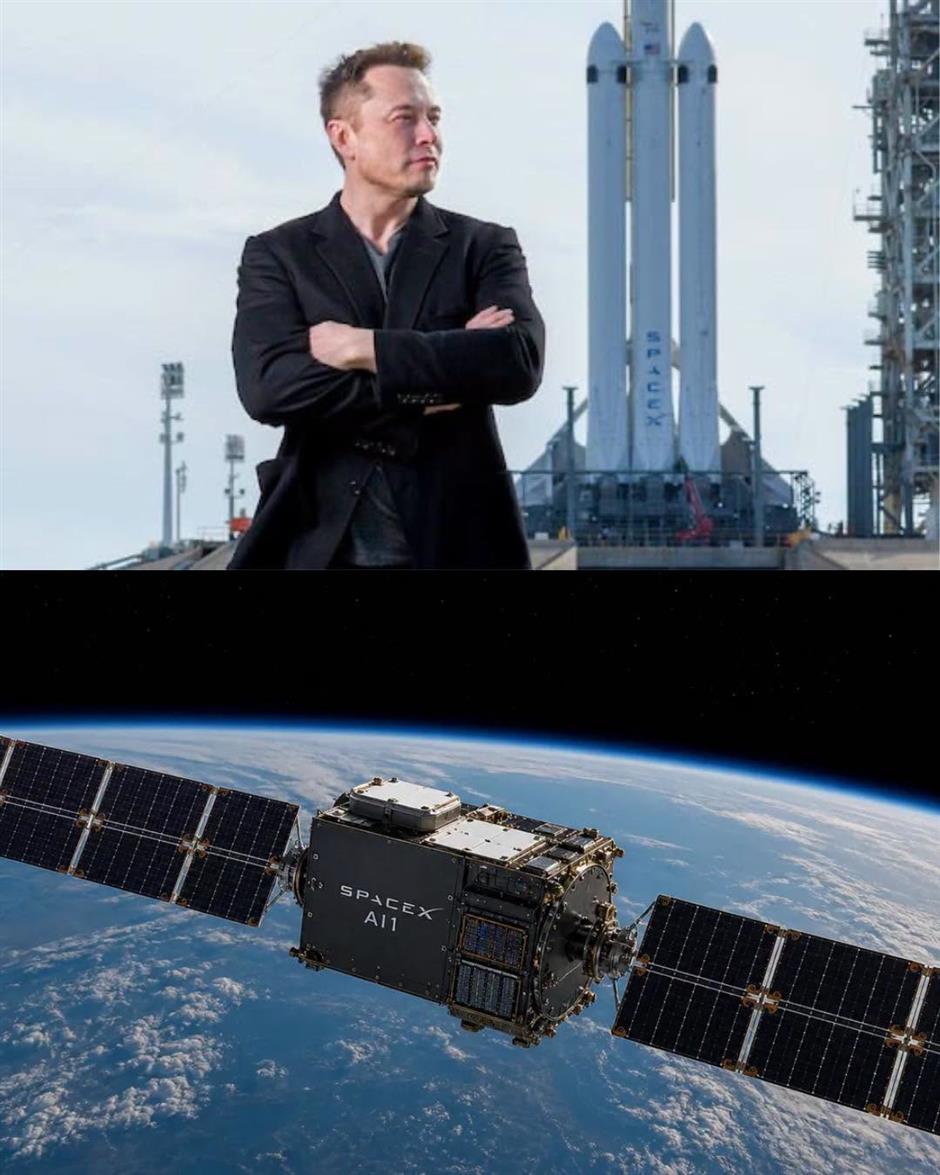
As orbital data processing shapes up as the next phase in the geopolitical tech race between China and the US, the stakes are rising. The escalation comes just as Elon Musk's SpaceX prepares for a record-breaking US$75 billion initial public offering this week, fueled heavily by its own soaring orbital AI ambitions.
Space AI computing fundamentally flips the script on traditional data management by placing data centers directly into Earth orbit. By installing high-performance intelligent processors onto satellites and linking them via a cosmic network, engineers are effectively turning satellites into "computers with wings."
Instead of merely capturing imagery and beaming massive raw data packets back to congested ground stations, these satellites can now think, analyze and process information in real time. This architecture slashes data-transmission delays from hours to seconds. Furthermore, by utilizing the natural chill of space and its abundant solar energy, orbital computing bypasses earthbound constraints and relieves mounting power and environmental strains on terrestrial electrical grids.
"The global space economy is entering a new growth cycle, driven by an accelerating transition from standard communication services toward orbital computing services," global market research firm TrendForce said in a note on Monday.
TrendForce projects the global satellite industry will reach a market value of US$447 billion by 2027, maintaining a robust annual growth rate of 14 percent.
While SpaceX commands global headlines, American tech titans Google, Amazon, and Nvidia are also investing heavily to secure their footholds in the orbital expanse. At the same time, China is aggressively mobilizing its own industrial ecosystem to ensure it is not left behind.
Beijing research hub established
Though US pioneers hold an early advantage, China is moving swiftly to consolidate its domestic capabilities. Last week, the Beijing Space Intelligent Computing Research Institute was officially established, aiming to anchor itself as China's national center for space-based computing.
The institute will spearhead cross-industry research and development in air-space-ground integration, orbital computing architectures and real-time remote sensing AI. Its stated objective is to catalyze industry revenue of at least 100 billion yuan (US$13.8 billion) by 2030.
The creation of the institute is aimed at addressing bottlenecks within China's aerospace supply chain. While the US has successfully cultivated a highly coordinated, closed-loop commercial ecosystem that enables rapid technological iteration, China's domestic space computing infrastructure has yet to coalesce fully.
"China's domestic sector currently remains small, weak and fragmented," noted Wang Shangguang, dean of the computer science at the Beijing University of Posts and Telecommunications.
Wang emphasized that China must establish centralized coordinating bodies to effectively harness its national industrial chain, build an integrated system and rapidly catch up with global benchmarks.
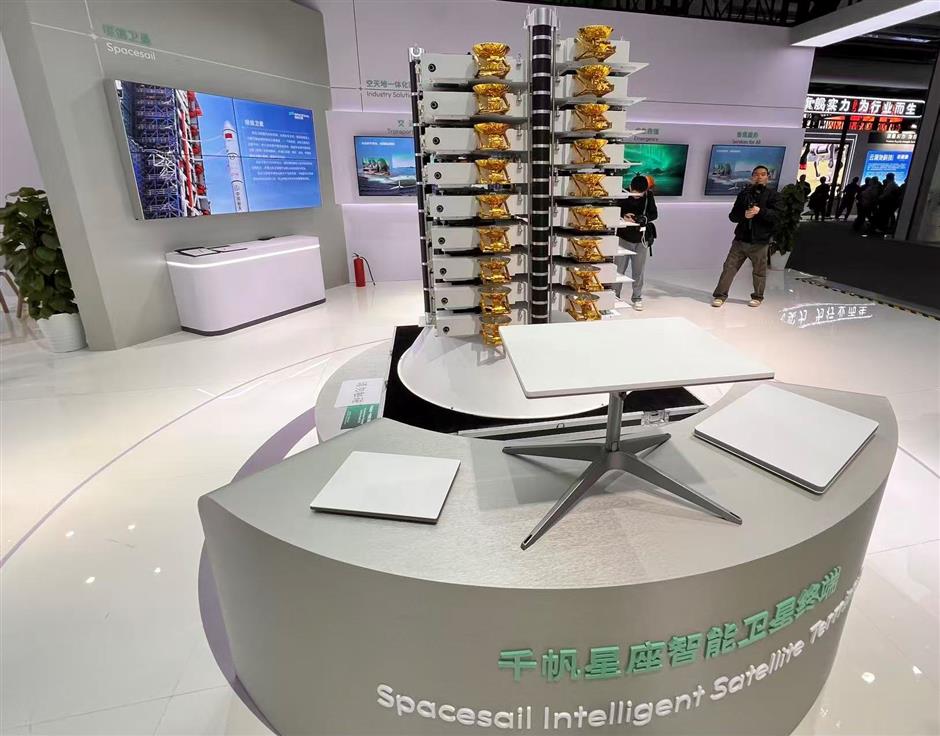
Local governments are answering that call. In Shanghai, municipal authorities have unveiled a matrix of specialized institutions and platforms to anchor a robust satellite Internet ecosystem. These include the Chinese Academy of Sciences' Innovation Academy for Microsatellites, Shanghai Spacecom Satellite Technology, Shanghai Aerospace Space Technology and Fudan University's Space Internet Research Institute. The alliance bridges major component manufacturers with telecommunications giants like China Telecom and China Mobile.
Crucially, Shanghai's Songjiang District has established a dedicated satellite industrial zone, aiming for a domestic production capacity of 300 commercial satellites annually and more than 600 active satellites in orbit by 2027.
Private enterprise plays vital role
Private tech giants are also entering the fray. This June, tech conglomerate Tencent's cloud unit formed a partnership with Guoxing Aerospace Technology to co-develop the Star Computing AI cloud service system. It will integrate Tencent's business cloud architecture with Guoxing's newly launched satellite constellation, marketing it as the world's first operational space-based computing network.
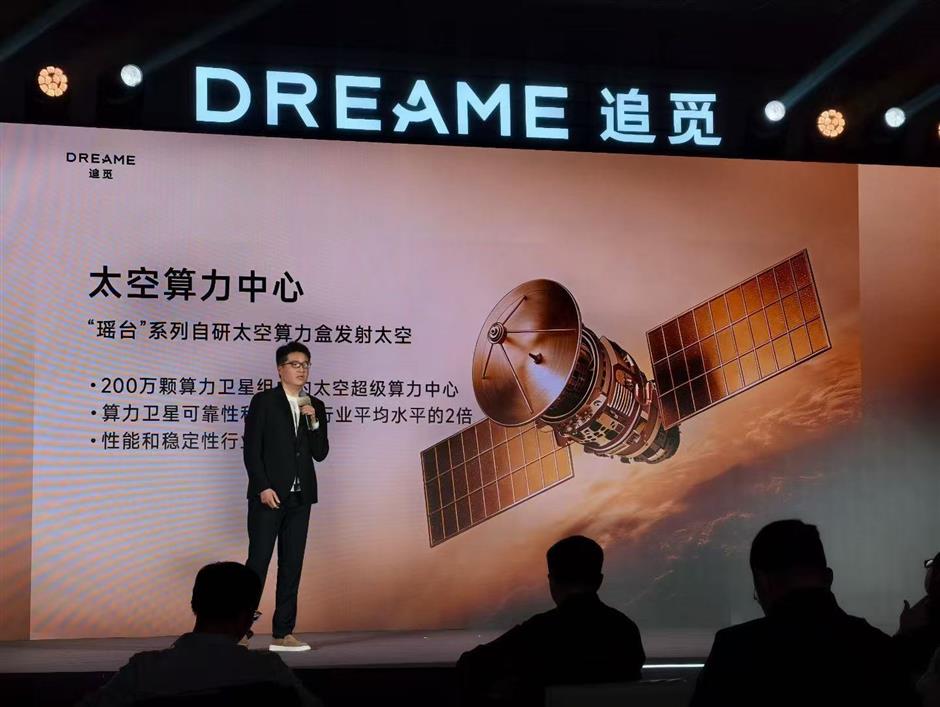
Chinese tech firm Dreame also said in March to build "Space AI Computer Center" with 2 million satellites.
The immense capital flowing into the space sector in the West underscores the urgency of China's push.
Ahead of SpaceX's historic IPO – which is poised to debut at a valuation of US$1.77 trillion – Musk revealed the technical specifications for the AI1, SpaceX's proprietary orbital AI data center satellite. Each AI1 satellite is designed with custom thermal management systems and expansive solar arrays capable of handling a peak computing load of 150 kilowatts. SpaceX aims to begin full-scale deployment of this orbital computing network by 2028.
"It's actually much simpler than a Starlink satellite," Musk remarked, emphasizing that the engineering is already technically and commercially mature.
The commercial viability of SpaceX's infrastructure was validated further by a compute-leasing agreement with Google. Google will pay SpaceX US$920 million per month, from October of this year through June 2029, to secure access to roughly 110,000 Nvidia graphics processing units and related server infrastructure. While initially tied to ground-based clusters originally, the multi-year partnership establishes a potential bridge for Google to integrate space-based compute capacity once SpaceX's orbital data centers go live.
This is mirrored by broader US tech alliances, including Google's ongoing integration with Planet Labs' imaging satellites, Nvidia's backing of orbital AI training startup Starcloud, and Amazon's collaboration with Jeff Bezos's Blue Origin to map out future gigawatt-scale space data infrastructure.
Analysis of layers in US-China race
While it remains premature to predict when China will fully close the gap with the US, China Biz Buzz analyzed core hardware and logistical layers, revealing distinct advantages and hurdles for China's space computing path.
In the chip layer, the US dominates via Nvidia's global standard for graphics processing units or GPU. While China lacks direct access to Nvidia's top-tier silicon, it relies on domestic Nvidia equivalents and holds highly competitive, specialized engineering in radiation-resistant and low-power microchips optimized for harsh space environments.
In space solar power, the US is developing high-power density arrays, highlighted by SpaceX's AI1 massive 70-meter deployable wings. However, China is exceptionally strong here. Because AI computing satellites consume over 10 times the power of traditional hardware, 100-square-meter solar arrays are becoming the baseline, and China commands an unassailable, highly localized supply chain for solar panels and advanced space-grade materials.
In launch infrastructure and costs, the US is far ahead. SpaceX has driven commercial launch costs down to roughly US$500 per kilogram, with a trajectory targeting US$200 via Starship. For China, launch costs remain a significant bottleneck, sitting at several thousand dollars per kilogram, meaning catching up requires rapid technological breakthroughs in reusable rocketry and high-frequency launch schedules.
Finally, in space communications, the US is highly mature, utilizing cross-linked laser arrays across the massive Starlink network. But China is highly competitive here, with a localized laser communication supply chain fully established, offering distinct structural and technological advantages in satellite-to-satellite data routing.
Editor: Liu Qi
In Case You Missed It...
![[Shanghai Stories] From Politics to President, Evelyn Figueroa in Shanghai](https://obj.shine.cn/files/2026/10/15/fb68cd03-a1ab-423d-b9f9-e12ecebfd169_0.jpg)
 Oct 15, 2026




![[Quick News] Payment App Wise Now Works in China](https://obj.shine.cn/files/2026/09/18/67ff807a-4a17-4b7c-95c2-f698c212ba80_0.jpg)
