China's Rocket Recovery Milestone Begs the Question: Who Can Get into Space Cheapest?
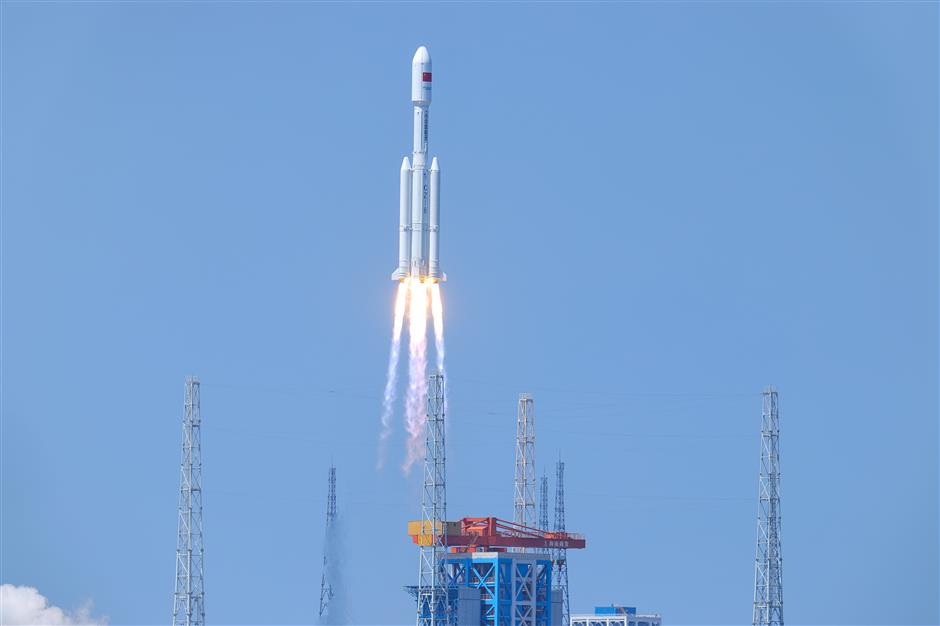
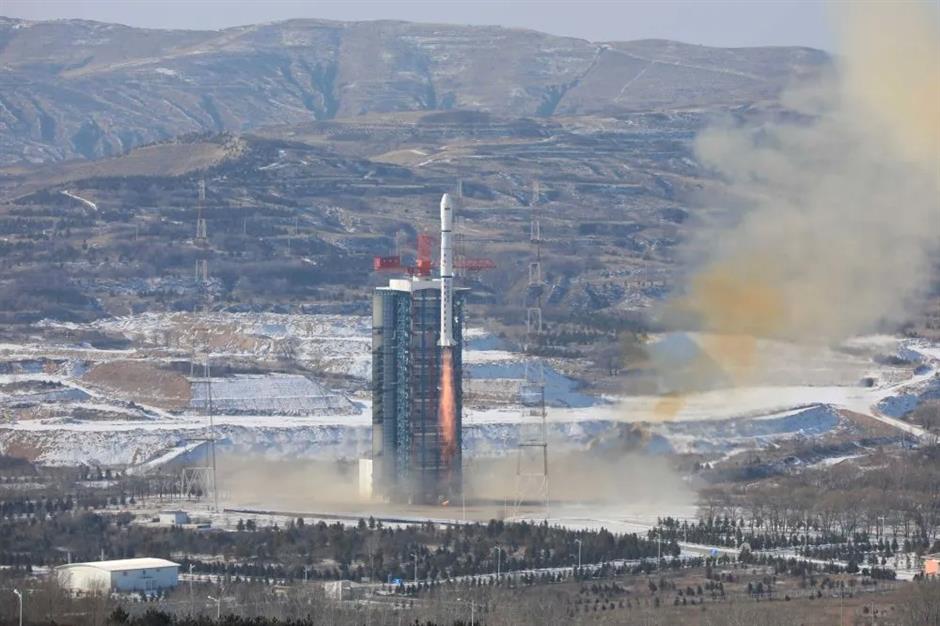
On July 10, a Chinese rocket dropped into a net. That wasn't a metaphor, but an actual, physical net of ultra-high-molecular-weight polyethylene (UHMWPE) supported by four offshore, 36-meter-high steel towers across the football field-sized recovery ship Pioneer.
The Long March 10B rocket's first stage fell out of the sky, hooked itself into the net, and became the first booster in history recovered by this method. China is now the second country after the United States to demonstrate a full engineering pipeline for large-payload reusable rockets. The Long March 10B can carry at least 16 tons into low-Earth orbit.
Chinese embassy in the US posts a video explaining this new technology.
Rockets that can be used multiple times, thus reducing launch costs and increasing frequency, are critical in the race to establish low-orbiting satellite clusters, space-based AI-powered data centers and even future exploration of outer space.
China's first net-capture rocket recovery is an opening gambit to see who can develop the technology at the lowest cost.
News coverage of the China feat yesterday lit a rocket under shares of Chinese companies deeply involved in that pursuit. Global headlines asked: Can China rival SpaceX in reusable rockets?
For years, recovering boosters for reuse was problematical. SpaceX solved the core engineering challenge a decade ago. What's happened since then across the industry has been slower, less visible process of bringing costs down.
China, which is establishing low-orbiting satellites clusters to rival SpaceX's Starlink, is well positioned in that race – not because its engineers are ahead, with China's per-launch costs still running three to six times higher than SpaceX's – but because compressing cost curves once a technology is proven is precisely an expertise China has successfully nurtured in solar panels, electric-vehicle batteries and, more lately, high-bandwidth memory.
The playbook is familiar. The central government adopts a policy priority, capital flows in at a scale beyond what markets alone can generate, dozens of companies rush into the sector, with those reducing costs most efficiently leading the pack.
China's commercial rocket sector is already embedded in this pattern. Nearly 300 companies emerged from a dozen a decade ago, creating an industrial ecosystem that is fragmented, oversupplied with talent and Darwinian in a way Silicon Valley's more structured launch sector isn't.
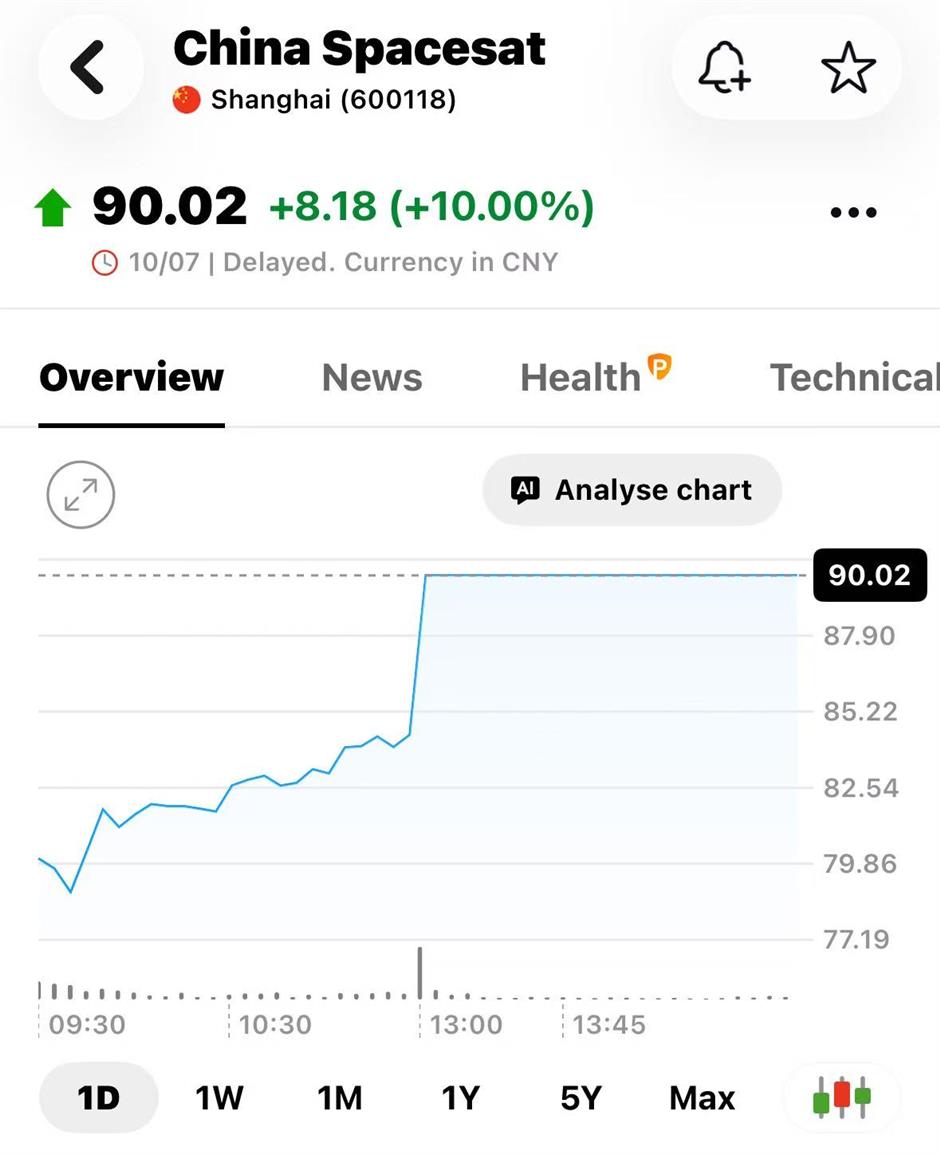
Investors rapidly read the signals. Shares in aerospace and satellite equipment companies surged across China's markets on the day news of the successful booster recovery was announced, with China Aerospace Times Electronics, China Spacesat, Highlander, Tianwei Electronics and China Satellite among those hitting the daily trading ceiling of 10 percent.
The market plays reflect a sophisticated reading of where the industry is headed. Shares surged not because one rocket was recovered but because reusable launch prospects change the industry's long-term cost structure.
That distinction matters because markets have a habit of pricing engineering milestones as if they were earnings events.
The actual economics unfold far more slowly than a single trading session suggests. But if launch costs fall meaningfully in coming years, the effects compound across the value chain: cheaper satellite manufacturing, faster constellation deployment, and, more importantly, export competitiveness globally.
The strategic question, then, isn't whether China can eventually match SpaceX's launch costs; it's what happens to the market once it does. It's a question of when not if.
China's commercial space sector cannot meaningfully compete for American or European launch contracts, given export controls and technology decouplings that foreclose those markets regardless of price.
What remains is the rest of the world. China's space agency, in its action plan for 2025-2027, has stated that is exactly where it intends to compete globally, helping developing nations build satellite-application industries, folding commercial space into China's broader international trade scheme.
China Great Wall Industry Corp, the state entity that handles foreign launch contracts, already delivered 78 satellites to international customers by end of April. The offer being touted is not built merely on cheaper launches. Rather, it's a total package encompassing launches, satellite manufacturing, financing and ground infrastructure that avoids navigating Western export control controls or capital markets.
Brazil has already taken up the offer, signing agreements in late 2024 with China's SpaceSail to build an alternative to Starlink. Brazil is an ideal customer – a country with connectivity ambitions, no domestic launch capacity and no compelling reasons to favor Western technologies. The strategy also envisions inroads in the Gulf states and Southeast Asia.
At this stage, however, nothing is guaranteed.
China's commercial rocket sector remains fragmented, with no dominant player analogous to SpaceX. Industry analysts note the industry is a structurally difficult business to make quick profits.
The July 10 rocket recovery still needs to be repeated, refined and scaled up into the kind of cadence that turns an engineering demonstration into a cost advantage.
That's a multi-year process, not a single afternoon event. And it's worth noting that the aerospace sector in Chinese stock markets was already trading near multi-year valuation highs even before the launch, reflecting hype not pinned to genuine new progress.
But the framing matters now, before the narrative calcifies around the simple theme that "China has caught up with SpaceX." The more consequential story is whether China can export an integrated space ecosystem – launches, satellites, financing and ground infrastructure – to markets where cost matter more than incumbency. That contest is not to be decided in Washington or Brussels, but in Brasília, Riyadh and Jakarta.
Editor: Yao Minji
In Case You Missed It...
 Sep 18, 2026