Colors of Jiangnan come alive at World Design Cities Conference

The pale pink of spring peach blossoms. The deep green of lotus leaves in summer. The golden yellow of ripened fields in autumn. The soft gray of river mists in winter.
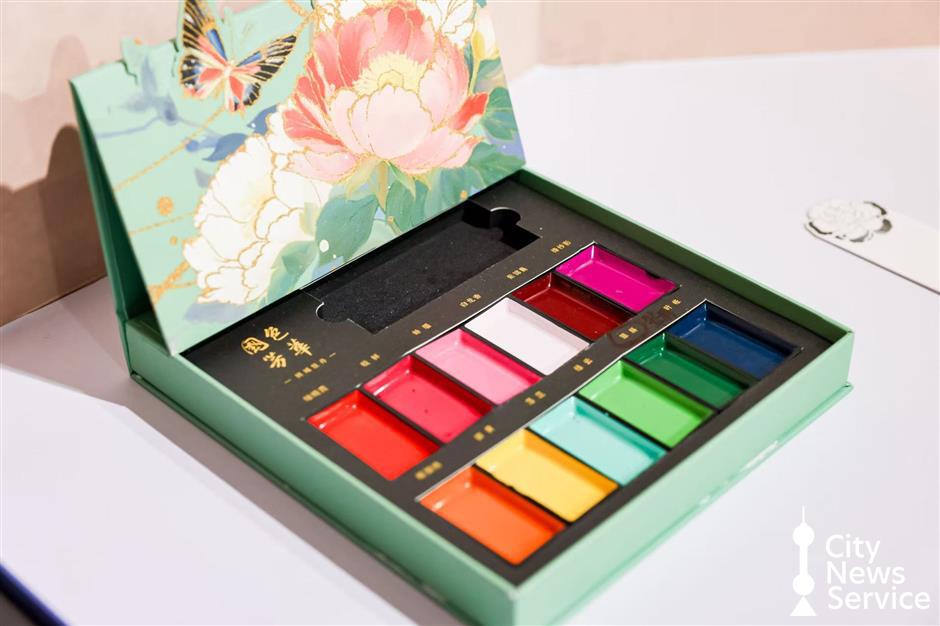
These colors of Jiangnan (regions to the south of the Yangtze River) have returned in a new pigment series, showcased at the World Design Cities Conference in Shanghai.
Shanghai University's Academy of Fine Arts worked with Marie's, a century-old art supply company, to create the "Four Seasons of Jiangnan" pigments.
The set features 48 traditional colors grouped by season, each tied to classical literature and painting.
"Jiangnan carries a poetic and quiet spirit, and these pigments allow that spirit to continue in design today," said Chen Wenjia, a teacher at the academy's department of digital arts.
The pigment series includes "Peach Blossom Red," inspired by Tang Dynasty (618-907) poems of spring gardens; "Lotus Leaf Green," found in Song Dynasty (960-1279) ink paintings; "Harvest Gold," echoing autumn rice fields; and "River Mist Gray," taken from the fog of winter waterways.

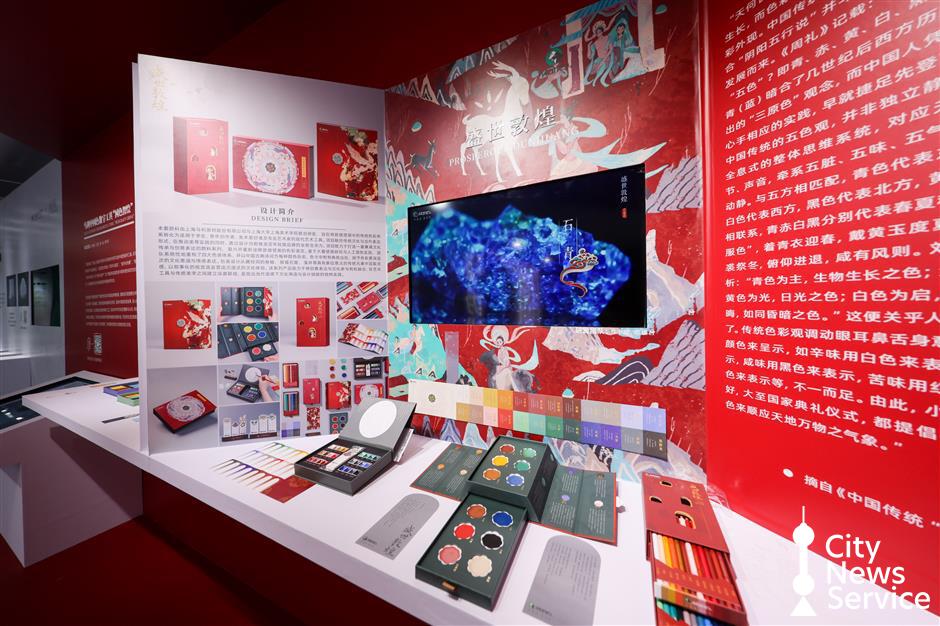
The project is not limited to Jiangnan. A second palette, "Dunhuang Colors," rebuilds the hues of Silk Road cave murals.
Shades such as "Cave Blue" and "Saffron Yellow" revive tones painted with mineral pigments more than a thousand years ago.
A third palette, "Roaring Yellow River," draws from relics, rituals, and ecology of the river basin. Its "Millet Yellow" and "Clay Brown" reflect farming traditions, while "Wave Green" mirrors the river's flow.
The exhibition also showcases 20 pairs of sneakers that fuse sportswear with traditional culture. The shoes are part of "Heritage 100+," a joint project between the academy and Warrior, one of China's oldest footwear brands.
The project began in 2024 and aims to apply 100 intangible cultural heritage (ICH) crafts to sneaker and apparel design.
So far, 60 designs are complete. Forty of them have been made into digital collectibles, while about 10 percent will enter the market as fashion products.
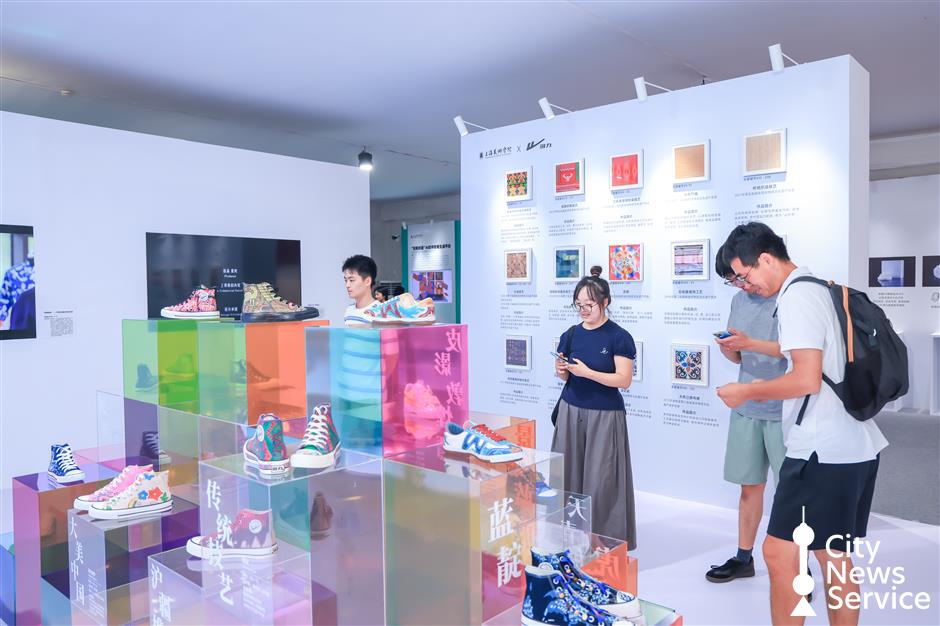
One pair uses Etles silk, a hand-dyed ikat fabric from Xinjiang known as a "living fossil of the Silk Road."
The fabric was woven by the craft's last inheritor. Warrior donated 5,000 pairs of the Etles sneakers to cultural tourism projects in the Xinjiang Uygur Autonomous Region.
The shoes may enter wider production with 12 design variations, bringing direct income to the inheritor and her village.
Other sneakers feature paper-cut patterns, Chinese button knots, embroidery, and even themes from folk legends like "The Legend of the White Snake" and the Yingge Dance.
"We do not just stack heritage motifs onto shoes," said Song Tianyi, a teacher at the academy and lead of the sneaker project.
"We re-create them so they carry a sense of modern style. Young people want to wear them, and that keeps the traditions alive."
The pigments and sneakers are part of Shanghai University's larger exhibition, "New Shanghai Genre." The exhibition has four themed sections covering digital media, industrial design, heritage textiles, ceramics, glass, and architecture.
One section, "Smart Design," highlights artificial intelligence tools that turn historical color names into new artworks. "Cultural Decoding" displays cross-disciplinary design research.
"The main line of the exhibition is turning traditional culture into new productive forces," said Li Qiansheng, a professor and head of the academy's digital arts department.