[SH Transit] How Shanghai's 'Air Express Lines' Speed Up Domestic Connections
Editor's Note:
From flight updates and train schedules to metro routes and taxi tips, we keep your Shanghai journey smooth, clear, and hassle-free.
![[SH Transit] How Shanghai's 'Air Express Lines' Speed Up Domestic Connections](https://obj.shine.cn/files/2026/08/25/7485bcc7-7226-442a-82aa-0981753ea0ad_0.jpg)
Shanghai's Pudong and Hongqiao airports just added a new option for travelers heading northwest: a dedicated "air express line" to Urumqi in China's Xinjiang Uygur Autonomous Region.
It is the latest addition to a growing network built to make connecting through Shanghai less of a hassle.
For expats who fly domestically within China, the express lines are worth knowing about – they can shave real time off a transfer, especially on the country's most congested routes.
![[SH Transit] How Shanghai's 'Air Express Lines' Speed Up Domestic Connections](https://obj.shine.cn/files/2026/08/25/c5499abf-a000-4363-abef-770bee707c54_0.jpg)
What is an air express line?
An "air express line," or kuaixian (快线), is not a special type of flight. It's an expedited-service arrangement that several airlines run jointly with an airport on a specific route.
It is aimed at travelers who fly it often and want a faster, more predictable experience from curb to carousel.
The service typically bundles three perks together: a dedicated check-in counter and a dedicated security lane; priority boarding with a jet bridge rather than a bus to the tarmac; and a fixed baggage carousel with a shorter wait for the last bag off the belt.
None of it requires a special ticket type or extra fee. Passengers simply look for quick-line signage at check-in, or ask airline staff whether their route is covered.
![[SH Transit] How Shanghai's 'Air Express Lines' Speed Up Domestic Connections](https://obj.shine.cn/files/2026/08/25/945044a8-b9bb-4617-8e08-b418c40d4a7e_0.jpg)
How many routes are there
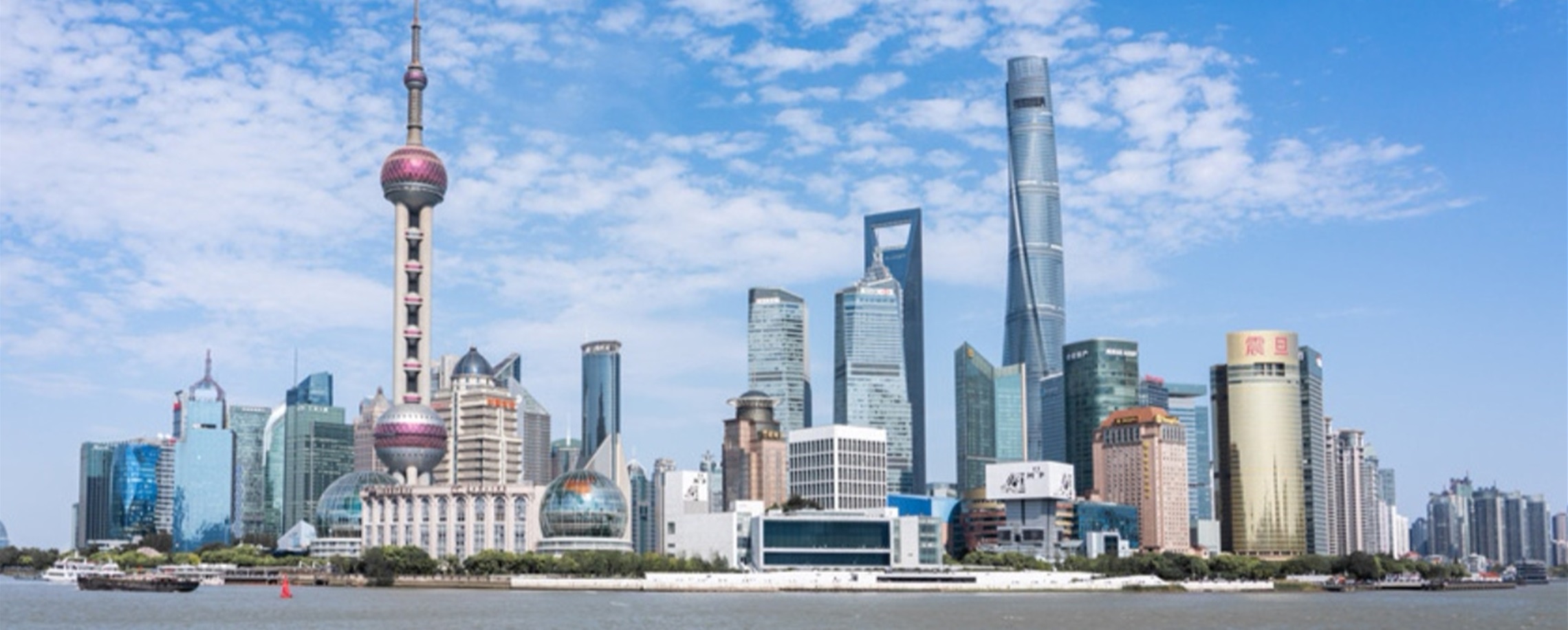
Shanghai's airports have steadily expanded the network. Hongqiao airport now runs 15 express lines, with Beijing, Guangzhou and Shenzhen the busiest. Flights on those routes depart roughly every half hour during peak periods.
Hongqiao's other express lines reach cities including Xiamen, Qingdao, Kunming, Chongqing and Wuhan.
Pudong airport runs 10 express lines fanning out toward the northeast, south, southwest and northwest, connecting Shanghai with cities such as Harbin, Guangzhou, Chengdu and Xi'an.
The newest addition, launched with Xinjiang Airport Group and carriers including China Eastern, China Southern, Juneyao and Spring Airlines, links Shanghai with Urumqi as both cities work to build up tourism traffic between them.
Passenger volume between Shanghai and Xinjiang reached about 1.4 million from January to July this year, with daily flights exceeding 40 during the peak summer travel season.
![[SH Transit] How Shanghai's 'Air Express Lines' Speed Up Domestic Connections](https://obj.shine.cn/files/2026/08/25/79202e57-03d3-4948-b165-dec1f99396c0_0.jpg)
The Beijing-Shanghai corridor
No express line carries more weight – or more competition – than the one linking Shanghai and Beijing.
The two cities are China's only pair with populations above 20 million each, and the route between them is the country's busiest and most profitable for both airlines and the high-speed rail operator.
The roughly 1,300-kilometer trip splits traffic across four airports: Beijing Capital, Beijing Daxing, Shanghai Hongqiao and Shanghai Pudong.
By air, the flight takes under two hours. By rail, the fastest high-speed train covers it in four hours and 18 minutes, with departures as frequent as every four minutes during peak hours – a pace closer to a subway than a train line.
The rivalry dates back to 2011, when the Beijing-Shanghai high-speed line opened and airlines scrambled to respond, including by keeping a backup aircraft on standby at each end of the route to protect on-time performance.
![[SH Transit] How Shanghai's 'Air Express Lines' Speed Up Domestic Connections](https://obj.shine.cn/files/2026/08/25/657f67ce-55a6-4f90-a297-1c0cf716dfcd_0.jpg)
It has continued since, with airlines rolling out passenger-friendly measures – including a cross-airline rebooking arrangement between Hongqiao and Beijing Capital that lets eligible ticket holders shift to another carrier's next available flight rather than wait out a delay.
Wang Zhiqing, chairman of China Eastern Airlines, has pointed to areas where flying still lags the trains: rail passengers can check in 15 to 20 minutes before departure versus nearly an hour for a flight, can order a meal at one station and have it waiting at the next, and get electronic receipts instantly, while air travelers still deal with paper itineraries.
"If in the past railways learned from civil aviation, now it's civil aviation's turn to learn from the railways," Wang said.
Good to know
If a trip involves connecting through Pudong or Hongqiao on a domestic leg, it's worth asking whether the route is an express line – the priority check-in and security lane alone can turn a tight connection into a comfortable one.
![[SH Transit] How Shanghai's 'Air Express Lines' Speed Up Domestic Connections](https://obj.shine.cn/files/2026/08/25/61b07f36-7074-4c62-847b-3c9360ae73fb_0.jpg)
Editor: Shi Jingyun
In Case You Missed It...

 Oct 22, 2026