Pudong Airport Boosts Cargo Clout with New SMARGO Hub
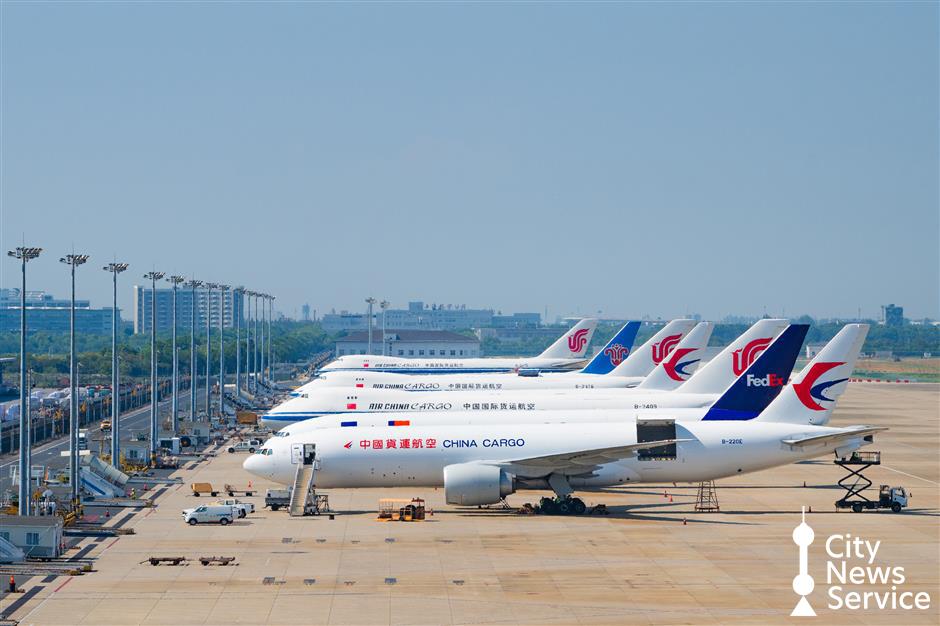
Pudong International Airport launched its new SMARGO smart freight facility on Tuesday, enabling Shanghai to reach a record air cargo throughput in 2025.
Shanghai's two airports are expected to handle 4.5 million metric tons of cargo and mail this year. Pudong Airport alone is likely to exceed 4 million tons. The figures were released at a meeting of the Shanghai Airport Coordination Mechanism on Tuesday.
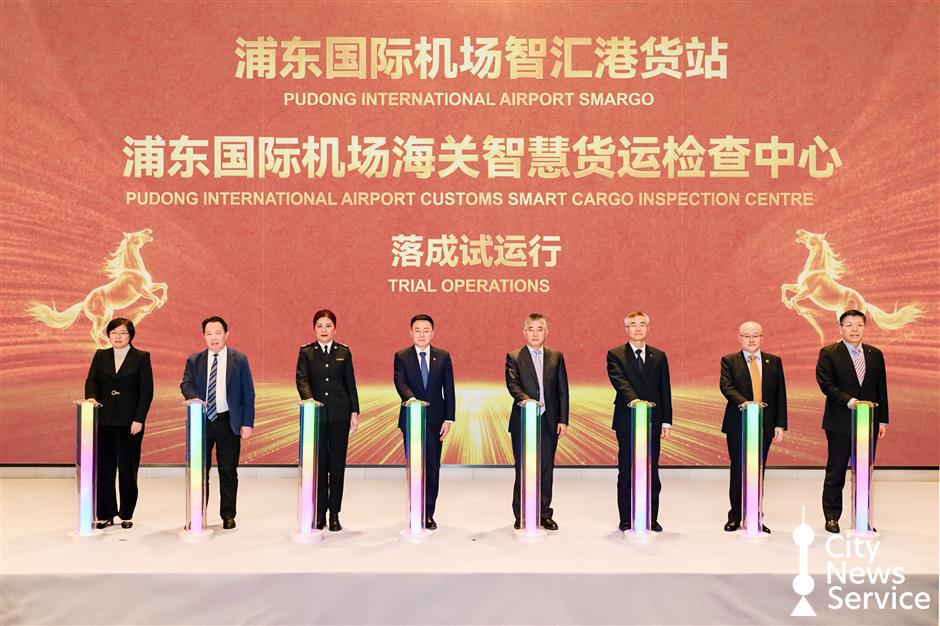
The Pudong SMARGO cargo terminal and a smart customs inspection center have started trial operations.
The facility uses digital systems for demand forecasting, automated sorting, and full-process tracking. Customs clearance allows "zero-contact supervision" and "no-wait processing," airport officials said.
The hub can handle more than 600,000 tons of cargo a year. The Shanghai Airport Authority said the project is a key part of building a smart international aviation hub.

China Eastern Airlines Logistics now operates about 140 cargo flights a week in Shanghai, the highest among carriers at the city's airports. Air China Cargo runs 74 weekly cargo flights.
Global logistics firms FedEx, DHL and UPS all operate dedicated international cargo centers at Pudong airport.
In 2024, Shanghai airports handled 4.206 million tons of cargo and mail.
That moved Shanghai to second place globally for the first time. It ranked behind Hong Kong International Airport and ahead of Memphis International Airport in the United States.
The airport authority said the growth came despite changes in global trade and supply chains.
This year, Shanghai opened 16 new international cargo routes, including flights to Riyadh. Other new destinations include Toronto, Vancouver, Hanoi, Ulaanbaatar, Mumbai and Santiago.
Pudong also extended cargo services to Istanbul, Abu Dhabi, Dubai and Doha. These Middle East hubs support transfers to Europe and Africa. The network helps Shanghai serve as a key transit point between regions, the airport authority said.
Zhou Hao, president of Shanghai Airport Authority, said Shanghai is moving beyond its role as a logistics gateway.
"The goal is to build a 'fully functional international aviation gateway,'" Zhou said. "The airport aims to shift air cargo from a transport channel to a supply chain hub by expanding its global network."
Editor: Yang Meiping
In Case You Missed It...

 Oct 10, 2026
![[Fashion Files] Beyond the Runway: Shanghai's Fashion Ambitions](https://obj.shine.cn/files/2026/10/09/36f592c5-63eb-4ee5-abe1-7d6c79ca9b62_0.jpg)