A Winter Evening at DA VITTORIO Shanghai: An Interview With Chicco Cerea, Leonardo Zambrino
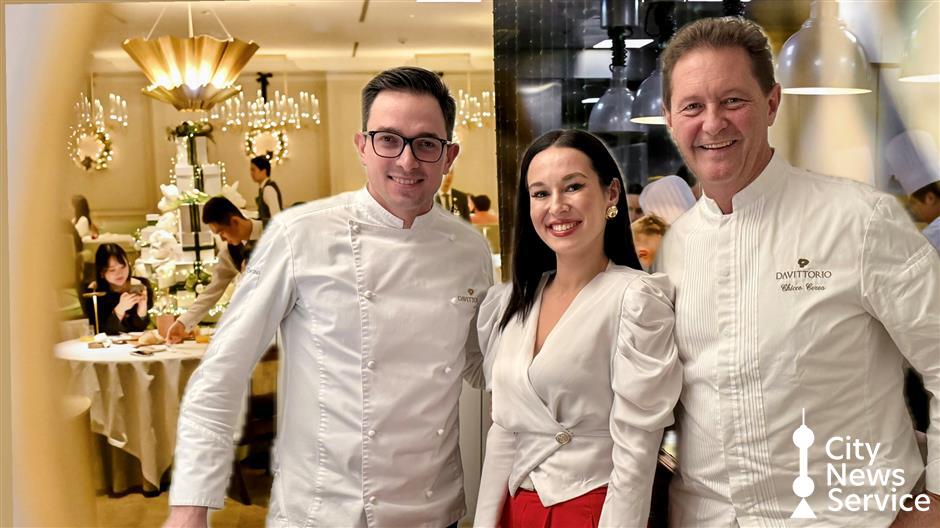
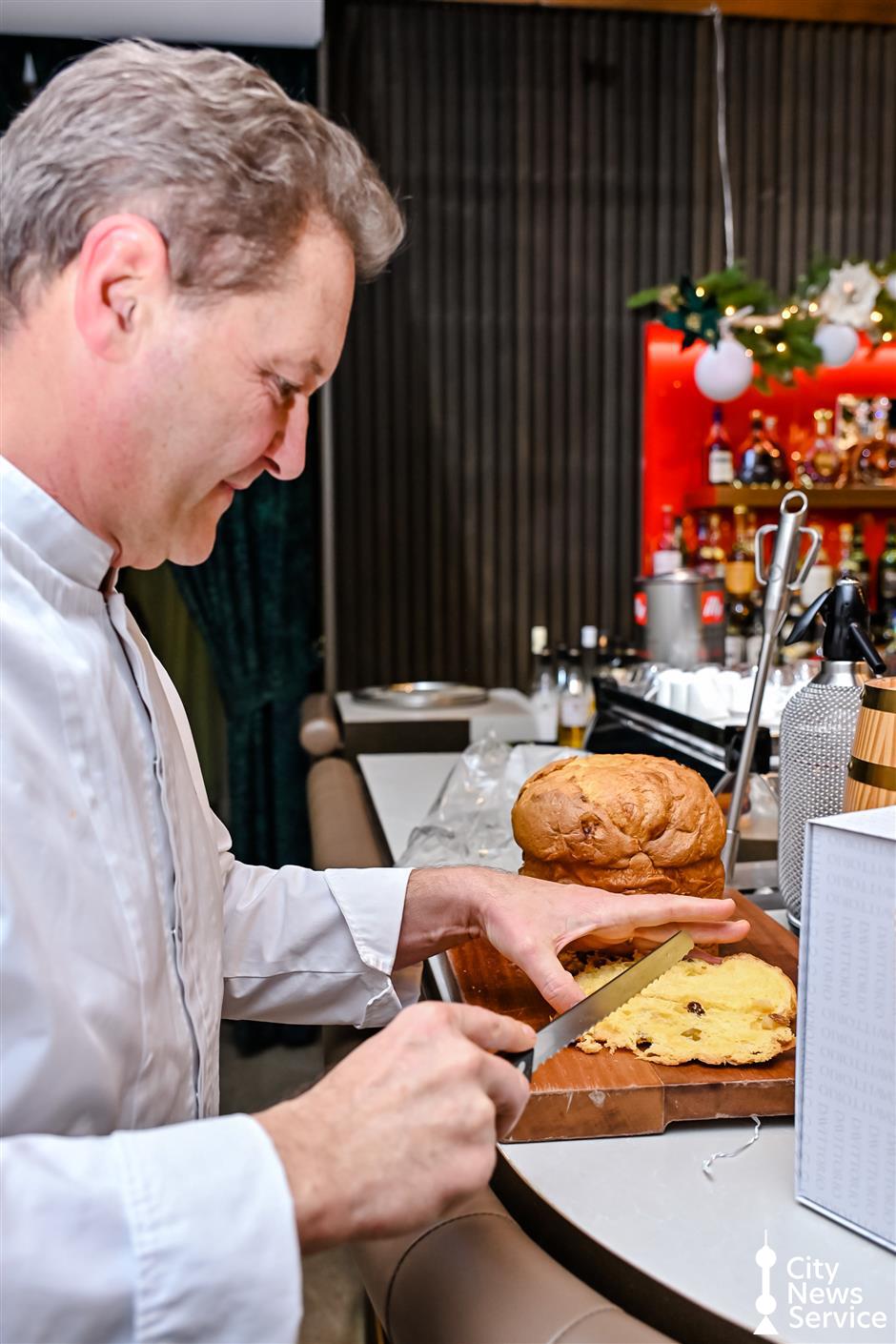
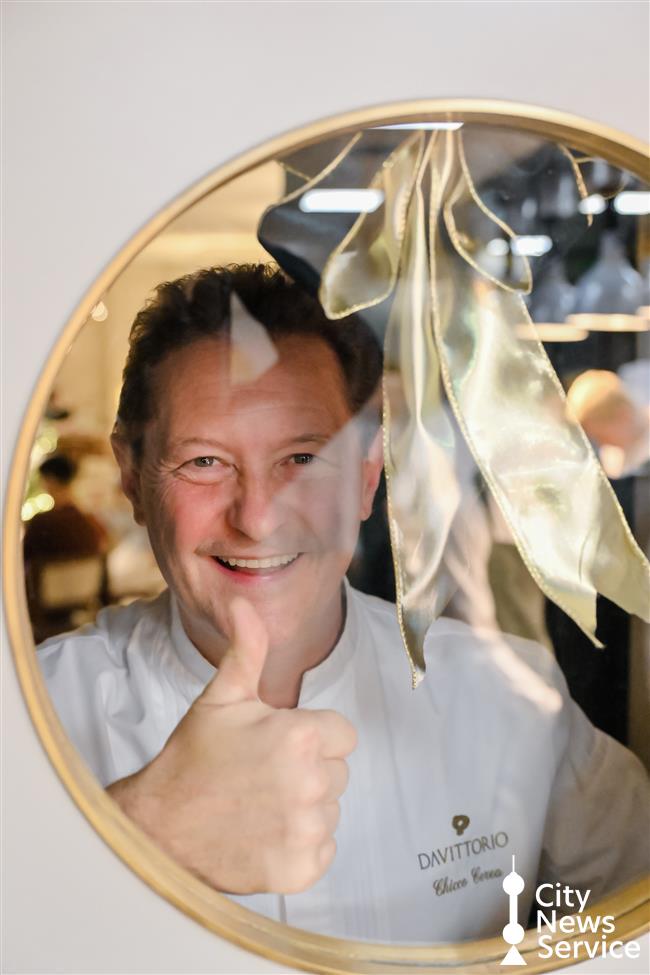
Winter has arrived in Shanghai, and with it Chicco Cerea, chef of Italy’s three-Michelin-starred Da Vittorio. Visiting the city this season, he joined Leonardo Zambrino, who leads the kitchen at DA VITTORIO Shanghai, to create a special dinner for guests called "Family Reunion". Together they explore the quiet magic of winter ingredients, from hearty root vegetables to the freshest seasonal produce. In this interview, Chicco and Leonardo talk about how the menu changes with the cold, the power of ingredients at their peak, and how tradition and modern approaches come together to create an experience guests remember long after leaving the table.
Arina Yakupova (Interviewer): This evening is a special moment when winter is not just a date on the calendar but an atmosphere that fills the restaurant. Your cuisine has always been warm and evocative. How does your approach to food change when it’s winter outside?
Chicco Cerea: When temperatures drop, there’s a desire to create even warmer, more welcoming dishes because people crave richer, more substantial flavors. Seasonality in cooking is very important. Summer, spring, autumn, and, of course, winter offer ingredients and products that are excellent and can be transformed into recipes we’ve perfected.
Arina: Which ingredients?
Chicco: There are so many. Even vegetables themselves, people often forget that winter also gives us wonderful vegetables, especially in Italy: cabbages, savoy, turnip greens, and black cabbage, like in Tuscany. There’s so much. Meats and fish are prepared in a more succulent, flavorful way, sometimes with a sauce, to make them juicier.
Arina: How do you manage seasonality when your cuisine travels across different continents?
Chicco: First, we inform ourselves. I was in Santo Domingo (Dominican Republic) last month, and the seasonality there is completely different. But traveling so much has given us experience. We learn about local products and seasons and adapt thanks to our experience, knowing a wide variety of dishes. Here in Shanghai, the seasons are similar to Italy, so it was much easier.
Arina: You’ve visited Shanghai several times and are now back again! You will cook tonight and then fly back. How have you changed as a chef since your previous visits?
Chicco: I remember the first trips well. There was much uncertainty, even fear, about understanding local products, deliveries, customs, and how to approach the menu. Over the years, I’ve seen Shanghai evolve tremendously in gastronomy. We were perhaps among the first to bring European cuisine, pioneers in a sense. Then others followed, which helped the transformation and made it easier.
Arina: Tonight you cook together with Leonardo. I have a question for you. Working in Shanghai with such a different culture, ingredients, and rhythm, how do you keep the Italian soul of the cuisine while adapting to local tastes?
Leonardo Zambrino: There are guidelines, a philosophy, a cooking soul to follow.
Chicco: The challenge is to find what is best at the right moment. Essentially, what we must do is question everything in a way that is authentically Italian. The cuisine itself must be welcoming, reflecting the hospitality we offer.
Arina: What is more important, the heritage of the Cerea family, the flavors, the way you welcome guests, or the discipline in the kitchen?
Chicco: It’s all of it together.
Leonardo: You could say the most important aspect is the flavors!
Chicco: It’s a combination of things, but what really matters is that all these elements enter the hearts of people, leave an indelible memory. People remember. Tonight, when they leave, they will recall: what a beautiful evening, the hosts were welcoming, the food was excellent, the service perfect, the environment lovely. They will want to return with their family, partner, or friends because it was a wonderful experience. It’s not just cuisine; it’s the experience itself.
Arina: The experience is…
Leonardo: The experience is the mix, the Dining Experience.
Chicco: Nowadays, going to a restaurant is like going to the theater or the cinema. It’s an emotion, an experience in your heart. Every evening here is like playing a (UEFA) Champions League final. Every night we must give our guests the best possible, so they remember this evening.
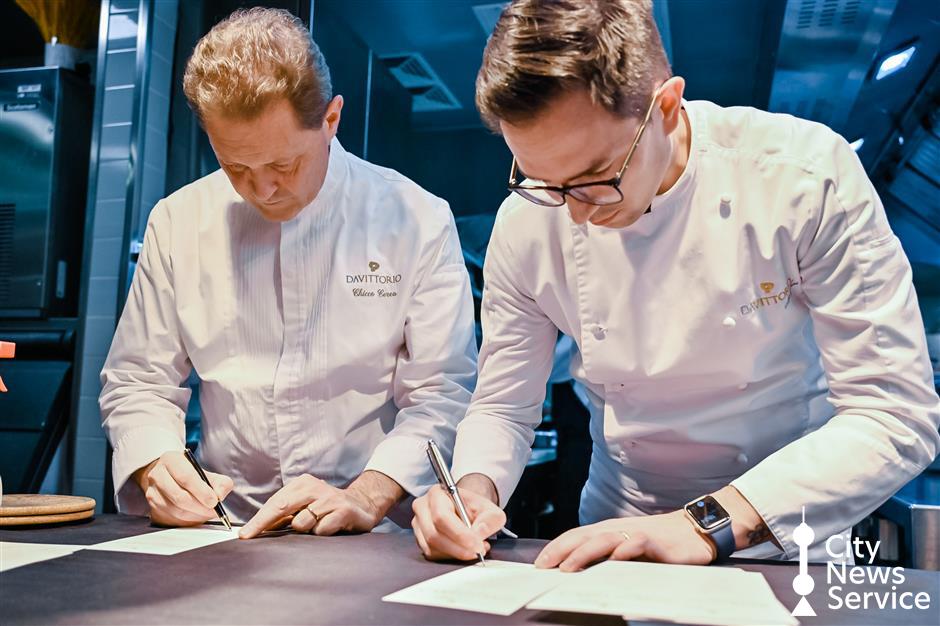
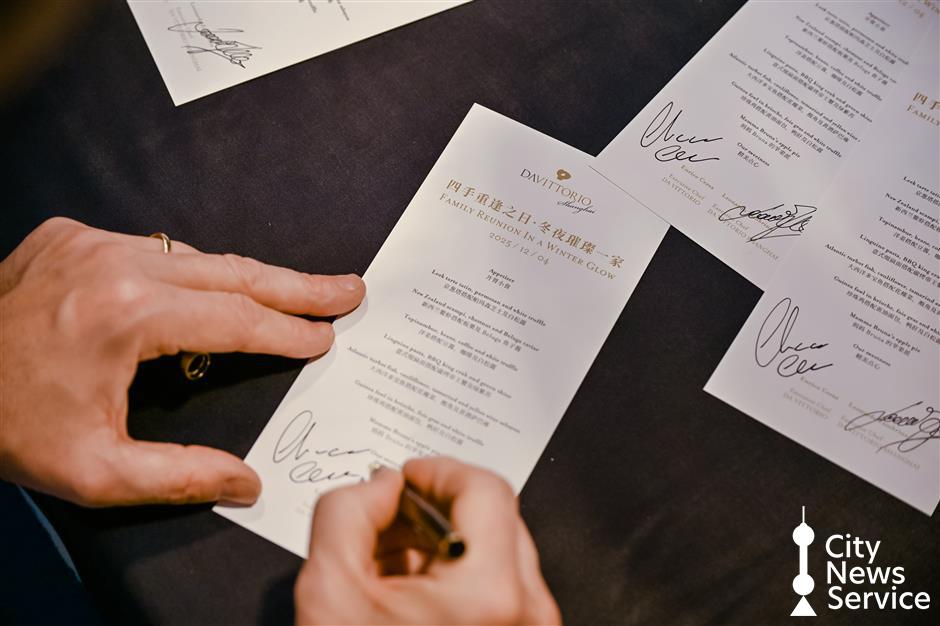
Arina: Emotions are very important…Tradition gives stability, innovation brings risk and openness. How do you balance the two? What guides you: memory, responsibility, the team, or something else?
Chicco: Knowledge of our work allows us to move from a solid base in tradition to something more innovative. Tradition is important, but we must stay current, anticipate the future, have clairvoyance, see what will happen in the market, and understand new processes to improve. We cannot remain static, we must move forward. Next year we celebrate 60 years in business. We’ve always maintained high standards, and I hope the brand continues for another 50 years. That is our direction.
Arina: Your family restaurant in Italy has three Michelin stars. Here in Shanghai, you have two. I’ve heard that after receiving a star, much energy goes into maintaining it. What does this recognition mean for you? Does it give you responsibility, inspiration, or something else?
Chicco: Naturally, having three stars in Italy was the fulfillment of a dream, something we aspired to. But from the start, we understood it was a starting point, not an arrival. Every day you have to prove you deserve it, so you must always work hard. Now, with two stars in Shanghai, Leo leads our kitchen, and we keep our fingers crossed to celebrate even more here in the future.
Arina: Sometimes it’s daunting, like pressure for perfection?
Chicco: They’re the achievement of a goal. If you’re competitive and want to show the world your value, stars are a stamp that says: yes, you’re among the best.
Arina: And if there were no guides, how would you know if a dinner, a dish, or a team’s work was successful?
Chicco: I’d know going to bed at night. If I’m satisfied and happy with what I did, these are also my Michelin stars. I know I worked conscientiously, I did it well, and I made people happy. Looking into their eyes, I see their joy reflected in mine.
Arina: Thank you. When two chefs — the head of the family and a guest chef work together, how does a shared, balanced dialogue or compromise arise?
Chicco: It cannot be improvised. After years of knowing each other, collaborating, and even clashing, you refine together. If there’s mutual respect, then you connect, it’s a beautiful feeling.
Editor: Chen Jie
Popular Reads

Chinese Stocks Rise on Good Economic News, Hopes for Imminent End to Iran War
German School Hosts Cooking Workshop Marking 40 Years of Shanghai-Hamburg Partnership
Shanghai's Foreign Trade Surges in Q1, Hitting Historic Highs