Nostalgia Pays: How Longing for the Past Creates Spiritual Value and Serious Cash
Westlife's performance at the 2026 CCTV Spring Festival Gala
When Irish trio Westlife performed their iconic hit "My Love" at the 2026 CCTV Spring Festival Gala, their soaring harmonies resonated with collective nostalgia across China, propelling the hashtag #Westlife'sVocalsTakeUsBackInTime to the top of the country's major social media trends.
This performance was the climax for the "Westlife: A Gala Evening" China tour, a masterclass in how to monetize nostalgia in the world's second-largest consumer market.
The nostalgia economy, defined as an economic model driven by consumers' emotional longing for the past, leverages classic IPs and shared memories to create both profound spiritual value and substantial commercial returns.
Westlife has emerged as the quintessential example of this trend in 2026, with their tour across Shanghai, Guangzhou, Macau, and Kaohsiung shattering box office expectations and redefining the power of retro fandom in China.
For those born in the 1980s and 1990s in China, Westlife is far more than a boy band – it is a cultural touchstone intertwined with their coming-of-age years. In the pre-streaming 2000s, the group's ballads spread through CDs, MP3 players, and campus radio, serving as an unofficial "English textbook" for a generation. Lyrics to "You Raise Me Up" and "Swear It Again" were copied into notebooks, and their songs provided the soundtrack to pivotal life moments: high school graduations, first loves, and late-night study sessions.
For these consumers, paying a premium for a Westlife concert ticket is not just about watching a live performance; it is about recapturing a fleeting piece of their youth.
"Finally I've seen the men whose voices I listened to every single day as a kid," one Shanghai concert-goer posted on RedNote, China's lifestyle-sharing platform. "We used to call them the 'West Boys' in Chinese back then – now they're the 'West Uncles'… and I guess I am too."
The commercial impact of this nostalgia-driven fandom has been nothing short of staggering. All tickets for the tour's four stops sold out within minutes of going on sale, with secondary market prices surging by 30 to 80 percent and VIP packages commanding even higher premiums. Box office earnings from Chinese mainland shows alone are estimated to top 25 million yuan (US$3.47 million).
Buoyed by the overwhelming response, Westlife has already announced plans for a 25th-anniversary world tour – with China confirmed as a major stop.
In an interview with Guangzhou-based media, band member Kian Egan said China has become one of the most important countries for the group, as their bond with Chinese fans is rooted in shared memories, and they're thrilled to continue that journey together.
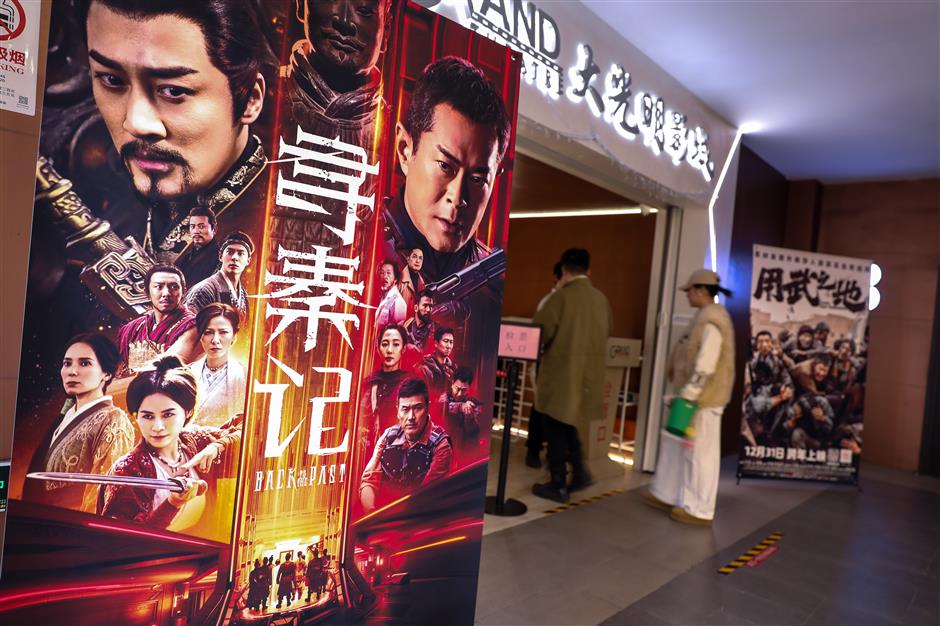
Westlife's runaway success is no isolated case. Hong Kong actor Louis Koo brought the beloved 2001 TV series "A Step into the Past ( Xun Qin Ji )" to the big screen recently, 25 years after its debut, and the film adaptation has become another nostalgia-fueled hit.
Based on Wong Yee's novel "The Chronicles of Searching Qin ," the original TV series is widely regarded as the pioneer of China's time-travel drama genre and still boasts rave reviews on Douban , China's leading film and TV rating platform, two decades after its release. The film sequel, "Back to the Past," features almost the entire original cast, with Koo also serving as executive producer.
"Upon hearing that familiar tunes of the theme song 'Destiny Prevails,' transported me straight back to the carefree days of my youth. Against that feeling, a critical assessment of the plot or special effects just didn't matter," a female film-goer surnamed Cheng said.
Like countless other audience members, she stayed in the theater until the end credits rolled, a salute to her younger self and the era the show represents.
Despite critics panning the film for numerous plot flaws, its box office taking from Chinese mainland and overseas markets hit 291 million yuan, a sum that, in many ways, is a direct payment for collective nostalgia.
Reports suggest that this nostalgia-fueled consumption is witnessing a rise among middle-aged and younger consumers. The objects in question might be an old book, an aged photograph, a vinyl record, an old mobile phone, or any bric-a-brac.
Last year nostalgia market, as represented in trade in objects from antiques to retro, was worth 355 billion yuan, a growth of 12 percent year-on-year, and expects to hit 588 billion yuan by 2030.
It could be a subconsciously intuitive behavior, like Wang Hongbo , 26, who would still purchase matchbox cars from a grocery from time to time.
Now working with a consultancy firm with a good salary, he could gratify his whims without resorting to external aid.
He got his first toy car from his parents as a birthday gift about 20 years ago.
The gadgets proved effective in amusing himself, or his cats.
Before long he had built up his fleet of cars by skimping on his odd money, and his mother came on a drawer full of cars quite by surprise one day not long after his birthday.
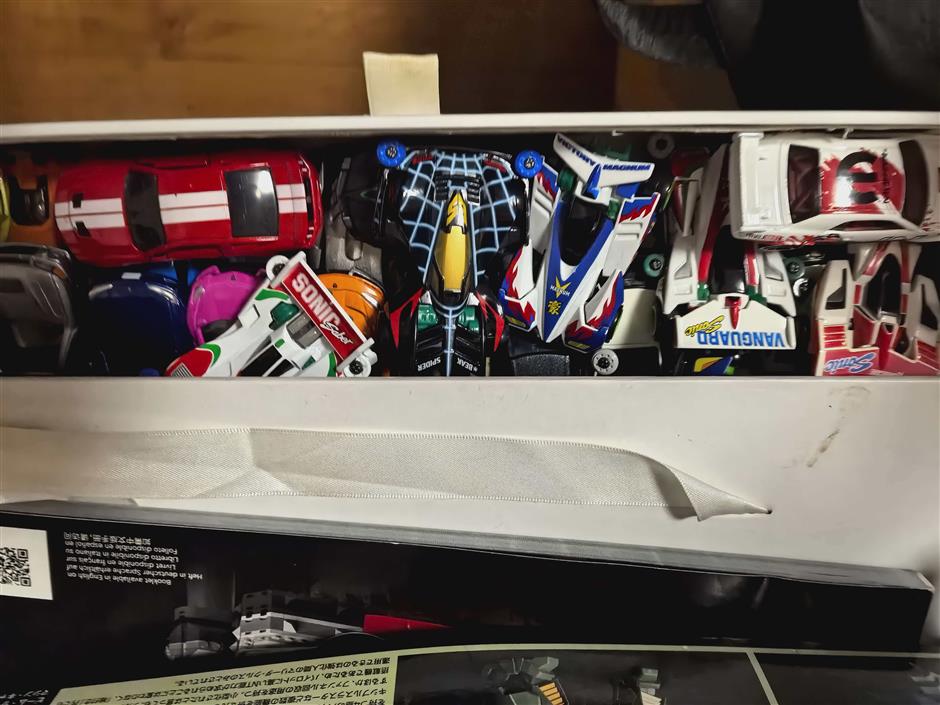
The hoard is still there, and his latest acquisition, last December, was two units in new editions, costing him about 100 yuan. For him, stressed out by a day's work, the sight of these toys reminded him of the carefree days in his childhood.
It's observed that even those born around 2010 have their own objects to exercise in the pathos of nostalgia.
Like everything in the new age, this predilection for the good old things has been much facilitated by digital platforms, with online trade extending to old stamps, money, toys, books, or CCD cameras.
On Xiaohongshu, or RedNote, a lifestyle-sharing platform, CCD (charge-coupled device) camera videos have been viewed nearly one billion times, more than double that for vinyl records. Those for antique mobile phones totaled 240 million, while those for subor family computer devices (Xiaobawang game player) exceeded 47 million.
Technically, CCD cameras have long been superseded by CMOS (complementary metal-oxide-semiconductor) sensors, and modern smartphones offer far more sophisticated gaming experiences than the Subor FC console ever did. But for consumers, the appeal lies not in technical superiority but in the retro atmosphere these items evoke and the chance to revisit childhood pastimes they once had limited access to.
One researcher believed that there is room for growth for this nostalgia-fueled economy, though the market would be more segmented, and such digital technologies like VR and AR might come in handy in recreating some immersive retro experiences.
There would also be more attention to sustainability, which advocates for reuse of objects, sometimes with some renovations.
In Case You Missed It...
 Sep 21, 2026