AI Opens New Frontiers for Maternal and Child Health Innovation
Participants at the Global Maternity and Child Health Innovation Forum, a sub-event of the 19th 2026 Pujiang Innovation Forum, acknowledged that cutting-edge AI is removing industrial obstacles and promoting a fair, inclusive R&D environment for maternity and child health.
The forum, co-organized by the Shanghai Soong Ching Ling Foundation, prioritized AI-enabled clinical innovation and cross-border collaboration for low-resource maternal-child care.
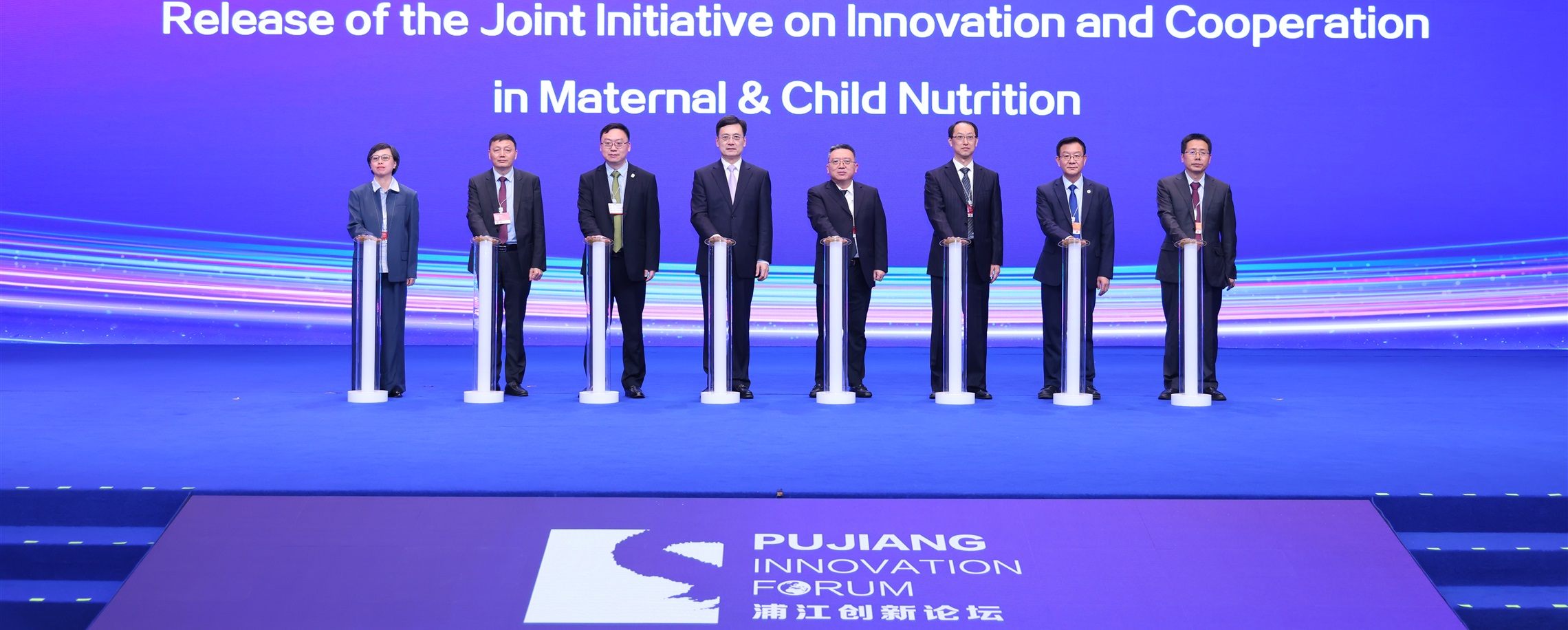
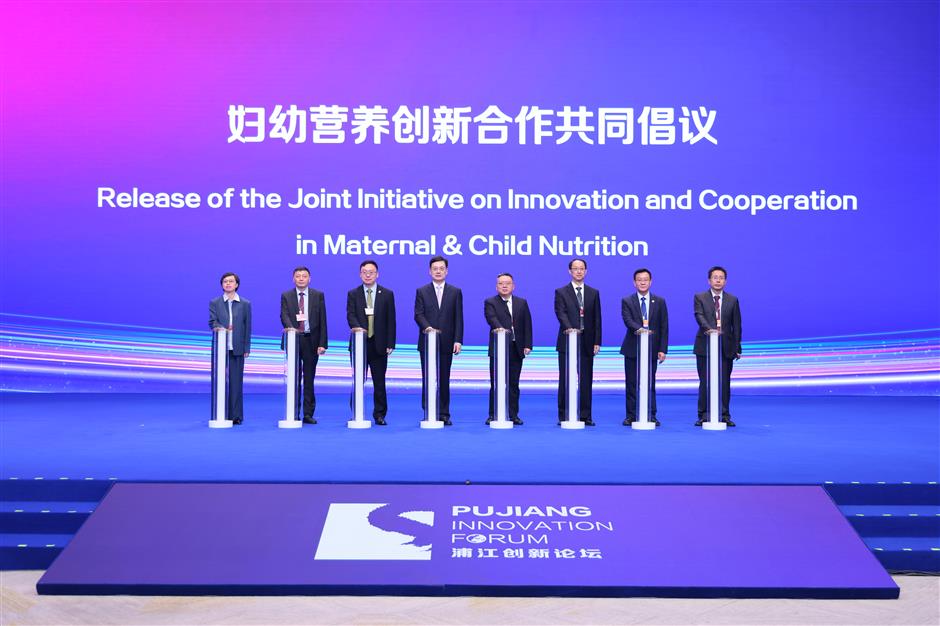
It developed a Joint Initiative on Innovation and Cooperation in Maternal and Child Nutrition to promote equitable, sustainable global healthcare for mothers and infants.
Jiang Ge, deputy head of the Shanghai Science and Technology Commission, stated that maternal-child health priorities have shifted from survival to high-quality full-cycle care.
Shanghai will increase cooperative research, clinical AI rollout, and international partnerships to erase geographic obstacles and increase access to premium maternal-child medical resources globally, supported by AI and telemedicine.
NiPGEN, presented by West China Second University Hospital vice president Xiao Xue of Sichuan Province, was the forum's highlight technology. AI-driven precision care in low-resource settings is redefined by the platform.
NiPGEN tackles three worldwide challenges: insufficient early risk identification, restricted cross-population model generalizability, and limited grassroots dissemination of advanced techniques.
It addresses common prenatal diseases like preeclampsia and gestational diabetes mellitus using real-world cohort data from western China and high-altitude locations.
It uses over 300,000 whole-genome datasets, 20 million longitudinal women's medical records, and 3.04 million standardized biological samples.
NiPGEN uses multi-modal AI, multi-omics analysis, and image segmentation to eliminate diagnostic disparities and decrease excessive genetic testing.
With cross-population AI validation, local data calibration, and risk-signal mining, high-precision models become low-cost screening tools for basic tests like blood pressure, glucose, and ultrasound, according to Xiao.
The researchers established an AI risk-stratification algorithm and immunoassay pre-detection kit, increasing screening sensitivity for hypertensive diseases in pregnancy by 1.7 times.
Developed China's first AI-based fetal imaging early warning model for maternal problems, providing intelligent treatment across pre-pregnancy, intrapartum, and postpartum stages.
With independent validation and local calibration, the platform may share China's plateau-region maternal health insights with low- and middle-income nations for global outreach and improvement.
NiPGEN provides cheap, locally adapted maternal-child health management systems for resource-limited contexts, rather than just technology exports.
Wang Yudong, president of Shanghai's International Peace Maternity and Child Health Hospital, highlighted AI's clinical worth, complementing the worldwide public-health framework.
As China's maternal-child health indicators reach new heights, clinical priorities include early risk prediction, tailored treatment, and equitable access.
AI standardizes clinical judgment, minimizes diagnostic bias, and enhances population-wide screening objectivity and repeatability.
AI-assisted embryo screening achieves 97.53 percent accuracy in reproductive medicine. In prenatal care, algorithms enable dynamic preeclampsia alerts, uniform fetal abnormality screening, and precise preterm-risk assessment.
In gynecologic oncology, AI helps tertiary hospitals to provide precise diagnosis, while grassroots sites can facilitate triage and screening.
AI pathological models along with multi-omics enable low-cost, high-accuracy endometrial and ovarian cancer diagnosis using routine pathology slides, addressing global healthcare gaps.
According to Wang, AI is merely a high-throughput, reproducible reference tool.
Final authority for clinical decisions, professional judgment, and patient-centered care is with physicians.
For safe, consistent clinical implementation, all AI technologies need multi-center validation and real-world proof.
Maternal-child AI innovation shifts care paradigms from post-symptom intervention to proactive early warning, from empirical practice to data-driven precision diagnosis, and from elite services to accessible grassroots care, according to experts.
Editor: Fu Rong
In Case You Missed It...
![[Hai Lights] A Foodie's Guide to Shanghai's 10 Best Sandwiches](https://obj.shine.cn/files/2026/09/16/660ac7b7-ec7c-404c-9872-976848781dda_0.jpg)
 Sep 16, 2026