Newly Established City Lab With International Experts Looks For New Cancer Therapies
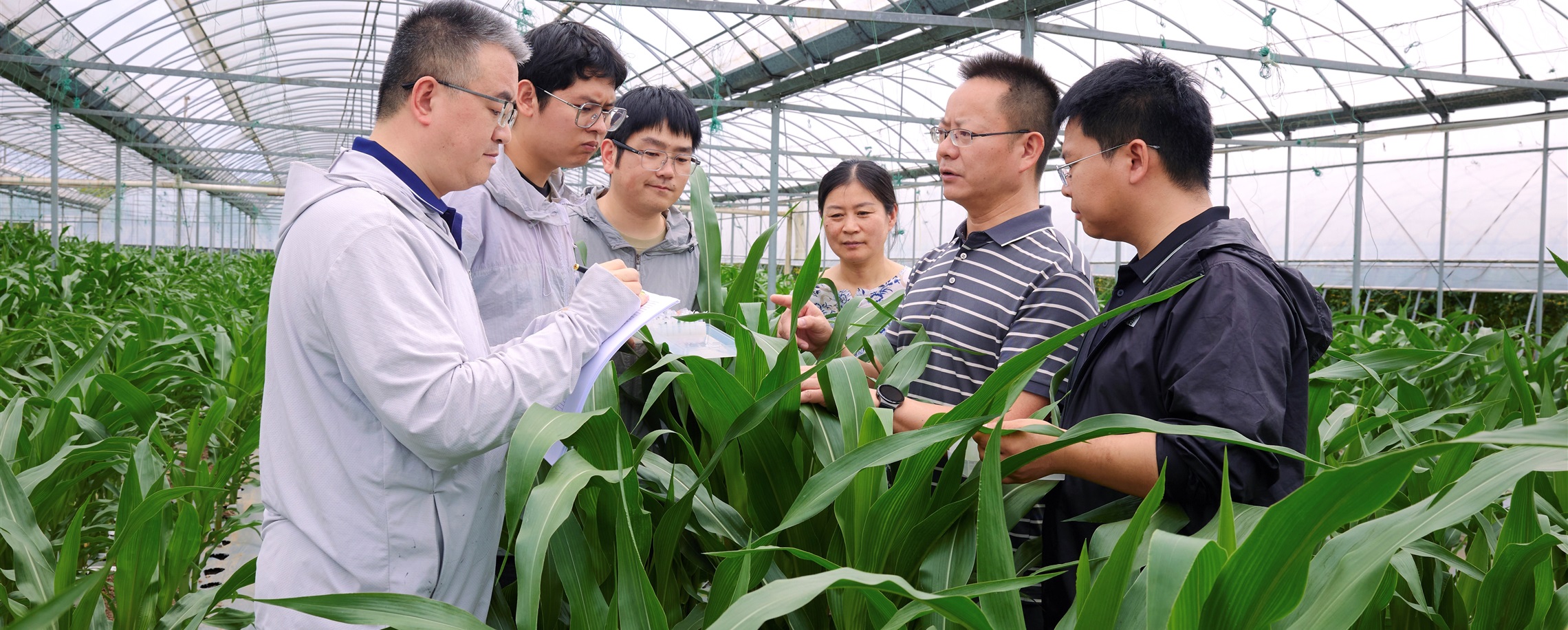
Top global medical experts have converged in Shanghai to join a world-class research team advancing cutting-edge cancer therapeutics. Ruijin Hospital hosted the inaugural Annual Meeting on Experimental Therapeutics earlier this week, assembling leading specialists from China and overseas.
H. Michael Shepard serves as director and chief science officer of the Experimental Therapeutics Laboratory at Ruijin Hospital's Frontiers in Therapeutics Research Center. A core inventor of breast cancer drug Herceptin, the American pioneered the world's first therapeutic antibody designed to target the HER2 molecule closely linked to cancer progression.
The newly launched research laboratory has unveiled a comprehensive pipeline of innovative cancer treatment strategies. By integrating gene editing, engineered antibodies, and stem cell technologies, the lab aims to tackle both prevalent malignancies and intractable, hard-to-treat tumors.
Backed by an international interdisciplinary team, the center prioritizes biotech-driven therapeutic breakthroughs. Its flagship research focuses on multispecific antibodies that bind simultaneously to multiple tumor targets, precisely carrying immune cells inside a tumor and killing the tumor.
"The other technology we are creating for the first time and nobody has seen this before, is a new kind of cell, which is a stem cell-like technology called Biobot," Shepard said. "We put genes into the stem cell, and then that cell goes into the patient. When the Biobot gets to the tumor, it will turn on its genes and will kill the tumor."
Committed to global collaborative innovation, the lab brings together interdisciplinary talents from around the world to accelerate translational medical progress. Though it does not currently conduct in-house TCM cancer research, the team has launched collaborative projects with Harvard University researchers to identify and validate potent anti-cancer active ingredients derived from traditional Chinese medicine herbs, Shepard added.
"The other technology we are creating for the first time and nobody has seen this before, is a new kind of cell, which is a stem cell-like technology called Biobot... We put genes into the stem cell, and then that cell goes into the patient. When the Biobot gets to the tumor, it will turn on its genes and will kill the tumor.
H. Michael Shepard, director and chief science officer of the Experimental Therapeutics Laboratory at Ruijin Hospital's Frontiers in Therapeutics Research Center.
Dr Chen Zhu from the Shanghai Institute of Hematology at Ruijin Hospital talked about a landmark achievement in integrative oncology.
In the 1980s, Dr Wang Zhenyi from Ruijin Hospital developed a groundbreaking combination therapy using arsenic trioxide and all-trans retinoic acid. The revolutionary regimen has transformed acute promyelocytic leukemia – once one of the most fatal malignancies – into one of the most curable cancers worldwide, establishing a golden standard for TCM-Western medicine integration in cancer treatment.
"Western medicine alone cannot address all complex cancer challenges, and the journey for better therapeutics remains ongoing," said Chen, who returned to Shanghai from France in 1989 to promote integrated medical research.
"We must produce rigorous, evidence-based research to validate TCM's clinical efficacy, clarify its pharmacological mechanisms and material basis, and accumulate solid clinical data. Scientific validation is crucial for global recognition and the overall advancement of cancer treatment systems."
Innovative drug development and integrated TCM-Western therapy have brought substantial clinical benefits to cancer patients.
American Drisha Leggit, a survivor of stage IV lymphoma for over 30 years, shared her inspiring journey with conference participants. Throughout her chemotherapy and clinical trial treatment in the United States, she received adjuvant TCM interventions, including acupuncture and herbal decoctions, to support her recovery.
She expressed deep gratitude to medical researchers and clinicians, and called for the development of more potent anti-cancer therapies to support vulnerable patients, recalling that cervical cancer had claimed the life of her close friend.
Editor: Fu Rong
![[Quick News] June 5: The race for SIFF 2026 tickets begins](https://obj.shine.cn/files/2026/06/04/38a70703-e513-463a-82e9-5946beaa7218_0.jpg)