Sugar and Ceremony: Festival Sweets Around the World
The world's festive traditions may look different, but a pattern emerges: certain desserts, meant to be shared, mark the moments when families pause, gather and transform the everyday act of eating into something closer to ceremony.
These desserts are not just casual indulgences, but expected presences – prepared in advance, served at specific times, and tied to the rhythms of the calendar.
Rice as Ritual
In Asia, festival sweets center on rice, a staple elevated beyond sustenance, whose texture and form carry layered meanings of abundance and unity. Glutinous rice, in particular, recurs across regions, prized for its elasticity and density.
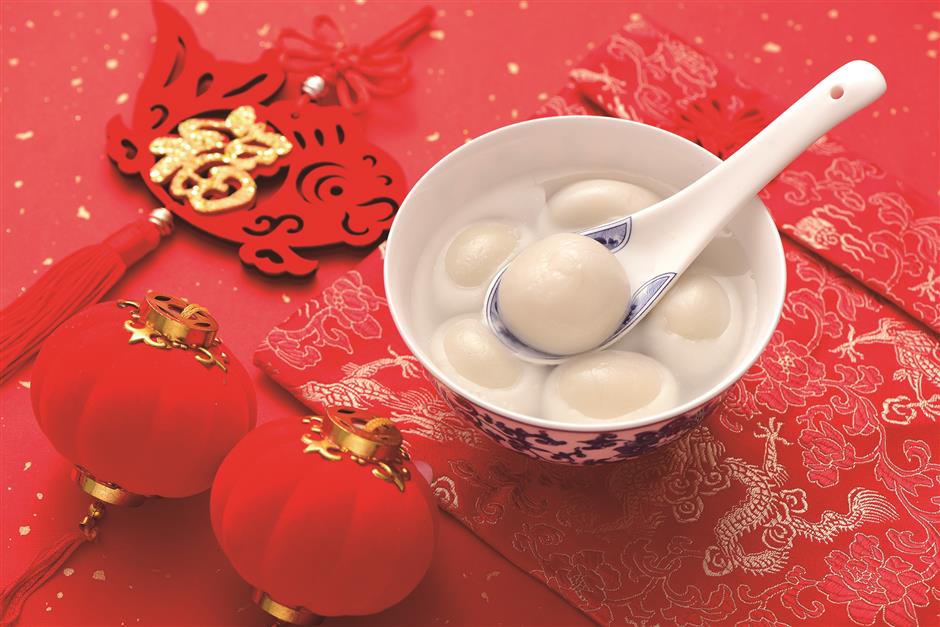
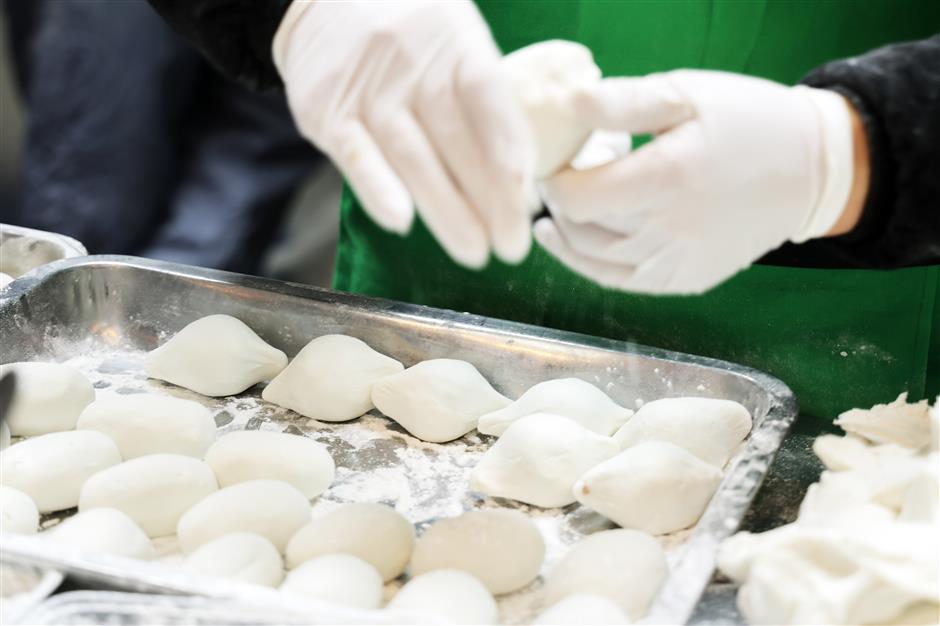
Chinese tangyuan float in sweet broth during the Lantern Festival and Winter Solstice – glutinous rice balls whose name sounds like "reunion" and whose spherical form represents family wholeness. Some come filled with black sesame paste or sweet red bean; others stay plain and white. Served warm and eaten slowly, they are typically enjoyed at the end of a shared meal.
During new year celebrations in Japan, households display kagami mochi, stacked rice cakes topped with a small bitter orange. The pounding of glutinous rice into smooth, elastic cakes is itself a ritual, the texture carrying meanings of flexibility and strength for the year ahead.
Korea's songpyeon appear during Chuseok, the autumn harvest festival. These half-moon shaped rice cakes are filled with sweetened sesame seeds or chestnuts, then steamed over pine needles that leave a distinctive fragrance.
The rice tradition extends across Southeast Asia. In the Philippines, bibingka – coconut rice cakes baked in banana leaves – appear at Christmas gatherings. Southern Vietnam turns to bánh tét, cylindrical sticky rice cakes with sweet mung bean and coconut fillings, prepared ahead of Tet and sliced gradually over the holiday. Indonesia's klepon, pandan-green glutinous rice balls filled with liquid palm sugar, are widely enjoyed and frequently served at weddings and festivals.
Bread, Butter and Rising
Move west and the base ingredient typically shifts from rice to wheat, the preparation from steaming to baking. Here, festival sweets tend toward leavened breads and laminated pastries – abundance made visible through rising, enrichment and the slow work of butter meeting dough.
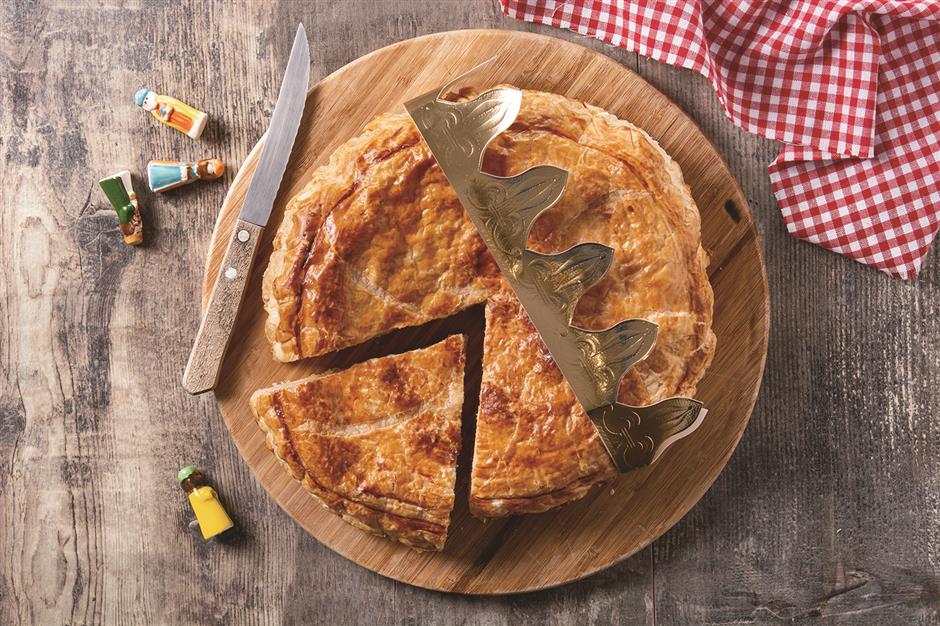
France's galette des rois arrives every January for Epiphany: layers of puff pastry encasing almond cream and a hidden ceramic charm, known as a fève. The youngest sits beneath the table calling out names for each slice, ensuring fairness. Whoever finds the fève becomes king or queen for the day, receives a paper crown, and by tradition must buy next year's cake.
Italy's panettone dominates December, those tall-domed sweet breads studded with candied citrus and raisins. Originally Milanese, they've become the Christmas sweet that shows up at gatherings across Italy and beyond. The height matters – panettone rises dramatically, a baker's show of skill that signals prosperity. Slicing it is rarely rushed, the dome preserved as long as possible before surrendering to distribution.
Germany's stollen takes a different approach to Christmas abundance: Dense fruit bread folded around a core of marzipan, then buried in powdered sugar. It improves with age, traditionally made weeks ahead and sliced thin throughout the holiday season.
In the United States, apple pie appears for all kinds of gatherings: Thanksgiving, Independence Day and church potlucks. Its power lies in its familiarity. The phrase "as American as apple pie" exists because this is the dessert that signals belonging, the choice that pleases the table without controversy.
Where Traditions Meet
Some sweets exist at cultural crossroads, their forms shaped by long histories of exchange as well as tradition.
Mexico's pan de muerto appears during Día de los Muertos, a sweet bread decorated with bone motifs and flavored with orange blossom and anise. Families place loaves on ofrendas (altars) before eating them together, the living and dead linked through shared ritual.
India's gulab jamun arrive at Diwali, the Hindu festival of lights, and weddings as fried milk balls soaked in rose-scented syrup, served warm and often in generous quantities. Their presence marks occasions of blessing, prosperity and shared celebration.
Baklava – layers of phyllo (paper-thin pastry sheets) brushed with butter, filled with pistachios or walnuts, and soaked in honey syrup – is woven into the dessert traditions of Turkey, Greece, the Arab world and Iran, appearing at weddings and Eid celebrations marking the end of Ramadan.
Why These Sweets Endure
Ingredients and techniques shift across cultures, but festive sweets serve the same purpose: to mark moments of gathering and celebration. Their value lies not in sweetness alone, but in timing – in when they arrive, and in the shared understanding of who is expected to be there when they do.
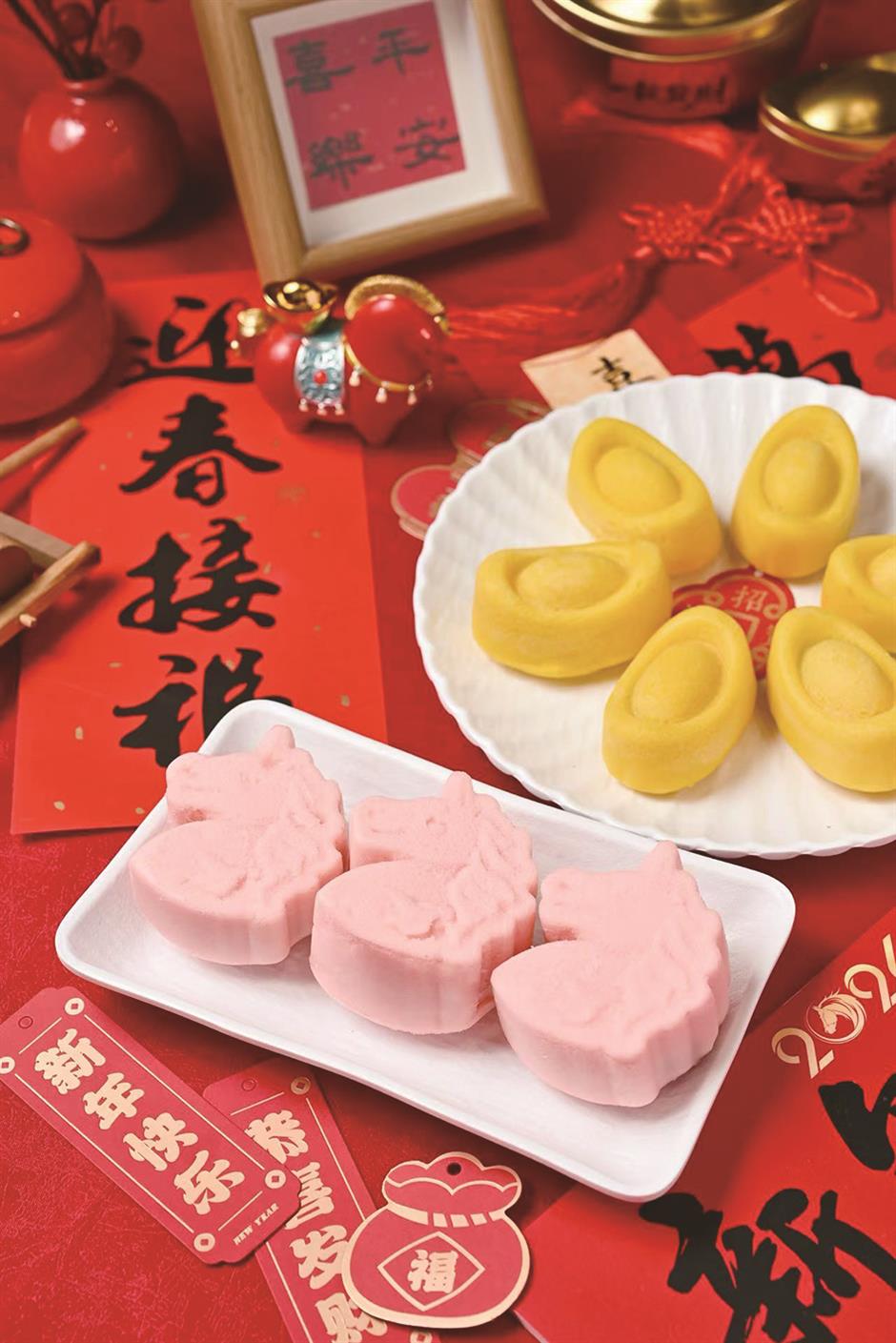
Wang Jia Sha | 王家沙
A Shanghai dim sum icon since 1945, Wang Jia Sha is famed for its craftsmanship and enduring legacy. Signature treats include crispy xiekehuang (crab shell-shaped pastries), babaofan (eight-treasure rice) and tangyuan (glutinous rice dumplings). For the Year of the Horse, Wang Jia Sha has introduced horse-shaped rice cakes filled with jujube or red bean paste, blending festive charm with traditional flavors.
Address: 805 Nanjing Rd W., Jing'an District
静安区南京西路805号
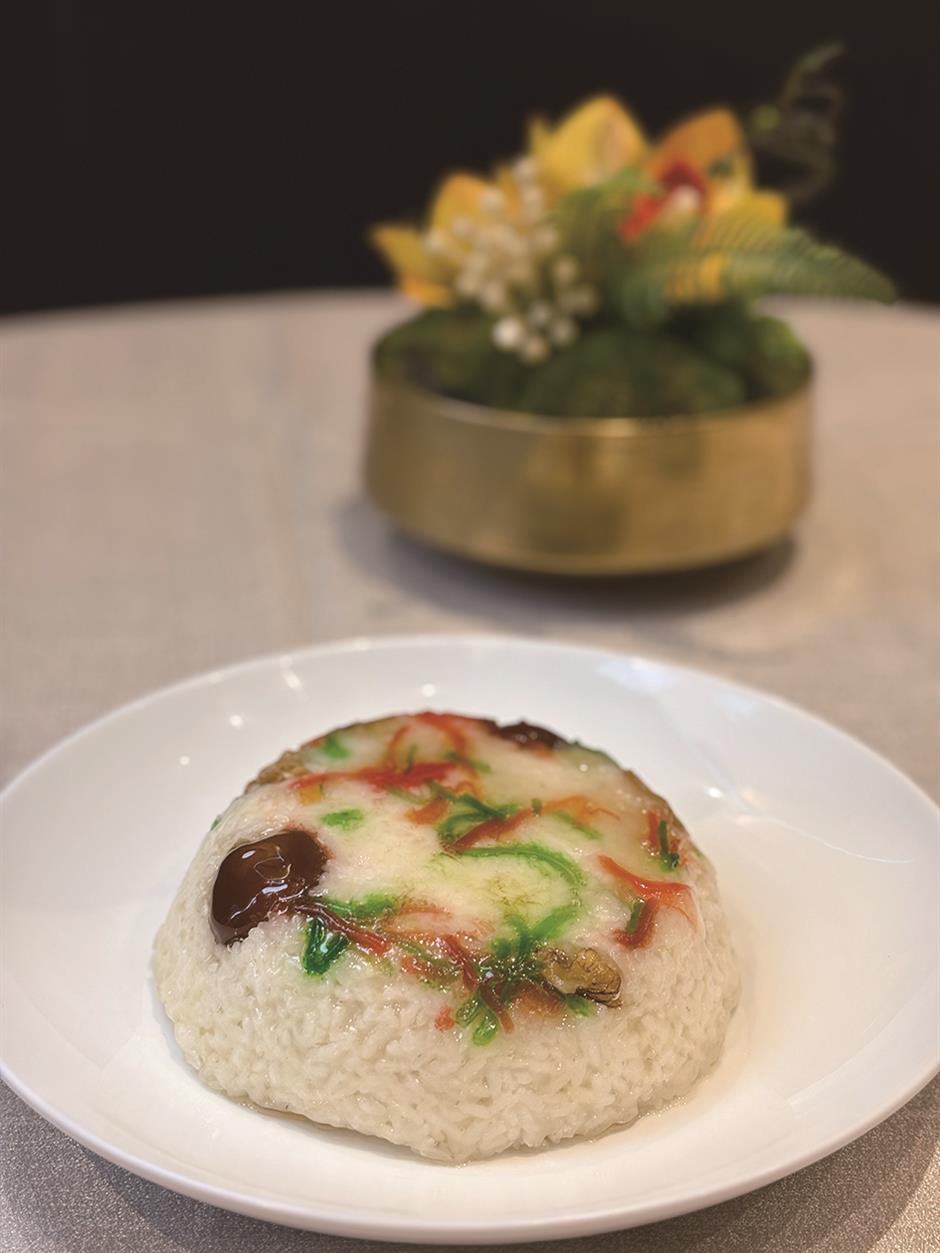
Lao Zheng Xing | 老正兴
Lao Zheng Xing, founded in 1862, has held a Michelin star for nine consecutive years. During the Spring Festival, it offers festive gift packages. A standout is eight-treasure rice: sweet glutinous rice filled with red bean paste, candied dates, lotus seeds and melon seeds. Handmade daily in limited quantities, each 700-gram portion costs 28 yuan (US$4).
Address: 556 Fuzhou Rd, Huangpu District
黄浦区福州路556号
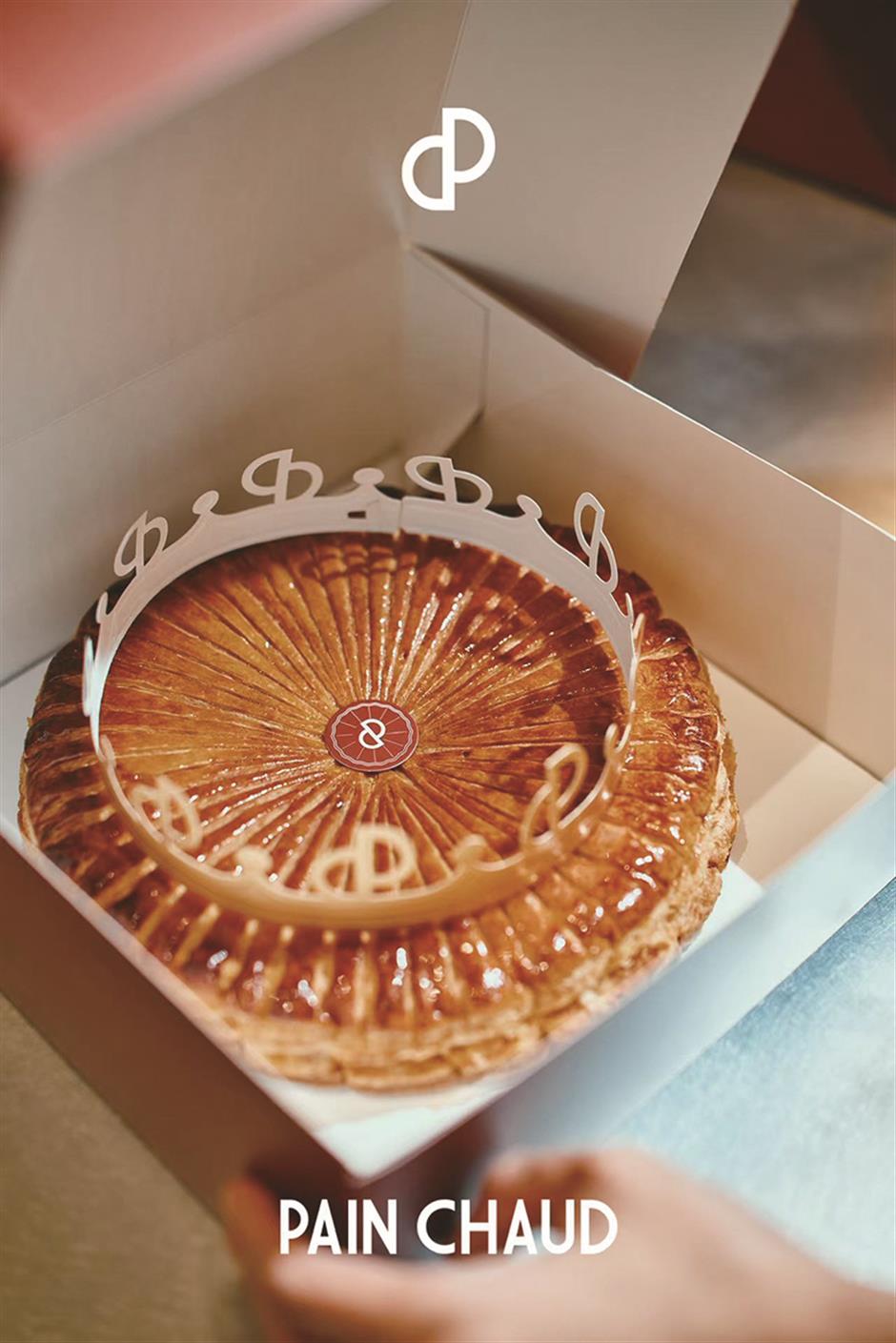
Pain Chaud | 百丘
Pain Chaud crafts galettes des rois with premium French AOP butter, delicate layers and a sunburst-crusted top, each served with a mini crown and fève. Founded in 2013, the bakery blends artisanal French baking with modern esthetics across eight stores in Shanghai.
Address 1: S102, 1/F, Jiuguang Department Store, 1618 Nanjing Rd W., Jing'an District
静安区南京西路1618号久光百货1楼S102室
Address 2: 256 Jianguo Rd W., Xuhui District
徐汇区建国西路256号
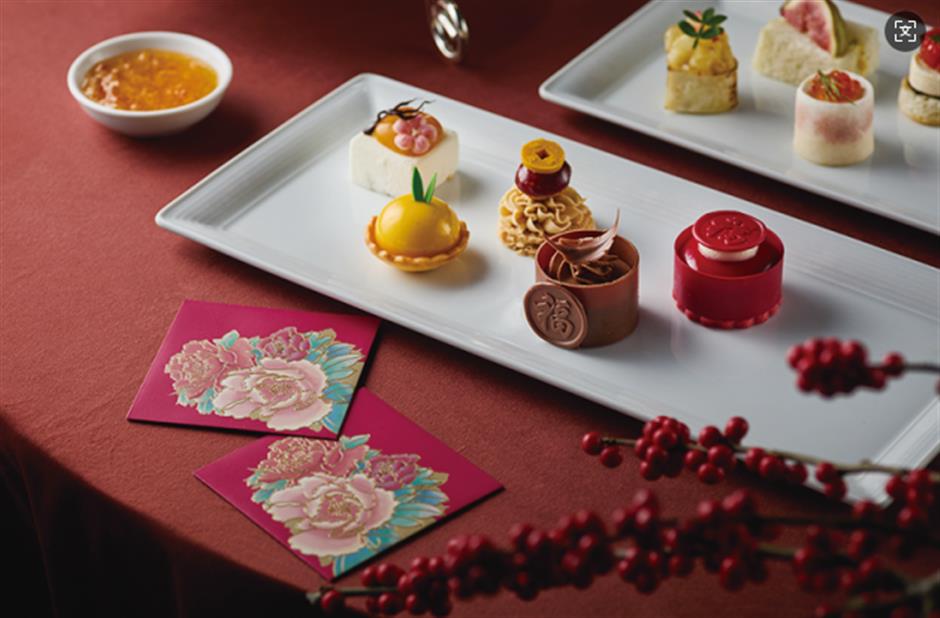
The Langham, Shanghai Xintiandi | 上海新天地朗廷酒店
At Cachet, The Langham, Shanghai Xintiandi, Spring Festival afternoon tea turns tradition into art. Six delicate desserts, from chocolate "Fu" mousse to plum-blossom coconut dacquoise, and four savory bites, including roast duck rolls and truffle cream cheese bread, bring festive symbolism to the table. Served daily from 2pm to 5 pm through March 3, the 518 yuan set for two offers a stylish, seasonal treat to enjoy with family or friends.
Address: 99 Madang Rd, Huangpu District
黄浦区马当路99号
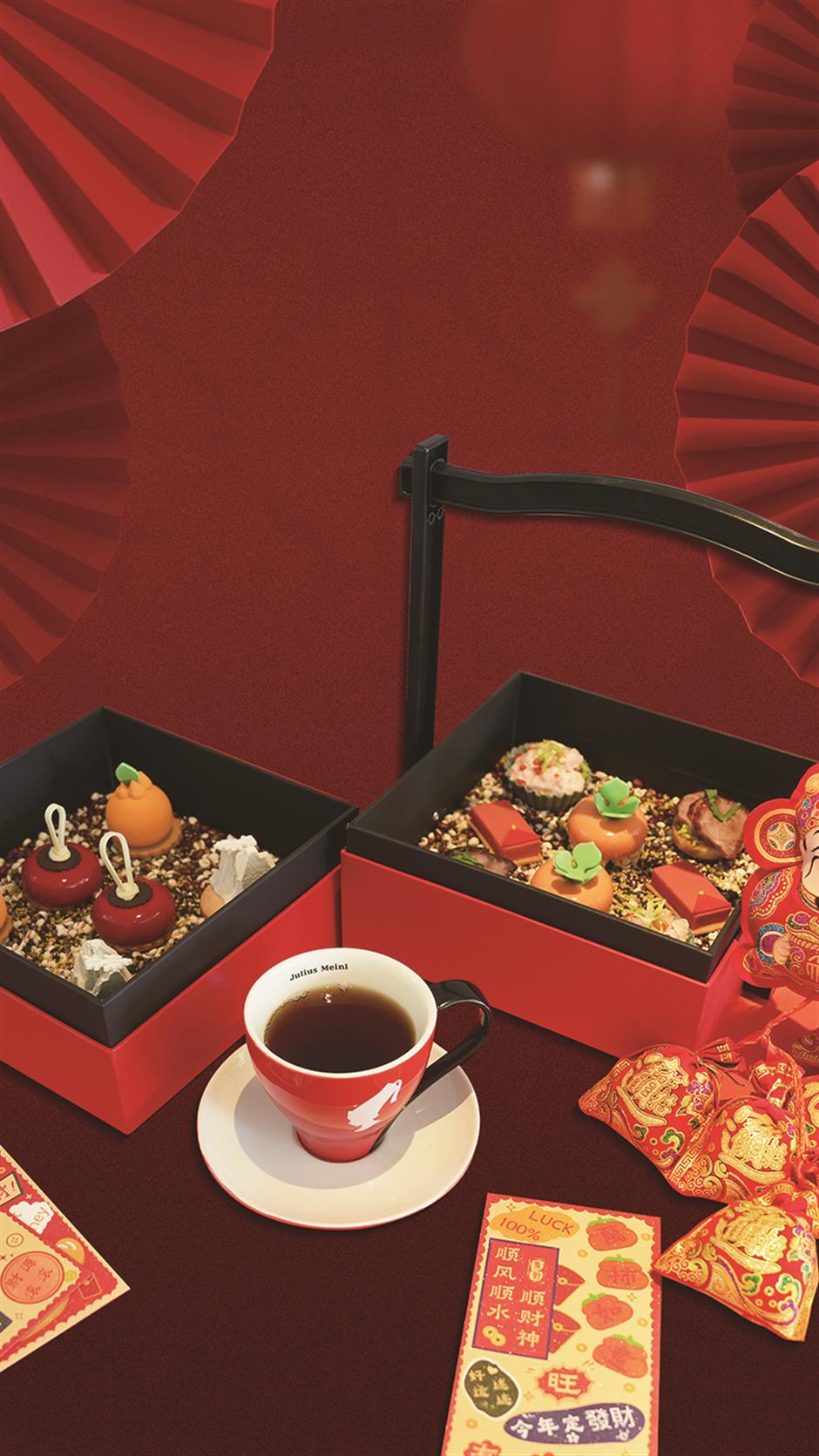
Shanghai Marriott Hotel Pudong East | 上海金桥红枫万豪酒店
Indulge in a festive afternoon tea at The Lounge, Shanghai Marriott Hotel Pudong East. Enjoy delicate teas and beautifully crafted pastries celebrating the Year of the Horse.
Address: 15 Xinjinqiao Rd, Pudong New Area
浦东新区新金桥路15号
The Sukhothai Shanghai | 上海素凯泰酒店
The Sukhothai Shanghai presents a Spring Festival afternoon tea for two (588 yuan) at The Zuk Bar and Urban Lounge. Sweet and savory creations celebrate the season, from hawthorn mascarpone cake and green bean cake to cod cakes and smoked salmon rolls, paired with carefully selected teas and coffee. It's served in a tranquil, elegant setting from 2pm to 5pm daily through March 3.
Address: 380 Weihai Rd, Jing'an District
静安区威海路380号
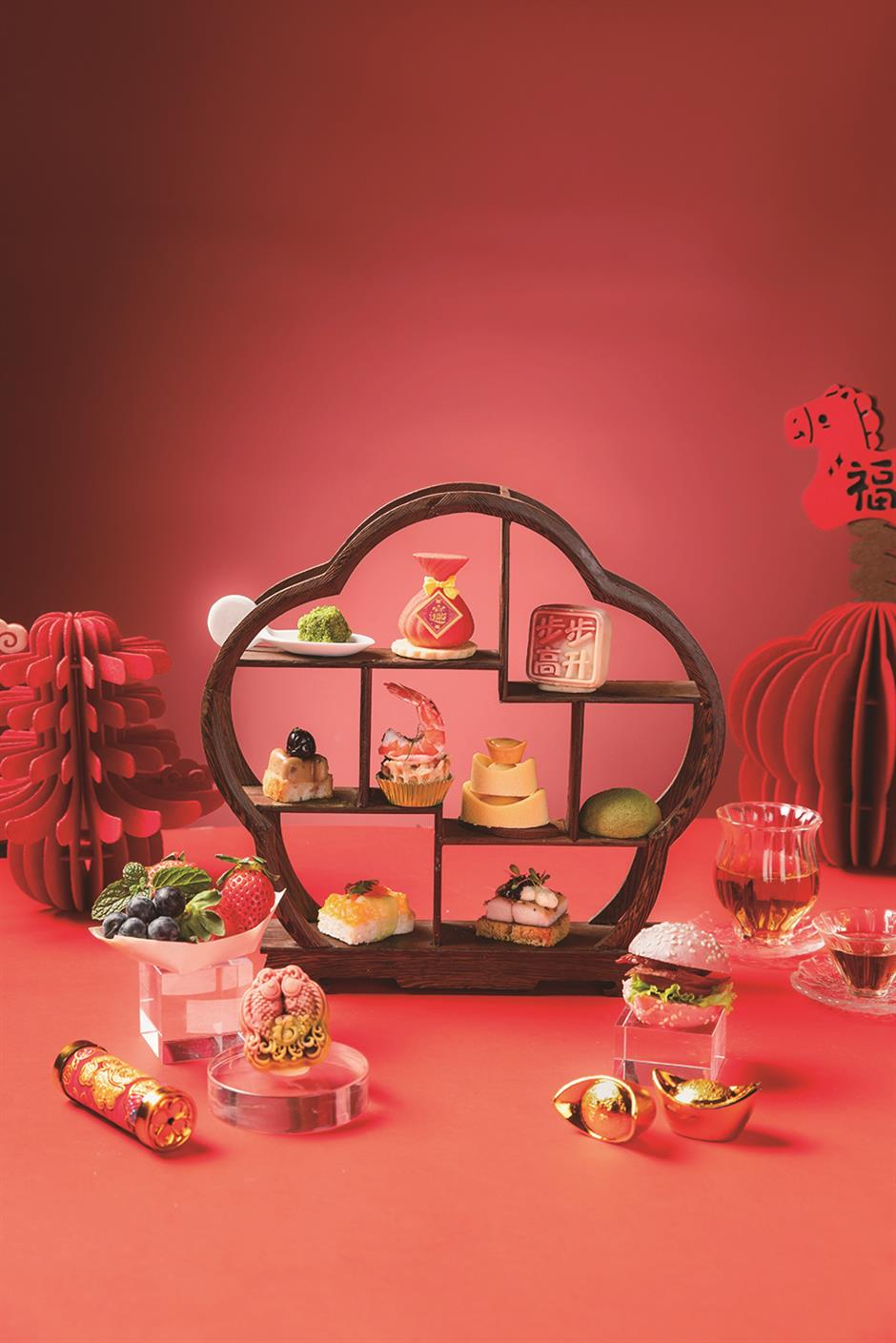
The Westin Bund Center, Shanghai | 上海威斯汀大饭店
At Heavenlies, The Westin Bund Center, Shanghai, a Spring Festival afternoon tea for two (388 yuan) blends festive flavors with playful presentation. Savor creative twists on classic bites, from shrimp salad with avocado in a waffle tart and goose liver mousse on crispy bread, to Chinese BBQ pork burgers. Desserts include white kidney bean cake, glutinous rice balls and gold ingot-shaped "Lime White Chocolate" cheesecake. Served daily, 2:30-5pm through March 15.
Address: 88 Henan Rd M., Huangpu District
黄浦区河南中路88号
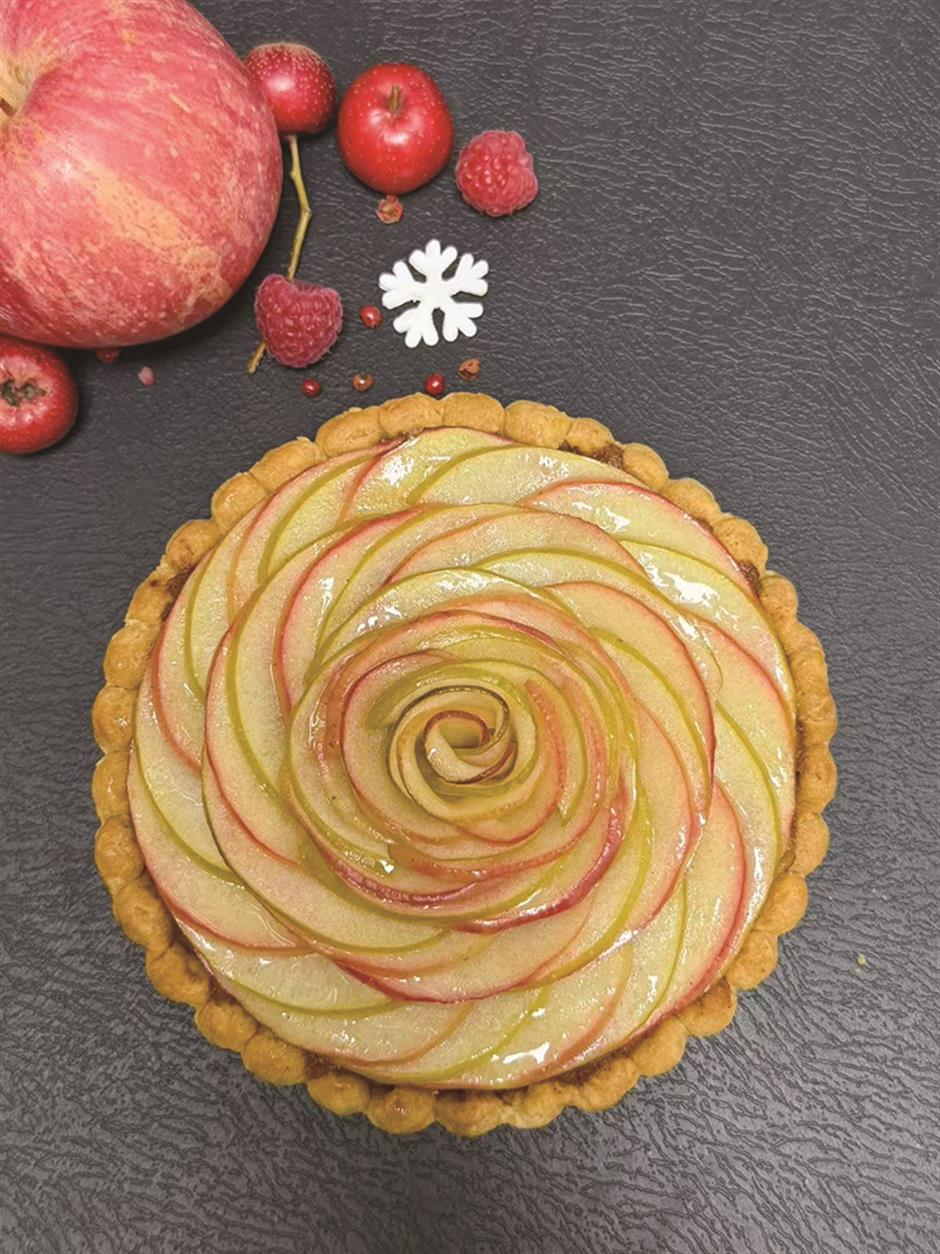
Azul italiano weave
The city's celebrated Italian restaurant presents a festive apple pie, brimming with cinnamon and caramel. Handcrafted by Alexs, a Le Cordon Bleu-trained French pastry chef with experience at Bund 18 and alongside Paul Pairet, the pie pairs classic French technique with fine-dining flair. Served warm, each slice is a sweet symbol of reunion and togetherness, perfect for sharing with family and friends during the holiday season.
Address: 2/F, Bldg 3, 277 Wuxing Rd, Xuhui District
徐汇区吴兴路277号3号楼2层
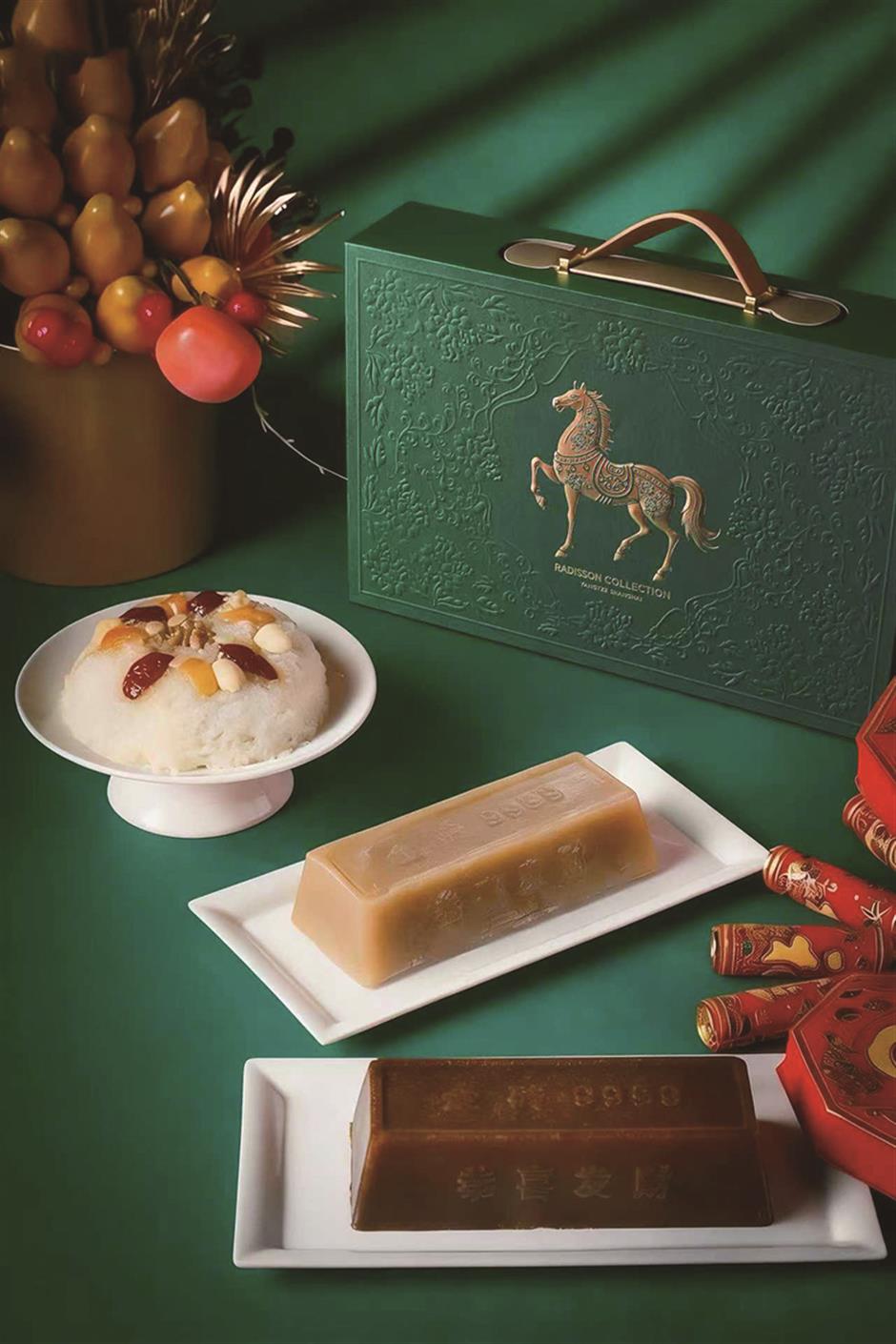
Radisson Collection Hotel, Yangtze Shanghai | 上海扬子江丽笙精选酒店
Celebrate reunion with the hotel's festive dessert gift box. Elegantly horse-shaped, it features golden coconut and brown-sugar niangao (rice cake) for prosperity, plus white glutinous eight-treasure rice for sweetness and togetherness. Perfect for gifting or sharing at family gatherings, each box blends traditional flavors with festive warmth.
Address: 2099 Yan'an Rd W., Changning District
长宁区延安西路2099号
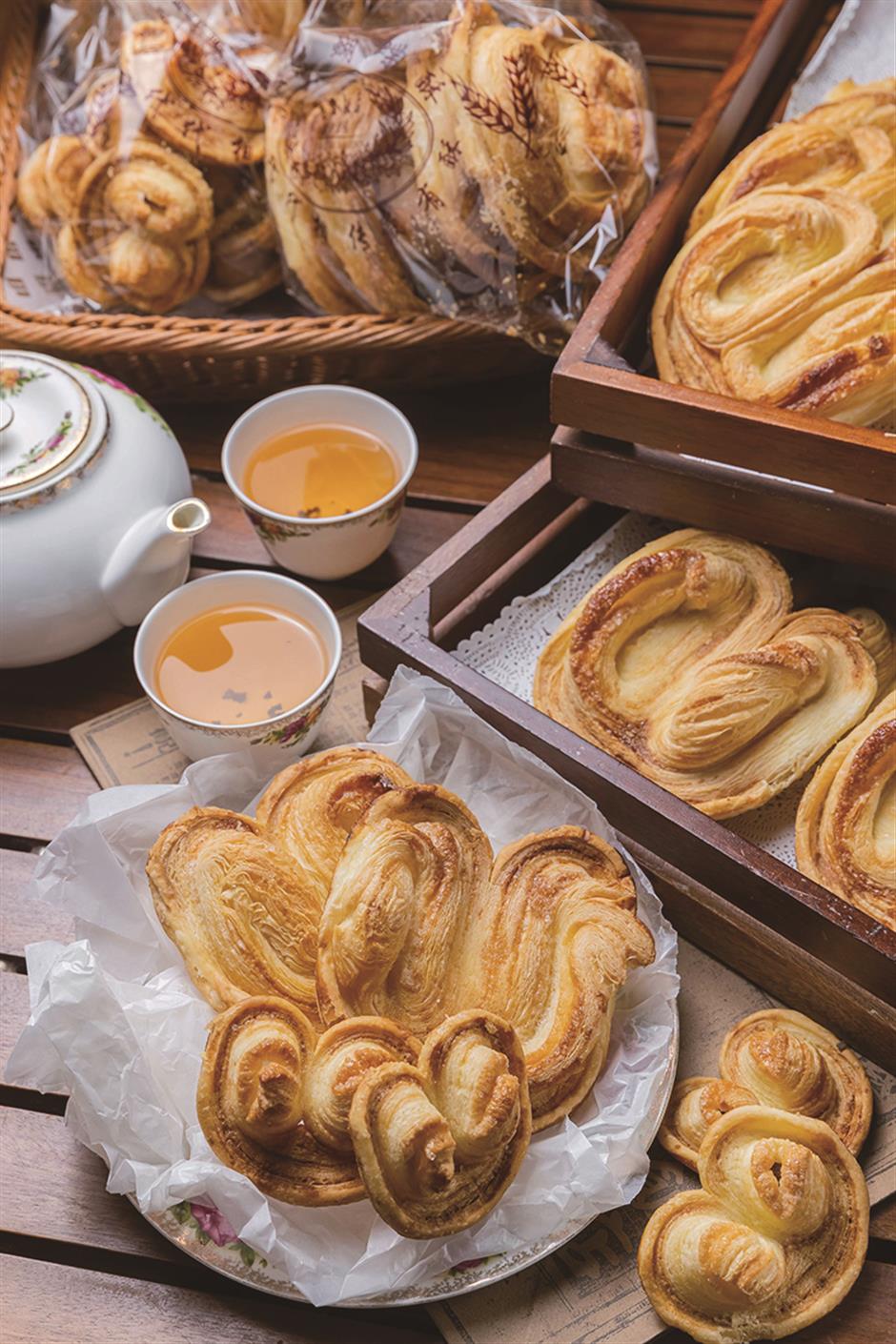
Park Hotel | 国际饭店
Hudiesu – the buttery, crispy palmier – is a festive favorite in Shanghai, especially for holiday gift-giving. At Park Hotel's bakery, the go-to spot for the treats, sugar is halved to let the rich butter shine, creating a light, flaky and aromatic pastry perfect for sharing or enjoying at home. Pair your hudiesu with refined coffee at the hotel's 28 PA KE LU cafe.
Address: 170 Nanjing Rd W., Huangpu District
黄浦区南京西路170号
Editor: Liu Xiaolin
In Case You Missed It...
 Mar 2, 2026
Popular Reads
Mideast War Grounds Flights and Triggers Emergency Refunds
![[China Tech] Local Experts Develop Novel Gene-editing Tool for Autism](https://obj.shine.cn/files/2026/02/28/bcd42f01-b0ca-4dba-8779-c8b64434ecee_0.jpg)
[China Tech] Local Experts Develop Novel Gene-editing Tool for Autism

China-SCO Platform Launched in Shanghai to Tackle Metabolic Diseases
![[China Tech] Chinese Experts Develop World's First AI System With Traceable Reasoning for Rare Disease Diagnosis](https://obj.shine.cn/files/2026/02/25/115392ea-bbde-409c-b37b-af65d6db7c4e_0.jpg)
