China Unveils AI System to Sharpen Global Weather Warnings
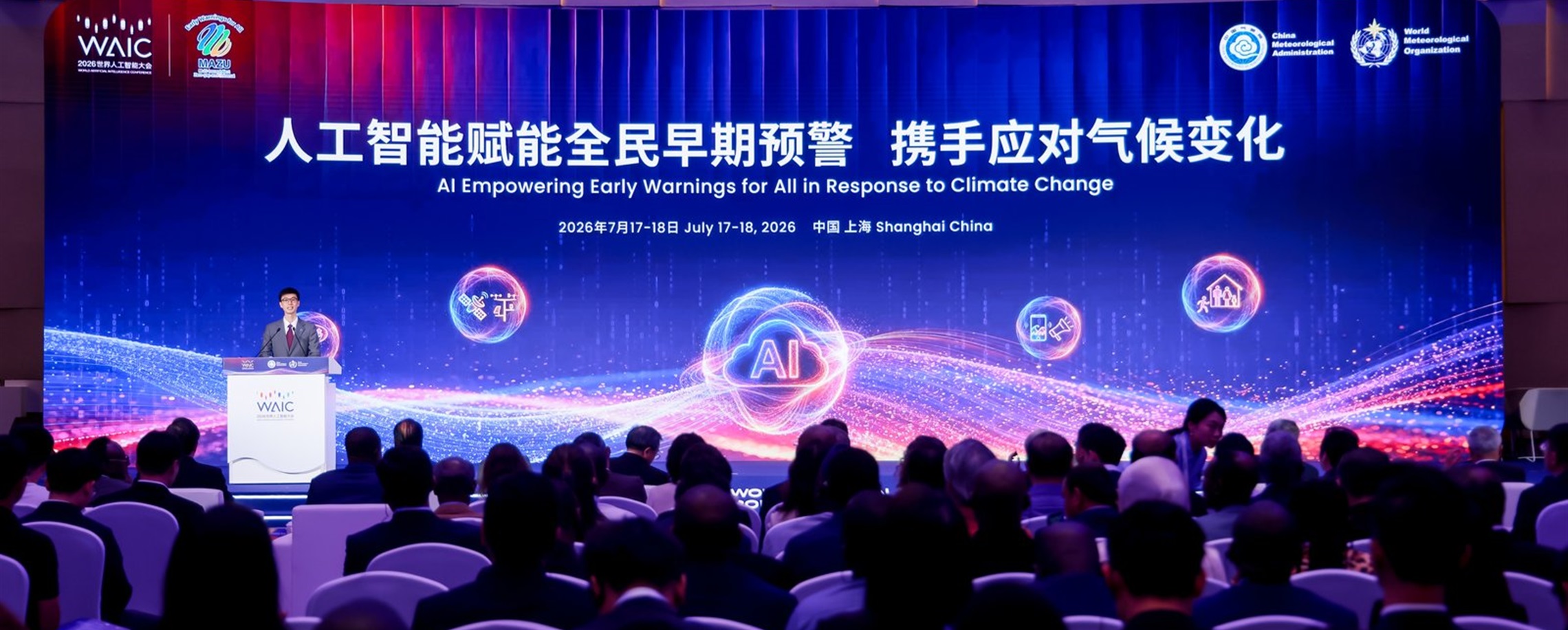
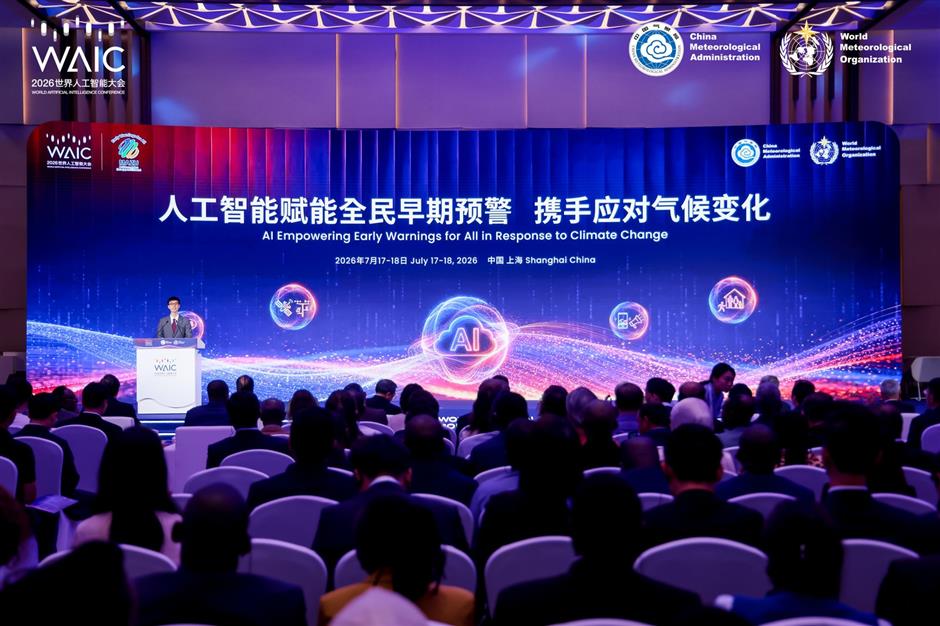
A special meteorological forum of the 2026 World Artificial Intelligence Conference opened in Shanghai on Friday, focusing on AI-powered universal early warning systems and coordinated global climate action.
The event showcased the latest developments in meteorological artificial intelligence and the MAZU-China Intelligent Meteorological Early Warning Solution, while also sharing practical experience in disaster prevention and risk reduction.
Against the backdrop of increasingly frequent extreme weather events and mounting climate risks worldwide, artificial intelligence is opening up new pathways for meteorological modernization and global collaboration in disaster prevention and mitigation.
MAZU represents China's first comprehensive solution in support of the UN's Early Warnings for All initiative. Developed by the China Meteorological Administration, MAZU's core mission is to build a multi-hazard monitoring and early warning system, helping narrow the gap in disaster prevention and mitigation capacity among countries.
The name stands for Multi-hazard Alert, Zero-gap and Universal Access. Integrating traditional Chinese culture with modern meteorological technology, MAZU adopts a dual-support model that combines practical expertise with advanced technology. It also operates through a menu-based, customized service model covering the entire workflow, from monitoring and forecasting to warning dissemination and public services.
Customized MAZU systems have been deployed in seven countries, including Pakistan, Ethiopia, the Solomon Islands, Jordan, Sri Lanka, Mongolia, and Djibouti. More than 40 other countries access related services through cloud-based platforms.
"This new technology, MAZU, provides highly accurate forecasts for sectors such as shipping and supports disaster prevention. It has been a very valuable service for us," said Mohamed Ismael Nour, director general of the National Meteorological Agency of Djibouti.
Mongolia used forecasting outputs from the system to accurately predict a sandstorm event on April 18 and 19, 2026. For flood risks in Nigeria, a lightweight AI runoff forecasting model was developed to predict daily hazards along nearly 20,000 river channels within five seconds per computation. The World Meteorological Organization has repeatedly recommended MAZU as a viable framework for developing countries that are building localized early warning capacity.
Four core meteorological AI innovations were unveiled during the forum, alongside the handover of 2.0/MAZU-Djibouti 2.0. Equipped with integrated meteorological chips and AI forecasting models, the upgraded terminal connects with existing urban multi-hazard agents to deliver an integrated observation-to-warning solution covering space, sky, ground, numerical models, chips and end devices.
Forecast spatial resolution has risen from nine kilometers to three kilometers. The system offers three-day forecasts updated every six hours, with newly added one-click alerting and real-time interaction functions. The lightweight hardware supports radar monitoring, intelligent prediction and targeted warning distribution, and works reliably under weak network conditions in Djibouti.
The equipment will be operated in Djibouti by the end of 2026, and the model can be replicated at ports, airports, new energy stations and scenic sites worldwide.
The China Meteorological Administration, in partnership with universities, research institutes, and tech enterprises, has developed the internationally leading "Feng" (Wind) series of meteorological AI models, while advancing global open sharing of these technologies.
MAZU-FengYun Satellite AI Box was released during the event. It leverages the all-weather observation capabilities of Fengyun meteorological satellites, integrating AI and satellite-ground collaboration technologies to deliver a one-stop satellite data application solution.
The system consists of a compact portable receiving antenna and an intelligent processing toolbox, supporting the full workflow from satellite data reception and intelligent interpretation to visualization and emergency decision support.
The "Feng He" (Wind Harmony) model, the world's first open-source meteorological large language model, with hundreds of billions of parameters, was released. It provides intelligent services for disaster warning, agricultural production, transportation, tourism, health, commerce and logistics, and energy and power sectors.
"We have incorporated different large models into MAZU and hope to share the results with the world, making it convenient to use and continuing to improve it for various circles of life," said Zhu Xiaoxiang, director of Public Meteorological Service Center of China Meteorological Administration.
The forum brought together delegates from 18 countries and regions and six international organizations, including senior officials from United Nations agencies, developing nations, as well as representatives of Chinese authorities, industries, research institutions and meteorological services.
Participants shared cutting-edge global advances in meteorological artificial intelligence. They also exchanged experience on using AI to advance universal early warning systems and disaster risk reduction, built international consensus and called for coordinated global efforts to tackle climate change.
Concurrent exhibitions at the 2026 World Artificial Intelligence Conference feature displays and meteorology-themed booths showcasing MAZU's overseas deployment, meteorological AI achievements and cross-industry use cases, sharing China's experience in meteorological disaster prevention and mitigation.
Editor: Li Qian
In Case You Missed It...

 Jul 18, 2026