Colorectal and Prostate Cancer Cases on the Rise in the City

Shanghai health authorities have released updated guidelines to address rising youth-onset colorectal cancer, improve prostate cancer screening, and offer new dietary advice to lower cancer risk.
The Shanghai Anti-Cancer Association and Fudan University Shanghai Cancer Center released the latest recommendations for screening and preventing common malignant tumors among residents to raise awareness of cancer prevention and control at the 32nd National Cancer Prevention Week and China Anti-Cancer Day.
Data from Shanghai's cancer registry showed a dramatic rise in colorectal cancer cases among adults aged 30 to 50 over the past two decades. The incidence rate among men aged 30 to 35 has increased fivefold, while that for women has risen 2.6-fold.
"This trend is consistent with that seen in developed countries, and the main contributing factors are unhealthy diets, sedentary lifestyles and lack of sleep," said Dr Zheng Ying from Fudan University Shanghai Cancer Center.
Prostate cancer is another growing concern for Shanghai men. Local men have had fivefold more prostate cancer incidence and fourfold more mortality in the past 20 years. Men aged 50-55 have seen a 20-fold increase.
Prostate cancer screening has a well-established medical procedure. The five-year survival rate for patients diagnosed with early-stage prostate cancer is nearly 100 percent, but the rate drops to 30 percent for those with terminal prostate cancer.
"However, only 10 percent of prostate cancer cases are detected at an early stage. Raising public awareness of cancer screening is critically important," Zheng emphasized.
To optimize screening efficacy, the guidelines have refined prostate cancer screening recommendations:
- Baseline prostate-specific antigen (PSA) testing is recommended for men aged 50 and above;
- Men with a family history of prostate cancer should start screening at age 45;
- Carriers of BRCA2 and other genetic susceptibility genes should begin screening as early as age 40.
New guidelines include a nutritional section. Unhealthy diets and lifestyles cause nearly 50 percent of cancer deaths. Optimizing nutritional intake alone can reduce cancer mortality by 10 percent, while lifestyle interventions like diet, exercise, smoking cessation and alcohol restriction can prevent 30-40 percent of cancer cases.
Cancer Is a Major Health Threat to Local Residents
Cancer has become a major public health challenge in Shanghai. In 2022, the city recorded 82,200 new cancer cases and 38,500 cancer-related deaths, with lung, colorectal and thyroid cancers as the most prevalent.
Shanghai has strengthened its cancer prevention and control network, focusing on early detection, diagnosis and treatment, raising the overall five-year cancer survival rate to 65.2 percent, among the highest in China, according to the Shanghai Health Commission.
The city's long-running colorectal cancer screening program has benefited over 4.19 million residents aged 50 and above. In 2025 alone, it detected 6,860 precancerous lesions and 710 colorectal cancer cases among the some 614,000 screened residents. This year, free screening will be provided to over 500,000 residents.
Seven major cancers are now included in community chronic disease management. By the end of 2025, 233,000 residents had received risk assessments, identifying 125,000 high-risk individuals and having been offered clinical suggestions and medical service guidance. A new digital self-management service will soon launch on the government-run Suishenban (随身办) app.
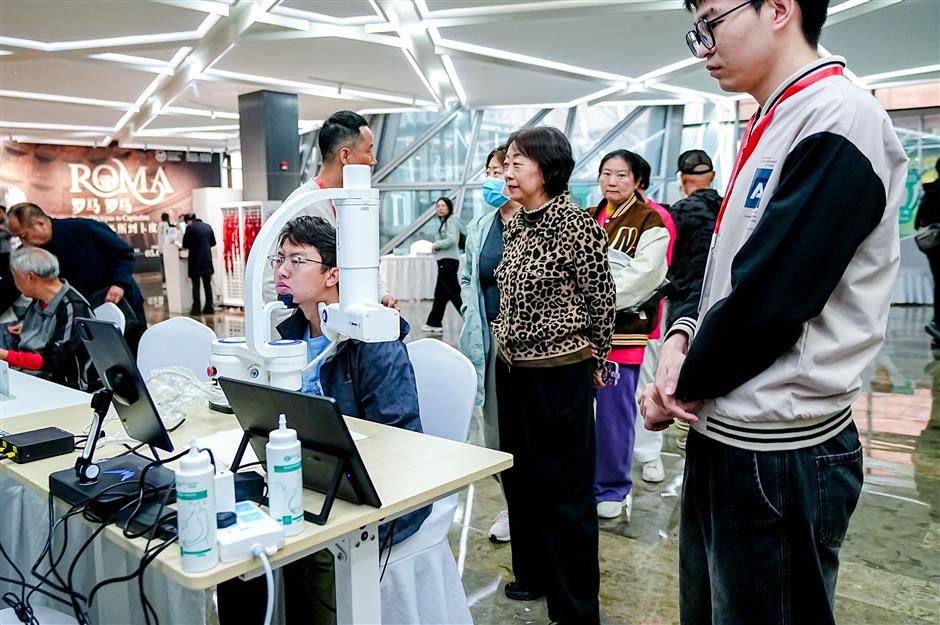
Health professionals emphasize that routine checkups cannot replace cancer screening. People are advised to seek medical advice for warning signs such as abnormal bleeding, lumps, persistent digestive problems and unexplained weight loss.
- Lung cancer screening: Low-dose spiral CT
- Breast cancer screening: Mammography combined with ultrasound
- Cervical cancer screening: TCT (ThinPrep Cytologic Test) combined with HPV test
- Colorectal cancer screening: Fecal occult blood test, colonoscopy
- Gastric/esophageal cancer screening: Gastroscopy
Editor: Liu Xiaolin
In Case You Missed It...

 Oct 15, 2026