Using AI at Work: Shared Responsibility Starts with Clear Rules
An employee uses an AI tool recommended by her manager to work more efficiently. A month later, she is dismissed for doing so. A recent Chinese labor dispute illustrates what happens when workplace expectations move faster than the rules governing them.
The employee, identified as Wu, worked in legal affairs at an insurance company. The company dismissed her a month after she uploaded a table of audie issues to a third-party AI platform, arguing that uploading internal information created a serious disclosure risk.
Beijing's Chaoyang District People's Court found the dismissal unlawful. The company had neither established specific AI-use rules nor provided relevant training. The lesson is straightforward: Companies seeking productivity gains from AI must also provide the conditions for employees to use it responsibly.
Artificial intelligence is transforming industries at an unprecedented pace, seamlessly integrating into our daily lives as people embrace an AI-powered lifestyle.
The growing reach of AI has also brought questions of safety and accountability to the fore. Recently, OpenAI Chief Executive Sam Altman said in an appearance before a UN Security Council on AI that the technology will expand opportunities but powerful systems must be kept under human control amid a need for international collaboration on AI safety.
As AI becomes more deeply embedded in the modern world, a central question arises: How can society harness its benefits while keeping its risks in check?
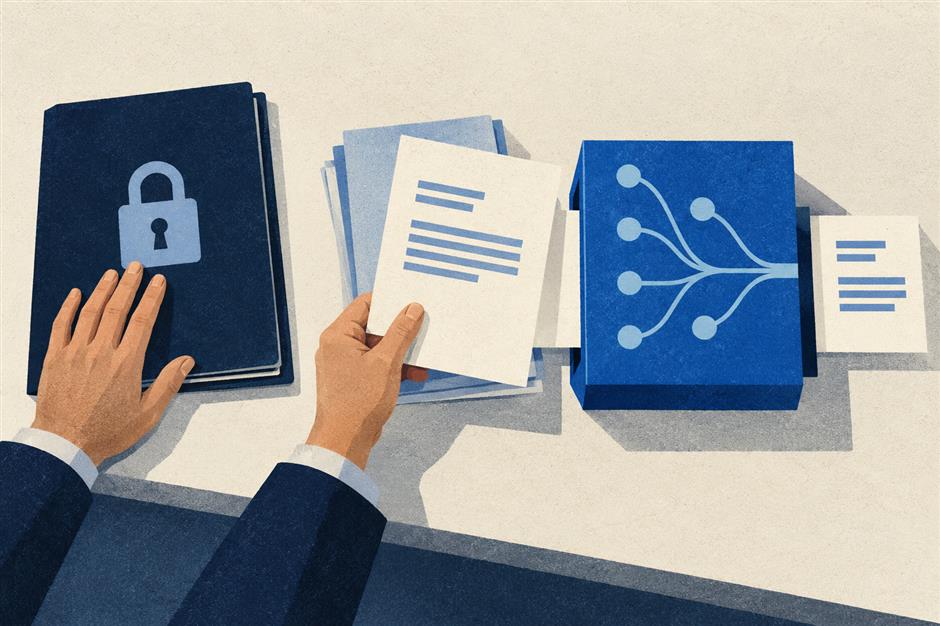
The legal case prompts us to rethink how workers should use AI, what safeguards must be provided and how companies need to clearly establish rules for its applications. Striking the right balance requires more than simply restricting AI use; it calls for shared responsibility between employers and employees.
Third-party AI tools may pose risks related to data retention, model training and information security. However, these risks vary by platform and depend on the nature and sensitivity of the information uploaded. While companies have a legitimate interest in protecting trade secrets, personal information and internal business data, they should assess any alleged misconduct based on the information involved rather than treating the use of third-party AI as a serious violation in itself.
A California law that comes into effect on January 1 offers a useful reference. It prohibits attorneys from entering confidential, personally identities or other nonpublic information into generative AI systems unless access is restricted to authorized persons bound by confidentiality obligations. This regulatory approach is worth a look. When regulating employees' use of AI, companies should specify the conditions for use in different scenarios according to the sensitivity of work information and the security safeguards of the tools.
If employers fail to do so, holding workers accountable for any breaches after the fact is unfair. Clear AI-use policies are not simply another layer of restriction. They help employees understand their obligations, protect sensitive information and prevent avoidable labor disputes.
Last March, Singapore's Ministry of Law released a guide for using generative AI in the legal sector. Although the guide is non-binding, it includes a template for internal AI governance policies and recommends that organizations specify approved tools, requirements for handling information at different confidentiality levels, human review standards and procedures for reporting risk incidents. This approach shows that AI governance should go beyond principled declarations and translate them into enforceable internal rules that embed professional ethics, confidentiality obligations and transparency requirements into specific workflows.
Companies should also provide employee training on AI use and establish clear risk-reporting procedures. Employees, in turn, should honor their confidentiality obligations, avoid uploading trade secrets, sensitive personal information or internal materials without authorization, and also promptly report any discovered data leaks or erroneous output.
China's AI safety guidance also places responsibility on organizations deploying the technology. The National Technical Committee 260 on Cybersecurity released its AI Application Ethics Safety Guidelines 1.0 in May. The document explicitly calls for protecting employment rights and assessing and preventing potential job displacement or unemployment risks before AI applications are introduced.
More recent State Council General Office guidance, published on October 23, goes further on employment. It encourages companies to explore unemployment buffer periods, notify affected workers in advance and provide support for transitions into other roles during the large-scale rollout of AI. It also addresses abuses of AI in human resources management, including employment discrimination, false recruitment, and infringements of privacy and rest rights.
In short, the age of AI for all requires clear rules, proportionate risk management and sufficient room for innovation. Only when workplace rules keep pace with technological change can AI realize its full potential in boosting efficiency and enhancing productivity.
(The author is an assistant research fellow with the Institute of Law, Shanghai Academy of Social Sciences.)
Editor: Liu Qi
In Case You Missed It...

 Nov 3, 2026