China to Augment Green Energy Credentials in Next Five Years
Editor's note:
China recently released the blueprint for the 15th Five-Year Plan (2026-2030), outlining how the nation will move up the value chain in industry and spur innovation, become more self-reliant in technology, and improve living standards. The new plan, which comes amid a more disquieting global environment, will go to the National People's Congress in March for adoption. This series provides insights into China's vision of its path forward.
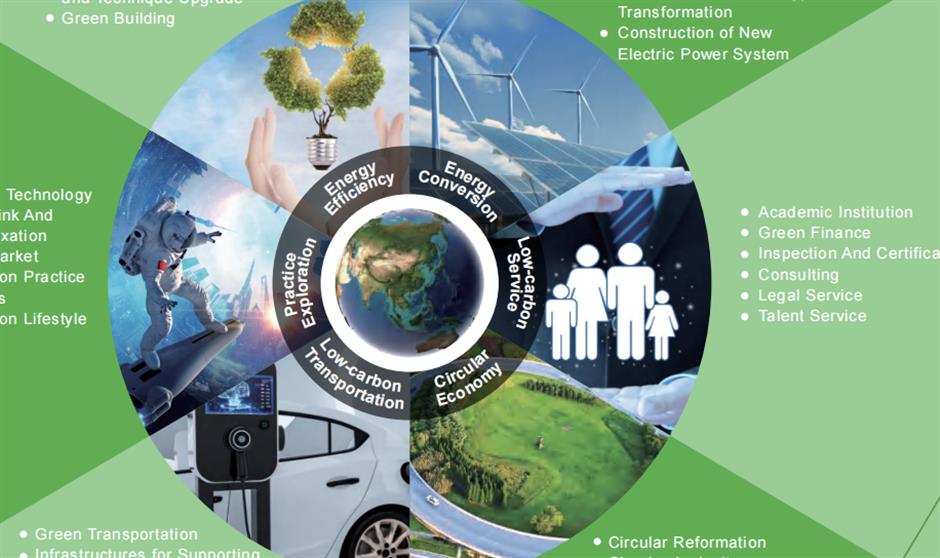
China blueprint for its energy sector is written in green as the nation pursues policies to reduce carbon emissions in the 15th Five-Year Plan (2026-2030).
The plan called for ramping up the transition from fossil fuels to green energy sources like solar and wind power to meet surging demand driven by sectors like artificial intelligence data centers. It forecasts a peak in carbon emissions by 2030 as a prelude to achieving carbon neutrality by 2060.
During current five-year plan, China has delivered some sterling results in the development of green energy. The National Energy Administration reports that one of every three kilowatt-hours of electricity generated in China comes from clean, green sources. Annually, the share of non-fossil energy has increased by one percentage point, while coal's share decreased by the same amount.
"Climate change highlights the importance of raising the share of non-fossil energy consumption, while geopolitical risks further accelerate the restructuring of energy supply chains," said Wang Peng, executive dean of the National Institute of Energy Development Strategy at North China Electric Power University. He called the new plan an "essential answer sheet."
While fossil fuels like coal, oil and natural gas still accounted for a combined 80.7 percent of China's energy consumption in 2024, the share of non-fossil energy has risen to 18.3 percent from 9.4 percent in 2010. Long-term goals anticipate this share exceeding 25 percent.
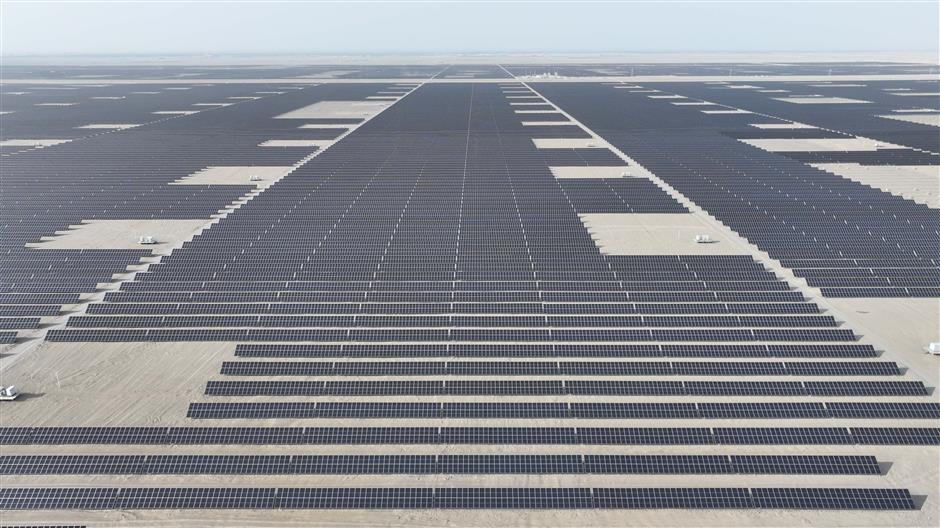
China currently leads the world in renewable energy, having built the largest new energy industry chain spanning wind, solar, hydro and nuclear power. By 2024, the total installed capacity of wind and solar power surpassed 1.2 billion kilowatt-hours, achieving the nation's 2030 voluntary commitment six years ahead of schedule.
Investment bank UBS said it expects China's target in the next five years to beat current expectations, lifting its own annual forecast by 14 percent on higher contributions from thermal, wind and nuclear approvals.
The steady shift to green energy comes as China's power market experiences a major surge in demand.
Ken Liu, head of UBS research on China's energy transition, doubled the firm's power demand growth forecast for the country, now projecting 8 percent annual growth by 2028-2030. The rapid buildup of AI data centers adds about 2.3 percentage points to power demand growth.

Major domestic technology companies, including Alibaba, Tencent, ByteDance and Xiaomi, are all accelerating AI investments, with a substantial portion flowing into more data centers, which need vast amounts of electricity to operate.
Founder Securities projects that the overall investment in AI data centers will rise from 187.5 billion yuan (US$26 billion) in 2024 to 482.6 billion yuan by 2027.
The other drivers for power demand include exports, as stronger manufacturing activity boosts industrial electricity use, insiders said.
As a global manufacturing powerhouse, China's "green manufacturing" concept is vital to achieving a carbon emission peak by 2030. The concept entails low consumption, low emissions and high efficiency, with strong economic benefits.
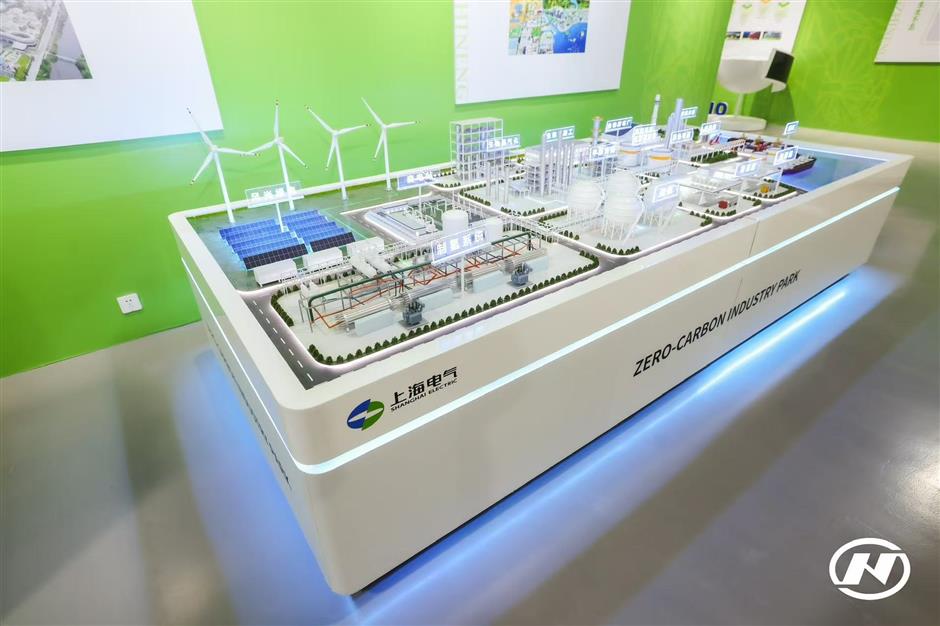
China efforts to integrate green development across the entire industrial chain is anchored in factories, industrial parks, supply chains and products. The Ministry of Industry and Information Technology reports that China has already fostered 6,430 green factories and 491 green industrial parks, the later consuming two-thirds less energy and three-quarters less water per unit of industrial value.
The Shanghai Scientific Energy Conservation Exhibition Hall showcases about 100 green and low-carbon application scenarios. Exhibits include zero-carbon industrial parks from Power Construction Corp, green hydrogen and green methanol equipment from Shanghai Electric, and carbon dioxide capture and utilization technology from Baowu, China's largest steel manufacturer.
Editor: Liu Qi
In Case You Missed It...
 Mar 10, 2026