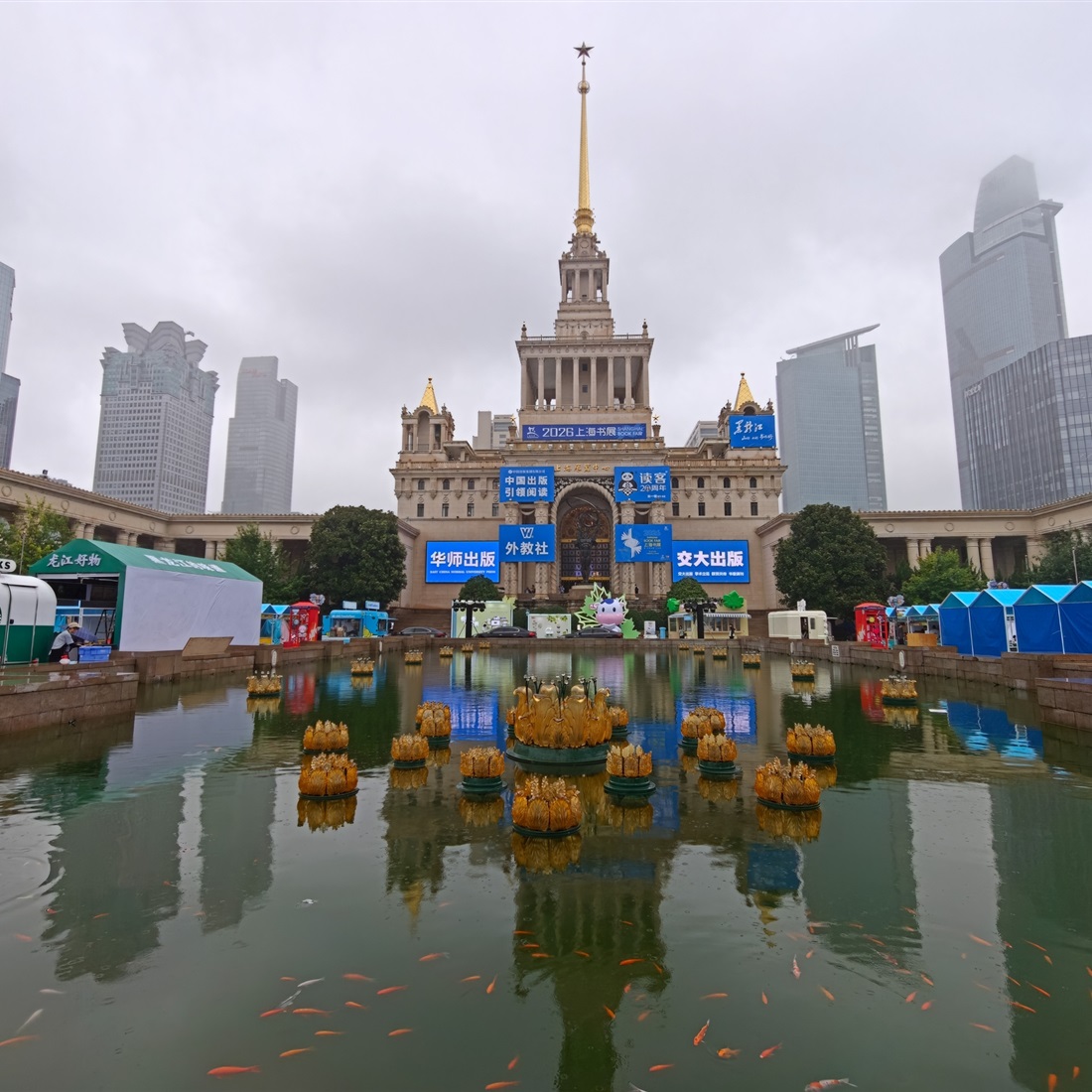
A Shanghai Coup: Qwen's Star Architect Forms Startup in City
Shanghai just scored one of the most symbolic wins in China's artificial intelligence talent war.
Lin Junyang, former technical leader behind Alibaba's Qwen large language model, announced the launch of his new startup, Pragmatik Labs, focused on developing the next generation of AI agents that operate across both digital and physical worlds.
The new company emerged with a reported valuation of US$2 billion and backing from a heavyweight syndicate including Gaorong Ventures, HSG, Tencent, and, notably, Shanghai Engine Fund.
The financing itself is impressive. More important is what it signals.
For months after Lin's surprise departure from Alibaba in March, China's venture capital community speculated about his next move. As one of the architects behind Qwen's rise into a globally influential open-source AI model, he represented exactly the kind of founder every major Chinese tech hub wanted to attract.
Shanghai appears to have won.
Pragmatik Labs has established itself in the West Bund's Shanghai Foundation Model Innovation Center, Shanghai's flagship AI innovation cluster. The startup's focus reflects a broader shift occurring across the AI industry. Rather than building ever-larger foundation models, Lin argues that the next frontier lies in "agentic thinking," which means training complete systems consisting of models, environments and autonomous decision-making capabilities.
That vision aligns closely with Shanghai's technology strategy.
Over the past two years, Shanghai has quietly assembled one of China's most comprehensive AI support ecosystems. Beyond venture capital, the city offers computing subsidies, data resources, application scenarios, talent incentives and state-backed "patient" capital. Shanghai Engine Fund alone was created to support cutting-edge technologies and early-stage founders willing to pursue long-term research.
The competition among Chinese cities is increasingly focusing on a race to attract founders. Beijing has Zhipu AI and Moonshot AI. Hangzhou has DeepSeek. And CXMT has helped turn the Anhui Province capital of Hefei into a semiconductor hub.
The arrival of Pragmatik Labs suggests Shanghai's pitch is resonating with a new generation of AI entrepreneurs.
In technology, talent creates companies, companies create industries and industries can reshape cities.
Shanghai is betting that AI agents will be its next big story.
(The author is an adjunct research fellow at the Research Center for Global Public Opinion of China, Shanghai International Studies University, and founding partner of 3am Consulting, a consultancy specializing in global communications.)
Editor: Liu Qi
In Case You Missed It...

 Aug 13, 2026