AI Access Needs Infrastructure. China Is Building It.
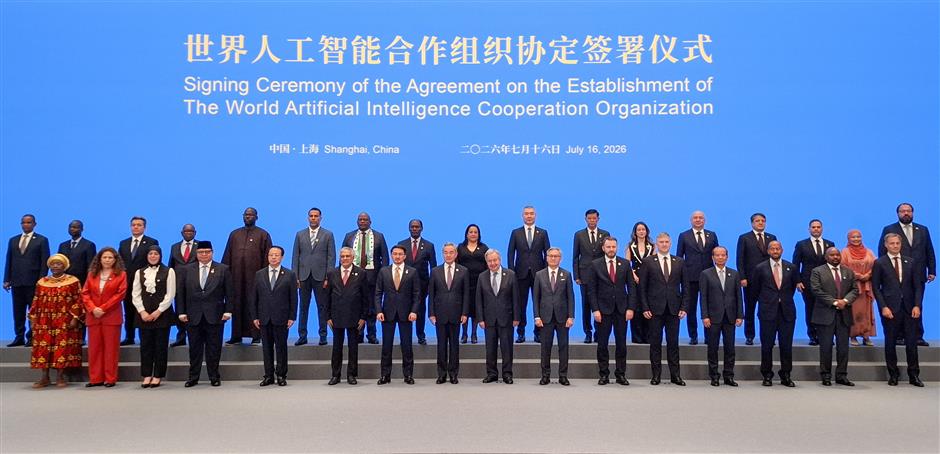
Twenty-nine countries signed a treaty in Shanghai yesterday. Not one of them got a single graphics processing unit from their signatures.
The establishment of the World AI Cooperation Organization (WAICO) marks an ambitious effort to broaden participation in the AI era, particularly for countries that have yet to develop significant AI capacity of their own. Members join as founding participants rather than observers – a notable shift for economies that have had relatively limited influence in AI governance frameworks led by the Group of Seven and the Paris-based Organisation for Economic Co-operation and Development.
But a seat at the table was never the hard part of this problem.
A permanent institution can give countries a voice in AI governance. It cannot generate a single token of inference. Access ultimately depends on physical infrastructure: power, cooling, land, fiber-optic networks, and data centers. Without sufficient computing capacity, AI access remains an aspiration rather than a capability.
If WAICO is the institutional framework, China's expanding compute infrastructure could become the physical foundation that gives it practical meaning.
Over the past several years, China has pursued an infrastructure strategy designed to expand AI computing capacity while reducing many of the constraints that are increasingly slowing infrastructure development elsewhere.
Under the "Eastern Data, Western Computing" (东数西算) initiative, much of China's new computing capacity is being built in sparsely populated western provinces, where land, renewable energy resources, and transmission capacity are more readily available than in densely populated coastal cities.
Electricity pricing is also managed differently. Rather than relying on utility rate proceedings that determine how infrastructure costs are allocated among customers, China's electricity prices are administratively managed, and local governments have in numerous cases subsidized data center electricity costs to attract AI investment.
China is also experimenting with new engineering approaches to reduce infrastructure bottlenecks.
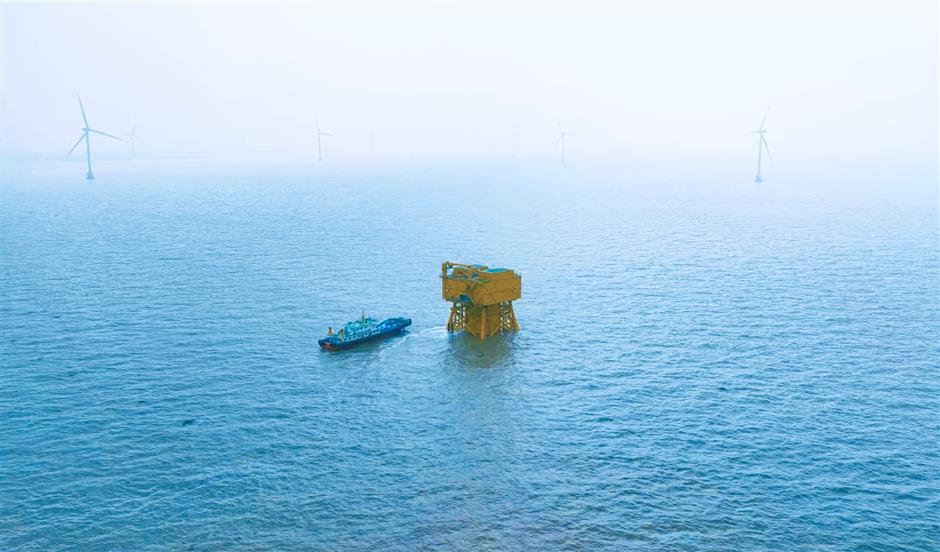
Hainan's underwater data center at Lingshui expanded this June with a new module capable of processing roughly 7,000 DeepSeek queries per second. In May, Shanghai's Lingang underwater data center began commercial operations using offshore wind power and seawater cooling to reduce freshwater consumption, cooling requirements, and pressure on land-based infrastructure.
Whether underwater data centers become mainstream remains uncertain. But they illustrate a broader point: China is attempting to engineer around infrastructure constraints rather than simply regulate them.
The contrast with parts of the United States is becoming increasingly apparent.
This week, New York became the first US state to impose a statewide moratorium on new hyperscale data centers while it develops a regulatory framework for future projects. The move reflects growing concern over electricity costs, grid upgrades, water consumption, and community impacts. It also follows broader warnings from Harvard Law School's Electricity Law Initiative, whose researchers argued in a March 2025 paper that existing utility rate structures and confidential contracts can force residential ratepayers to shoulder part of the cost of powering large data centers. Across the United States, hundreds of local moratoria and state legislative proposals now illustrate how AI infrastructure has become a political as well as an engineering challenge.
The immediate questions being asked are different.
In New York, policymakers are asking: Who pays?
In China, policymakers are asking: How do we build more capacity?
Neither approach is inherently right or wrong. One prioritizes protecting consumers from infrastructure costs. The other prioritizes expanding infrastructure while attempting to engineer around resource constraints.

This matters because AI is increasingly becoming a deployment business rather than simply a model-development business. The industry is gradually shifting from rewarding the most capable models to rewarding those that can deliver inference at scale – and at low cost.
History suggests that countries export technology only after they have first built abundant domestic capacity. AI is unlikely to be different.
That does not mean WAICO can guarantee AI access for its founding members. Domestic computing abundance is a precondition for broader access – not its fulfillment. Nothing in the founding agreement obligates members to share computing capacity, subsidize inference, or provide preferential access to AI infrastructure. Commercial incentives, export controls, connectivity, and geopolitics will all shape how much of China's expanding compute base ultimately reaches other countries.
That is why the real significance of WAICO lies less in the agreement itself than in the infrastructure that may eventually support it.
If China succeeds in building abundant, low-cost AI infrastructure, it will eventually have something meaningful to offer beyond governance principles: compute.
Whether that compute ultimately reaches members of the new organization or simply fuels China's own race to dominate AI deployment will determine whether the new organization is an important step forward or simply another great idea in search of fulfillment.
Editor: Su Yanxian
In Case You Missed It...
![[Weekend Escape] 2hrs From Shanghai, An Abandoned Island Village](https://obj.shine.cn/files/2026/06/10/b25a6ab8-9e5f-457d-95ea-dacb9b2b648f_0.png)
 Jul 27, 2026
![[Hai Lights] Creative Souvenirs Are Going Viral in Shanghai. We Want Them All!](https://obj.shine.cn/files/2026/07/22/afe220e1-bedb-4c2c-9ede-2a7f82550147_0.jpg)