Weekend Buzz: 18-19 April 2026
Top News
Iran Opens Hormuz Strait After Lebanon Ceasefire, Oil Prices Drop
Iran announced that the Strait of Hormuz is open to all commercial shipping for the duration of Israel's agreement to a 10-day ceasefire in Lebanon. However, Iran's Tasnim news agency reported that ships and cargos linked to hostile nations won't be allowed transit, and it isn't clear if Iran intends to collect tolls from vessels allowed through. The US said it is continuing its blockade against vessels that call at Iranian ports as part of efforts to choke Iran's oil-export revenue. Companies tracking shipping showed few vessels transiting the strait so far. The US Navy warned ships about the risk of underwater mines in the waterway, which normally carries about a fifth of the world's oil and gas.
Iran's announcement came a day after Israel, under orders from Washington, agreed to the temporary truce. Iran had said it wouldn't resume peace talks with the US as long as Israel continues strikes against Lebanon, the stronghold of its ally Hezbollah. Global oil prices fell on Tehran's announcement, with benchmark Brent futures closing the week at US$90.38 a barrel in New York. However, spot prices remained above US$100 as the war enters its eighth week.
US President Donald Trump said a second round of peace talks with Iran in Pakistan could begin as early as this weekend. He said the war "should be ending pretty soon" and suggested that Iran is willing to suspend its nuclear program and hand over its enriched uranium – a claim Iran denied.
Britain and France chaired a video conference call with about 50 countries to discuss a possible multinational role in guaranteeing freedom of navigation through the Strait of Hormuz once the war ends. About a dozen nations indicated willingness to join the mission, which could include mine-sweeping operations.
Top Business
Premium Moutai Maker Posts Profit, Revenue Declines
Kweichow Moutai, maker of a premium distilled liquor once served at official Chinese state banquets to toast visiting world dignitaries, said profit for 2025 declined 4.5 percent from a year earlier to 82.3 billion yuan (US$1.2 billion) on 1.2 percent lower revenue of 168.8 billion yuan. It was the first time the company reported declines in both profit and revenue since it listed in Shanghai in 2001. Despite the declines, the distiller maintained strong margins and cash generation, underscoring the resilience of demand for high-end liquor even as the tastes of the younger generation move away from fiery spirits. Kweichow Moutai was officially incorporated in 1999, but its history in China can be traced back to the Qing Dynasty (1644-1912). Its flagship product, Moutai Feitian, is still considered a luxury item, often given as gifts and consumed at special occasions like weddings and festivals. The company's shares are among the most expensive on the Shanghai Stock Exchange. They dropped 3.8 percent to 1,407 yuan on Friday, ranking second.
Manycore Shares Surge in HK Trading Debut
Shares in Manycore Tech, a Chinese design software developer, surged 144 percent from their offer price in their first trading day in Hong Kong after an initial public offering that raised HK$1.1 billion (US$140 million). The retail portion of the initial public offering was nearly 1,600 times oversubscribed. Hangzhou-based Manycore explains its focus as "spatial intelligence," which moves beyond AI language models toward real-world general AI. Founded in 2011, the company two years later launched its flagship product Kujiale, which allowing creation of 3D renderings of home interior layouts using massive computing power. In 2024, it pivoted to new products like SpatialVerse, designed for scenarios ranging from robotics training and content generation in e-commerce to film production and manufacturing, the South China Morning Post reported. The company said it planned to use its IPO proceeds to fund international expansion, product development and marketing. Manycore reported a 2025 loss of 427.9 million yuan (US$62.7 million) on revenue of 820 million yuan.
Seres Takes Equal Stake in BMW-Mercedes-Benz Charging Venture
China automaker Seres has joined the BMW-Mercedes-Benz joint venture Ionchi as a new investor, securing an equal 33.3 percent stake in the supercharging project. Its electric car brand Aito will support development of Ionchi's fast-charging infrastructure across China. Ionchi prioritizes building charging networks in prime urban commercial districts.
Economy & Markets
SenseTime Plans Share Placement to Fund AI Development
SenseTime, a Chinese AI software company involved in facial recognition, medical imaging, voice analysis, autonomous driving technology and remote sensing, told the Hong Kong stock exchange said it plans to raise HK$3.3 billion (US$415 million) through a share placement to expand its AI infrastructure platform, strengthen its AI cloud, stack and fund research and development. The company aims to sell 1.7 billion new shares at HK$1.90 each, an 8.6 per cent discount to Thursday's closing price. The new shares will comprise about 4 percent of enlarged capital. The company narrowed its loss in 2025 1.8 billion yuan (US$245 million), with revenue surging 33 percent to 5 billion yuan.
Closure of Hormuz Strait Hits China Freight Forwarders
The effective closure of the Hormuz Strait in the Persian Gulf for seven weeks has halved volumes for Chinese freight-forwarding companies, while their costs have nearly tripled. Demand for non-essential goods has declined, while that of daily necessities and basic building materials has remained pretty strong, Li Hao, sales manager at freight forwarder in Guangdong Province, told Yicai news. Leading shipping companies like Mediterranean Shipping and Maersk have suspended or adjusted their Middle East routes, resulting in a surge in freight and insurance costs. There are estimates of at least 2,000 vessels waiting to exit the Persian Gulf. Shipping a standard container from Shanghai to the Middle East has risen up to US$6,000 from about US$3,000 before the war started.
China Credit Cards in Retreat
Chinese banks are accelerating a withdrawal from issuing credit cards, as mobile payment systems erode card profitability. Lenders have halt more than 45 card-related products this year. Major lenders, including Agricultural Bank of China, China Minsheng Bank and Bank of Communications, have suspended multiple co-branded and themed cards, with Minsheng alone discontinuing 11 products. Most of the affected partnership cards are tied to internet platforms and consumer brands, whose appeal often fades after promotional cycles end. China's outstanding credit card debt fell to 696 million yuan (US$102 million) at the end of 2025, down 111 million yuan from a 2022 peak. The retrenchment follows tighter regulations, fully implemented in mid-2024, that capped dormant cards and discouraged banks from chasing volumes in card issuance.
China Fines Food-Delivery 'Ghost Kitchens'
China's market regulator has fined seven major e-commerce platforms a combined 3.6 billion yuan (US$527 million) for violations involving food delivery "ghost kitchens" that operate outside of regulations, and ordered them to end unlawful practices. Legal representatives and food safety directors at the platforms were additionally fined 19.7 million yuan.
China's Nuclear Power Generation Tops Global Capacity
China's installed nuclear power generation capacity has reached a world first of 125 million kilowatts, according to a report from the China Nuclear Energy Association. The nation has 60 commercial nuclear power stations, with 36 under construction.
China Game Market Extends Growth
China's gaming industry continued to expand in the first quarter, with total revenue rising 13.4 percent year from a year earlier to 97.3 billion yuan (US$14 billion), according to industry data. Mobile games remained the largest segment, rising 6.3 percent to revenue of 67.6 billion yuan. Client-based PC games jumped 39 percent to 25 billion yuan. Overseas sales of Chinese-developed games surged 32 percent to US$6.33 billion.
Deep Dive
Over-the-Counter Histamines Do Roaring Trade as Spring Allergy Season Begins
The annual allergy season has arrived. But this year, the spike in symptoms is feeding into a larger trend: growing reliance on over-the-counter antihistamines as Chinese consumers increasingly turn to self-medication instead of hospital visits.
China's Ailing Property Market Is Showing Some Green Shoots This Springtime
China's property market, which has been in a slump since 2021, triggered by a liquidity crunch that led to debt defaults by some big developers, is showing some signs of recovery, albeit slow.
Corporate
Agibot Posts 16-fold Surge in Revenue
Unlisted robotics startup Agibot's revenue last year surged more than 16-fold from 2024 to 1.1 billion yuan (US$154 million), Chairman Deng Taihua told a conference. He predicted the company will achieve revenue of 10 billion yuan next year but provided no other financial information. The Shanghai-based company reportedly will seek an initial public offering in Hong Kong, perhaps this year, aiming for a valuation of up to HK$50 billion (US$6.4 billion), Reuters earlier reported. The company is backed by investors that include Tencent and HongShan Capital Group.
Apple Leads China Smartphone Growth
Apple posted the fastest growth among major smartphone vendors in China in the first quarter, with iPhone shipments rising 20 percent, according to Counterpoint Research. The broader market contracted 4 percent year from a year earlier as higher memory chip prices pushed up handset costs and disrupted supply chains. Apple's domestic rival Huawei posted a 2 percent rise in shipments, retaining its dominant 20 percent domestic market share, a percentage point above Apple. Other brands struggled. Xiaomi shipments plunged 35 percent, and Oppo and Honor also posted declines. However, Vivo edged up 2 percent.
Luckin to Expand Into Bottled Coffee Drinks
Luckin Coffee, China's largest café chain, is planning to launch bottled coffee drinks priced at between 6 yuan (88 US cents) and 7 yuan. The first drinks in the new series will be americano, pomelo americano and coconut latte. The company posted a 39 percent drop in 2025 fourth-quarter profit as margins fell. The company has 30,000 outlets, mostly on the Chinese mainland.
Vietjet Air to Lease 10 Chinese-Made C909 Jets
Vietjet Air, Vietnam's second-largest airline, has signed a financial leasing agreement with Shanghai Pudong Development Bank Financial Leasing for 10 Chinese-made C909 regional passenger jets. The agreement secures another overseas order for China's domestically produced aircraft. In April 2024, Vietjet Air leased two C909 aircraft from Chengdu Airlines, marking the beginning of commercial operations for Chinese passenger jets in Vietnam.
China Tire Makers Lift Prices as Cost of Materials Surges
Zhongce Rubber, Sailun Tire and Wanli Tire are among the Chinese tiremakers raising prices for a second month as costs of raw materials continue to climb. After Japanese tiremaker Bridgestone said it is raising prices for passenger car tires in China by 3 percent-5 percent, the three companies announced price hikes of between 1 percent and 5 percent on all-steel heavy-duty tires, light truck tires and inner tubes. Earlier, Chinese tire makers Timsun Rubber Tire, Bayi Rubber and Keerun Tire announced price increases of up to 10 percent across product lines.
Editor: Lu Feiran
Popular Reads

Chinese Stocks Rise on Good Economic News, Hopes for Imminent End to Iran War

German School Hosts Cooking Workshop Marking 40 Years of Shanghai-Hamburg Partnership
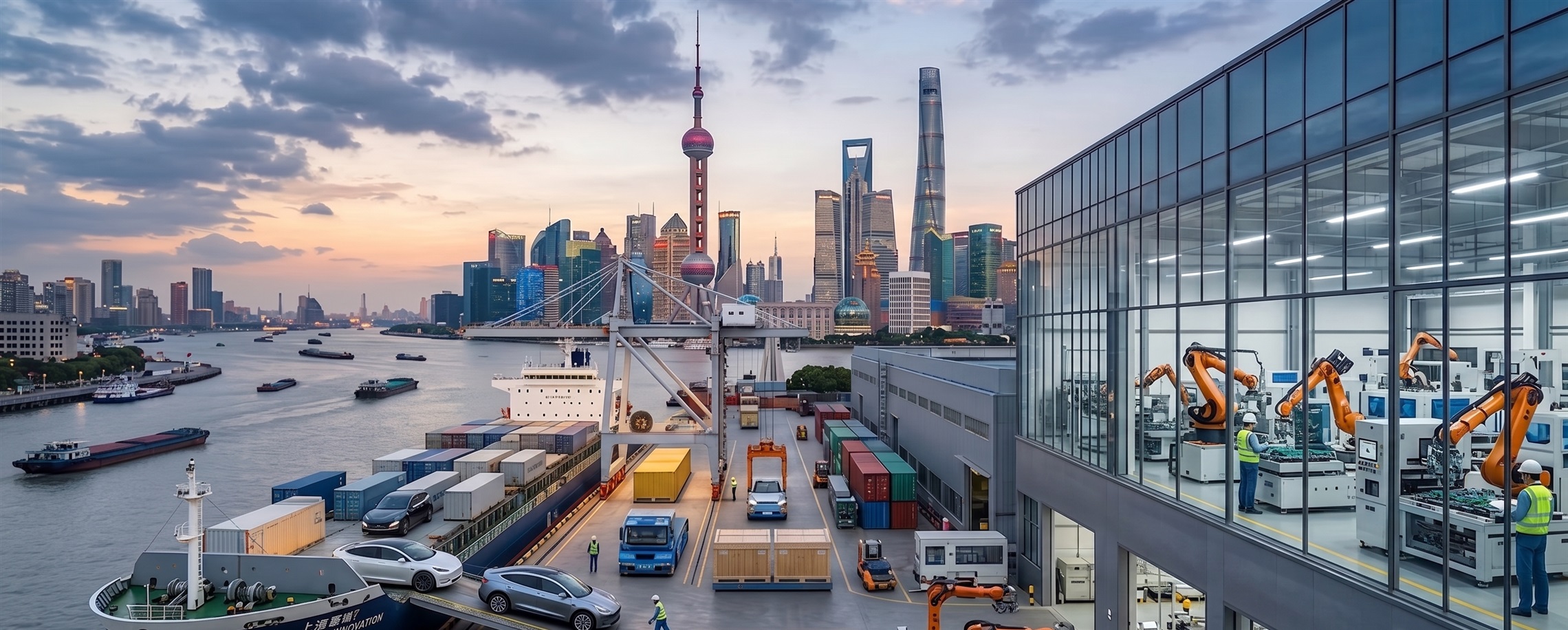
Shanghai's Foreign Trade Surges in Q1, Hitting Historic Highs