[Shanghai Stories] Keeping an 800-Year Musical Legacy Alive in Shanghai
Luca Stradivari is an Italian violin maker, composer and performer based in Shanghai. He describes himself as the ninth-generation heir to the Stradivari violin-making family – the family behind Stradivarius violins, which are among the most prestigious in the world.
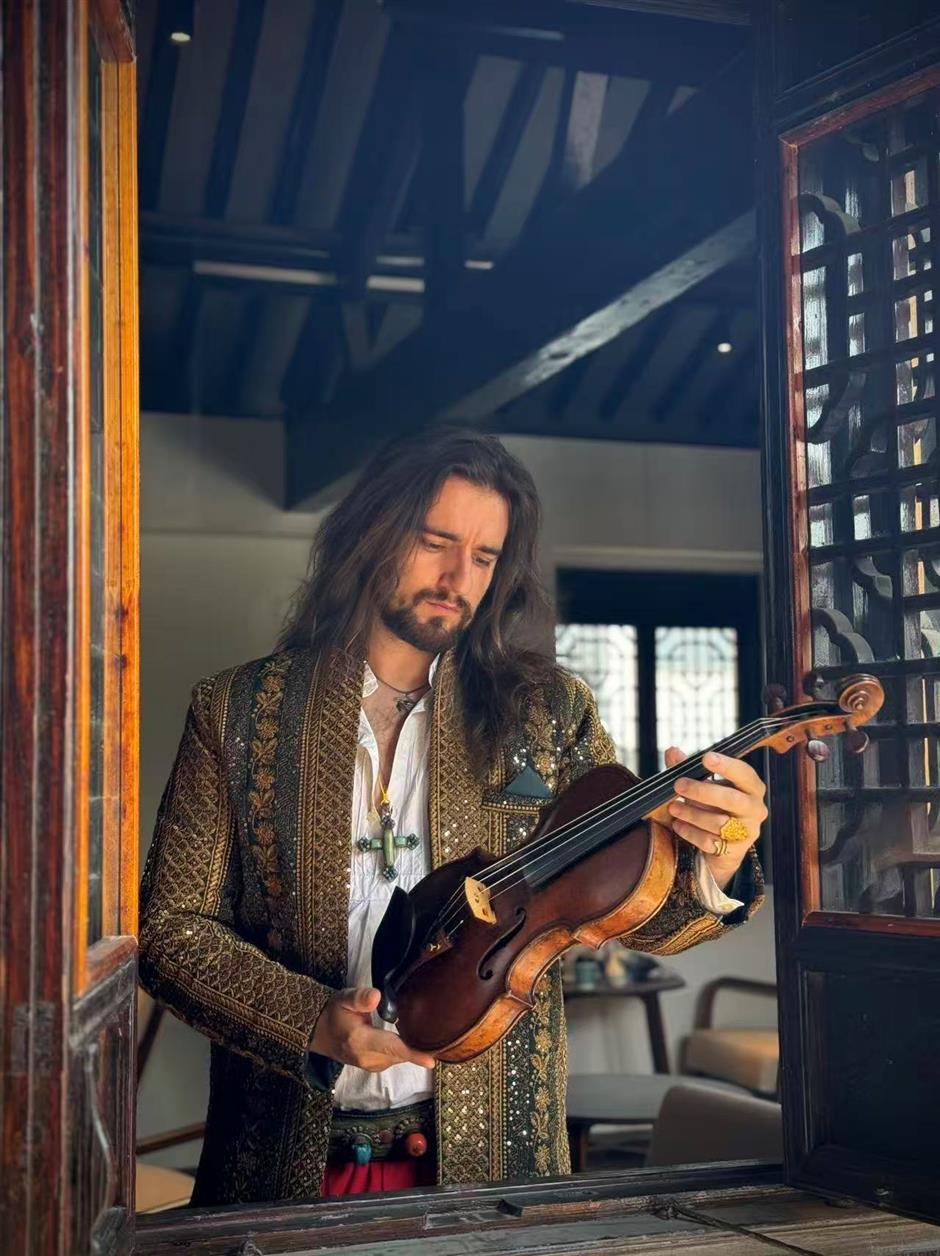
On a Shanghai stage, Luca Stradivari draws his bow across a violin he built with his own hands – an instrument carrying a family name that has defined violin-making for three centuries.
A direct descendant of the historic Stradivari family of Cremona, Italy, Luca has spent about a decade in Shanghai developing music and cultural projects aimed at strengthening ties between China and Italy.
A violin maker, composer, pianist and stage performer, he says carrying one of the most famous surnames in music is both a privilege and a responsibility. Rather than simply preserving his family's past, he wants to build on it in Shanghai, a city he sees as open to reinvention.
"Shanghai has a pulse," he said. "It is a city that respects the past without being imprisoned by it."
He first came to the city around 10 years ago out of curiosity, drawn to the way China embraces and reimagines classical music. He sees a parallel between Shanghai today and Cremona during its golden age, when craftsmanship and artistic innovation flourished together.
"Tradition and innovation are not opposites," he said. "They are partners."
A family legacy and a personal path
The Stradivari name is closely associated with Antonio Stradivari, the celebrated Cremonese violin maker whose instruments remain among the most sought-after in the world. Luca says his family history stretches back roughly 800 years and describes himself as the last living direct descendant in the family line.
For him, the family name is not a trophy but a responsibility. Preserving a legacy means more than looking back at past achievements. It requires continuing to create and finding new ways to bring inherited knowledge into the present.
"Perfection is not a destination but a discipline," he said.
"You are both the end of a line and the beginning of something new. I choose to see it as the latter," he added.
That outlook is reflected in his work across several artistic fields. Besides making violins, Luca also composes music, plays the piano and violin, and performs on stage, among many other artistic pursuits. He sees these practices as interconnected forms of expression, often performing his own compositions on instruments he has made and bringing his own poems and scripts to the stage.
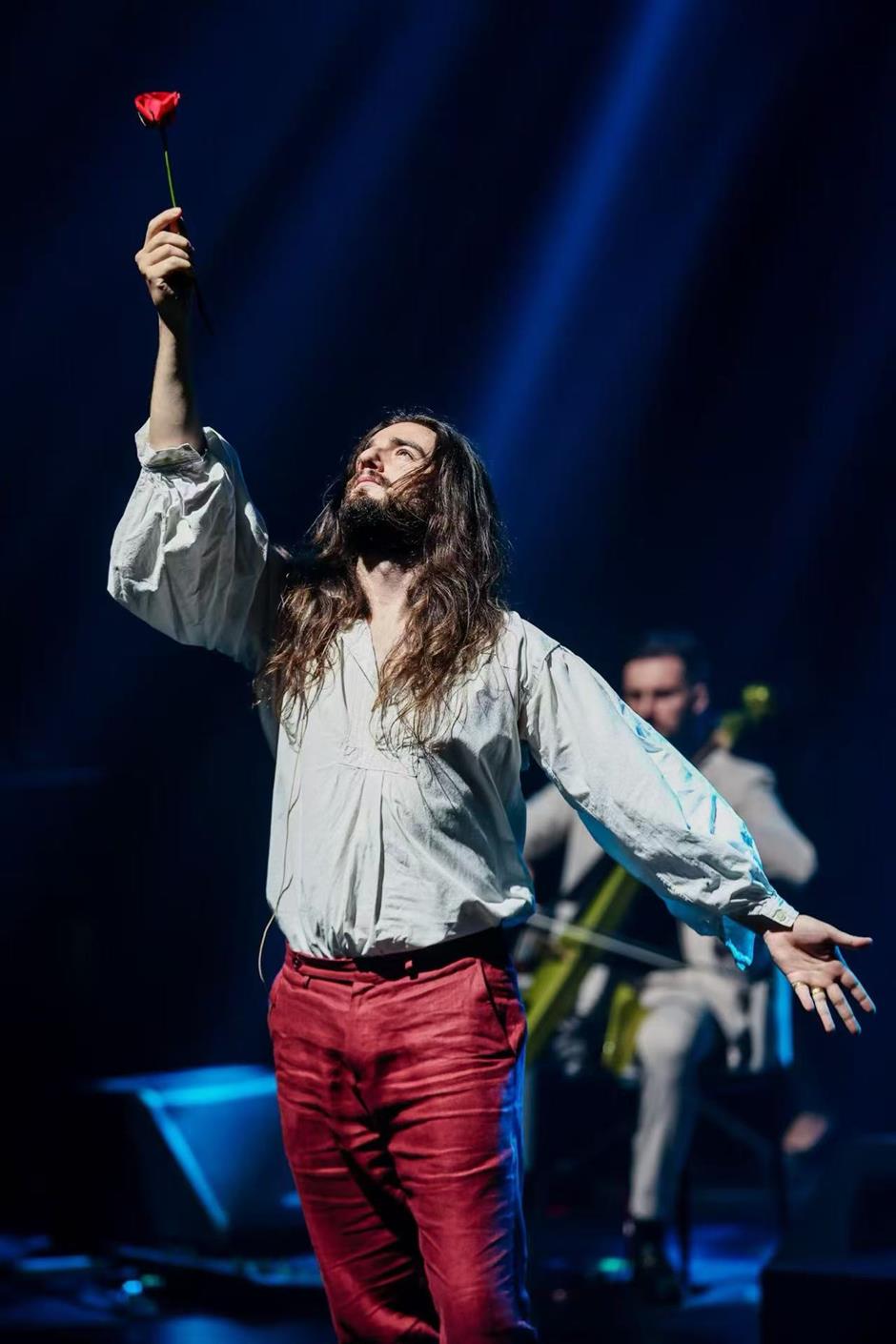
For him, making an instrument, writing music and performing all require patience, attention to detail and a willingness to experiment. He also wants audiences to appreciate his work on its own terms, rather than view him only through the history attached to his surname.
His family legacy provides a starting point, but he hopes to contribute something new to it.
"I want the world to know who I am, and to succeed on my own merits, not just my surname," he said.
Building cultural bridges between China and Italy
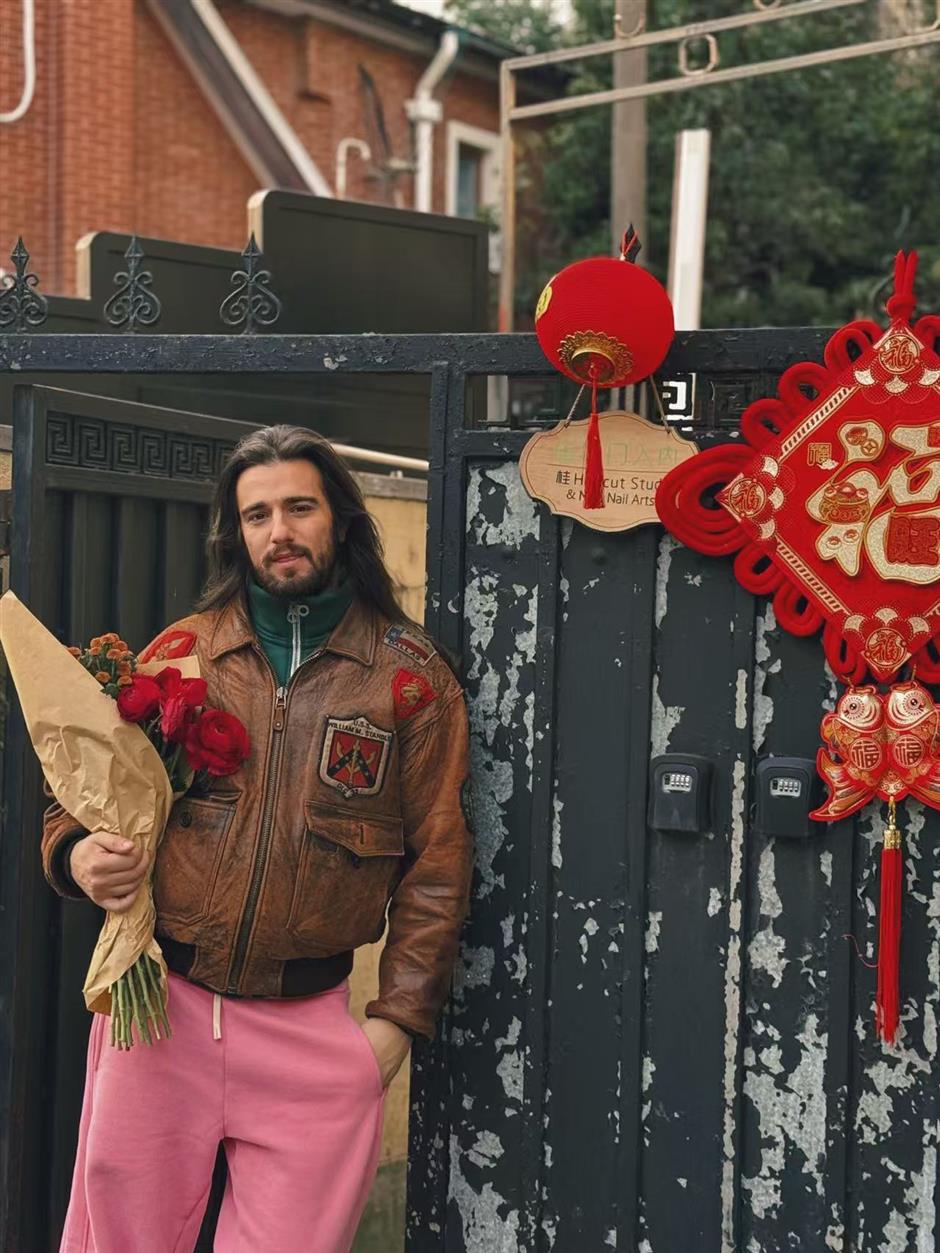
Luca's interest in China extends beyond music. He has explored Chinese traditions and philosophies, including traditional swords, feng shui, Taoism and jade, and has incorporated Chinese elements into his performances.
He particularly admires how Chinese people preserve their cultural roots while embracing rapid modernization – a balance he says mirrors his own effort to keep a family legacy alive.
That vision is taking shape in Puxi, where Luca lives. He is organizing an international music festival intended to bring local and international artists onto the same stage and engage the surrounding community.
Through the Stradivari Royal Orchestra, he hopes to present classical music in a more contemporary way and bring great musical masterpieces into everyday life. Open to all generations, the festival is planned as an annual event held in public spaces.
For him, meaningful cultural exchange goes beyond introducing one country's art to another. It happens when artists work together, learn from each other and create something new.
"We want Chinese and Italian artists to work together not as visitors observing each other's cultures, but as partners in a shared creative process," he said. "It is investment – in the next generation of cultural bridges between nations."
For Luca, working in Shanghai is not simply about bringing an Italian legacy to China, but about seeing how it can evolve through engagement with Chinese culture.
Music beyond words
For Luca, communication is not about speaking louder or faster, but about sensitivity, patience and listening. He believes people can truly connect only when they learn to be still, set aside their assumptions and make room for others.
"Music is not based on sounds. It is based on silence. It is a union with the universe," he said.
In a modern society filled with sounds, information and distractions, Luca believes people have gradually lost touch with themselves. For him, music is a form of meditation that allows people to slow down, explore their inner world and reconnect with both themselves and the wider universe.
He also sees music as a bridge between cultures, enabling people to connect beyond language and national boundaries. A melody can express emotions that words cannot, bringing together people from different backgrounds through a shared experience.
"When a Chinese musician plays a phrase written by a European composer three centuries ago, and an audience in Shanghai feels it, something extraordinary happens: time collapses, geography dissolves," he said.
For Luca, such moments reveal music's unique power to transcend time and distance. Every concert offers an opportunity for mutual understanding, where performers and audiences share emotions and perspectives.
"My concerts are not merely performances; they are true international dialogues."
Shanghai: a city where art meets everyday life
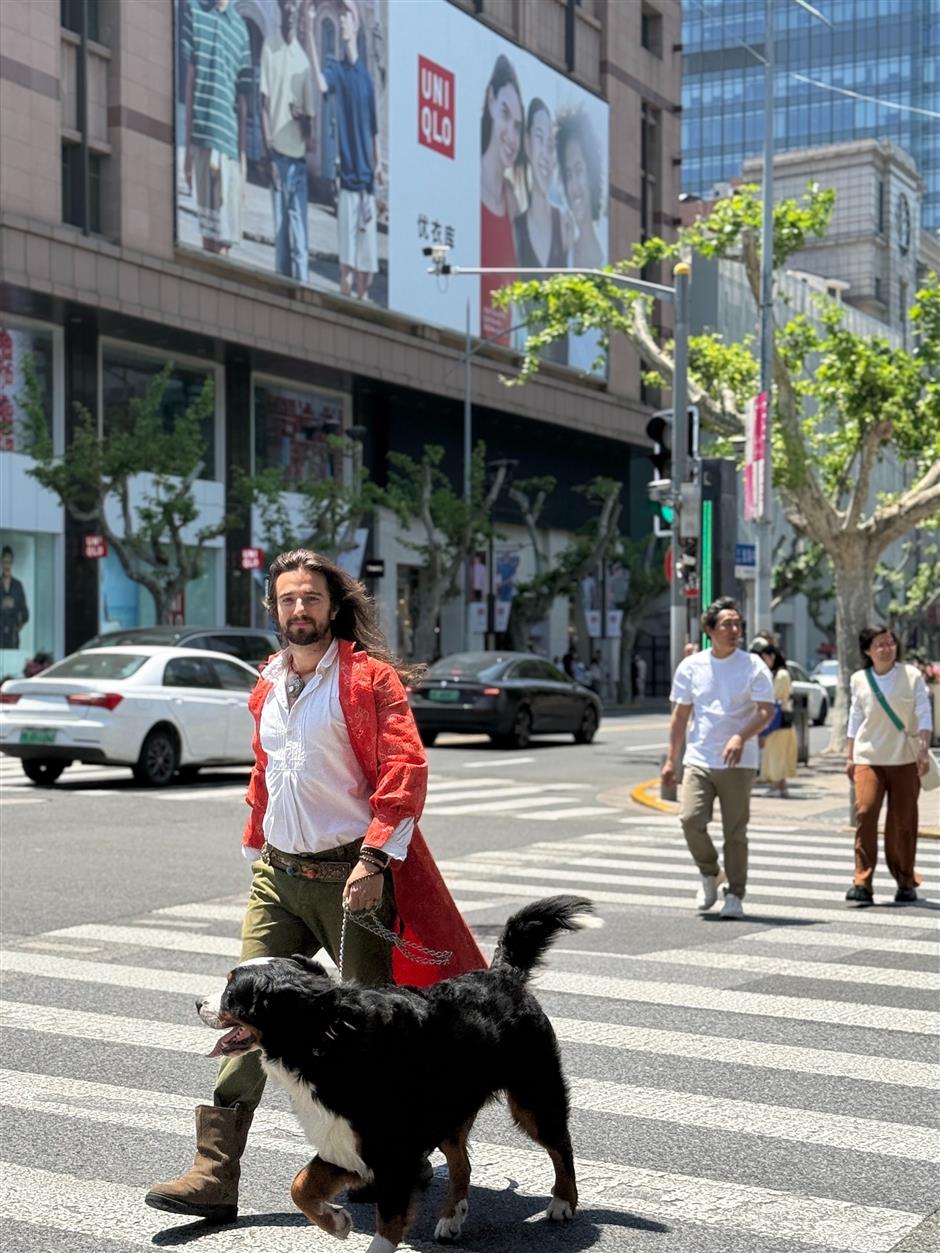
For Luca, Puxi captures the unique character of Shanghai, blending the charm of historic Shanghai with a vibrant, cosmopolitan energy.
"People who live in this part of the city experience a balance between tradition and modernity, where historic architecture meets contemporary city life," he said.
He is especially drawn to the city's tucked-away artistic spaces, from independent galleries and small theaters to museums in former industrial buildings, such as M50 Creative Park along Suzhou Creek.
His visits there have shown him how receptive and curious Shanghai's communities are to new artistic influences.
"That district shows that art should not be confined to elite museums but should be part of the urban fabric," he said.
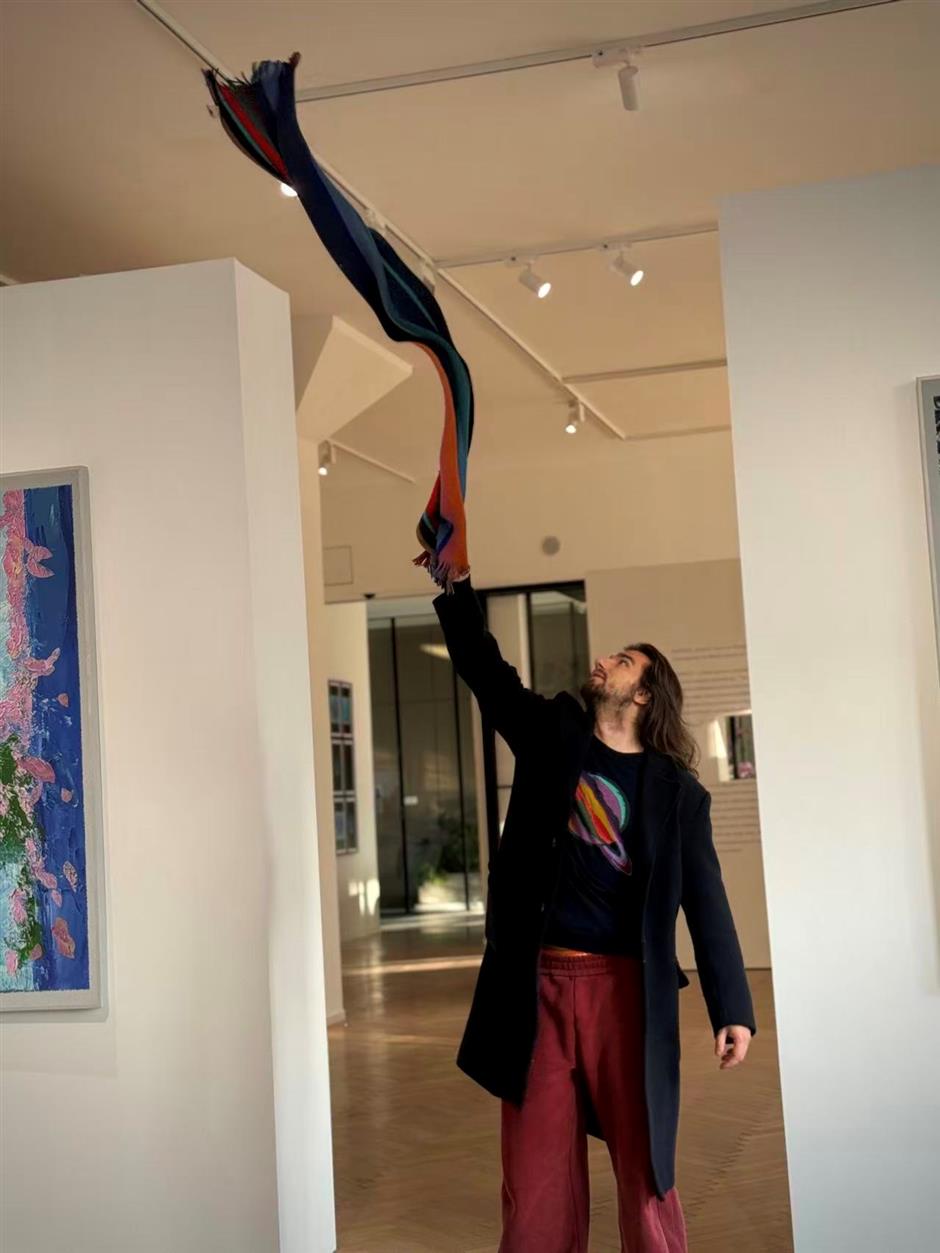
This idea also inspires Luca's vision for the Stradivari Royal Orchestra and its music programs.
He hopes to bring great music beyond the social barriers often associated with classical music and closer to the public, creating a multisensory experience that connects Shanghai's visual soul with Italy's rich musical heritage.
Creating new cultural connections through the university
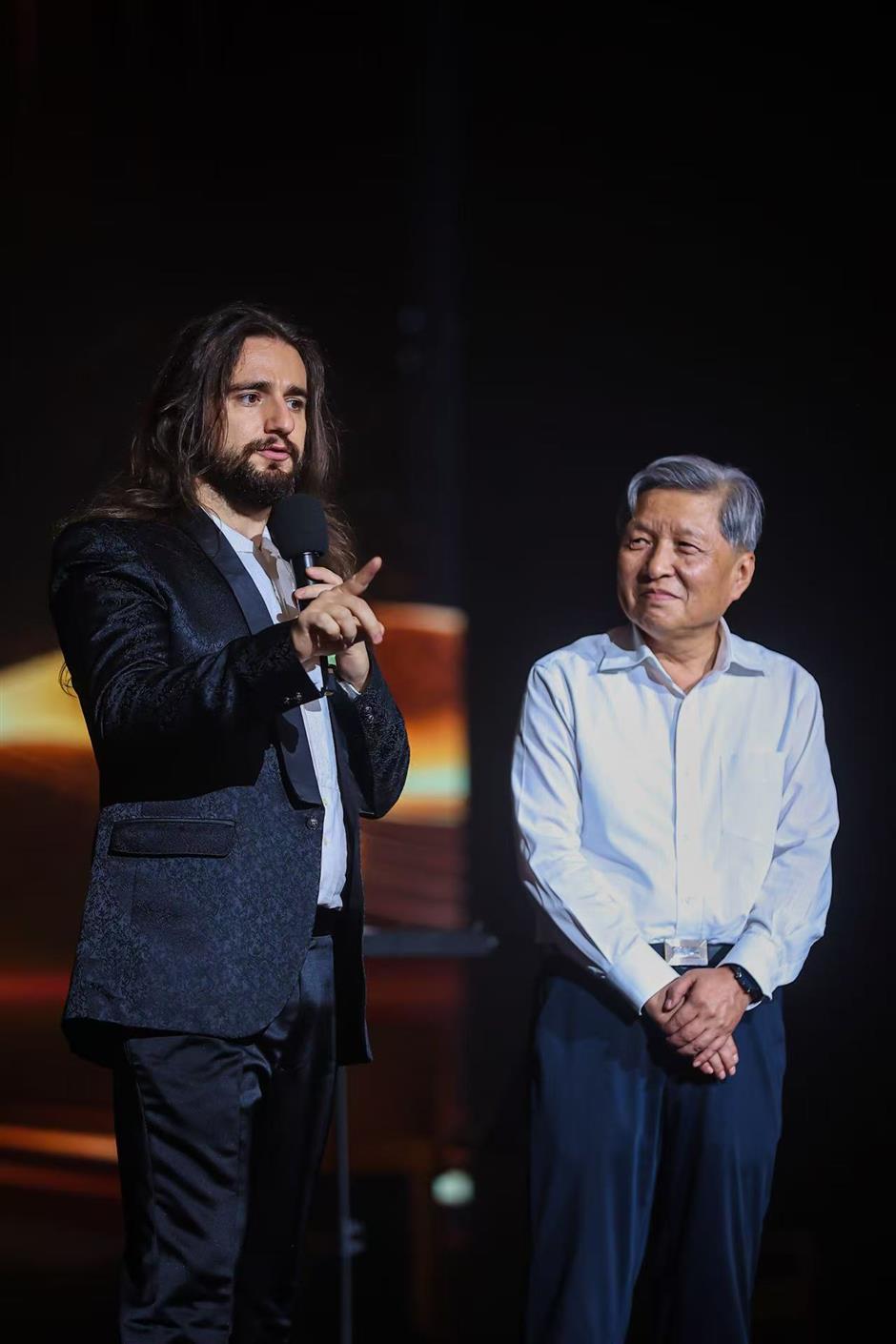
Luca is working with Chinese entrepreneur and philanthropist Cao Dewang on cultural projects aimed at strengthening ties between China and Italy.
The plan includes the Stradivari International Music and Art Center, the Stradivari Opera House, and the Stradivari Royal Orchestra performance program held at Fuyao University of Science and Technology. The broader goal is to bring music and the humanities into dialogue with science and technology education.
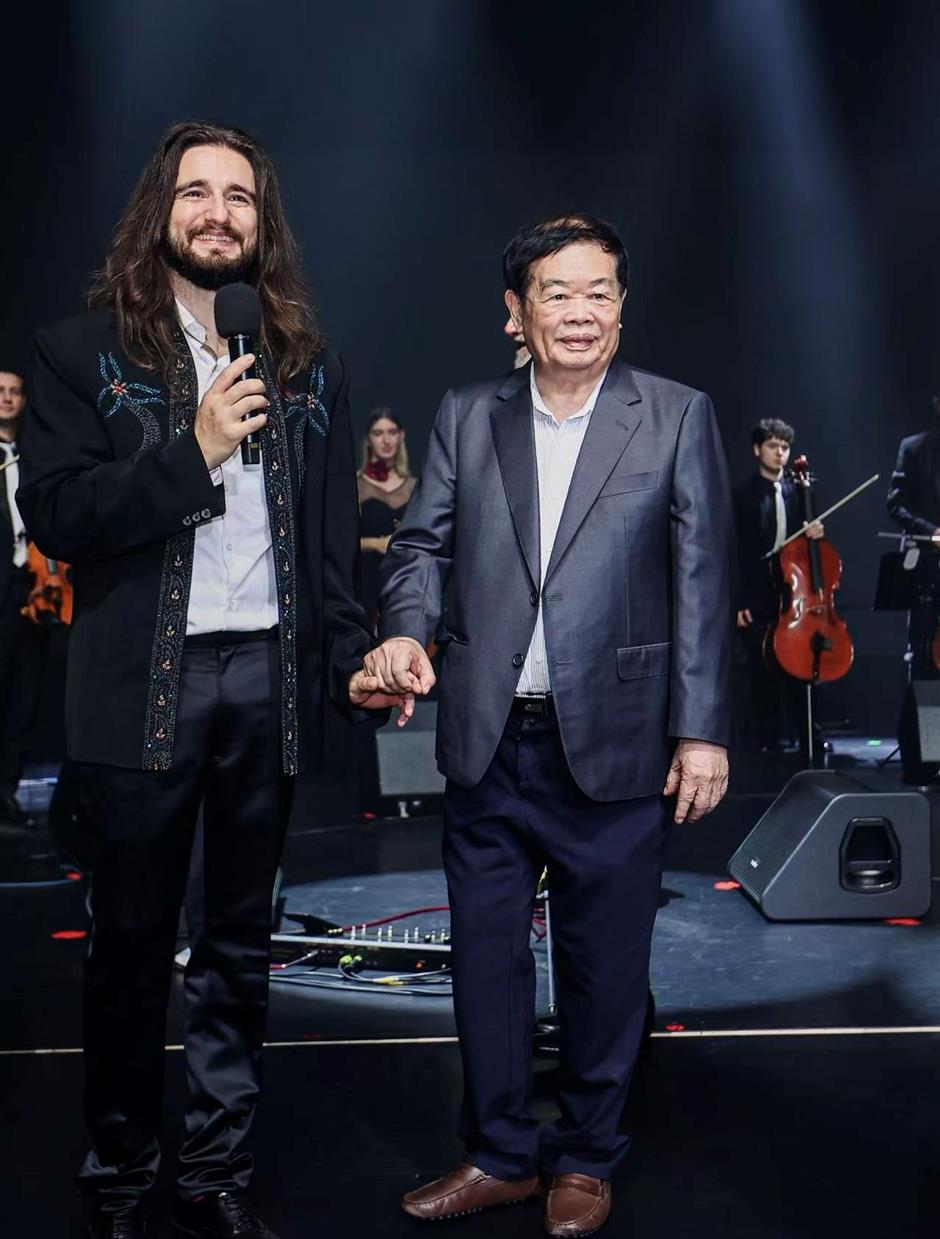
Luca believes that artistic experiences can complement technical training by fostering creativity, focus and empathy.
"This provides an irreplaceable ground for developing versatile talents with an international vision and a strong humanistic culture," he said.
He also hopes the projects will create more opportunities for young Chinese and Italian musicians to work together. Rather than simply introducing one country's music to the other, he wants them to develop joint projects and explore new artistic possibilities.
For young artists, such encounters can offer more than technical experience. Working across cultures can challenge familiar assumptions and open up new ways of understanding their own traditions.
Keeping tradition alive through innovation
Looking ahead, Luca hopes to create what he calls "living archives" – spaces where craftsmanship, performance and education come together.
He envisions a workshop in Shanghai where young violinists can watch an instrument being made and play it on the same day, as well as residencies where Italian violin makers and Chinese composers work side by side for months.
He also hopes to explore the intersection of traditional Chinese instruments and Western musical forms, not simply to create novel combinations, but to pursue deeper compositional research.
For Luca, Shanghai is an ideal place for these initiatives, with its audience, cultural institutions and openness to new ideas. What matters most, however, is patience – a value he says he learned from his ancestors.
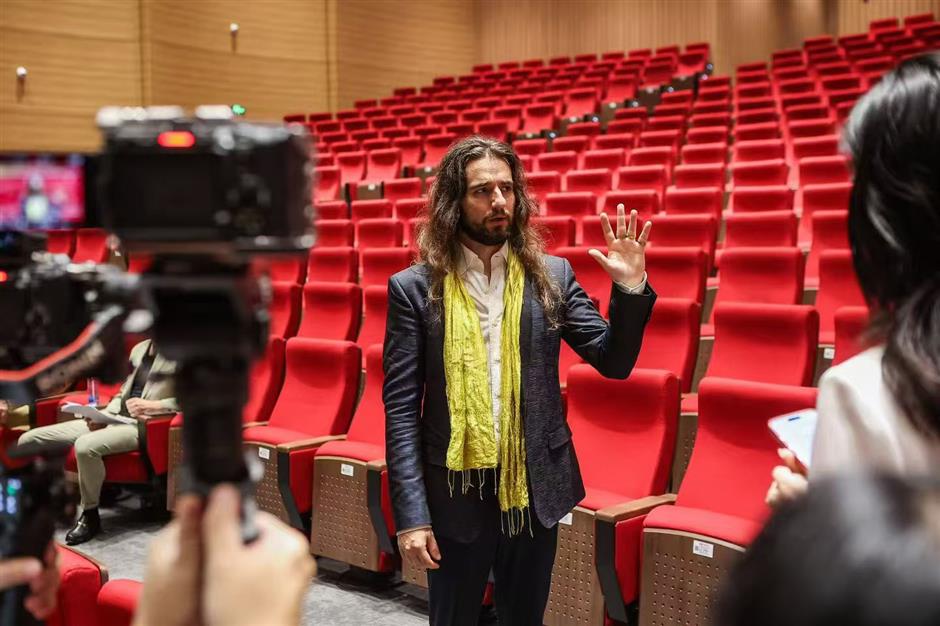
Asked what he thinks Antonio Stradivari might say if he could see his descendant's work in Shanghai, Luca imagined a quiet response: his ancestor would pick up a violin and ask, "Does it sing?"
Then, with a touch of humor, he imagined him adding, "Where's my flight ticket? I want to come and see."
The imagined answer captures how Luca sees his career: excellence is not a national property but a human one.
In Shanghai, he is working to give that tradition a future – connecting artists across borders, bringing Italian craftsmanship into dialogue with Chinese culture, and creating opportunities for the next generation to build on the past.
Editor: Xu Qing
In Case You Missed It...

 Oct 28, 2026