Culture Catalyzes Vibes, Verve of Residential Life in Hongkou
Amid the bustle of the China International Import Expo, a group of foreign journalists traded exhibition halls for Hongkou's tree-lined lanes, scenic parks, and cultural hubs – diving into the vivid, culture-infused daily life of Shanghai residents that blends legacy, innovation, and warm community vibes.
The tour, crafted to showcase the human side of the city, offered a firsthand look at how culture catalyzes joy, connection, and vibrant residential life in one of Shanghai's most storied districts.
At Heping Park (Peace Park, with its name derived from a stone sculpture of a dove), a huge number of residents, many parents and children, were enjoying themselves on a lawn, thanks largely to the mild and cloudy weather.
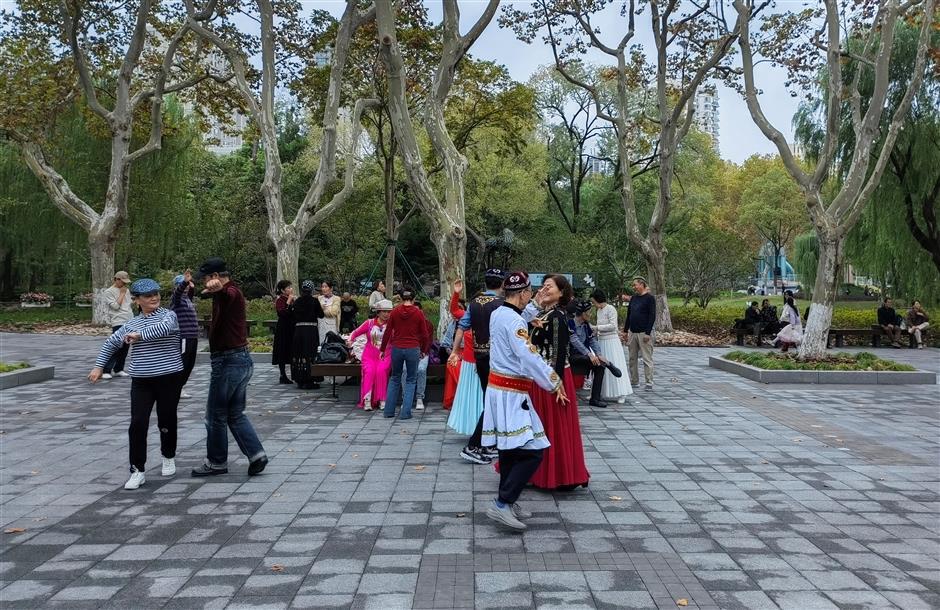
A short distance away, some middle-aged and elderly folks were engaged in vibrant dance in the Uygur style, complete with ethnic attire and even some cosmetics suiting the occasion.
Nor was it purely entertainment.
Visitors could learn about tips for low-carbon living at the Low-Carbon Life Science Popularization Gallery or study in a library that has dedicated spaces for adult readers and children.
"The first floor of the immersive exhibition shows the disastrous consequences if the average temperature on earth climbed by five degrees, with itinerant seasonal shows. The current show focuses on marine ecology," said Weng Linghong, deputy chief librarian of Hongkou District Library.
The second floor of the low-carbon show explains how residents can adopt a low-carbon lifestyle in all aspects of their lives, featuring interactive and enjoyable events designed for children.
Art aficionados could enjoy an art show at an underground gallery, and the literary-minded could borrow or buy magazines at a special magazine library housed in a separate building.
All these features were added after a renovation that began in 2020, which included the removal of the fence surrounding the park, making it accessible 24/7.
Since its opening on April 23, 2024, the library has become one of two branch libraries in the district, alongside one general library and over 130 reading centers located throughout the communities, serving a population of approximately 800,000 permanent residents.
"Ever since it was opened, the first floor of the library has instituted a 24-hour open schedule (except for Mondays and special holidays), the first for a public library in the city," said Weng.
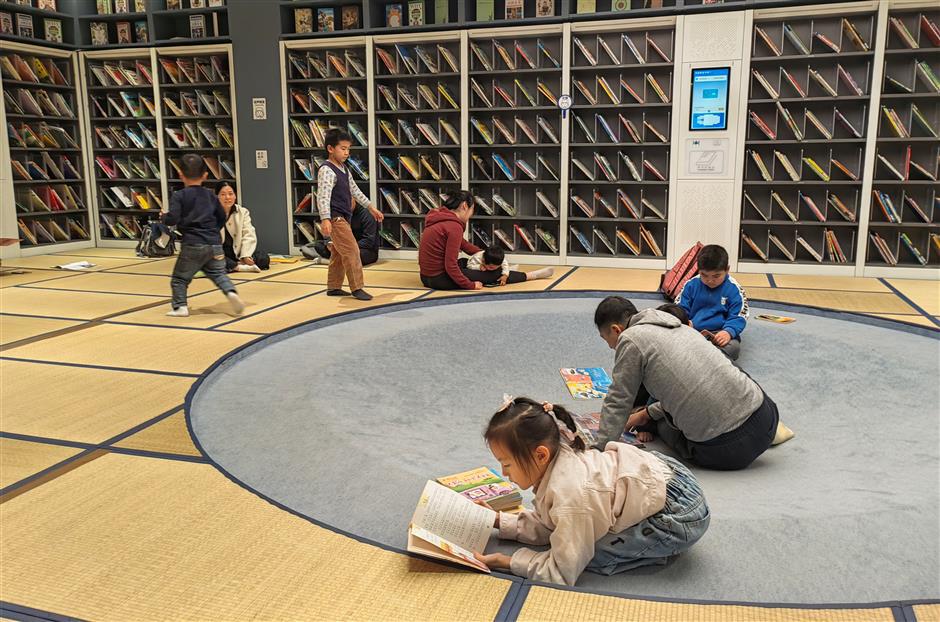
Since then, an accumulated 200,000 people have visited the library during the odd hours.
Weng said this patronage was not surprising.
"Some young people might still be jogging in the park at midnight, while some elderly are already bustling around at four in the morning," said the librarian.
As Weng explained, Hongkou used to be a hotbed of haipai (Shanghai-style) culture.
Among the several downtown districts, Hongkou was a latecomer in large-scale renovations and relocation, and this afforded the district a unique advantage to balance development with protection of legacy.
As we found in the Inlet complex (with its Chinese counterpart meaning "trendy eight lanes"), also in Hongkou, near the intersection of Sichuan Road N. and Wujin Road, a total of 60 shikumen-style buildings and eight independent buildings, many of them going back over a century, were turned into a space for art, trendy consumption, immersive experience of old-style lanes, and exhibitions, in a unique and innovative blending of history, art, and shopping.
Towards evening, at the rooftop walk called Tian Ai Promenade, we could command a view of row upon row of shikumen (stone-gate) buildings, with an ongoing music performance at one rooftop.
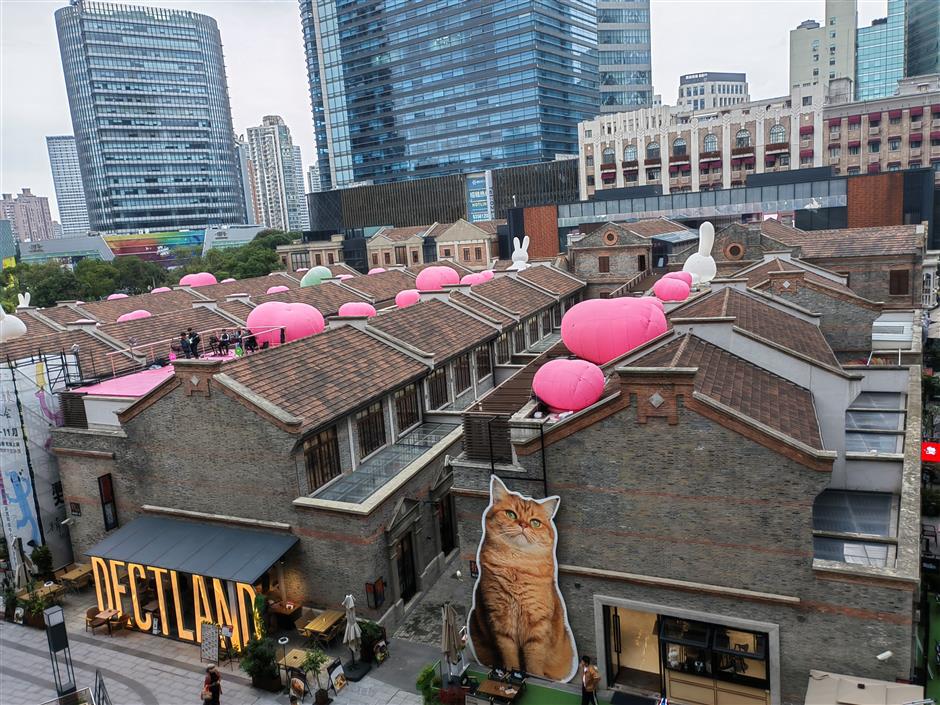
"This is a breathtaking view that comes with ingenious design, for unless you travel with an aircraft, you cannot hope to have such an intimate view of these legacy buildings at such a short distance – unless you manage to climb to the rooftop. Here you are witnessing a rooftop concert, now in its third week," said Isa Cui, deputy general manager of marketing and operations, Chongbang Group Life HUB@Bund Central. The complex is just 600 meters from the Bund.
In this place lies the gist of haipai culture, where resided early last century such literary celebrities as Lu Xun, Guo Muoro and Qu Qiubai.
Celebrating this legacy are the Haipai Culture Center, housed in a century-old building, the Shanghai Literary Gallery, and the Ba Jin Library.
"As you know, we are witnessing a paradigm shift in terms of consumption, with many people talking about the merge of culture and shopping, and our realignment of the business line-ups is an attempt at fostering a new consumption mode," Cui observed.
Since 1908, 32 cinemas and 46 film companies have been set up in Hongkou. People could conveniently arrive here by boarding a tram at Jing'an Temple and then travel along Sichuan Road N. after crossing the Suzhou Creek.
One reason people liked to watch the movies there was that it was cheaper; for the first-run cinema ticket south of the creek in the city could be one yuan, but here in Hongkou it could be only two dimes.
Lu Xun watched a total of 142 movies, averaging one per month, during the ten years (1927-1936) that he lived near Sichuan Road N. in Hongkou.
Hopefully, all such lore, art shows, and educational endeavors could help steer the new consumption in a balanced and fulfilling manner.
Editor: Liu Qi
In Case You Missed It...

 Sep 19, 2026