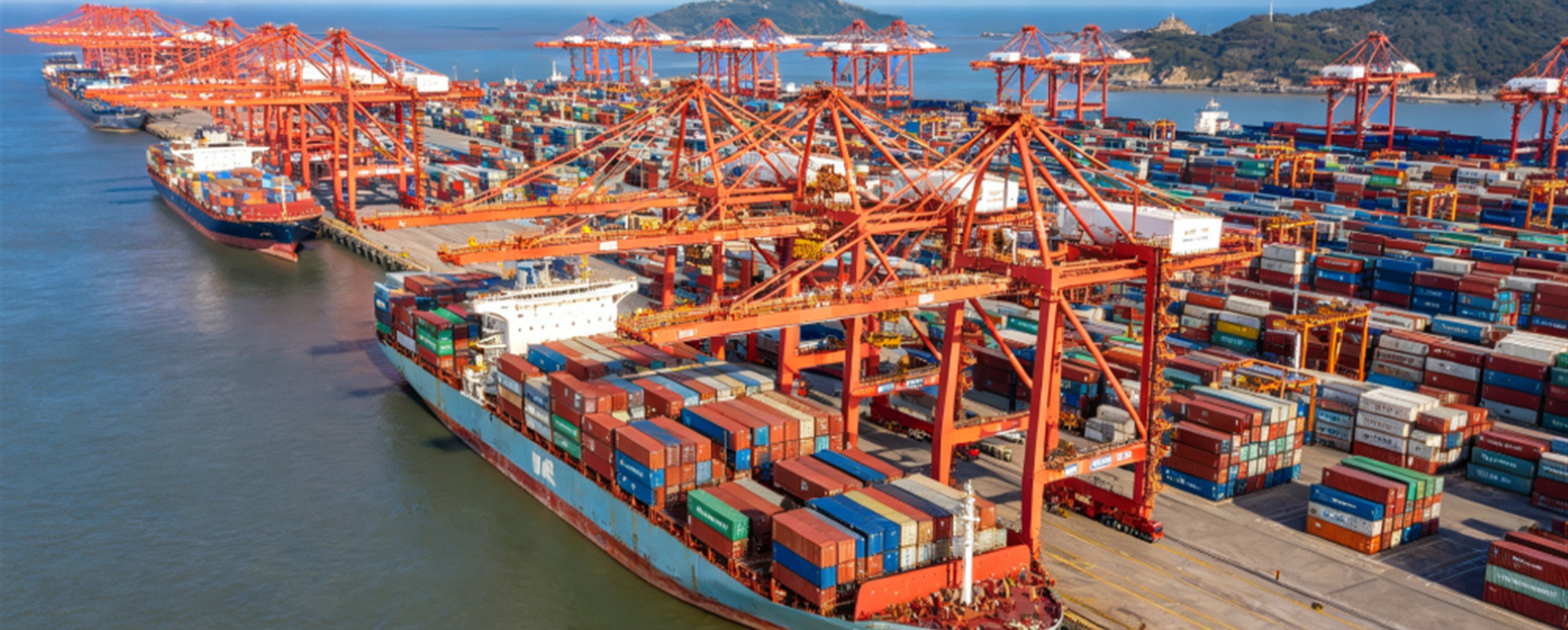
In Shanghai, Lantern Festival Means Long Lines for Tangyuan
Tangyuan (汤圆), a Lantern Festival specialty in China, reveals itself in the first bite.
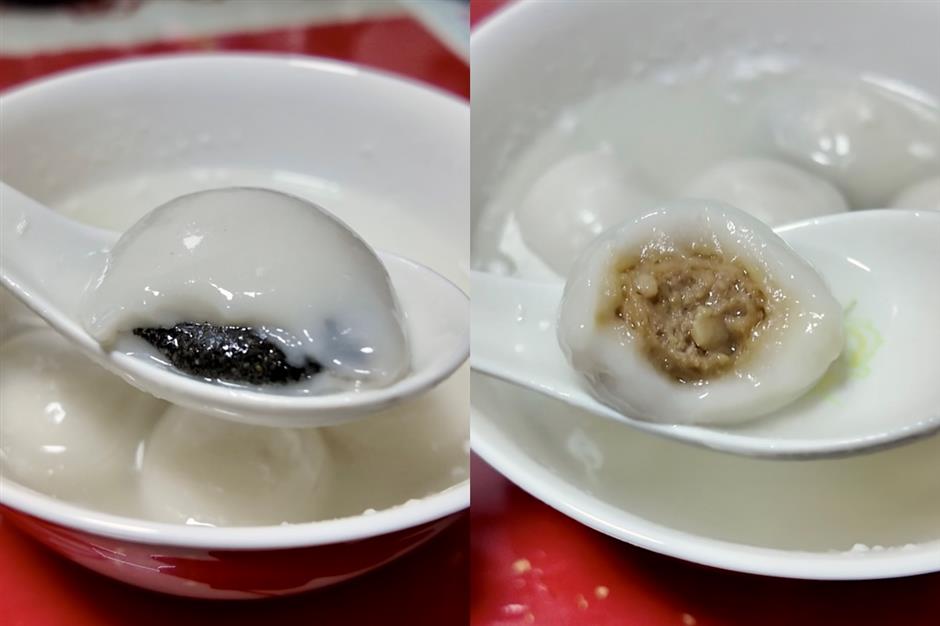
The delicate skin of the glutinous rice dumpling yields easily. In savory versions, hot broth spills out, rich with minced pork.
In sweet ones, a dense filling of black sesame and lard melts slowly, leaving a deep, nutty warmth reminiscent of a lava cake's center.
In Shanghai, locals believe the best place to find them is the modest shop at 105 Shaanxi Road N. Tucked away here is Meixin Dim Sum Shop (美新点心店), a century-old institution that has become one of the city's best-known makers of tangyuan.
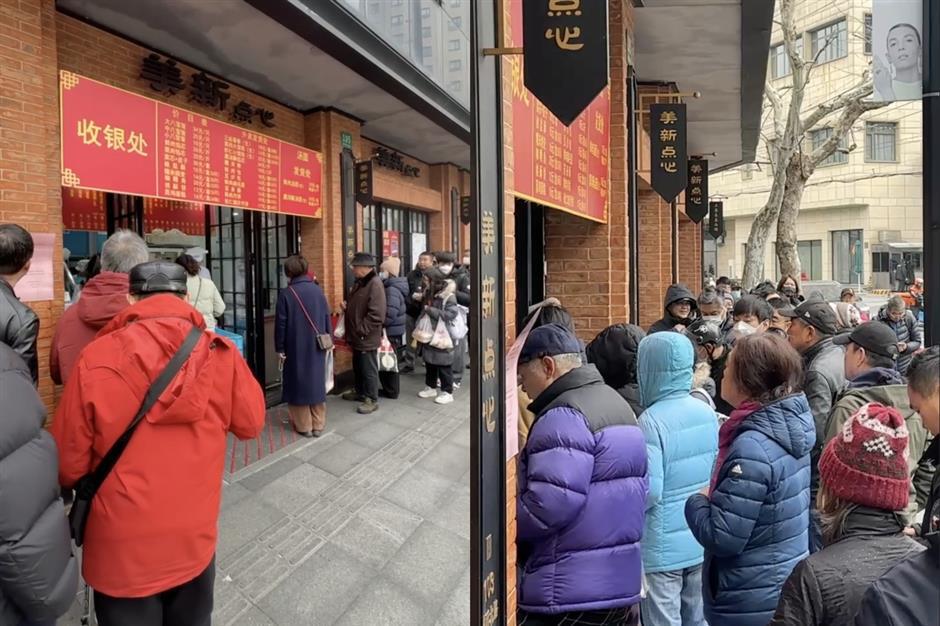
The sidewalk outside the shop has two long lines on holidays. One runs along the storefronts on the street. The other stretches deep into the nearby Cihui Beili longtang (弄堂), a residential lane. From above, the twin lines resemble a pair of long mustaches.
"One line is just to pay," one customer explained. "You have to join another line to pick them up."
On peak days, the wait can stretch to three hours. Yet people still come.
One woman who drove more than 30 minutes said she expected to wait at least another two hours.
"But what can you do?" she said. "It's Meixin. The taste is worth it."
For some customers, the wait is about more than just taste.
One woman surnamed Li, who traveled from Pudong, told the Jiefang Daily that she has been eating Meixin tangyuan for more than 40 years.
"Old brands are just better," she said. "My daughter, who was born in the 1990s, doesn't understand why I would take the Metro early in the morning just to queue here. She tells me to purchase frozen products from the supermarket, but people of my generation tend to prefer the flavors we were raised with."
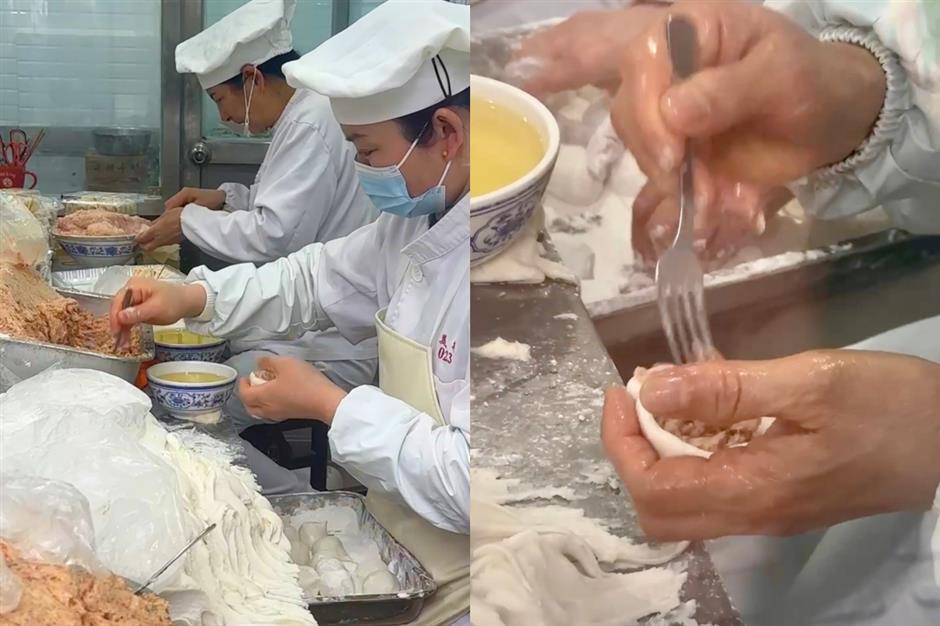
The long lines, staff say, come down to one thing: everything is still made by hand.
Through the open kitchen window, customers can watch workers shape the dumplings one by one. The shop makes only two kinds – pork and black sesame – both sold for 33 yuan (US$4.50) per box. The pork dumplings are slightly larger, with a small pointed tip, while the sesame ones are smooth and round.
Following traditional Ningbo-style methods, sesame seeds are washed and ground before being mixed with sugar and lard to form the filling.
"Our dumplings may look small, but they are packed with filling," one staff member told Jiefang Daily. "If the quality drops, customers will notice immediately."
Meixin was founded in 1925, when Shanghai was rapidly expanding as a port city. Migrants from Ningbo in Zhejiang, Suzhou in Jiangsu, and other places in Guangdong brought their culinary traditions with them. Over time, those influences blended into what is now known as haipai (海派), or Shanghai-style culture.
The demand today reflects this legacy.
During the Spring Festival season, the shop sells about 50,000 dumplings a day, or roughly 2,000 boxes.
Meeting that demand requires long hours in the kitchen.
"Our pastry chefs start work at 5am and keep going until about 5:30pm," store manager Wang Senlin told the Jing'an Media Center. Even with nearly 20 pastry chefs, it can be difficult to keep up with the high volume of orders and ensure that all pastries are freshly made and of high quality.
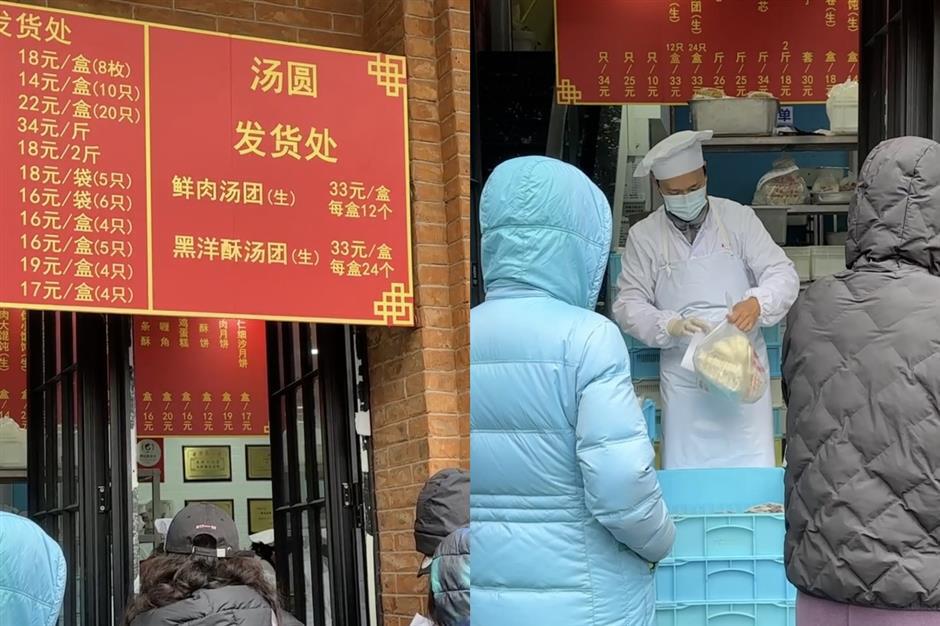
Because everything is handmade, supplies are limited, and many items sell out soon each day. Regular customers know the trick: arrive early.
Some people begin lining up as early as 4am, even though the shop does not open until 8am.
Others take one look at the queue and turn away. "I'm out," said a nearby resident, smiling as she waved her hand. "The line's too long. I can eat them any time. It doesn't have to be during the holiday."
Still others skip the line altogether by buying the dough and fillings separately and making tangyuan at home.
Shanghai has many famous tangyuan shops, including Wang Jia Sha, the Ningbo tangyuan stalls in Yuyuan, and vendors in Qibao Old Town. Each has its own loyal following.
But every year, as winter turns toward spring, the long line outside Meixin returns. Customers leave with boxes of raw dumplings, heading home to cook them.
And when they finally take that first bite, the noise of the city fades for a moment.
Editor: Shi Jingyun
In Case You Missed It...

 Sep 16, 2026

Popular Reads

Chinese Smartphone Brands Race to Build AI-Powered Operating Systems

HYROX Winner Apologizes, Saying She Should Have Stopped After Soiling Herself in Beijing

AI Couture, 500 Brands, Free Entry: World Design Cities Conference Returns To Shanghai This Month