Shanghai Matcha Shop Draws Foreign Tourists with Viral Sheep Latte Art
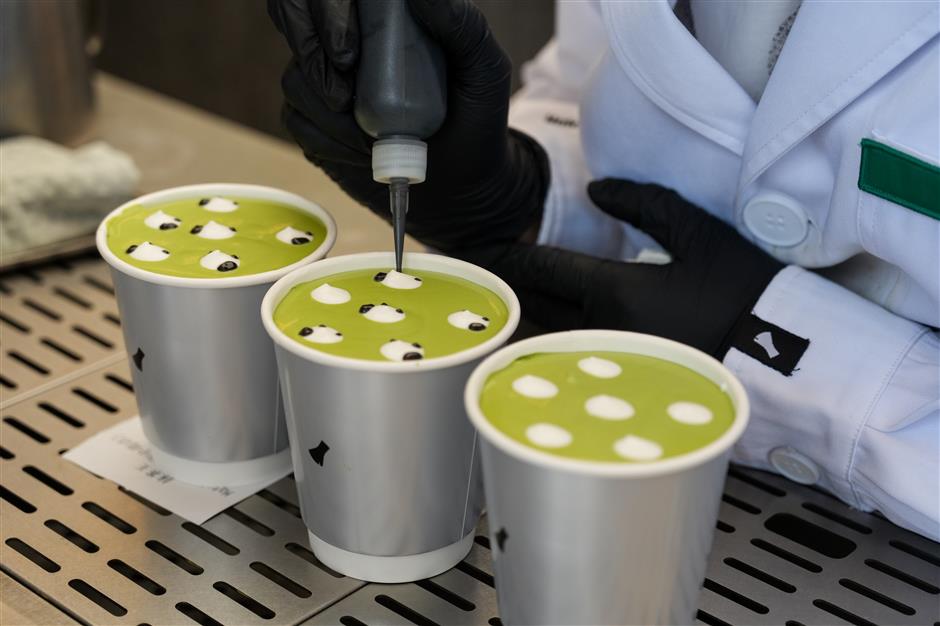
A small matcha shop on Shanghai's Huaihai Road M. is drawing long lines of international tourists this spring, with some waiting up to an hour for a cup topped with a foam sheep.
Matcha Wang, which opened in December 2025 inside the HAI550 mall, has quickly transformed from a neighborhood specialty store into a global social media sensation. Foreign visitors now account for about 80 percent of its customers.
The surge coincides with China's expanded visa-free policies and a steady growth in inbound tourism. Shanghai recorded 9.36 million inbound trips in 2025, with momentum continuing into this year.
Most international customers discover the shop through Instagram and TikTok, where videos of its signature vanilla seed matcha latte have gone viral.
The drink features a hand-drawn sheep named "Lily," created with cream and black sesame paste. The whimsical design disappears with the first sip, prompting online users to dub the experience the "kill the sheep project."
"I saw a lot of people sharing it on Instagram, so I wanted to give it a try," said a tourist from Portugal. "You won't find this flavor outside as often, or you have to pay a lot for it."
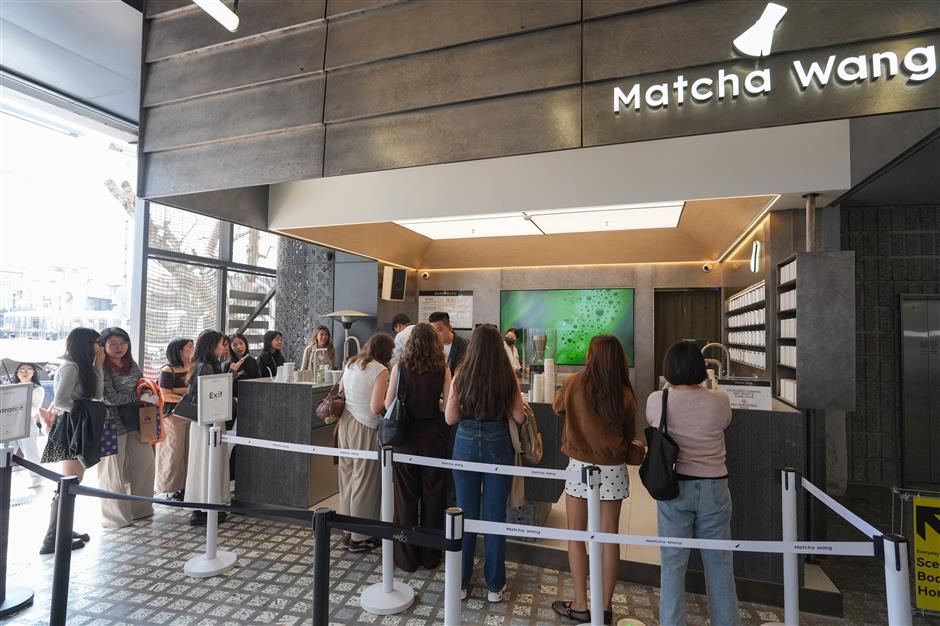
The popularity of Matcha Wang reflects a sweeping transformation in China's beverage industry.
China's "new-style" tea brands, which emphasize original leaf tea and fresh milk, are entering a phase of rapid global expansion.
Mixue Ice Cream & Tea, for instance, had built a network of more than 4,700 overseas stores across 14 countries as of early 2026.
The company's strategy of using its own supply chain helps it sell drinks like bubble tea for as little as US$3.99 in busy places like Hollywood Boulevard in Los Angeles.
Chagee became the first Chinese freshly made tea brand to list on the Nasdaq in April 2025. Its flagship jasmine green milk tea sold more than 1.25 billion cups worldwide between 2022 and 2025.
Meanwhile, HeyTea has expanded to more than 100 stores in 32 cities overseas, positioning itself as a premium lifestyle brand in major global cities such as London and New York.
Industry estimates placed the global market for new Chinese-style tea at US$37.35 billion in 2025, with projections exceeding US$40 billion by the end of 2026. Growth is increasingly driven by Southeast Asia and North America.
More than a visual treat
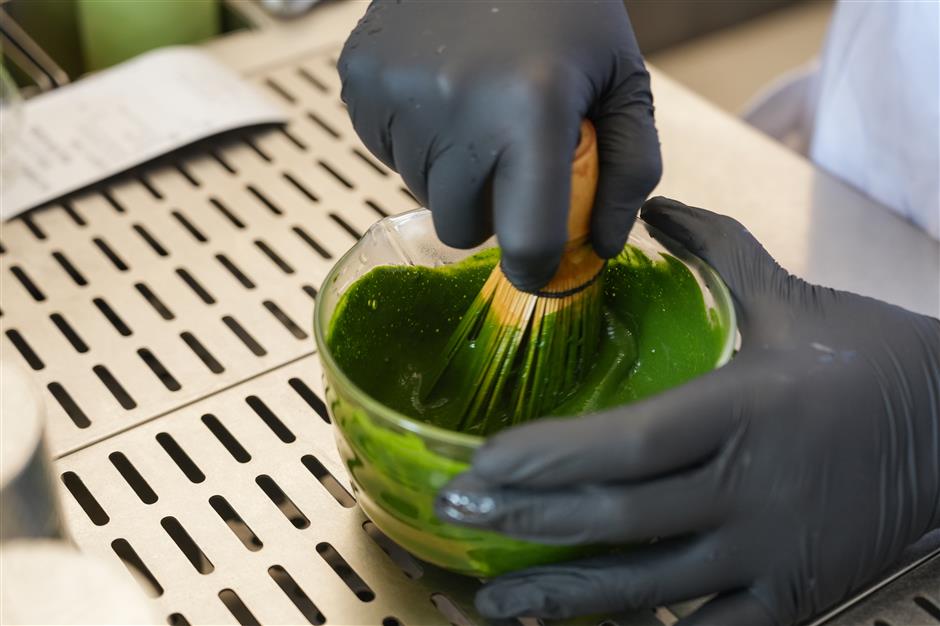
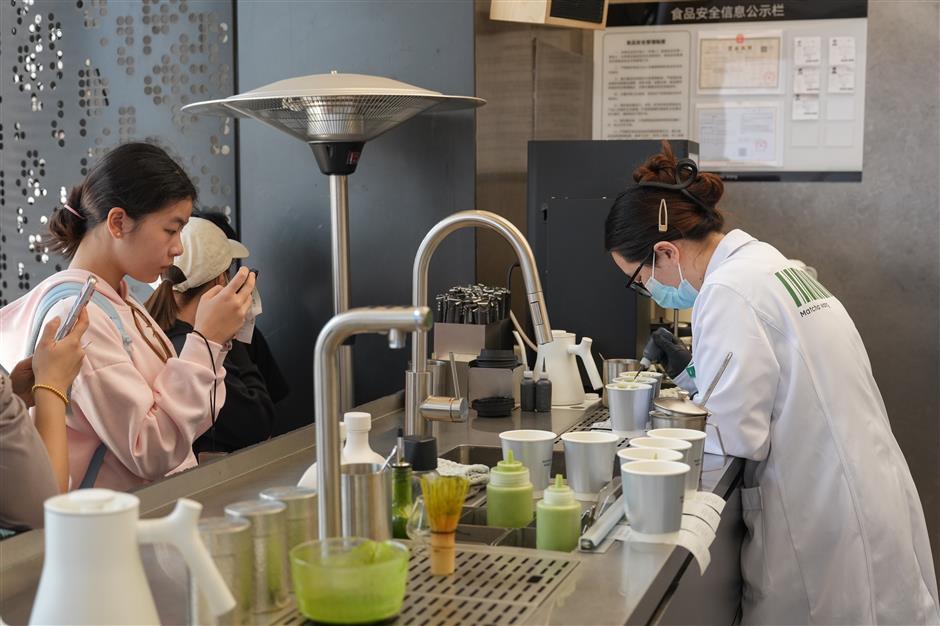
At Matcha Wang, presentation is central to the experience. Store supervisor Mao Jianmin said the shop deliberately emphasizes visual appeal, with staff preparing drinks in full view of customers.
"The display method suits the habits of foreigners," Mao noted. "Our reputation was built through word of mouth on foreign social media networks."
The shop uses premium matcha, blending it with milk and real vanilla seeds to create a flavor profile that balances sweetness with earthy notes, Mao added.
Some visitors come as observers of a growing trend. A Russian chef attending a restaurant exhibition in Shanghai visited the shop to study its operations firsthand.
"The taste is like pop music," he observed. "It is very simple to understand. Personally, it is too sweet for me, but it is very good for people because sweetness makes people happy.
"You see how many people look at it and smile. We start to drink with our eyes. We look, then we smell, then we drink."
The global popularity of Chinese milk tea reflects broader industry and consumer trends beyond its visual appeal.
Many Chinese tea brands focus on using high-quality ingredients and standardized preparation methods. The approach differs from earlier versions of bubble tea, which often relied on powdered mixes.
"There is a level of professionalism in milk tea in China which you don't find elsewhere," said a London traveler visiting Shanghai.
"It's not just sugar; you can actually taste the tannins and the specific floral notes of the tea."
Health considerations are also influencing consumer choices. In 2025, brands like Chagee received "Healthier Dining" certifications in markets like Malaysia by keeping sugar content below 5 grams per 100 milliliters.
Posts on X, formerly Twitter, have highlighted the "cleaner" feel of fresh milk and tea bases compared with some Western fast-food drinks.
New Chinese style meets new social media trends
Another factor is the rise of "Guochao," or "China chic." The trend combines traditional Chinese design elements with modern branding.
Packaging and store designs often include references to calligraphy and historical architecture, which have attracted attention from younger consumers in international markets.
"It's not just a drink," said one frequent traveler on social media. "It's something you want to photograph, share and remember."
The rise of Matcha Wang also highlights how digital platforms are reshaping travel behavior.
Increasingly, international visitors are prioritizing viral food experiences over traditional landmarks, curating itineraries based on what trends online.
A tourist from Austria, who waited about 10 minutes for her hot matcha, said the flavor exceeded expectations. "People come first for the vision, to get the perfect shot. But they will come back for the flavor."
A German visitor staying with a friend at Shanghai Jiao Tong University echoed the sentiment, praising Chinese milk tea for its balance and quality.
"I like that the taste is mild and has a vanilla touch," she said. "It is my first time trying matcha in China. It is definitely worth the wait."
Mao said the Huaihai Road store will serve as a model for future domestic expansion, though the company has no immediate plans to open overseas locations.
"We prefer matcha instead of coffee, even though we have very good coffee in our country," an Italian tourist said.
"The taste is very good. It is creamy with a slightly salty top. I would rate it nine out of 10."
Editor: Shi Jingyun
In Case You Missed It...
![[ChinaMaxxing] The Weather We're Having Now Is Called Frost's Descent](https://obj.shine.cn/files/2026/10/22/fda50b72-359d-4115-8cb6-9e2cc7a5a250_0.jpg)
 Oct 22, 2026