Shanghai Unveils 2026 Action Plan to Empower Five Suburban 'New Cities'
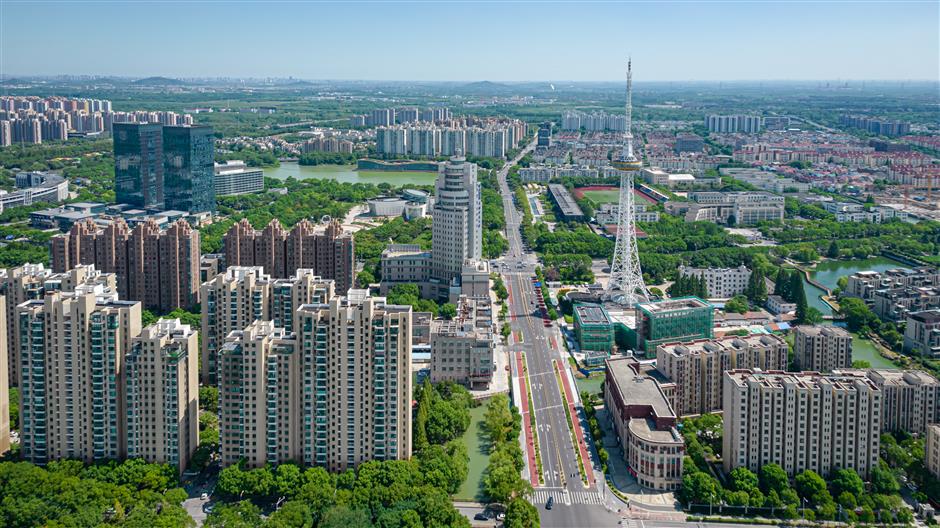
Shanghai unveiled an action plan on Thursday to boost industrial clusters, urban services, and innovation ecosystems in five suburban "new cities."
The key sectors in the "five new cities" reported positive growth in 2025, with gross industrial output value exceeding 100 billion yuan (US$13.8 billion).
The city wants to decentralize downtown functions and build self-sustaining hubs in Jiading, Qingpu, Songjiang, Fengxian, and Nanhui, the "five new cities."
"Medical devices and high-end equipment in Jiading, BeiDou navigation and the low-altitude economy in Qingpu, and the large aircraft supply chain in Nanhui all recorded double-digit growth in 2025," said Chen Shiyan, deputy director of the Shanghai Development and Reform Commission.
Shanghai will accelerate the construction of the Shanghai Scientific Instrument Innovation Port, the Huawei Yangtze River Delta AI+ Joint Innovation Center, and a national-level manufacturing pilot platform for civil aviation.
"These platforms aim to bridge the gap between laboratory research and mass production," she added.
Each area had customized development goals under the new plan.
Jiading New City, anchored on "Shanghai Medical Device Valley," is targeting a 100-billion-yuan medical equipment cluster for high-end imaging and surgical robots.
The district and Ruijin Hospital have established a full-chain R&D mechanism. This partnership allows medical professionals to test new technologies and move them directly from laboratories to commercial production.
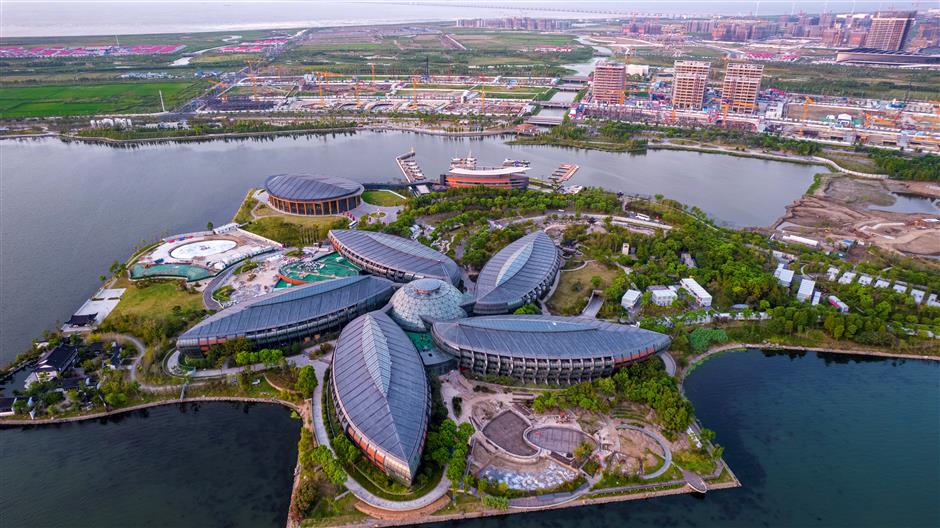
Nanhui New City in Lingang New Area builds new energy vehicles, integrated circuits, and commercial aerospace. The district has branded itself as a "city for young people."
To attract international talent, the government overhauled its "Lingang Talent Card." Platinum, gold, silver, and bronze cards offer more benefits and easier housing, healthcare, and education access.
The district will also build four new science and technology communities, establish youth transit stations, and form a dedicated investment fund to support young entrepreneurs.
Qingpu New City serves as the first stop for Yangtze River Delta companies looking to enter the Shanghai market and expand overseas.
Information technology, high-end equipment, and BeiDou satellite navigation are developed in the district. The city's first IT application innovation park and a joint artificial intelligence innovation center are being built with Huawei.
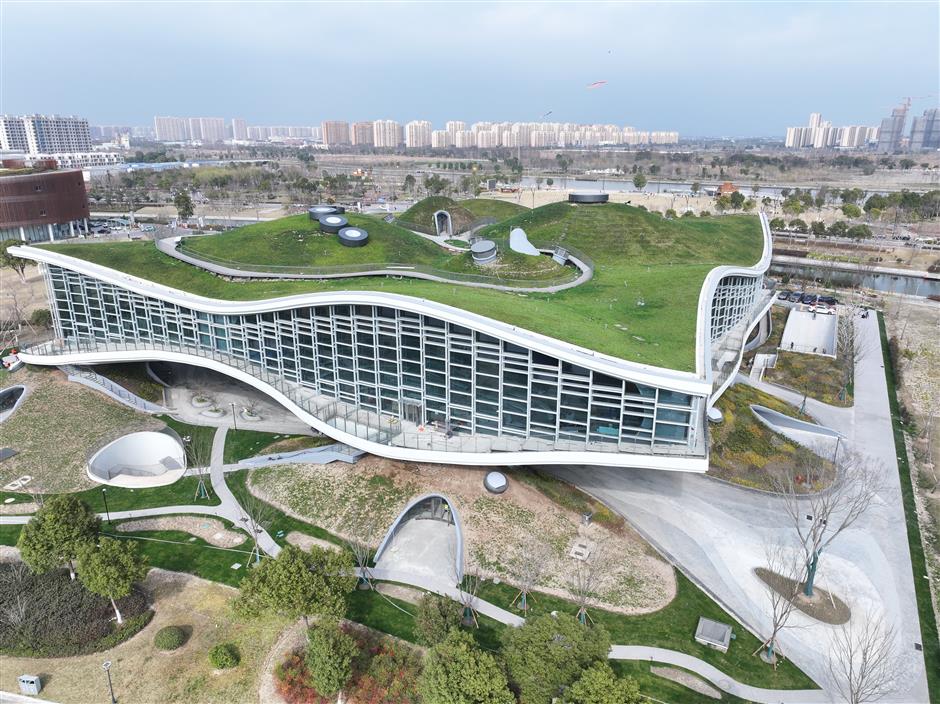
Songjiang New City connects academic research with local manufacturing. The district relies on the Songjiang University Town Science and Technology Innovation Hub to bridge the gap between universities and enterprises through a "two-way list" mechanism.
Universities publish their technological capabilities, while local companies list their manufacturing bottlenecks.
"We collected 33 research lists from universities and 24 demand lists from enterprises. We successfully matched 26 of them, generating about 20 million yuan in transaction value," said Chen Zhe, deputy general manager of the innovation hub.
Nearby, the Donghua University National University Science Park operates a proof-of-concept center. The center provides validation funding for university researchers to build commercial prototypes.
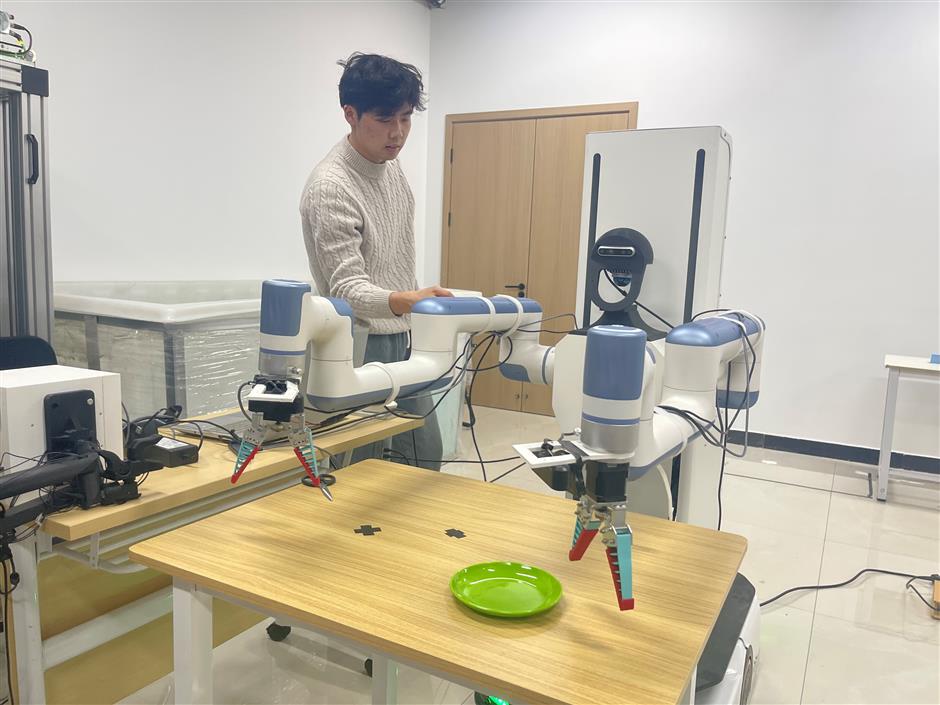
Inside the center, developers are currently testing a dual-arm mobile robot designed to automate factory assembly lines. Another research team demonstrates a biological agent that reduces the composting time of organic waste from 30 days to just one hour.
"We support these projects with funding and market resources so they can successfully transition into the market through patent licensing or spin-off companies," said Tao Kangle, general manager of the science park.
Fengxian New City upgrades its cosmetics and health sector, known as the Oriental Beauty Valley. The district currently accounts for 40 percent of the city's cosmetics sales.
The district shifts its focus from manufacturing scale to biotechnology innovation. It plans to build a synthetic biology innovation center to develop functional raw materials, plant extracts, and stem cell technologies.
Editor: Yang Meiping

![[First in SH] Neo Young 6, K-Pop Debuts, and the Mall Wars](https://obj.shine.cn/files/2026/05/12/5396b5c2-9d47-4c33-9358-bd01e9afcca3_0.jpg)

