Shanghai's '15-Minute Life Circle' Gives American Students a Taste of Neighborhood Life
Tyler Yoakum expected a massage. What he got, in his own words, "hurt" – and lasted only two minutes.
"It was very rhythmic, very quick, very deep and fast, so it hurt more," said Yoakum, a University of Hawaii student, describing his first experience with tuina, a traditional Chinese therapeutic massage.
"But I think I got much more of an effect much quicker. The massage only lasted like two minutes, but I feel like that could have been like an hour's massage."
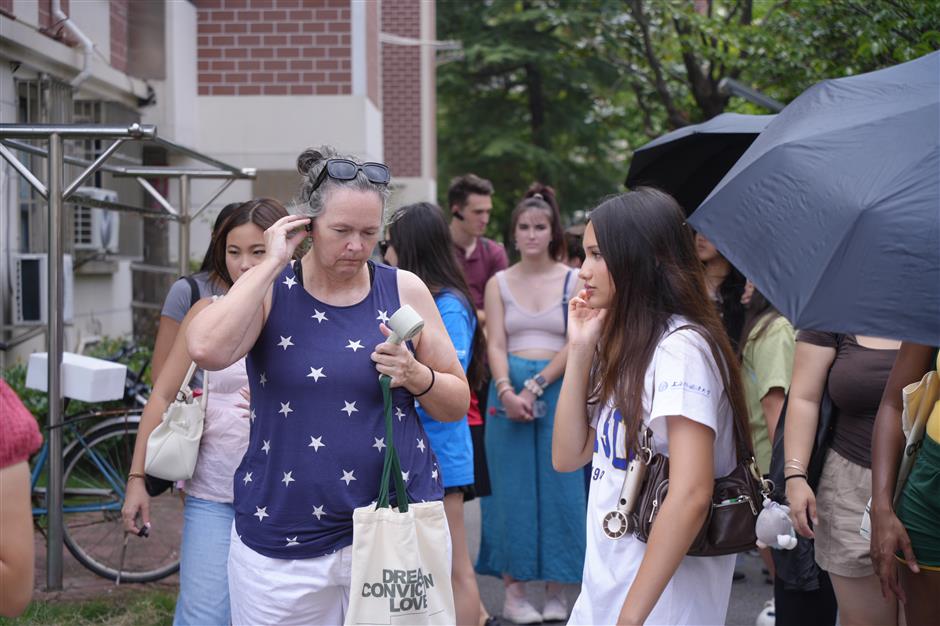
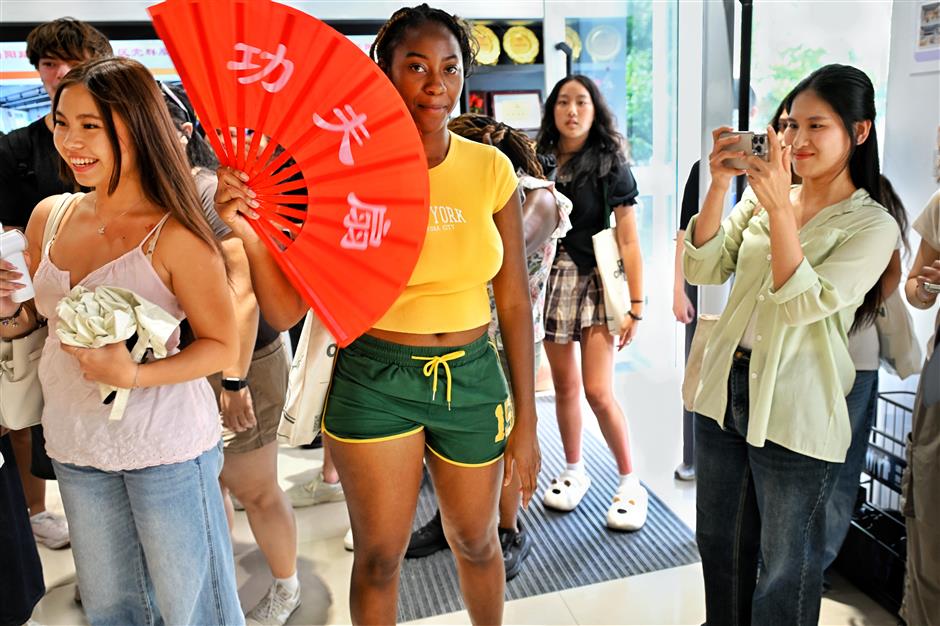
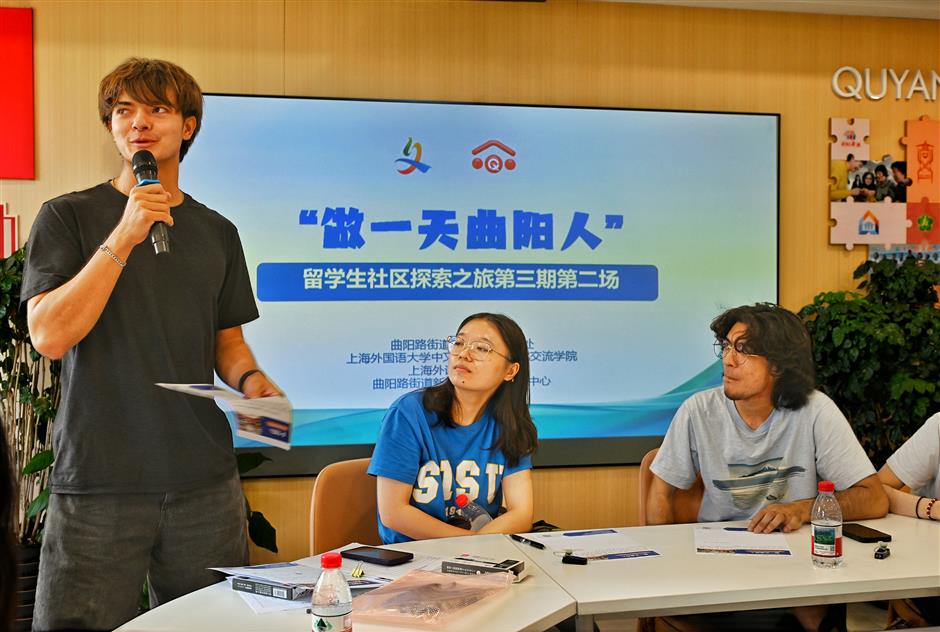
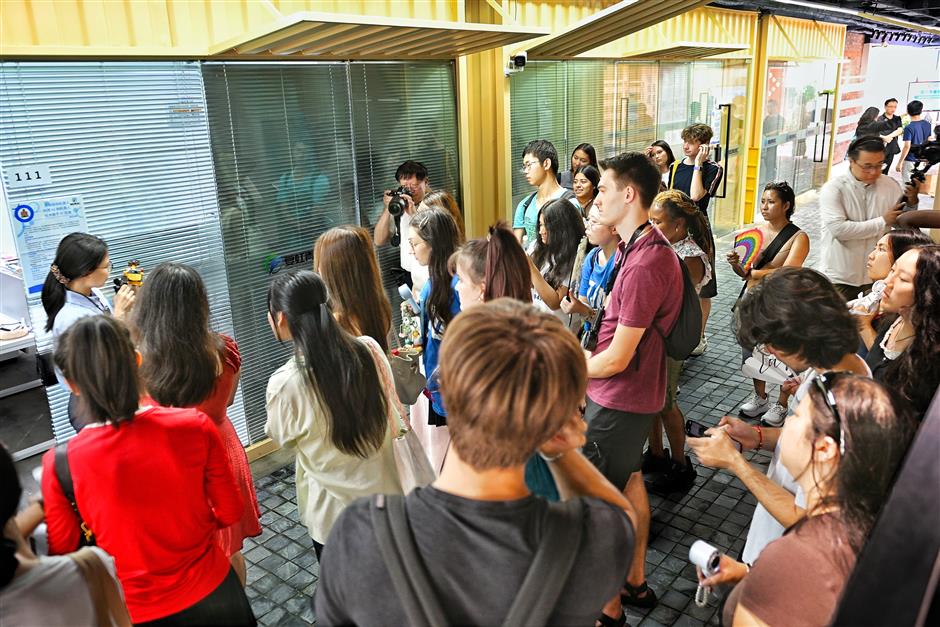
The treatment was one stop on a day-long tour of a neighborhood service center in Quyang Road Subdistrict of Shanghai's Hongkou District, where about 30 American exchange students sampled senior dining, medical care, child care and startup support all housed under one roof – a model the city calls the "15-minute community life circle."
First floated at a Shanghai forum in 2014 and written into the city's 2017-2035 master plan, the policy aims to put daily services within a short walk of every resident.
Over the past decade, Shanghai has rolled the model out across the city, retrofitting old neighborhoods and building new community hubs organized around elder care, health clinics and youth entrepreneurship.
Mark Spencer, also a University of Hawaii student, said the concept would be welcomed in the United States, especially by older residents.
"That's a great idea, especially for the elderly, and when it's hot outside," he noted. "I think that's like the perfect thing you could do for them."
Inside the center, the layout makes the concept concrete. A ground-floor canteen serves lunch to seniors and neighbors.
A traditional Chinese medicine clinic treats anything from the common cold to a sore neck. A day care center looks after young children, while an upper floor hosts an activity space for everyone in the community.
For Amanda Spincola, another University of Hawaii student, it was the fact that residents don't have to choose between services that stood out most.
"You can come here for services, but also see your friends downstairs at the elder day care, or drop your child off here for a playdate, then go have lunch with your friend downstairs in the cafeteria," Spincola said.
She compared the center to rural clinics on Hawaii's outer islands, which she said offer medical care but little else. "Those clinics can sometimes lack the additional community-building resources that this center offers."
Mia Twelker, another University of Hawaii student, said the day surprised her in more ways than one – starting with how green the city looked.
"I was expecting there to be so many buildings and everything, but it was surprising how much greenery there is, so many trees alongside the skyscrapers," she observed. What stayed with her most, though, was how easy it was to get around without a car.
"I live in an area in Hawaii that you can't really walk anywhere – you have to drive," Twelker said. "Having the ability to walk places and have this safe route to secondary locations, to have social connection, is very different, and very good."
Crystal Archie, a student with the University of Alabama at Birmingham, drew a sharper contrast after comparing the center to a senior facility near her home.
"In the United States, we do have a senior center close to mine. However, it's not necessarily a community – it's more like, you go to this place if you need assistance," Archie said.
"In Shanghai, I was able to see that you have multiple facilities with a lot of older people staying so they can get treatment, instead of just going to one location where it's all grouped together."
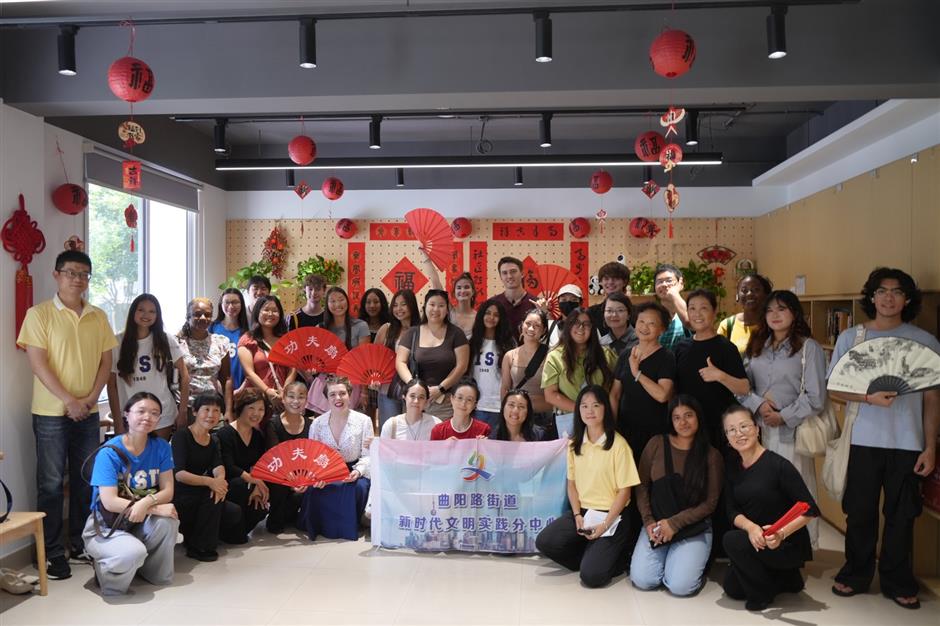
The tour also stopped at a nearby entrepreneurship hub, where a partnership with Fudan University gives young founders free office space and help navigating government paperwork.
Spencer said the support stood in contrast to what he's seen among friends trying to launch startups in the US.
"It takes a lot of effort just to get into it," he explained. "I think it's a great idea, because with the help of the government, you're able to start your own projects that can benefit your community, rather than having to start from the ground up and build your connection network out of nothing."
By the end of the day, it was the sight of retirees filling public spaces – not the buildings themselves – that stuck with Yoakum the most.
"I notice people get outside more in China, especially the elderly – not just at the community centers, but in city parks," he said.
"They're out there singing, dancing, having a better time than us young people, frankly. You would never see that in the United States."
Editor: Shi Jingyun
In Case You Missed It...

 Sep 22, 2026