Shanghai in Verse: A City's Poetic Dialogue with the World
"From Nanjing Road to the Bund,
As if walking through a magical vale,
The streets, like bubbling brooks,
Roar with life, a vibrant tale."
Excerpts from "Shanghai" written by Xie Mian in 1971
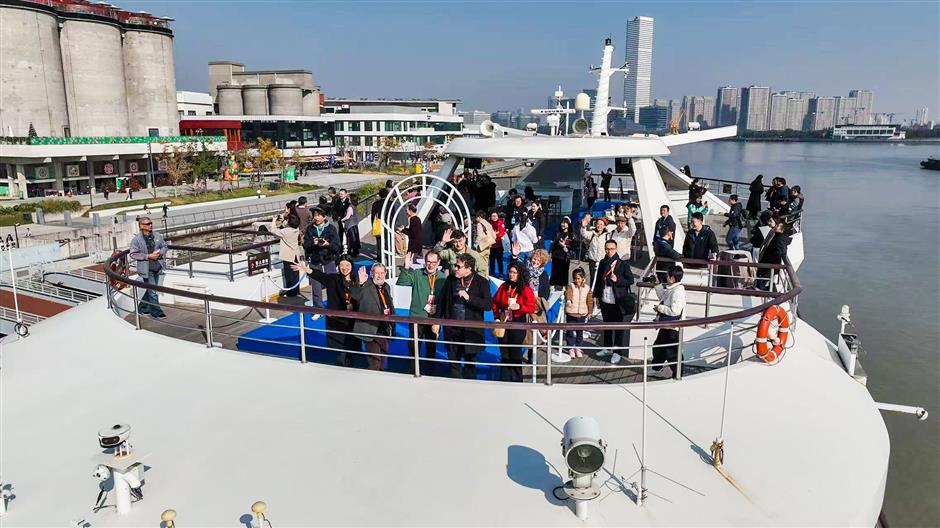
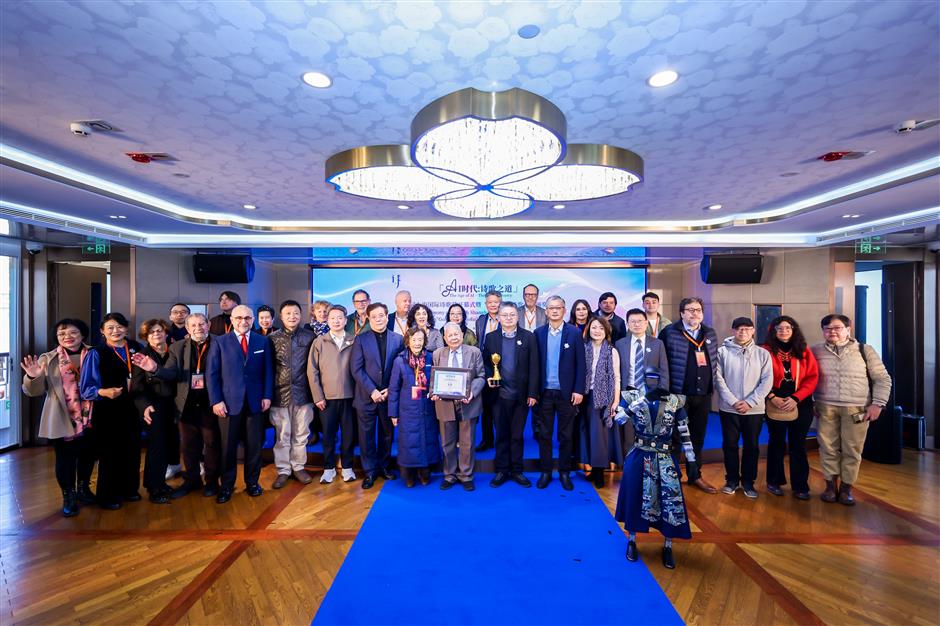
Renowned Chinese literary critic and poet Xie Mian, soon to be 94 years old, received the "Golden Magnolia" poetry award at the 10th Shanghai International Poetry Festival that opened on Saturday on a cruise along the city's West Bund waterfront.
"I've studied poetry my entire life, and today I'm receiving this award in Shanghai as a poet. The other name for poetry is freedom – the freedom of expression, and the freedom of words," Xie said as he received the award.
"I rescued myself through poetry, and here I am, as a poet, under the spotlight in Shanghai."
A cruise of poetry lovers, including 14 famed verse-makers from around the world and ten Chinese poets participating in the festival, witnessed Xie's speech as the festival kicked off.
"To many people, the first impression of Shanghai is as China's commercial center, but it is also a very poetic city," Shanghai poet and essayist Zhao Lihong, told Shanghai Daily ahead of the opening.
"Many poets who participated in our festival over the last 10 years would agree with me. This is truly a city full of poetic aura. As long as you have people who appreciate life and love literature, poetry will be discovered anywhere. And Shanghai is filled with such expressive poets."
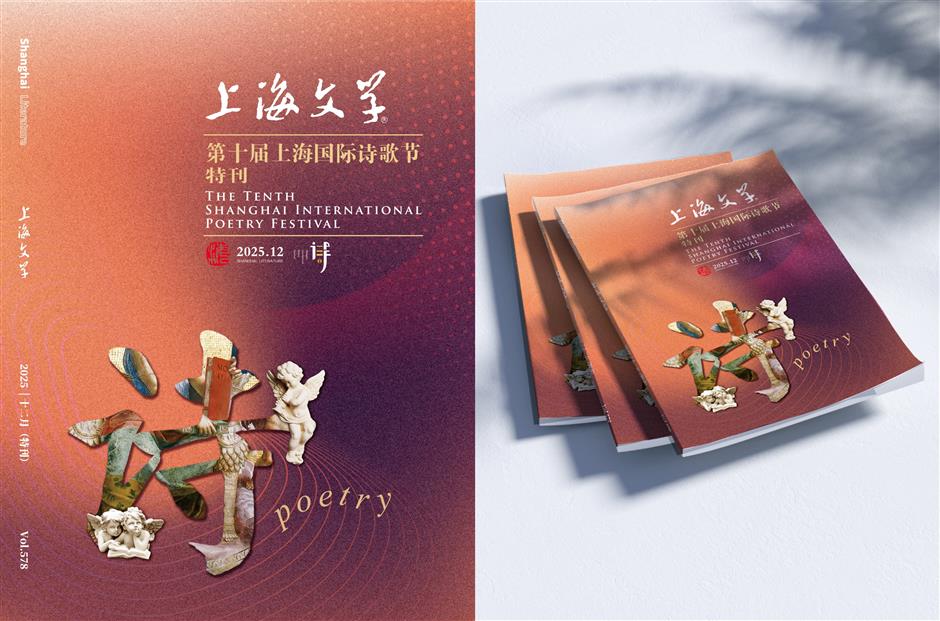
Zhao is the editor-in-chief of the city's poetry journal Shanghai Poets, and also the president of the festival since it started 10 years ago. The 73-year-old poet remembers a poetry society he once founded back in his university years. They would gather at a rooftop garden on Nanjing Road and read their newly written poems.
"That poetry society is a small part of the cultural Shanghai, and now there are many poetry clubs like that, covering a variety of different styles and forms of poetry, with regular events across the city," Zhao said.
The 10th edition of the festival also included a panel joined by organizers from some of the best-known poetry festivals in the world, including the Genoa International Poetry Festival, the International Poetry Festival of Medellin in Colombia and the Struga Poetry Evenings in Macedonia, among others.
"It is one of the most beautiful ways of human communications to exchange views and study from each other through poetry," Zhao said, adding each poetry festival he attended is unique in its own way.
"Our Shanghai festival isn't the largest in scale, but we offer an extraordinary journey with impressive hospitality. Many poets visited China for the first time through our festival, which completely changed their impression about China," Zhao noted.
The four-day Shanghai festival invited poets to delve into the cultural side of Shanghai, not only from the literary perspective, but also through exchanges with local residents. One featured event of the festival had the poets visit a local community and share their works with residents there.
"This festival is a microscope into how we have more exchanges with the world in terms of literature, in the last 10 years or so, a very sharp change compared with 30 years ago," Zhao reflected.
When he visited the United States and Mexico in 1985 with other Chinese writers, he couldn't find a single book of modern Chinese literature in the bookstores.
"For a long time, literary exchanges weren't equal to some extent. Chinese writers have read so many works from all over the world, in translations, but Chinese literature wasn't well translated. So we knew so much about the literature in the countries we visited, but their writers knew very little about modern Chinese literature, wherever we went," Zhao recalled.
"That has completely changed. Along with China's increasing significance in the world, Chinese literature is also getting translated and published around the world. More foreign writers and readers also get to know China and Chinese literature through literary festivals and writers' residency programs like this."
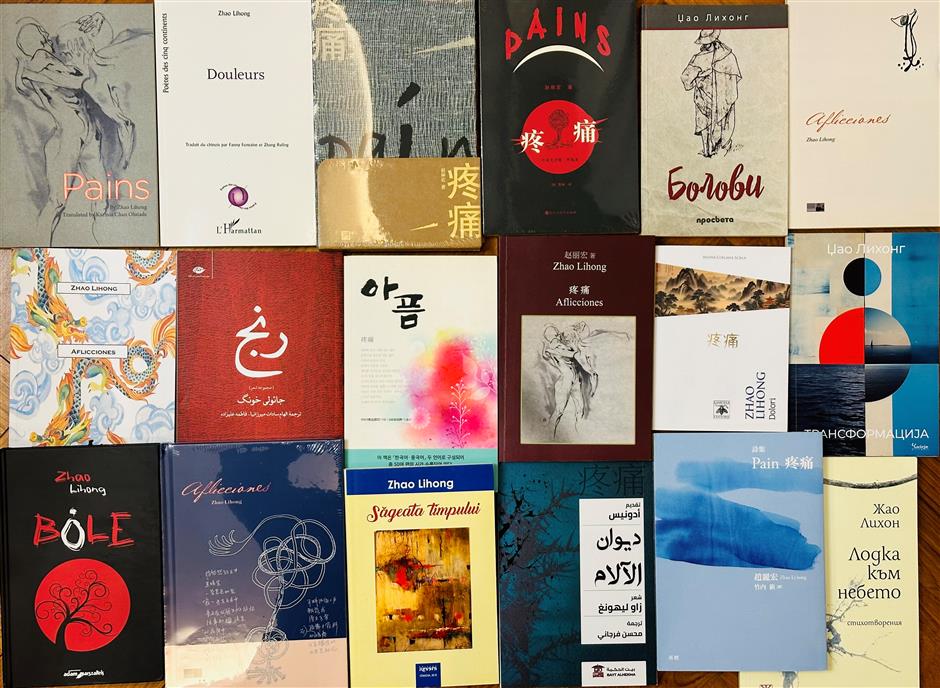
Zhao's own works have been published in over 30 languages, including a recent French translation of his 700-page essay. He has also become a member of the European Academy of Arts and Sciences, and won various foreign literary awards, including most recently the 2025 Premio Montale Fuori di Casa (International Section), an Italian literary award named after 1975 Nobel laureate in Literature Eugenio Montale.
He hopes such exchanges between Chinese literature and the world, "unimaginable 30 years ago," would continue, as the world is curious about every aspect of China. He also desires that the vividly poetic Shanghai would be better known through the poetry festival.
"As long as there is poetic sentiment, poetry is everywhere," he said.
"The sacred flame of poetry can only be passed on by flesh-and-blood beings who have love, pain, ideals and emotions."
In Case You Missed It...

 Mar 2, 2026
Popular Reads
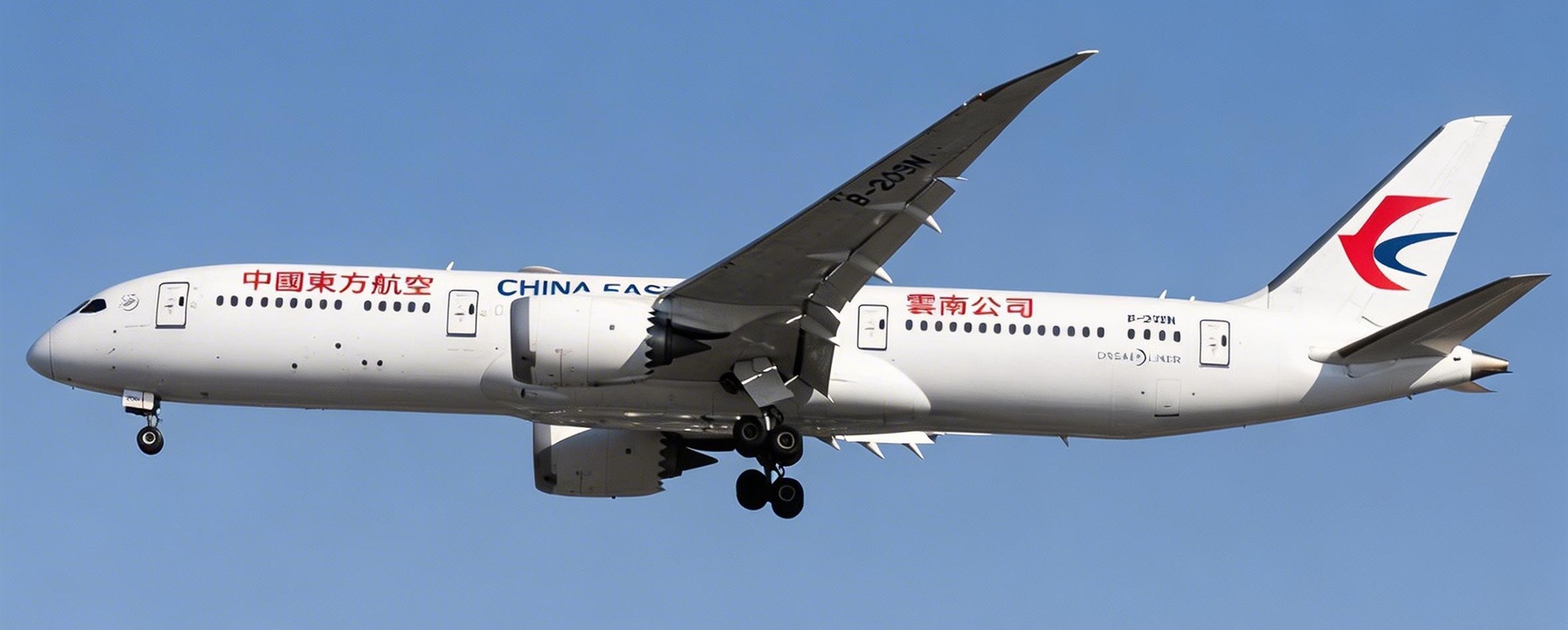
Mideast War Grounds Flights and Triggers Emergency Refunds
![[China Tech] Local Experts Develop Novel Gene-editing Tool for Autism](https://obj.shine.cn/files/2026/02/28/bcd42f01-b0ca-4dba-8779-c8b64434ecee_0.jpg)
[China Tech] Local Experts Develop Novel Gene-editing Tool for Autism

China-SCO Platform Launched in Shanghai to Tackle Metabolic Diseases
![[China Tech] Chinese Experts Develop World's First AI System With Traceable Reasoning for Rare Disease Diagnosis](https://obj.shine.cn/files/2026/02/25/115392ea-bbde-409c-b37b-af65d6db7c4e_0.jpg)
